
Activism
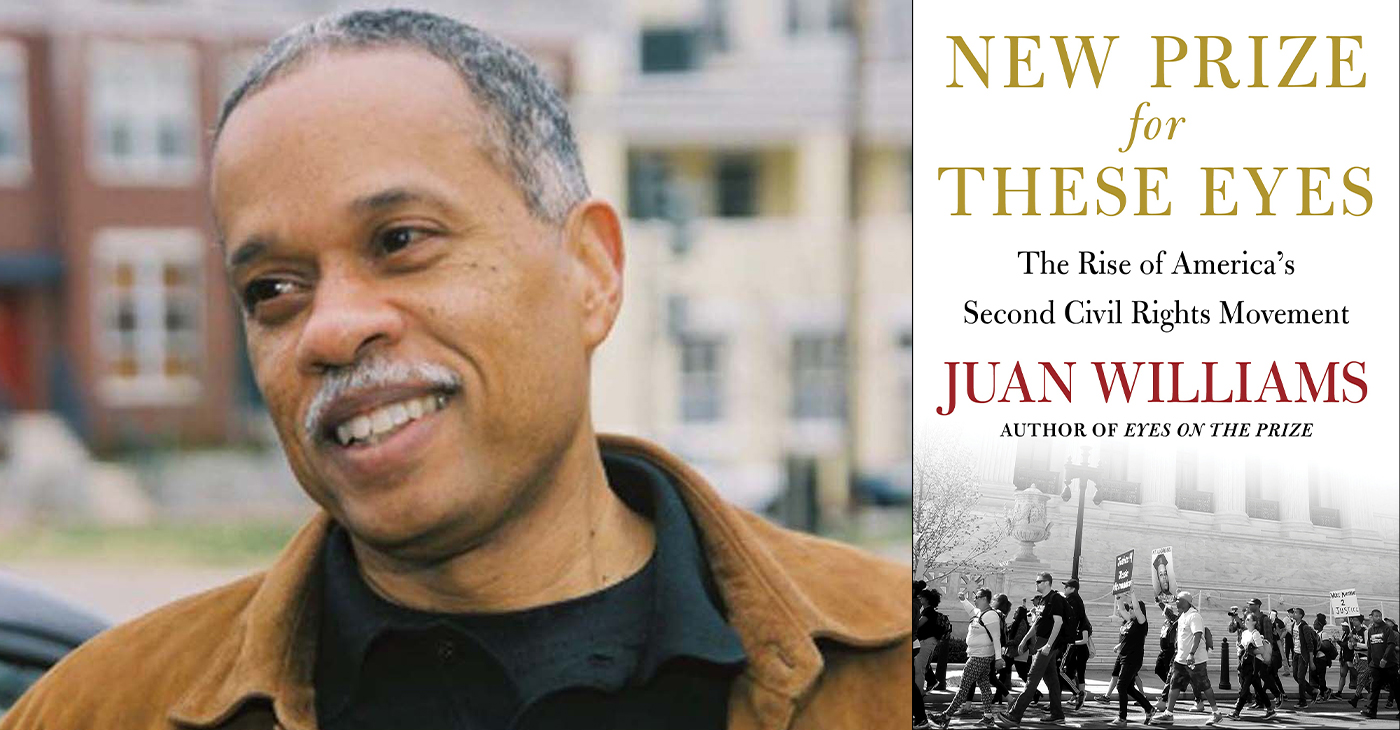
Book Review: Author Juan Williams Makes Case for Second Civil Rights Movement in ‘New Eyes for This Prize’
History disagrees on the exact catalyst for the Civil Rights Movement. However, Williams says that “the second Civil Rights Movement” sparked at the 2004 Democratic National Convention, and it took less than 20 minutes.

By Terri Schlichenmeyer
The Bookworm Sez
You’re not letting go that easily.
No, you’re on the right side of justice and you’re not letting go of the issue. Your heels are dug in, your back is straight, and your resolve is steely. You have a plan, and you’ll keep it, and see it to the end no matter what happens. As in the new book “New Prize for These Eyes” by Juan Williams, there are some who’ve gone before you, but your effort is what matters now.
History disagrees on the exact catalyst for the Civil Rights Movement. However, Williams says that “the second Civil Rights Movement” sparked at the 2004 Democratic National Convention, and it took less than 20 minutes.
Not long after young Senator Barack Obama, whose presence was meant to attract Black voters, began his speech at that convention, he had the audience cheering. He was positive, energetic, and energizing, and spoke of “a new sense of common purpose,” which spurred a Second Civil Rights Movement and a mandate to “deal with … cultural issues that the first Movement had left unresolved …”
The speech thrust Obama onto the national stage and, with the endorsement of many old guard Civil Rights Movement figures, ultimately put him in the White House. His presence there wasn’t without issues, both politically and racially, however: the deaths of Trayvon Martin, Michael Brown, and Philando Castile, and others, absolutely affected Obama’s terms, in part because “he acted only as a referee” and didn’t “take any special level of response as a Black man.” Still, early civil rights leaders agreed with him that America was “better” than it was 60 years ago.
Before Obama’s second term was over, a “right-wing backlash” that was “fueled by grievance” ushered Donald Trump into office but by then, young Black Americans had flocked to social media and gave root to the Black Lives Matter movement. “COVID-19 would also transform” the situation.
By the summer of 2024, “the Second Civil Rights Movement was far from completing its agenda,” says Williams, but “it had still achieved remarkable success.”
Pay very close attention while you’re reading this book. It’s filled with politics, but there’s a pay-off in it: Williams does a little forecasting toward the end of “New Prize for These Eyes,” promising readers a new movement, a third one, to come.
Even if you’re not particularly a politics-watcher, Williams draws your attention to the last 20 years and how they keenly shaped racism and racial issues in America. Sometimes, he seems to invite argument, using Obama as a singular catalyst for this “second” movement and its current continuation, fairly or unfairly.
He also credits other people and events that will make readers want to find someone to discuss his theories with. The tantalizing idea of a third movement will only underscore that desire.
As a sequel to Williams’ “Eyes on the Prize,” this is a must-read for anyone who knows where we’ve been or wonders where we’re going. Find “New Prize for These Eyes.”
You will not want to let it go.
“New Prize for These Eyes: The Rise of America’s Second Civil Rights Movement,” Author: Juan Williams c.2025, Simon & Schuster, $28.99.











Activism
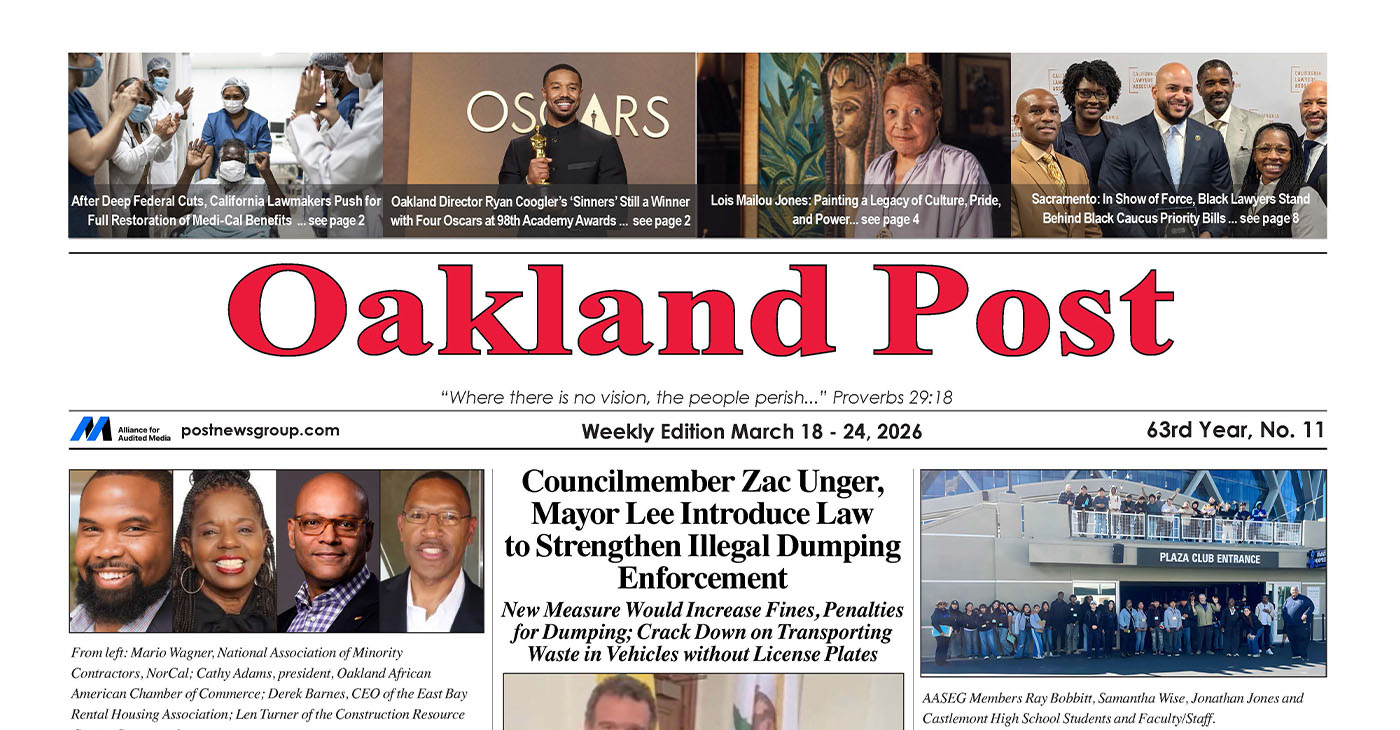
Oakland Post: Week of March 18 – 24, 2026
The printed Weekly Edition of the Oakland Post: Week of March 18 – 24, 2026
To enlarge your view of this issue, use the slider, magnifying glass icon or full page icon in the lower right corner of the browser window.
Activism
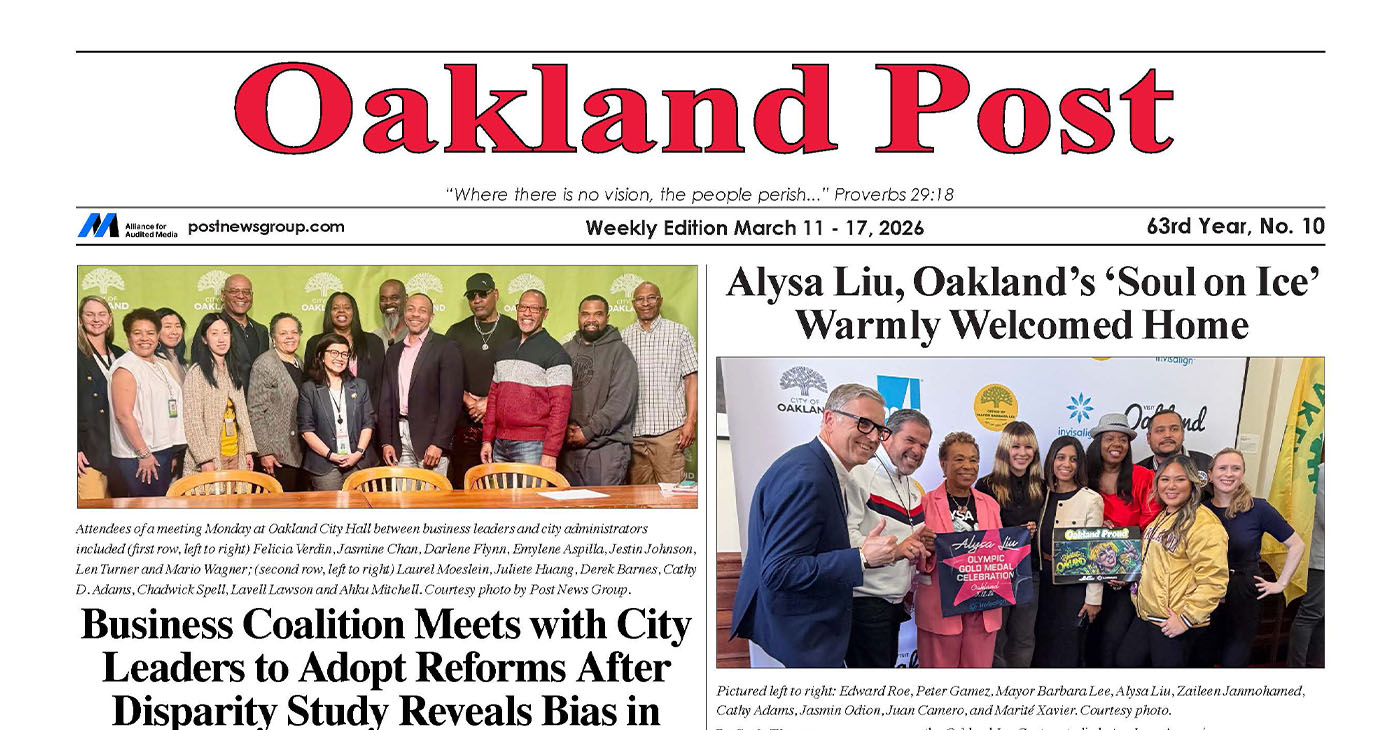
Oakland Post: Week of March 11 -17, 2026
The printed Weekly Edition of the Oakland Post: Week of March 11 – 17, 2026
To enlarge your view of this issue, use the slider, magnifying glass icon or full page icon in the lower right corner of the browser window.
Activism
Oakland Post: Week of March 4 – 10, 2026
The printed Weekly Edition of the Oakland Post: Week of March 4 – 10, 2026
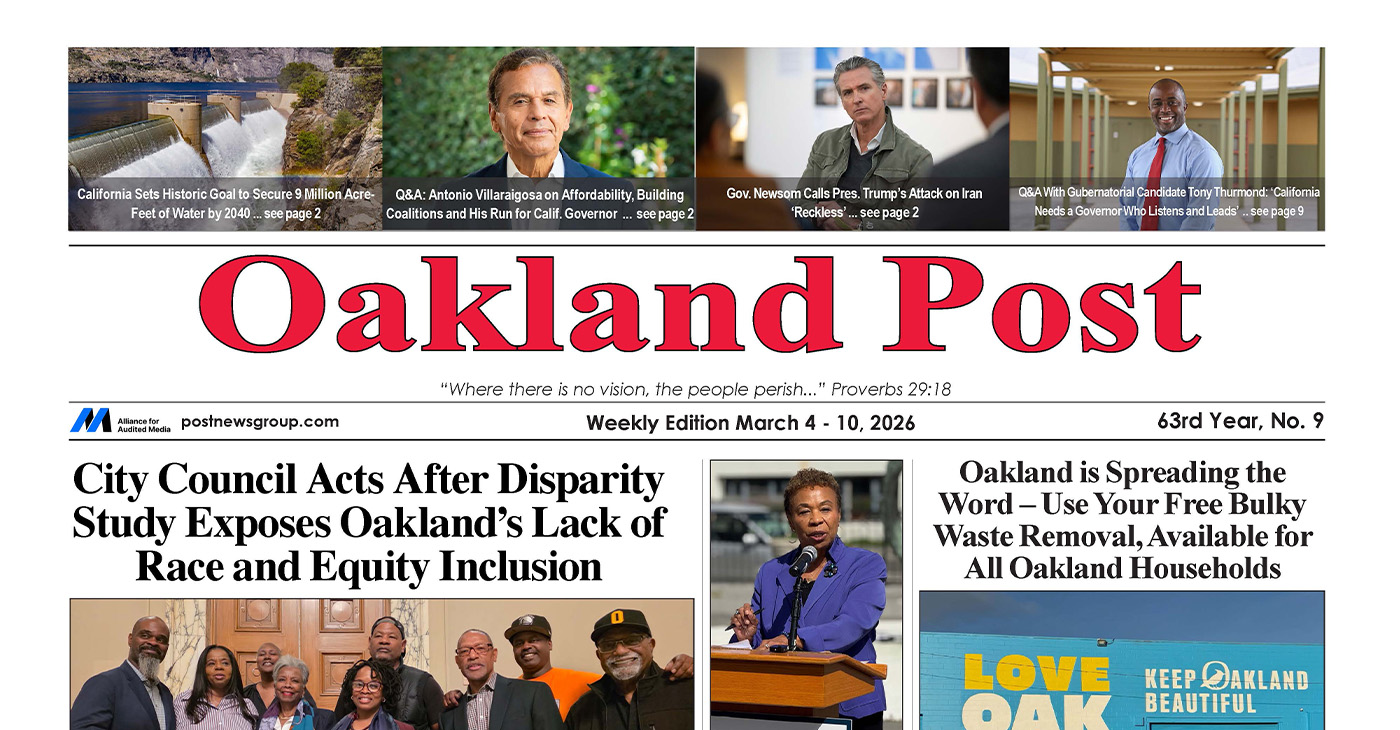
To enlarge your view of this issue, use the slider, magnifying glass icon or full page icon in the lower right corner of the browser window.


WORK FROM HOME
Home-based business with potential monthly income of $10K+ per month. A proven training system and website provided to maximize business effectiveness. Perfect job to earn side and primary income. Contact Lynne for more details: Lynne4npusa@gmail.com 800-334-0540


Black Artists in America, Installation Three Wraps at the Dixon Gallery and Gardens

Grief, Advocacy, and Education: A Counselor Reflects on Black Maternal Health

Future of Florida’s Black History Museum in Limbo

New Research Shows the Many Benefits of Early Learning

South Hampton K-8 Students Among Top 10 Finalists for Samsung’s ‘Solve for Tomorrow’ Competition

Cuba: No Negotiation with US on the President or Political System

Brooklyn Academy of Music Names Jamaican-Born Tamara McCaw as President

Trinidad & Tobego – U.S. Launches WhatsApp Channel for American Citizens in the Country

Oakland Post: Week of March 18 – 24, 2026

AI Innovation vs. Ethics and Environmental Impact

AI, Web3, and Digital Reparations

What If You Owned Your AI Agent?

Season 7, Episode 3 – January Reporter’s Roundtable 📱

Season 7, Episode 3 – January Reporter’s Roundtable

AI, Media, and Power | Part 2, Real-World Impacts and Tradeoffs

Oakland Post: Week of February 11 – 17, 2026

Reflecting on Black History Milestones in Birmingham AL

CITY OF SAN LEANDRO STATE OF CALIFORNIA PUBLIC WORKS DEPARTMENT ENGINEERING DIVISION NOTICE TO BIDDERS FOR ANNUAL STREET OVERLAY/REHABILITATION 2019-21 – PHASE III

Oakland Post: Week of February 18 – 24, 2026

PRESS ROOM: NBA Hall of Fame Nominee Terry Cummings Joins 100 Black Men of DeKalb County to Launch Victory & Values Initiative

Oakland Post: Week of February 25 – March 3, 2026

Trump’s MAGA Allies are Creating Executive Order Plan to Steal the 2026 Midterms

U.S. manufacturing rebounds – how foundry services are adapting to rising demand

OP-ED: One Hundred Years of Black Workers Telling the Truth

Chase Oakland Community Center Hosts Alley-Oop Accelerator Building Community and Opportunity for Bay Area Entrepreneurs

Advancements in solar technology that are changing the way we power the world

Poll Shows Support for Policies That Help Families Afford Child Care

Oakland Post: Week of March 4 – 10, 2026

PRESS ROOM: Civil Rights TV Launches in Selma as the World’s First 24/7 Civil Rights Television Network

Woman’s Search for Family’s Roots Leads to Ancestor John T. Ward – A Successful Entrepreneur and Conductor on the Underground Railroad

Hyundai Ioniq 5 Parking, Safety, and 360 View #shorts

2025 Ioniq 5 New Wiper & Powerful Performance! #shorts

Electric SUV Range: Is 259 Miles Enough? #shorts

EV Charging: How Fast Can You Charge an Electric Vehicle? #shorts

Biometric Cooling… Messaging Seats…Come on! 2025 Infiniti QX80 Autograph 4WD

Charged Up: Witness the Magic of a Fully Electric Car! #shorts

Range Rover Sport PHEV Included…: See What’s Inside This Luxury SUV! #shorts

Invisible Hood View: Perfect Parking with X-Ray Vision! #shorts

AI Is Reshaping Black Healthcare: Promise, Peril, and the Push for Improved Results in California

ESSAY: Technology and Medicine, a Primary Care Point of View

Sanctuary Cities

The RESISTANCE – FREEDOM NOW

STATE OF THE PEOPLE: Freddie

ECONOMIC BOYCOTT DAY!!!!!

I told You So
-
 #NNPA BlackPress4 weeks ago
Poll Shows Support for Policies That Help Families Afford Child Care
-
 Activism4 weeks ago
Oakland Post: Week of March 4 – 10, 2026
-
 #NNPA BlackPress3 weeks ago
Woman’s Search for Family’s Roots Leads to Ancestor John T. Ward – A Successful Entrepreneur and Conductor on the Underground Railroad
-

 #NNPA BlackPress4 weeks ago
OP-ED: NNPA Launches 2026 “Leadership Matters” Video Series
-

 #NNPA BlackPress3 weeks ago
Advocates Raise Alarm Over ICE Operation, MOU and Detention Risks in Baltimore County
-

 #NNPA BlackPress3 weeks ago
COMMENTARY: Women of Color Shape Our Past and Future
-

 #NNPA BlackPress3 weeks ago
Pete Buttigieg to Join Mayor Randall Woodfin for Community Town Hall in Birmingham
-
 Activism2 weeks ago
Oakland Post: Week of March 11 -17, 2026
