
Education
Cost-of-Living adjustments set for all teachers Extra 3% effective January 1 in addition to 3% raise effective now
NASHVILLE PRIDE — Mayor David Briley announced on Monday that all MNPS teachers and employees will receive another three percent cost-of-living adjustment (COLA) on January 1, 2020, in addition to the three percent COLA the mayor made possible by allocating nearly $30 million in new funding for schools for FY2020. This allocation was six times the allocation in the last budget.

By Pride Newsdesk
Mayor David Briley announced on Monday that all MNPS teachers and employees will receive another three percent cost-of-living adjustment (COLA) on January 1, 2020, in addition to the three percent COLA the mayor made possible by allocating nearly $30 million in new funding for schools for FY2020. This allocation was six times the allocation in the last budget.
For weeks, the mayor has been working to find ways to get teachers more money this year while avoiding a tax increase. Thanks to MDHA’s help and the work done by the Council’s Tax Increment Financing Study and Formulating Committee, Mayor Briley is able to free up $7.5 million that would have been paid out of the MNPS budget to repay TIF loans. These funds are recurring, so the raise is ‘paid for’ moving forward. This move does not require Council action since it will simply result in a reduced expenditure for MNPS.
This will bring all teachers to a 6% raise on January 1, 2020, which equates to a 4.5% increase over the course of the year. This is .5% higher than the COLA increase in the proposed substitute budgets that would have raised property taxes.
“I have been working on the MNPS budget with Dr. Battle and Dr. Gentry, trying to find the best possible way to get recurring dollars to teachers while not penalizing the 40% of MNPS teachers who are ‘topped out’ and while avoiding a property tax increase this year—something that would have hurt in-county teachers more than the proposed raises would have helped,” Mayor Briley said. “With this increase in place, we will continue our in-depth talks about comprehensive pay plan restructuring for teachers so the more than half of all teachers who are topped out of receiving meaningful increases will get them in future years. There’s work to be done, but this is an important first step.”
This plan has the support of MNPS School Board Chair Dr. Sharon Gentry and MNPS Director Dr. Adrienne Battle.
“Mayor Briley’s investment shows a deep commitment to our teachers and staff members, and we thank him for his leadership and support for public education,” Dr. Battle said.
“When Mayor Briley saw an opportunity for supplemental revenue, he ensured that it was dedicated to funding a raise for staff members, which is in addition to the raise they are receiving at the start of the year. We are only as successful as our amazing staff, and the Mayor’s actions show how he values them. Our goal is that these resources also ensure that we are able to maintain funding for other new strategic investments. MNPS is thankful to partner with the Mayor and Metro Council who are dedicated to the success of our students and staff.”
The $7.5 million will come to schools in the form of a reduction in the $11.2 million they would otherwise have paid to MDHA for TIF loan repayments this year. In short, it cuts that bill by $7.5 million, freeing up those funds for raises. MNPS will continue to pay what it is required to pay MDHA each year.
“I am grateful to Dr. Adrienne Battle, the MNPS Board, MDHA and the members of the TIF Study and Formulating Committee, whose hard work and support made this additional COLA possible,” Briley said. “I plan to keep at it, and I know we have more great things to come for all students and teachers in our schools.”
Clemmons: Briley’s attempt to appease teachers falls flat
Says Nashville’s teachers deserve better
State Rep. John Ray Clemmons, a candidate for mayor of Nashville, released the following statement regarding the Briley Administration’s most recent example of fiscal mismanagement:
“Today, we have witnessed yet another hollow attempt at political preservation disguised as a good faith attempt to provide our teachers with much-needed raises. While I appreciate that our mayor finally acknowledges the detrimental impact his lack of leadership is having on our teachers, we should call this announcement of a fiscally questionable plan right before early voting starts what it really is: the last gasp by a mayor in a tailspin. MNPS leadership’s last-minute receipt of this plan demonstrates the lack of transparency and patchwork policy-making that has defined this administration since day one.

State Rep. John Ray Clemmons
“Briley has now had two budgets and multiple opportunities to make fundamental, fiscally responsible budgetary changes in Metro that could have directly benefited our schools and teachers for the benefit of students. Unfortunately, he repeatedly kicked the can down the road, costing our teachers a better quality of life and our students two years of fully funded educational opportunities. This mayor has lost the confidence of teachers, public school parents, and advocates across Nashville, and they will see right through his ploy to try and buy their votes with Metro’s credit card.
“These desperate acts by a desperate politician trying to get reelected will ultimately cost our city and taxpayers more money. We’ve seen numerous eleventh-hour policy proposals out of the mayor’s office over the last six months, designed to appease specific constituencies rather than create real, substantive change. Nashville deserves a mayor who will partner with all stakeholders, engage the community, and make the tough decisions necessary to move our city forward in a substantive manner. Under no circumstances should teachers and Nashville residents be used as pawns for a failing reelection campaign.”
This article originally appeared in the Nashville Pride.



Commentary
OPINION: Board VP Valarie Bachelor Says OUSD Is Moving Ahead Under Committed Leadership
As I reflect on this past year serving on the Oakland Unified School District (OUSD) Board, I’m incredibly proud of what we’ve accomplished together. While there is still important work ahead, this year demonstrated what is possible when we stay focused on students, collaborate t

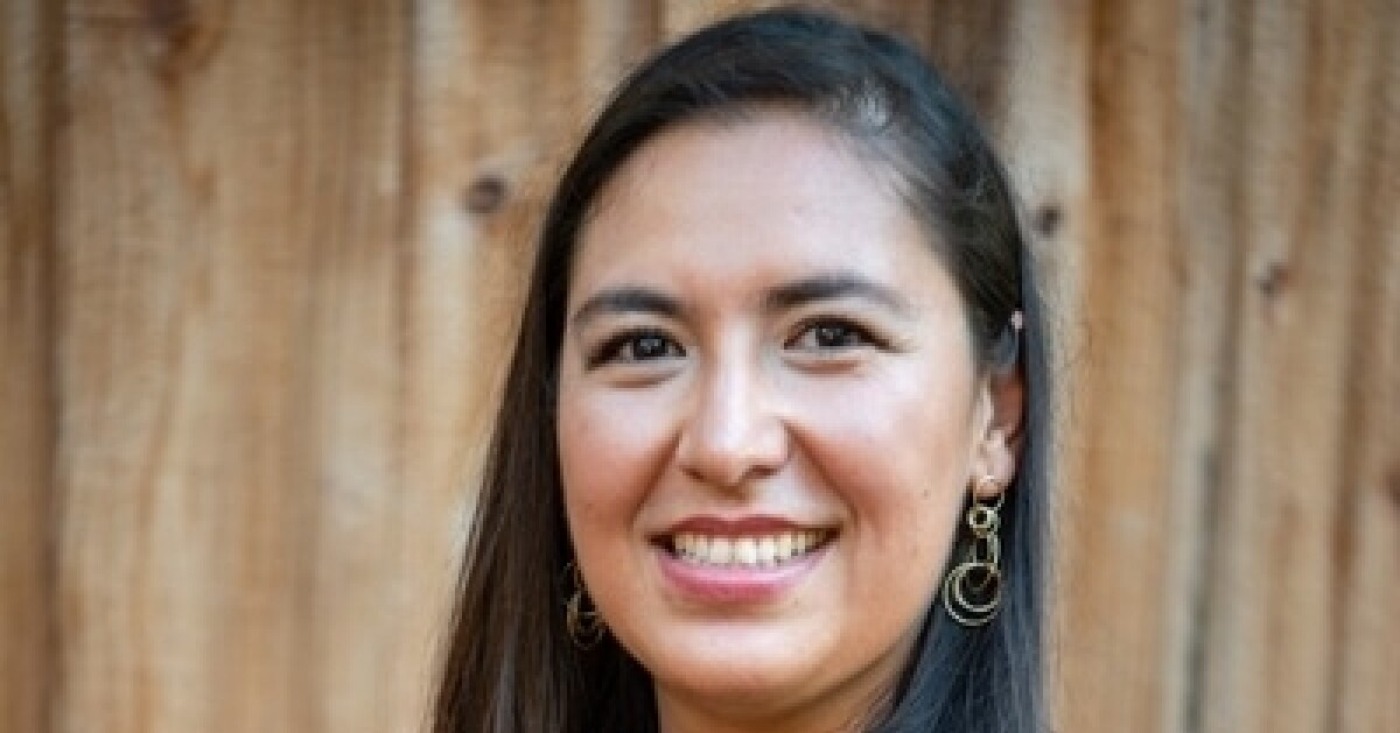
As I reflect on this past year serving on the Oakland Unified School District (OUSD) Board, I’m incredibly proud of what we’ve accomplished together. While there is still important work ahead, this year demonstrated what is possible when we stay focused on students, collaborate through difficult challenges, and refuse to lose sight of our goals.
We inherited one of the most difficult financial situations in OUSD’s history.
Together with Interim Superintendent Dr. Denise Saddler, the Senior Leadership Team, our fiscal consultants, and my Board colleagues, we made difficult decisions that put the district on a stronger path forward.
For the first time in 22 years, OUSD has adopted a balanced budget. We earned a Qualified Second Interim certification and submitted a Positive Third Interim report — major milestones that reflect disciplined leadership, sound fiscal management, and our commitment to preserving local control while avoiding both a state loan and school closures.
As Chair of the Facilities Committee, I’ve also had the privilege of seeing years of community advocacy become reality.
This month, I attended the groundbreaking for Coliseum College Preparatory Academy’s new high school building and gymnasium — an investment decades in the making that will provide East Oakland students with modern, climate-controlled, age-appropriate learning spaces.
I was also honored to celebrate the groundbreaking for the transformation of McClymonds High School alongside the Mac family. This project will bring modern classrooms, engineering labs, athletic facilities, accessibility improvements, updated building systems, a renovated cafeteria, and so much more to one of Oakland’s most historic campuses.
And we’re not stopping there. We’re looking ahead to the transformation of Melrose Leadership Academy while continuing to complete projects across the district, including improvements at Roosevelt and other school sites.
None of this would be possible without the persistence of parents, students, educators, school leaders, and the Oakland voters who invested in our schools by passing Measure Y.
Thank you for believing in our students.
This year also brought important progress for our employees. We reached tentative agreements with OEA, SEIU Local 1021, and our Building & Grounds staff, recognizing the essential role our employees play in serving Oakland’s children.
We’re also strengthening the district’s long-term financial outlook by expanding Transitional Kindergarten hubs, growing in-district non-public school programs, and continuing to identify new revenue opportunities that better serve students while keeping resources within OUSD.
None of these accomplishments happened overnight, and none happened because of one person. They are the result of dedicated staff, community advocates, labor partners, district leadership, and Board members working through disagreements, solving problems together, and keeping students at the center of every decision.
Thank you to everyone who has partnered with us this year. Serving Oakland’s 34,000 students is both an honor and a responsibility. I’m proud of the progress we’ve made, grateful for everyone who helped make it possible, and excited for the work ahead as we continue turning the corner and building the schools our students deserve.
About the Author
Valarie Bachelor is Vice President, Oakland Board of Education.

Business
The Power of Pink: Laila Leigh’s Journey to Streamer University
MOREHOUSE COLLEGE – THE MAROON TIGER — Laila Leigh, also known as “LailaSimoneTV” on Twitch, is preparing to attend Streamer University as part of the Class of 2026. This intensive week-long bootcamp, hosted by Twitch star Kai Cenat, aims to help emerging creators enhance their platforms, master streaming techniques, and monetize their content.

Laila Leigh’s Streamer University journey started on cardboard in a pink room in Upper Marlboro, Maryland. From a young age, her family has taught her to speak things into existence: grades, internship opportunities and now the chance to build her brand as a social media influencer.
Streamer University, for those unfamiliar, is a week-long intensive bootcamp held on a U.S. college campus hosted by content creator and Twitch superstar Kai Cenat. The bootcamp focuses on helping rising creators elevate their platforms, master the art of streaming, and monetize their content. Leigh is set to join the Class of 2026 for the bootcamp.
“[Laila’s father] believes in speaking things into existence. I believe in writing it down and making it plain. Laila’s been around all these concepts,” said Mai Leigh, Laila’s mother. “She has books about manifestation.”
Laila Leigh, who goes by “LailaSimoneTV” on Twitch, hopes that Streamer University is just one step in a path that leads to a career as an entertainment correspondent. She has memories of watching “Good Morning America” and “106 and Park,” respectively. The show’s hosts, Robin Roberts and Rocsi Diaz, were her role models. Watching them helped Leigh realize she wanted a life in front of the camera.

“Robin Roberts introduced a professional side and being a student of the game and real journalism,” said Leigh, a 2026 Clark Atlanta University (CAU) graduate.
Shifting her goals
Initially, Leigh thought she wanted to be a newscaster, like Roberts. As she got older, she watched YouTubers like Queen Naija and Jordyn Lucas. She also went to events like the Black Sports Business Symposium. She learned how to network, but she also realized that she would rather interview celebrities instead of learning about male athletes.
“I want to do something more fun…let me see what entertainment is like,” she said.
From that day, she never looked back.
She started interviewing celebrities like Luhh Dyl, India Love and Latto. She also began posting videos of herself talking about celebrities. Her Instagram video covering celebrity couple Megan Thee Stallion and Klay Thompson’s split has more than 170,000 views.
A relationship made through time
Mai Leigh and her daughter have built a special relationship. One that has roots in respect.

“I think I was meant to be her mom. We have a relationship that’s really unique. I respect Laila,” said Mai Leigh.
When the duo traveled to Atlanta to film Laila’s Streamer University application, Mai didn’t know much about streaming. She questioned how people even got picked to attend Streamer University. She watched DDG’s content to learn how he became rich from streaming.
“If kids are retiring their parents through streaming… go for it,” Laila remembers her mother telling her.
Finding her way
For Leigh, “find a way or make one” is more than a motto. It’s a way of life. At CAU, she founded “Meet a Panther,” a platform designed to highlight students from the school’s community. She also interned with the school’s social media. She was also the Vice President of The Culture Collective. The organization refers to itself as a creative outlet that connects brands and students through culture.
She also interned as a podcast editor at TMZ, participated in the 2025 CNN Academy and worked as a BET Next Gen Ambassador at this year’s BET awards. These programs taught her how to prepare for big moments, how to communicate with others and how to make a way past obstacles.
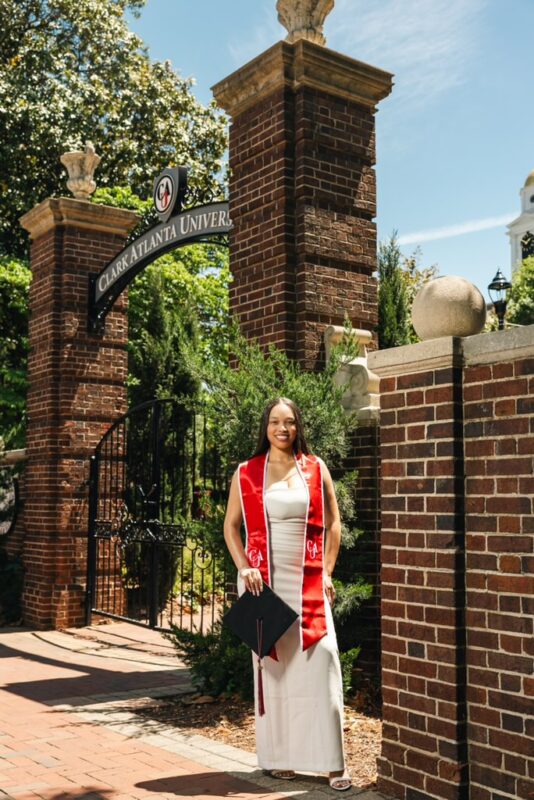
“Everything she’s talked about, she’s gotten done,” said Kaden Lymon, a 2026 CAU graduate who worked with Leigh at The Culture Collective (TCC).
The duo have been friends since 2022, their freshman year of college. Across the last four years, Lymon has seen Leigh’s positive attitude, curiosity and persistence take shape.
“That’s really my dawg,” said Lymon, a smile forming on his face. “It’s really been a joy to watch her grow.”
Her mother, Mai, believes that her daughter can achieve anything she wants because of her curiosity.
“The curiosity that children have, the wonder, it’s beautiful. If you allow them to explore they can become whatever they want,” said Mai Leigh, Laila’s mother.
Professional practice
Lymon, who filmed Leigh’s application to Streamer University, also touts the professionalism that Leigh has shown throughout their time working together. One month before filming the video, Leigh reached out to Lymon for help. She already had a plan, even flying back to Atlanta with her mother from Maryland to make sure her vision came to life.
Lymon and his creative team met with Leigh to work on details. The script was finalized. Choreography and props were discussed. When filming started, though, not everything went to plan.
Instead of giving up, the duo made the necessary adjustments. Just like Lymon, she wanted the video to be perfect. The final sentence of the video, “what we doing, Kai?” took 22 takes to perfect. The video was complete before Kai Cenat announced that Streamer University would be accepting applications.
This type of discipline is not only reserved for her application, which was one out of more than a million. When Laila was in sixth grade, her parents challenged her: stay on her school’s honor roll for the whole school year, and they would reward her with a puppy. Laila took on the challenge. The puppy turned out to be a shih tzu named Cody, who is now 12 years old.
According to Lymon, the two would call weekly and talk about how to make TCC and “Meet a Panther” content better.
“I’m around a lot of people that do big things… It feels good knowing that I was able to help her get to [Streamer University],” said Lymon.
What’s next?
Streamer University is only one part of Laila Leigh’s plan. On her vision board, Leigh lives her dream life. Working at Complex. Interviewing celebrities. Maybe even a life as a TV host like her role model, Rocsi Diaz.
Laila Leigh lays her future in front of her. She prints out her goals, dreams and aspirations, pastes them onto a piece of cardboard and posts the vision board on a pink wall in her family’s house. Then, she turns the vision into a reality.
Based on reporting by Morehouse College – The Maroon Tiger.
Business
COMMENTARY: HBCUs Are Still the Vanguard
SAN DIEGO VOICE & VIEWPOINT — SAN DIEGO VOICE & VIEWPOINT — As the back-to-school season commences, the question of equitable access to education and the financial burdens students face comes to the forefront. While some students benefit from extensive support, others contend with debt, family obligations, and underfunded communities. This disparity highlights the ongoing challenge of opportunity rationing in the United States.
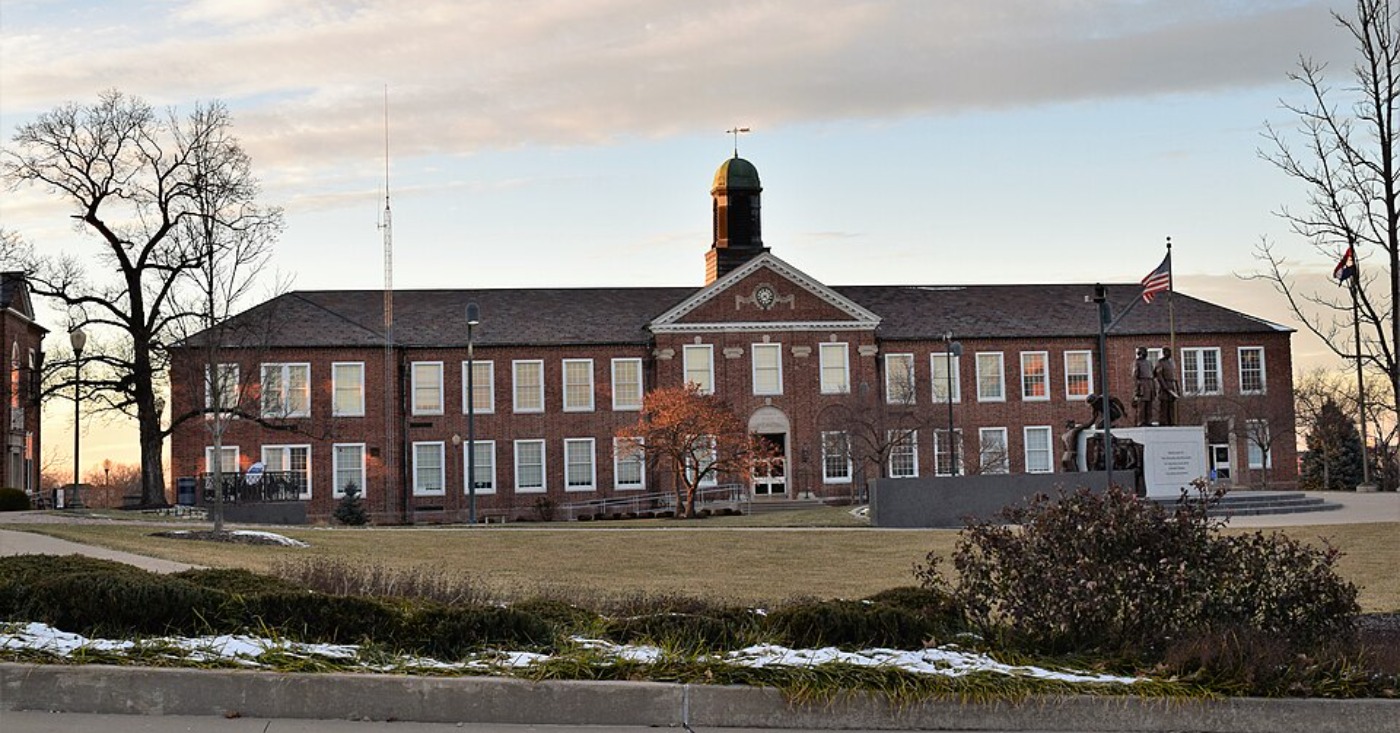
This week I am thinking about what it means to go back to school in a country that still rations opportunity. The stores are selling backpacks and dorm décor, but the deeper question is who gets access to education, who must borrow for it, and which institutions continue to carry the burden of Black possibility.
The fireworks have dimmed, and the Fourth-of-You-Lie sales are waning. In this country, we commemorate through commerce and celebrate through retail activity, so even though we are just a few days into July, back-to-school signs are already shouting from store windows and websites.
Who is going back to school, and under what circumstances?
As with every milestone in this country, inequality roars. Some students will return to school with new laptops, quiet rooms, family-paid tuition, and networks that cushion every stumble. Others will return carrying debt, doubt, family obligations, food insecurity, transportation challenges, and the accumulated disadvantages of underfunded schools and under-resourced communities.
The back-to-school season is marketed as a fresh start. For too many students, it is also a reminder that opportunity in America has always been rationed.
That is why Historically Black Colleges and Universities (HBCUs) still matter. Indeed, that is why HBCUs remain the vanguard.

The vanguard is not always the largest part of the army. It is the front edge. It moves first. It absorbs blows. It clears the path. By that definition, HBCUs have always been the vanguard. They were built because this country’s higher education system excluded Black people by law, custom, violence, and contempt. Their founding question was not, “How do we reproduce privilege?” Their founding question was, “How do we cultivate genius where America has refused to see it?”
That question remains urgent.
HBCUs enroll only a fraction of Black college students, but their impact is outsized. In 2022, HBCUs enrolled about 9 percent of Black college students, yet they produced 16 percent of the bachelor’s degrees earned by Black students in 2021–22. UNCF reports that HBCUs generate $16.5 billion in annual economic impact, support more than 136,000 jobs, and that the 2021 HBCU graduating class is projected to earn $146 billion over their lifetimes.
These are not sentimental institutions. They are economic engines, leadership factories, and community anchors.
Still, HBCUs are too often asked to do transformative work with transactional support.
That contradiction is especially sharp now, as federal student loan policy shifts under the feet of students and families. The Biden-era SAVE plan — Saving on a Valuable Education — was designed to make repayment less punishing by tying payments to income and family size, reducing monthly payments for many borrowers, limiting runaway interest, and creating a shorter forgiveness path for some small-balance borrowers. Now SAVE has ended, and millions of borrowers have been told to move into other repayment plans.
The change lands first on borrowers already in repayment, but current students are not untouched. Undergraduates will face a narrower repayment landscape when they leave school. Families will confront new Parent PLUS limits. Graduate and professional students will face new borrowing caps just as advanced credentials remain expensive and often necessary. Graduate PLUS loans, which previously allowed many graduate students to borrow up to the cost of attendance, are being phased out for new borrowers. Grad PLUS was the backstop many students used when tuition and living costs exceeded unsubsidized loan limits.
For Black students, the stakes are higher because the debt burden is heavier.
That is the context in which HBCUs do their work. Having led an HBCU, I know both the miracle, the math, and the myth. I also know this: HBCUs cannot be praised in February and underfunded in July.
The country loves the symbolism of back-to-school season. New backpacks. New notebooks. New slogans. But the real question is not what is on sale, it’s what is at stake.
If HBCUs are the vanguard, then the question is not whether they have earned our admiration. They have. The question is whether they will receive the investment, protection, and respect that their record demands.
Based on reporting by San Diego Voice & Viewpoint.

WORK FROM HOME
Home-based business with potential monthly income of $10K+ per month. A proven training system and website provided to maximize business effectiveness. Perfect job to earn side and primary income. Contact Lynne for more details: Lynne4npusa@gmail.com 800-334-0540


COMMENTARY: Mental Health Crisis Among Black Men — A Growing Concern

COMMENTARY: Our Voices — When Armed Power Appears at the Ballot Box

Councilman Johnson calls for Action to Keep Mavericks in Dallas – Garland Journal

Automatic Draft Registration Raises Questions Among Young Americans

Scotland Defeats Haiti 1-0 in World Cup Opener

Ivory Coast Finds the Net Late Securing a 1-0 Victory Over Ecuador

What the insurance industry sees when it looks at your home

What the insurance industry sees when it looks at your home

BOOK REVIEW: Never Tell a Black Girl How to Black Girl: Essays

Assemblymember Mike Gipson: Tragic Compton Shootings Drive Home Need for Stronger Gun Control Legislation

Gov. Gavin Newsom Signs Law Streamlining Affordable Housing Rules

Oakland Celebrates $125 Million Coliseum Sale

OPINION: Board VP Valarie Bachelor Says OUSD Is Moving Ahead Under Committed Leadership

Oakland Children’s Hospital Workers and Patients Rally for Pediatric Medical Care

Alameda County Board of Supervisors Honors 100 Black Men of the Bay Area

After 10-Year Wait, Fillmore Heritage Center Reopens in San Francisco

Oakland Post: Week of June 3 – 9, 2026


Oakland Post: Week of June 17 – 23, 2026

IN MEMORIAM: Oakland Dance Legend Reginald Ray-Savage, 67

Oakland Post: Week of June 10 – 16, 2026

UC Berkeley Named Top Public University in the U.S. and No. 7 in the World by ‘U.S. News’

COMMENTARY: Black Music is the Sound of Black Freedom: Let Us Reclaim Both This Juneteenth

2026 World Cup is Here and Atlanta is Ready For It

Oakland Director Boots Dazzles Once Again in ‘I Love Boosters’

Sale of Coliseum to African American Developers Moves Toward Completion

Ferry Fares to Increase July 1 as Ridership Hits Record Highs

NCBW-OBAC Champions Black Women Entrepreneurs at Business en Blaque Expo

Oakland Post: Week of July 1 – 7, 2026

A Long Time Coming: School District Kicks Off Massive $97 Million Renovation of West Oakland’s McClymonds High School

The Conversation With Al McFarlane 6/23/26

Media Monday 6/22/26

LIVE! ASK ALMA! — TUES. 6.23.26 7PM EST

Car Buying Secrets: 4 Hidden Checks Before You Sign!

Is This 550 HP Charger Worth YOUR Money? AutoNetwork Review

Celebrating Juneteenth – Frederick Douglass on education and resistance

LIVE! — ASK ALMA! — TUES. 6.19.26 7PM EST

Hyundai Ioniq 5 Parking, Safety, and 360 View #shorts

2025 Ioniq 5 New Wiper & Powerful Performance! #shorts

Electric SUV Range: Is 259 Miles Enough? #shorts

EV Charging: How Fast Can You Charge an Electric Vehicle? #shorts

Biometric Cooling… Messaging Seats…Come on! 2025 Infiniti QX80 Autograph 4WD

Charged Up: Witness the Magic of a Fully Electric Car! #shorts

Range Rover Sport PHEV Included…: See What’s Inside This Luxury SUV! #shorts

Invisible Hood View: Perfect Parking with X-Ray Vision! #shorts
-
 Activism4 weeks ago
 -
 Arts and Culture4 weeks ago
IN MEMORIAM: Oakland Dance Legend Reginald Ray-Savage, 67
-
 Bay Area4 weeks ago
UC Berkeley Named Top Public University in the U.S. and No. 7 in the World by ‘U.S. News’
-
 Alameda County4 weeks ago
Ferry Fares to Increase July 1 as Ridership Hits Record Highs
-
 Activism4 weeks ago
NCBW-OBAC Champions Black Women Entrepreneurs at Business en Blaque Expo
-
 Activism2 weeks ago
Oakland Post: Week of July 1 – 7, 2026
-
 Bay Area4 weeks ago
A Long Time Coming: School District Kicks Off Massive $97 Million Renovation of West Oakland’s McClymonds High School
-

 Activism4 weeks ago
Oakland Museum Presents Landmark Retrospective Celebrating Beloved Bay Area Artist Mildred Howard

1 Comment