
Alameda County
Councilmember Carroll Fife, on Track to Win Reelection, Looks to Oakland’s Progress
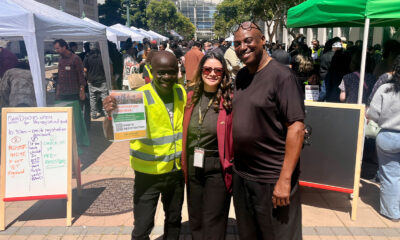
District 3 Councilmember Carroll Fife, though outspent by hundreds of thousands of dollars and facing a bitter campaign of slander, misrepresentations, and physical threats, seems to have emerged with a fairly comfortable lead in her reelection bid, well ahead of her nearest competitor (44% to 30%). In an interview with the Oakland Post Thursday, Councilmember Fife said she is hopeful that Congresswoman Barbara Lee would be willing to run for Oakland mayor if Mayor Sheng Thao is recalled.


By Ken Epstein
District 3 Councilmember Carroll Fife, though outspent by hundreds of thousands of dollars and facing a bitter campaign of slander, misrepresentations, and physical threats, seems to have emerged with a fairly comfortable lead in her reelection bid, well ahead of her nearest competitor (44% to 30%).
In an interview with the Oakland Post Thursday, Councilmember Fife said she is hopeful that Congresswoman Barbara Lee would be willing to run for Oakland mayor if Mayor Sheng Thao is recalled.
She also explained why she thinks her campaign has done so well against extreme challenges and talked about her priorities for the coming year, especially the need to stabilize leadership in city government.
“We’re on the right path,” said Fife. “We just need to bring in the right leadership, and I’m praying that Barbara Lee will consider running for mayor. I think she has the gravitas to pull Oakland together and unite everyone in a way that none of the top potential contenders will.”
Fife explained why she feels she has been able to overcome very powerful opponents to win reelection.
“There are several thousand votes outstanding (left to be counted), but it looks pretty good,” Fife said, emphasizing the impact of the door-to-door work her supporters have done over the past four years and her close ties with her constituents.
“I attribute that to ongoing base-building and community organizing, outside of the election years,” she said. “I have an amazing field team that was able to penetrate through the negative messaging and the narratives that these millionaires and billionaires were trying to craft.”
In addition, she said she spoke with most of her opponents, and they agreed to support each other in ranked choice voting. “I was able to coordinate with them, except for the two candidates that were perpetuating false narratives, and were part of former Mayor Libby Schaaf’s talking points,” and the doom-loop narrative trashing Oakland promoted by corporate public relations operative Sam Singer.
One of the local groups working to unseat Fife, Empower Oakland, received over $500,000 raised by crypto industry leader Jesse Pollak. The National Association of Realtors and other real estate groups also poured over $1 million into the campaign against the councilmember.
Though the billionaire and multimillionaire backers may be successful in recalling Oakland’s mayor and the Alameda County district attorney, they appear to be failing in their attempt to remake the leadership of City Hall.
“With all the money they’ve spent, they were successful with the two recalls and nothing else,” she said, explaining that corporation-backed candidates are not winning.
She noted that some local leaders are organizing to repeal ranked-choice voting in Oakland and that eliminating or preventing ranked-choice voting “is one of the (right-wing) Heritage Foundation’s flagship campaigns in cities and states across the nation.”
People “should be aware of how these Republican policies are creeping into the Bay,” she continued. Ranked-choice voting is a threat to those with money because it allows for “unlikely candidates who are not necessarily connected to wealth and or political connections,” to succeed, she said.
Oakland is poised for economic growth and is becoming a much safer city, Fife says.
At the same time, considerable economic challenges remain.
“We are dealing with some of the most challenging financial times in the history of Oakland, and I want to make sure that our infrastructure is solid. There are a lot of things to do and understanding that we’re going to need some help, and we’re not going to even have consistent leadership in the mayor’s office,” she said.
“If you want to empower Oakland, you don’t destabilize it,” Fife said. “You don’t destabilize it by creating mass hysteria in one of the largest businesses in the city, which is our city government.”
Looking at the impact of the Nov. 5 elections, she said, “I know people are feeling really dejected about some local and national races. But I think these are the opportunities for people who have big ideas and who are concerned about the beloved community to step up.
“We’ve seen how people have voiced their positions and their anxieties around our country, our city. But now is the time to organize,” Fife said.











Activism
EBMUD Enshrines the Legacy of its First Black Board Member William ‘Bill’ Patterson
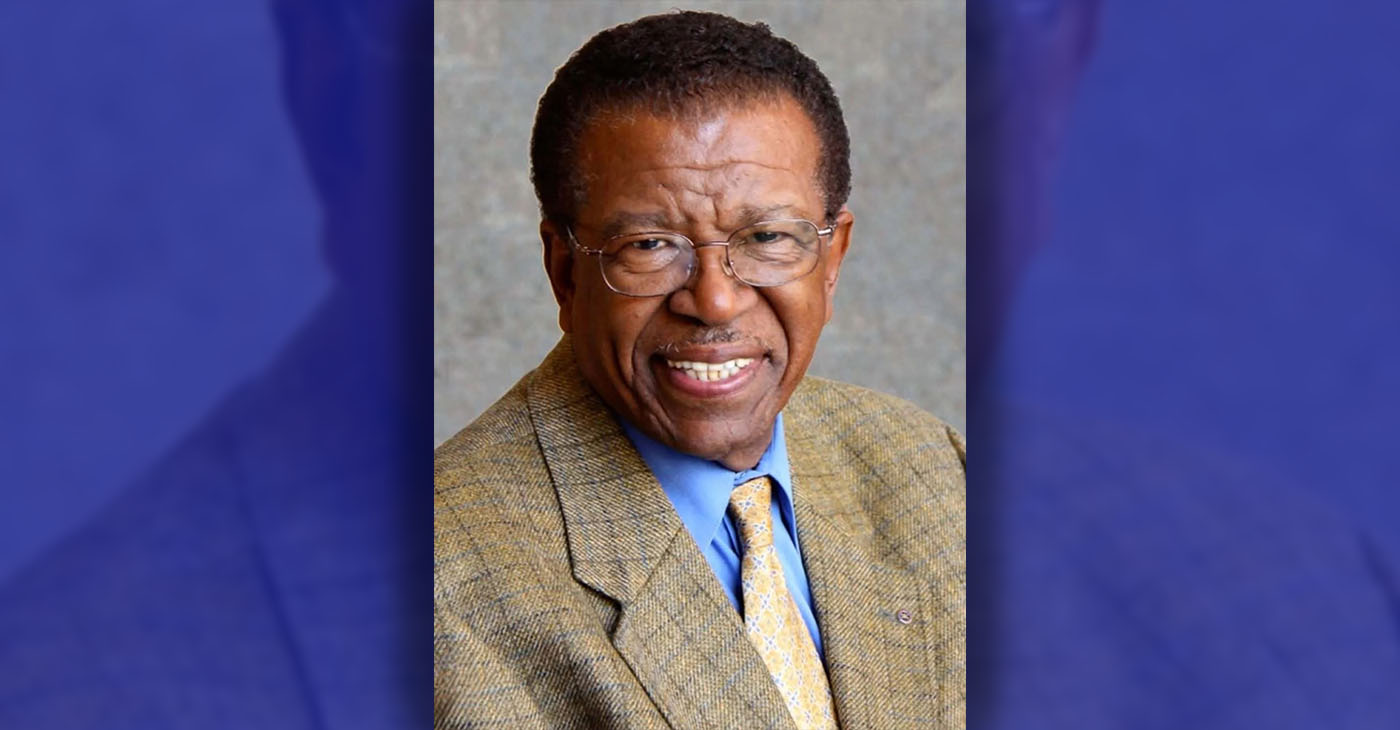
Patterson, who died in 2025 at the age of 94, was remembered as a tireless advocate, mentor, and public servant whose influence shaped generations across the East Bay.
By Carla Thomas
On Tuesday, May 12, Oakland honored a towering community figure, William “Bill” Patterson, with the unveiling of a bronze plaque and the renaming of the East Bay Municipal Utility District (EBMUD) boardroom in downtown Oakland.
Board members, family, colleagues, and mentees gathered to reflect on Patterson’s enduring legacy at the meeting.
Patterson, who died in 2025 at the age of 94, was remembered as a tireless advocate, mentor, and public servant whose influence shaped generations across the East Bay.
“This is well deserved,” said Patterson’s cousin, Maria Simon. “He was such a big part of the Oakland community. It’s heartwarming to know he was known by so many people.
“So many credit him with helping them get their first job. It was especially meaningful when he held the Bible for Mayor Barbara Lee’s swearing-in. He truly believed in the goodness of people, in possibilities, and in the power to bring things to fruition.”
Oakland NAACP President Cynthia Adams described Patterson as a father figure. “He took me under his wing,” she said. “This recognition is a very special moment.”
Fellow NAACP member Robert “Bob” Harris echoed that sentiment, recalling Patterson as “a great member of the NAACP and a proud Kappa Alpha Psi man.”
Patterson’s son, William Patterson Jr., reflected on his father’s professional life.
“My father loved his community, and he loved working with EBMUD and spoke highly of his colleagues,” he said, standing alongside cousin Rise Jones Pichon, a former Santa Clara County Superior Court judge.
EBMUD Board President Luz Gómez praised Patterson’s resilience and dedication.
“As his health declined, he would spend half the day in the hospital and still come to our meetings,” she said. “There will never be another like him.”
Activist Cheryl Sudduth highlighted Patterson’s commitment to workforce development and youth empowerment. “He had the vision to bring water careers to students and the next generation,” she said, noting that participants in one of his initiatives received $2,000 stipends.
Sudduth also summed up one of Patterson’s guiding philosophies: “He told me it’s not enough to have a seat at the table. You need to have access to quality resources, the tools to build the table, and the skills to ensure everyone there can contribute. We should be more than a representation; we should reflect determination.”
EBMUD Board Member Andy Katz emphasized the importance of remembrance.
“When you die, you die twice, physically, and then when people stop saying your name,” he said. “By honoring him this way, his name will continue to be spoken for years to come.”
Others in attendance reflected on Patterson’s broad impact.
“It was a joy to watch him accomplish so much,” said EBMUD Board Member Marguerite Young.
Business leader, Delane Sims added that Patterson became a trusted advisor to multiple Oakland mayors.
“We need young people to learn about him so they can become leaders capable of creating meaningful change,” Sims said.
Following public comments, attendees witnessed the unveiling of the bronze plaque in the boardroom foyer, along with signage officially renaming the space in Patterson’s honor.
Born in 1931, Patterson devoted more than seven decades to public service in Oakland and the broader East Bay. Appointed to the EBMUD Board in 1997, he served for 27 years and became its first African American board president. His leadership extended beyond water governance into civil rights, education, and community development.
A three-term president of the Oakland NAACP, Patterson also advised Oakland’s first Black mayor, Lionel Wilson, and played a key role in advancing equity, public health, and environmental justice. He served on the Urban Strategies Council and the Oakland Public Ethics Commission, further shaping public policy.
In 1971, Patterson was a founding director of the Peralta Colleges Foundation, which provides financial assistance and support to students across Berkeley City College, College of Alameda, Laney College, and Merritt College.
In addition, Patterson mentored countless young people through Oakland’s recreation programs, helping guide future leaders and even professional athletes. Though slight in stature, Patterson will always be remembered as a giant of a man.
Alameda County
The Marin City Flea Market Is Back
The Marin City Flea Market returns on May 23, offering arts, crafts, vintage items, and collectibles. The market aims to uplift local vendors and celebrate cultural diversity.

By Godfrey Lee
After a long absence, Marin City will once again hold its flea market. The market will have its grand opening on Saturday, May 23, from 8 a.m. to 2 p.m. at the St. Andrew Presbyterian Church parking lot on 101 Donahue St. It will be held every fourth Saturday of the month
The market will be free to the public
There will be arts, crafts, vintage, collectibles, and other items on sale at the market. Interested vendors can contact info@marincityflea.org or text (415) 484-2984 for more information.
“The Marin City Flea Market’s mission is to uplift local vendors, celebrate cultural diversity, and provide an accessible community space where creativity, entrepreneurship, and connection can thrive,” says their website, marincityflea.org.
The flea market is sponsored and run by the Rotary Club of Marin City.
For more information, contact info@marincityflea.org. Or text to (415) 484-2984
Activism
The People’s Coalition to Stop Deed Theft Speaks at National Probate Reform Coalition Meeting
Evangeline Byars and Carmella Carrington lead the STOPDEEDTHEFT.org movement, fighting rising deed and title fraud, which disproportionately affects Black and Brown communities nationwide.

By Tanya Dennis
The National Probate Reform Coalition (NPRC) has learned that aside from rampant theft of properties occurring through probate court, deed theft extends even further with the support of banks, police, judges, attorneys and “the system” to steal Black and Brown properties.
Deed and title fraud are rising, with FBI data showing over 9,300 complaints and $173.6 million in losses in 2024 alone.
To that end, NPRC invited Evangeline Byars of The People’s Coalition to Stop Deed Theft as their keynote speaker on May 7.
Deed theft victims reach out to Byars because she has a reputation of getting things done. Introduced to community organizing at Medgar Evers College in 2011, Byars was mentored by Harry Belafonte and gained further movement training in 2012-13 through his “Gathering for Justice.” Byars also trained with the Youth Brigade 32BJ, Union in 2012 where she learned to map, target, and execute actions.
With that knowledge as an advocacy worker, Byars ran for president of TWU Local 100 for transit workers. During challenges of the union and political changes in New York when unions no longer had friends in government, they organized.
In 2025, deed theft victims approached Byars and told their stories. Byars investigated, and discovered rampant, unrelenting theft of properties, primarily from Black and brown families, got involved and helped them with their fight, teaching them how to sustain their fight at the grassroots level while remaining politically independent. This independence gave them the ability to move without co promise.
Deed theft is the taking of someone’s deed through fraudulent mortgages or a stranger that accesses property records, prepares paperwork and files for an owner’s property. New York is a’ first notice’ state, which means whoever appears first on record is the designated deed holder.
Deed theft escalated between 2013-23, the outcome of the subprime market, when people faced mass foreclosure and short sales. By 2014 people, primary Black and Brown, were fighting for their property.
In California, title theft (deed fraud) is a fast-growing threat often targeting high-equity homes, vacant land, and rentals. As of 2024, California leads the nation in real estate fraud with over 1,583 cases costing roughly $24.8 million in losses in a single year, reflecting the state’s prime position for scammers due to high property values, the FBI reports.
Byars says, “Deed theft affects Black and Brown people: it is by design, leading to the erasure of people of color homeownership that is happening nationwide. In every big city across the United States, towns and municipalities, we are witnessing a mass exodus of Black and brown people. This theft cannot occur without judges, notaries and law enforcement, it is a syndicate of players working together for the removal of people by illegal ejectment or eviction.
The People’s Coalition to Stop Deed Theft does court watch and constantly highlight the inequities in the court system.
Byars says, “This is a human rights crisis. Because of Wall Street and what New York signifies to the nation, know that no state is safe. Any person can come and create paper terrorism, slap forgery notes on homes; engage in illegal guardian procedures; initiate foreclosures; apply for fraudulent loan modifications; then there’s outright theft and forgery, just taking people’s homes. Believe me, it’s happening nationally and on the daily, These predators also target seniors over the age of 60 and women.”
The People’s Coalition to Stop Deed Theft take direct actions against perpetrators and are working with the New York District Attorney to create an office dedicated to gighting deed theft.
“Two ways to protect your deed is to keep a note, never satisfy your mortgage, because the bank is the biggest gangster, but if you’re making a payment, it keeps them in check. Or put your home in a living trust, once you have a trust, it hides the owner’s name and protects the person from predators.”

WORK FROM HOME
Home-based business with potential monthly income of $10K+ per month. A proven training system and website provided to maximize business effectiveness. Perfect job to earn side and primary income. Contact Lynne for more details: Lynne4npusa@gmail.com 800-334-0540


Oakland Mayor Pushes Charter Overhaul to Clarify Roles in City Government, Increase Accountability and Improve Service Delivery

The Ladies of Delta Sigma Theta Hold Day of Advocacy at the Capitol in Sacramento

Rep. Kamlager-Dove Introduces Bill to Protect Women in Custody After Reports Detailing Miscarriages and Neglect

Q&A with Steven Bradford: Why He Wants Your Vote for California Insurance Commissioner

OPINION: The Fire of Oakland’s Justin Jones

How Is AI Affecting California? The State Wants You to Share Your Story

California Launches Free Diaper Program for Newborns Statewide

Book Review: Books for College-Bound Students

Asm. Jackson Bill Requiring Anti-Hate Speech Training for Calif. Public Officials Sent to “Suspense File”

More and More, Black Californians Are Worried About Rising Costs of Housing, Energy, Food and Gas

Advocates Rally at State Capitol to Demand Heat Protections for Incarcerated People; More Funding for DV Survivors

Coming to Orinda: A Lecture on Finding the Strength to Heal and Move Past Fear With Divine Love

EBMUD Enshrines the Legacy of its First Black Board Member William ‘Bill’ Patterson

Against All Odds: Mary Jackson’s Journey to NASA Engineer

Supreme Court Voting Rights Ruling Reverberates From the South to California

Oakland Post: Week of April 22 – 28, 2026
Book Review: Books for College-Bound Students

Up to the Job: How San Francisco’s PRC Is Providing Work Opportunities That Turn Into Lasting Stability
Against All Odds: Mary Jackson’s Journey to NASA Engineer
OPINION: The Fire of Oakland’s Justin Jones
Q&A with Steven Bradford: Why He Wants Your Vote for California Insurance Commissioner

OP-ED: Small Businesses Need Minnesota to Act on Pass-Through Tax Policy

The Marin City Flea Market Is Back

Snoop Dogg Celebrates 10 Til’ Midnight at the Compound

2026 Lucid Air Grand Touring Review — Is This $136K EV Sedan Worth It?
EBMUD Enshrines the Legacy of its First Black Board Member William ‘Bill’ Patterson

2026 Mazda CX‑90 PHEV Premium Plus — Luxury SUV or Overpriced Plug‑In? | Walkaround Review

Marin City Public Housing Residents Demand a Voice in County’s Renovation Plans

LA28 Olympic Tickets: Register by July

Oakland Post: Week of May 6 – 12, 2026

Hyundai Ioniq 5 Parking, Safety, and 360 View #shorts

2025 Ioniq 5 New Wiper & Powerful Performance! #shorts

Electric SUV Range: Is 259 Miles Enough? #shorts

EV Charging: How Fast Can You Charge an Electric Vehicle? #shorts

Biometric Cooling… Messaging Seats…Come on! 2025 Infiniti QX80 Autograph 4WD

Charged Up: Witness the Magic of a Fully Electric Car! #shorts

Range Rover Sport PHEV Included…: See What’s Inside This Luxury SUV! #shorts

Invisible Hood View: Perfect Parking with X-Ray Vision! #shorts

AI Is Reshaping Black Healthcare: Promise, Peril, and the Push for Improved Results in California

ESSAY: Technology and Medicine, a Primary Care Point of View

Sanctuary Cities

The RESISTANCE – FREEDOM NOW

STATE OF THE PEOPLE: Freddie

ECONOMIC BOYCOTT DAY!!!!!

I told You So
-
 Advice3 weeks ago
Book Review: Books for College-Bound Students
-
 Arts and Culture3 weeks ago
Against All Odds: Mary Jackson’s Journey to NASA Engineer
-
 Activism3 weeks ago
OPINION: The Fire of Oakland’s Justin Jones
-
 Bay Area3 weeks ago
Q&A with Steven Bradford: Why He Wants Your Vote for California Insurance Commissioner
-
 Alameda County3 weeks ago
The Marin City Flea Market Is Back
-
 Activism3 weeks ago
EBMUD Enshrines the Legacy of its First Black Board Member William ‘Bill’ Patterson
-
 Activism4 weeks ago
Marin City Public Housing Residents Demand a Voice in County’s Renovation Plans
-
 Activism4 weeks ago
Oakland Post: Week of May 6 – 12, 2026
