
Black History
Cross-Dressing Blues Artist Gladys Bentley Was ‘Out’ Ahead of Her Time
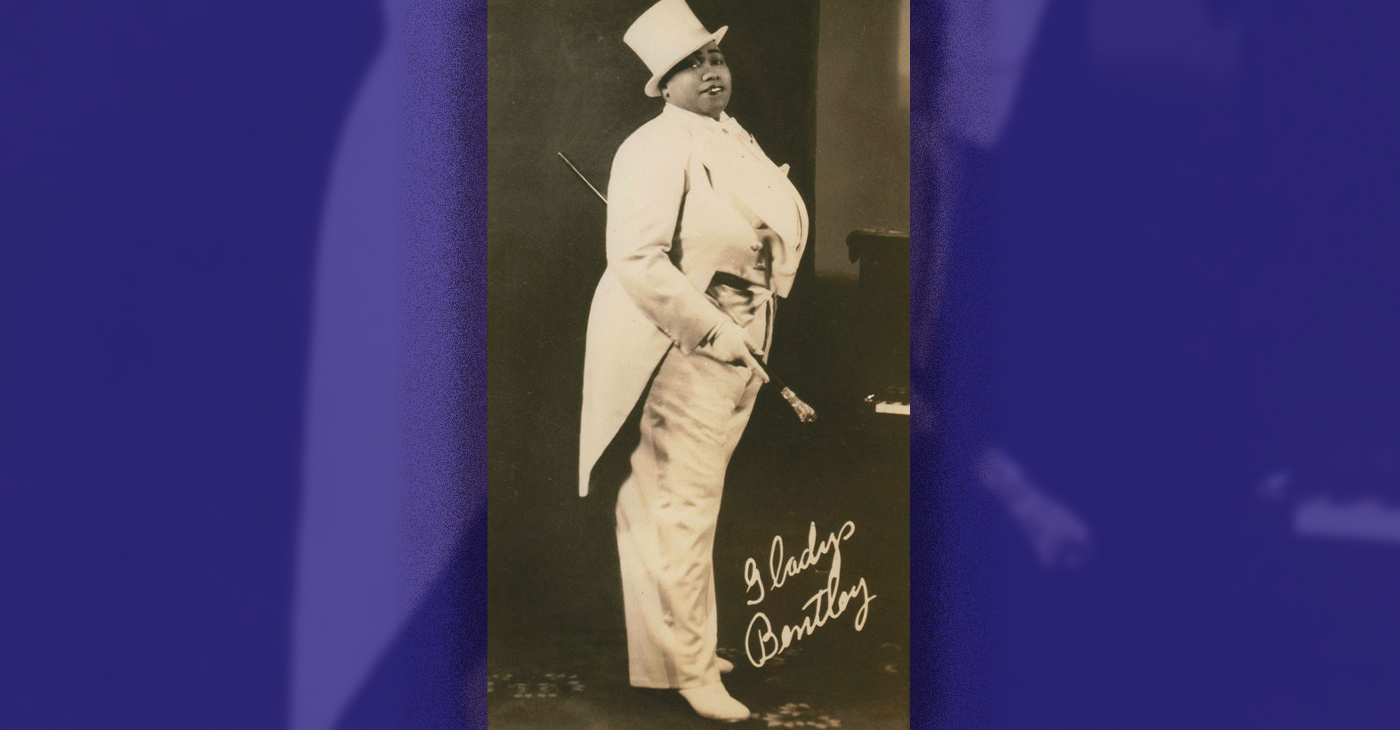
In 1934, New York City’s King’s Terrace nightclub faced closure after complaints about its “dirty songs.” The venue had been hosting a troupe led by Gladys Bentley, an audacious piano-playing blues artist who thrilled and scandalized audiences with her provocative music.

By Tamara Shiloh
In 1934, New York City’s King’s Terrace nightclub faced closure after complaints about its “dirty songs.” The venue had been hosting a troupe led by Gladys Bentley, an audacious piano-playing blues artist who thrilled and scandalized audiences with her provocative music.
Born in Phila., Pa., Bentley arrived in Harlem around 1925 at the age of 16 and became part of the vibrant artistic community during the influential Harlem Renaissance. Proudly embracing her identity as an African American woman who loved other women, donned men’s clothing, and sang risqué songs, Bentley challenged societal norms.
Although Bentley’s performances prevented her from gaining mainstream recognition and limited her inclusion in history books, her portraits now grace the African American History Museum’s music collections.
Starting her career in Harlem’s rent party circuit, Bentley wowed audiences with her deep, growling voice and scatting skills. She fearlessly added explicit lyrics to popular tunes, leaving a lasting impact on her listeners.
While her popularity soared in the rent party scene, Bentley also pursued opportunities in established Harlem nightclubs. At the Mad House on 133rd Street, she convinced the skeptical boss to give her a chance.
Bentley’s energetic piano-playing and unique style of fashion, featuring immaculate dress shirts, bow ties, oxfords, and short Eton jackets, set her apart as a “male impersonator.” Her flirtatious interactions with women in the audience captivated all who witnessed her performances.
As Bentley’s career flourished, she graced prominent Harlem venues such as the Cotton Club and the Clam House, a renowned gay speakeasy. Her act attracted diverse audiences, including both African Americans and white patrons. Writers like Carl van Vechten were drawn to Bentley’s talent, featuring her as a character in their works.
In the 1930s, she headlined at Harlem’s Ubangi house, where she was backed by a chorus line of drag queens.
With the repeal of Prohibition, the club scene in Harlem declined. She relocated to Southern California, where she was billed as “America’s Greatest Sepia Piano Player” and the “Brown Bomber of Sophisticated Songs” according to Wikipedia. She continued performing in upscale venues but in a more subdued manner than her earlier days in Harlem. Harassed for wearing men’s clothing, she began facing scrutiny during the repressive McCarthy era in the 1950s.
In a 1952 article for Ebony magazine titled “I Am a Woman Again,” Bentley shared her life story. She recounted her glamorous life as a performer and her personal struggles existing in a realm between traditional gender boundaries. Bentley claimed to have undergone medical treatment that awakened her “womanliness” and mentioned her marriages. However, the veracity of these claims remains uncertain.
Bentley continued her career for a few more years but succumbed to pneumonia in 1960. Today, her story is being rediscovered and celebrated as that of a gender outlaw and a pioneer of self-expression.
Bentley’s defiance of societal norms serves as a reminder of the power of self-expression, resilience, and the courage to challenge expectations. Her legacy inspires individuals to embrace their true selves fearlessly.
Bentley’s contributions to the Harlem Renaissance and her unyielding embrace of her identity remain impactful. Her audacity and refusal to conform continue to inspire generations. Gladys Bentley, an extraordinary performer, trailblazer, and symbol of empowerment, leaves a lasting impression on those who follow her path.










Activism
Oakland Post: Week of April 1 – 7, 2026
The printed Weekly Edition of the Oakland Post: Week of April 1 – 7, 2026
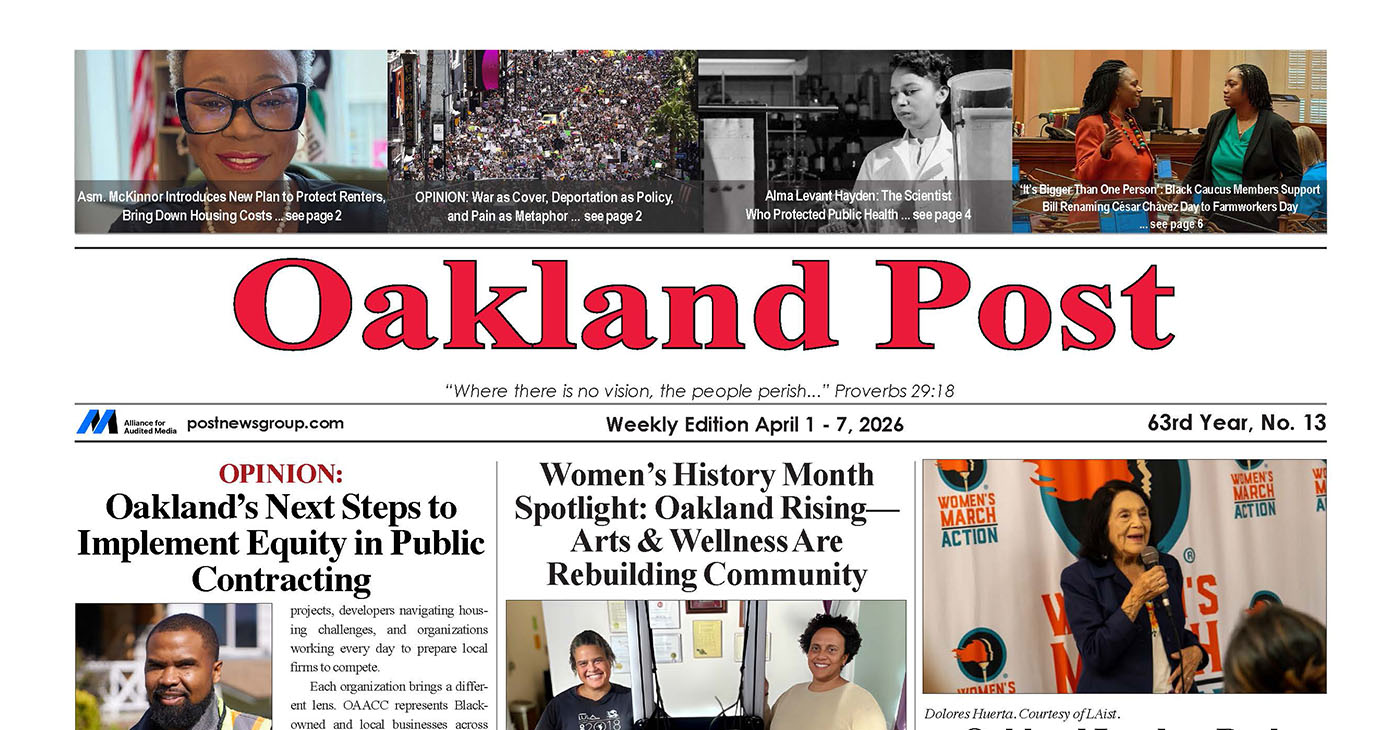
To enlarge your view of this issue, use the slider, magnifying glass icon or full page icon in the lower right corner of the browser window.
Activism
Oakland Post: Week of March 18 – 24, 2026
The printed Weekly Edition of the Oakland Post: Week of March 18 – 24, 2026

To enlarge your view of this issue, use the slider, magnifying glass icon or full page icon in the lower right corner of the browser window.
Activism
Oakland Post: Week of March 11 -17, 2026
The printed Weekly Edition of the Oakland Post: Week of March 11 – 17, 2026
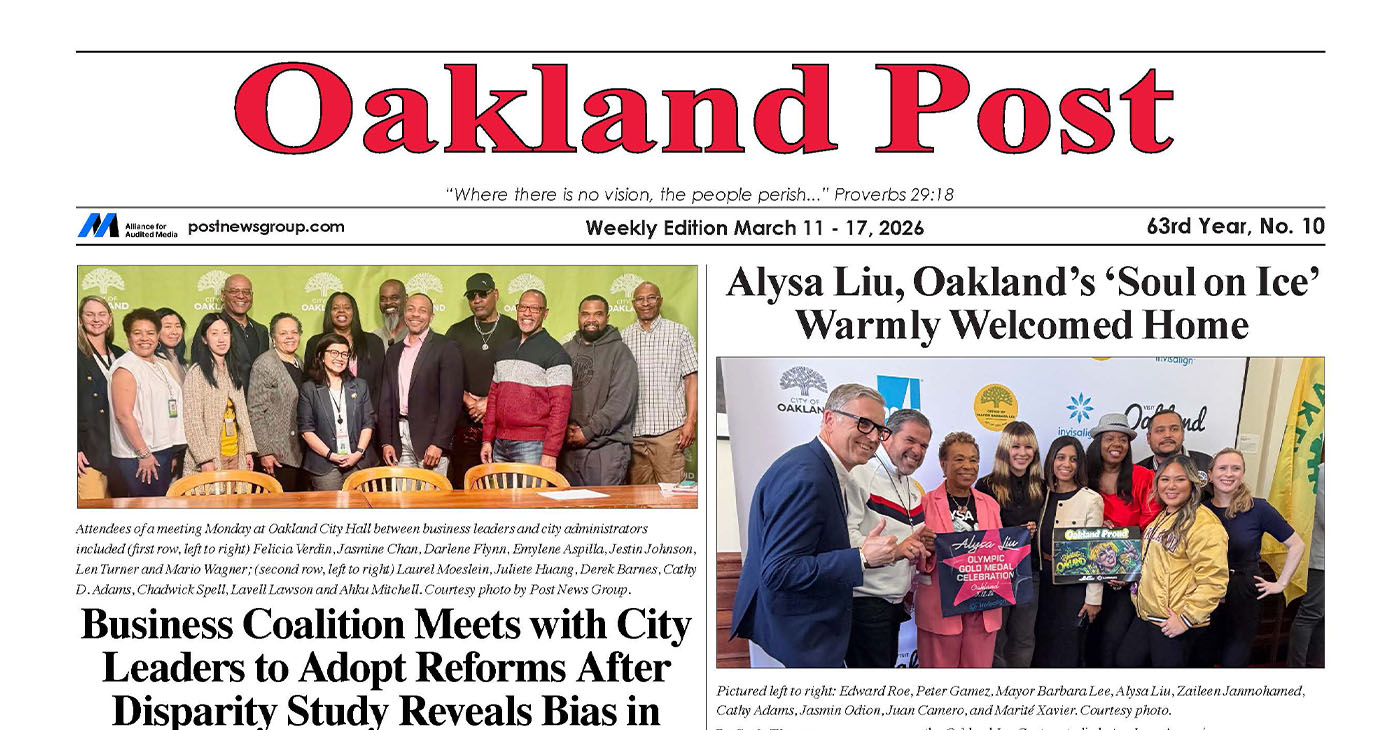
To enlarge your view of this issue, use the slider, magnifying glass icon or full page icon in the lower right corner of the browser window.

WORK FROM HOME
Home-based business with potential monthly income of $10K+ per month. A proven training system and website provided to maximize business effectiveness. Perfect job to earn side and primary income. Contact Lynne for more details: Lynne4npusa@gmail.com 800-334-0540


Oakland Post: Week of April 1 – 7, 2026

Black Artists in America, Installation Three Wraps at the Dixon Gallery and Gardens

Grief, Advocacy, and Education: A Counselor Reflects on Black Maternal Health

Future of Florida’s Black History Museum in Limbo

New Research Shows the Many Benefits of Early Learning

South Hampton K-8 Students Among Top 10 Finalists for Samsung’s ‘Solve for Tomorrow’ Competition

Cuba: No Negotiation with US on the President or Political System

Brooklyn Academy of Music Names Jamaican-Born Tamara McCaw as President

Trinidad & Tobego – U.S. Launches WhatsApp Channel for American Citizens in the Country

Oakland Post: Week of March 18 – 24, 2026

AI Innovation vs. Ethics and Environmental Impact

AI, Web3, and Digital Reparations

What If You Owned Your AI Agent?

Season 7, Episode 3 – January Reporter’s Roundtable 📱

Season 7, Episode 3 – January Reporter’s Roundtable

Reflecting on Black History Milestones in Birmingham AL

Oakland Post: Week of February 25 – March 3, 2026

PRESS ROOM: NBA Hall of Fame Nominee Terry Cummings Joins 100 Black Men of DeKalb County to Launch Victory & Values Initiative

Oakland Post: Week of March 4 – 10, 2026

Trump’s MAGA Allies are Creating Executive Order Plan to Steal the 2026 Midterms

U.S. manufacturing rebounds – how foundry services are adapting to rising demand

Poll Shows Support for Policies That Help Families Afford Child Care

OP-ED: One Hundred Years of Black Workers Telling the Truth

Oakland Post: Week of March 11 -17, 2026

Advancements in solar technology that are changing the way we power the world
Oakland Post: Week of March 18 – 24, 2026

Woman’s Search for Family’s Roots Leads to Ancestor John T. Ward – A Successful Entrepreneur and Conductor on the Underground Railroad

COMMENTARY: Women of Color Shape Our Past and Future

PRESS ROOM: Civil Rights TV Launches in Selma as the World’s First 24/7 Civil Rights Television Network

Financial Wellness and Mental Health: Managing Money Stress in College

Hyundai Ioniq 5 Parking, Safety, and 360 View #shorts

2025 Ioniq 5 New Wiper & Powerful Performance! #shorts

Electric SUV Range: Is 259 Miles Enough? #shorts

EV Charging: How Fast Can You Charge an Electric Vehicle? #shorts

Biometric Cooling… Messaging Seats…Come on! 2025 Infiniti QX80 Autograph 4WD

Charged Up: Witness the Magic of a Fully Electric Car! #shorts

Range Rover Sport PHEV Included…: See What’s Inside This Luxury SUV! #shorts

Invisible Hood View: Perfect Parking with X-Ray Vision! #shorts

AI Is Reshaping Black Healthcare: Promise, Peril, and the Push for Improved Results in California

ESSAY: Technology and Medicine, a Primary Care Point of View

Sanctuary Cities

The RESISTANCE – FREEDOM NOW

STATE OF THE PEOPLE: Freddie

ECONOMIC BOYCOTT DAY!!!!!

I told You So
-
 Activism3 weeks ago
Oakland Post: Week of March 11 -17, 2026
-
 Activism2 weeks ago
Oakland Post: Week of March 18 – 24, 2026
-
 #NNPA BlackPress4 weeks ago
Woman’s Search for Family’s Roots Leads to Ancestor John T. Ward – A Successful Entrepreneur and Conductor on the Underground Railroad
-
 #NNPA BlackPress4 weeks ago
COMMENTARY: Women of Color Shape Our Past and Future
-
 Advice3 weeks ago
Financial Wellness and Mental Health: Managing Money Stress in College
-

 #NNPA BlackPress4 weeks ago
Advocates Raise Alarm Over ICE Operation, MOU and Detention Risks in Baltimore County
-

 #NNPA BlackPress4 weeks ago
Pete Buttigieg to Join Mayor Randall Woodfin for Community Town Hall in Birmingham
-
 #NNPA BlackPress2 weeks ago
Brooklyn Academy of Music Names Jamaican-Born Tamara McCaw as President
