
Black History
Descendants of Enslaved Africans to Receive $50 Million as Part of Wealth-Building Initiative
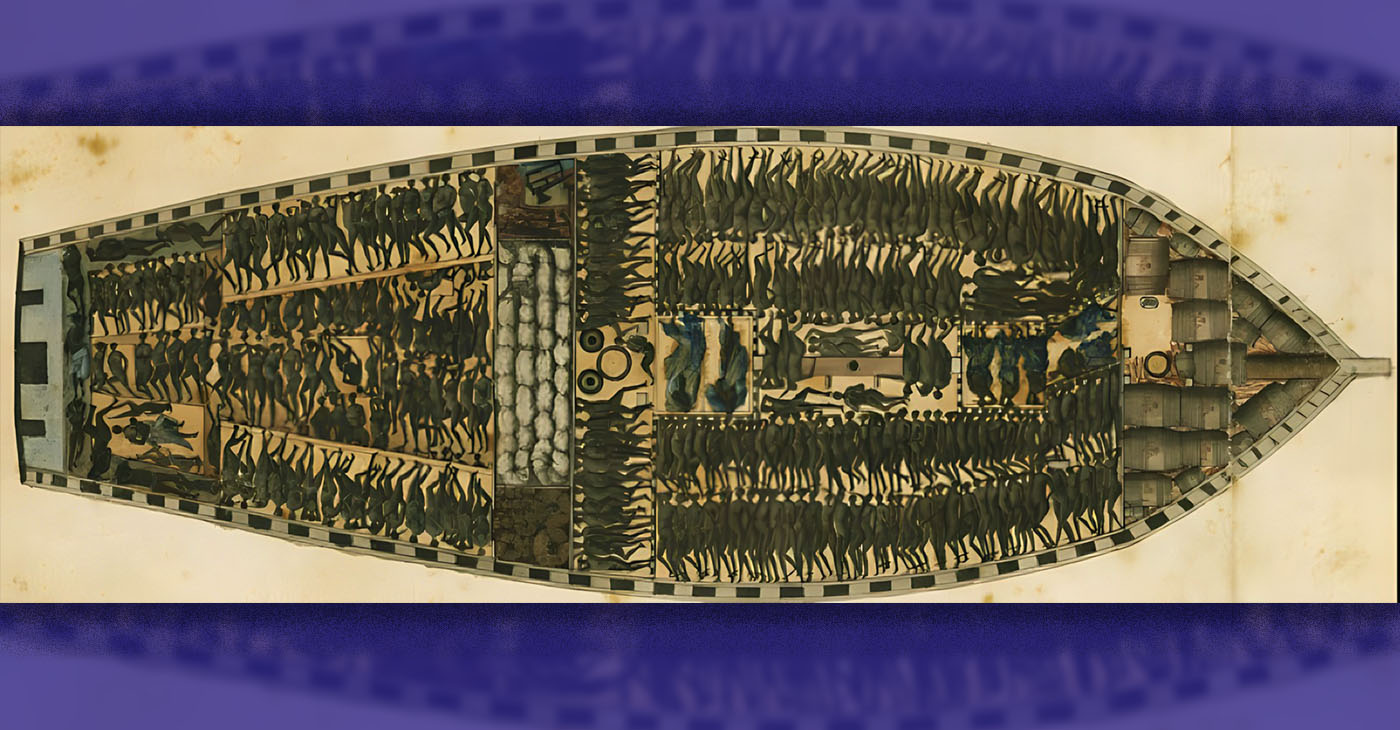
An ambitious wealth-building initiative will provide 800 Black residents of Minnesota, South Dakota and North Dakota with $50,000 grants over the next eight years to support economic justice and financial well-being for descendants of enslaved Africans during the trans-Atlantic slave trade.

By Niara Savage, published in the Minnesota Spokesman-Recorder, an NNPA member
The promise of 40 acres and a mule
An ambitious wealth-building initiative will provide 800 Black residents of Minnesota, South Dakota and North Dakota with $50,000 grants over the next eight years to support economic justice and financial well-being for descendants of enslaved Africans during the trans-Atlantic slave trade.
The $50 million Open Road Fund, financed by the Bush Foundation headquartered in St. Paul, is intended to address race-based economic disparities and cultivate Black wealth. Indeed, the grants should not be labeled as “reparations” because the funds are simply not enough to repair the generational harms inflicted by the institution of slavery, said Danielle Mkali, senior director of community wealth-building at Nexus Community Partners. The nonprofit is stewarding the funds through community engagement and disbursement.
“It shares a lot of the spirit of what people think of when they think about reparations, and the reason why we are being so clear about distinguishing the Open Road Fund from reparations is that, as it’s designed now…it’s not nearly enough in terms of reparations for what is owed to Black descendants of enslaved African people,” Mkali said.
“What reparations should do and will do is impact every descendant of enslaved African people. It would be a profound and significant apology from our state governments, from our national governments. There would be a profound investment financially, educationally, with all kinds of different resources that attempt to acknowledge what descendants of enslaved African people have endured, and what our ancestors have endured,” Mkali added, noting that the fund will only reach about 100 people each year through 2031.
A 2022 study by WalletHub found that Minnesota has the third-largest racial wealth gap in the country behind Wisconsin and Washington, D.C. In 2018, White Minnesotans’ median household income was $73,027 while the median Black household income was less than half that figure at $36,849.
“We don’t want people to think, ‘Oh well, the Black folks in Minnesota, North and South Dakota are good now.’ We aren’t,” Mkali said.
Earlier this year, the St. Paul City Council took a step toward addressing racial disparities in the city when it established the Saint Paul Recovery Act Community Reparations Commission to serve as an advisory body to the city council and mayor on repairing damage caused by systemic racism in the city that led to racial disparities in generational wealth, homeownership, health care, education, employment and fairness within the criminal justice system among Black descendants of enslaved Africans.
Recipients of the $50,000 Open Road Fund grants can use the money for a variety of wealth-building projects, including buying a home, paying off debt, estate planning, investing in life insurance, covering tuition costs or starting a business. People can apply for the grants as individuals or as a part of a group on the Nexus Community Partners website (https://www.nexuscp.org/open-road-fund/).
Applicants’ goals must be aligned with one of five categories of wealth-building including housing and housing stability, education, financial well-being, health and healing and ownership and economic justice.
The application for the Open Road Fund opened on June 19 (Juneteenth) and will close on July 28. To be eligible, applicants must be aged 14 or older, a resident of Minnesota, South Dakota, or North Dakota, and a descendant of an African person enslaved during the trans-Atlantic slave trade. There are no income caps or minimums. A separate $50 million trust aims to support Native and Indigenous people in the region.
In a two-part process, applicants will first complete initial registration that confirms eligibility for the grant and then discuss how they hope to use the money to achieve their wealth-building goals. A diverse panel composed of individuals who also meet the eligibility requirements for applicants will review applications.
After passing the initial application phase, 100 applicants will be selected at random to receive the awards. “If you’ve completed the application fully, and you’ve said what your wealth-building project will be, you will be put into the randomization tool,” Mkali said. “We’re not saying one wealth-building project has more merit than another wealth-building project.”
Single parents, people with disabilities, formerly incarcerated individuals, senior citizens, and members of the LGBT community are especially encouraged to apply. Recipients will be required to attend orientation and training workshops and complete an evaluation survey one year after receiving the funds. They’ll also have access to educational wealth-building webinars.
Nexus Community Partners hopes the Open Road Fund will encourage more funders to release dollars directly into the Black community.
“The stipulation from the beginning from the Bush Foundation was that the dollars needed to go directly into individual’s hands and not be granted to nonprofit organizations. The purpose of the fund would be to directly impact people’s individual wealth-building,” Mkali said.





Activism
Oakland Post: Week of March 18 – 24, 2026
The printed Weekly Edition of the Oakland Post: Week of March 18 – 24, 2026
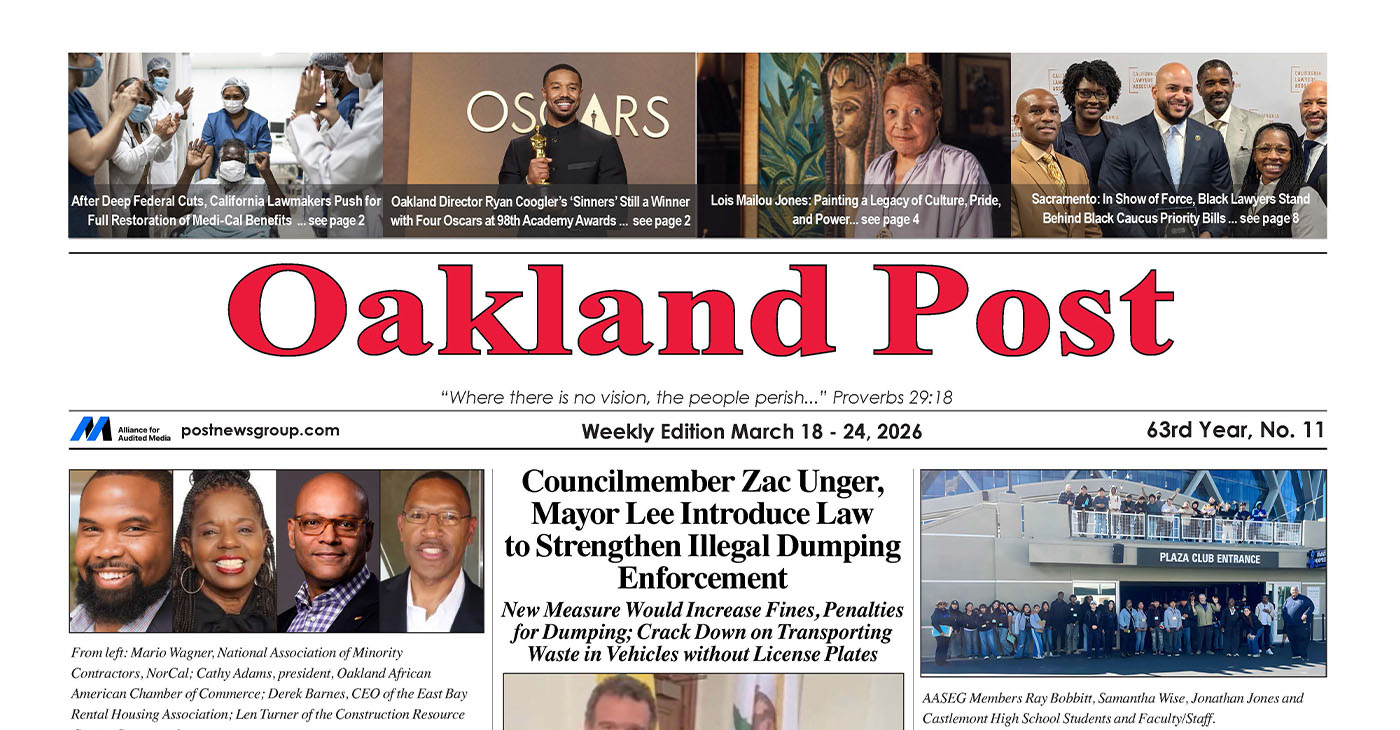
To enlarge your view of this issue, use the slider, magnifying glass icon or full page icon in the lower right corner of the browser window.
Activism
Oakland Post: Week of March 11 -17, 2026
The printed Weekly Edition of the Oakland Post: Week of March 11 – 17, 2026
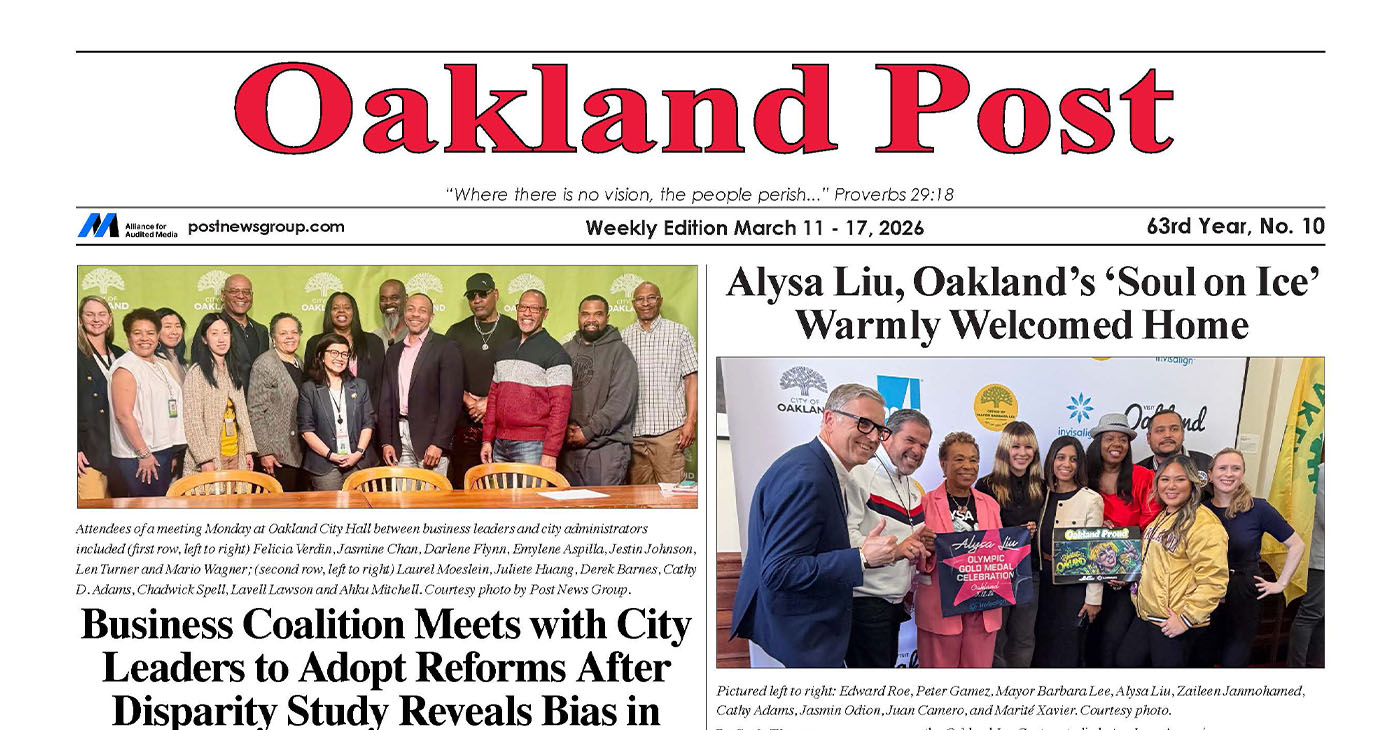
To enlarge your view of this issue, use the slider, magnifying glass icon or full page icon in the lower right corner of the browser window.
Activism
Oakland Post: Week of March 4 – 10, 2026
The printed Weekly Edition of the Oakland Post: Week of March 4 – 10, 2026

To enlarge your view of this issue, use the slider, magnifying glass icon or full page icon in the lower right corner of the browser window.

WORK FROM HOME
Home-based business with potential monthly income of $10K+ per month. A proven training system and website provided to maximize business effectiveness. Perfect job to earn side and primary income. Contact Lynne for more details: Lynne4npusa@gmail.com 800-334-0540


Black Artists in America, Installation Three Wraps at the Dixon Gallery and Gardens

Grief, Advocacy, and Education: A Counselor Reflects on Black Maternal Health

Future of Florida’s Black History Museum in Limbo

New Research Shows the Many Benefits of Early Learning

South Hampton K-8 Students Among Top 10 Finalists for Samsung’s ‘Solve for Tomorrow’ Competition

Cuba: No Negotiation with US on the President or Political System

Brooklyn Academy of Music Names Jamaican-Born Tamara McCaw as President

Trinidad & Tobego – U.S. Launches WhatsApp Channel for American Citizens in the Country

Oakland Post: Week of March 18 – 24, 2026

AI Innovation vs. Ethics and Environmental Impact

AI, Web3, and Digital Reparations

What If You Owned Your AI Agent?

Season 7, Episode 3 – January Reporter’s Roundtable 📱

Season 7, Episode 3 – January Reporter’s Roundtable

AI, Media, and Power | Part 2, Real-World Impacts and Tradeoffs

Oakland Post: Week of February 11 – 17, 2026

Reflecting on Black History Milestones in Birmingham AL

CITY OF SAN LEANDRO STATE OF CALIFORNIA PUBLIC WORKS DEPARTMENT ENGINEERING DIVISION NOTICE TO BIDDERS FOR ANNUAL STREET OVERLAY/REHABILITATION 2019-21 – PHASE III

Oakland Post: Week of February 18 – 24, 2026

PRESS ROOM: NBA Hall of Fame Nominee Terry Cummings Joins 100 Black Men of DeKalb County to Launch Victory & Values Initiative

Oakland Post: Week of February 25 – March 3, 2026

Trump’s MAGA Allies are Creating Executive Order Plan to Steal the 2026 Midterms

U.S. manufacturing rebounds – how foundry services are adapting to rising demand

OP-ED: One Hundred Years of Black Workers Telling the Truth

Chase Oakland Community Center Hosts Alley-Oop Accelerator Building Community and Opportunity for Bay Area Entrepreneurs

Advancements in solar technology that are changing the way we power the world

Poll Shows Support for Policies That Help Families Afford Child Care

Oakland Post: Week of March 4 – 10, 2026

PRESS ROOM: Civil Rights TV Launches in Selma as the World’s First 24/7 Civil Rights Television Network

Woman’s Search for Family’s Roots Leads to Ancestor John T. Ward – A Successful Entrepreneur and Conductor on the Underground Railroad

Hyundai Ioniq 5 Parking, Safety, and 360 View #shorts

2025 Ioniq 5 New Wiper & Powerful Performance! #shorts

Electric SUV Range: Is 259 Miles Enough? #shorts

EV Charging: How Fast Can You Charge an Electric Vehicle? #shorts

Biometric Cooling… Messaging Seats…Come on! 2025 Infiniti QX80 Autograph 4WD

Charged Up: Witness the Magic of a Fully Electric Car! #shorts

Range Rover Sport PHEV Included…: See What’s Inside This Luxury SUV! #shorts

Invisible Hood View: Perfect Parking with X-Ray Vision! #shorts

AI Is Reshaping Black Healthcare: Promise, Peril, and the Push for Improved Results in California

ESSAY: Technology and Medicine, a Primary Care Point of View

Sanctuary Cities

The RESISTANCE – FREEDOM NOW

STATE OF THE PEOPLE: Freddie

ECONOMIC BOYCOTT DAY!!!!!

I told You So
-
 Activism4 weeks ago
Oakland Post: Week of March 4 – 10, 2026
-
 #NNPA BlackPress3 weeks ago
Woman’s Search for Family’s Roots Leads to Ancestor John T. Ward – A Successful Entrepreneur and Conductor on the Underground Railroad
-

 #NNPA BlackPress4 weeks ago
OP-ED: NNPA Launches 2026 “Leadership Matters” Video Series
-

 #NNPA BlackPress3 weeks ago
Advocates Raise Alarm Over ICE Operation, MOU and Detention Risks in Baltimore County
-

 #NNPA BlackPress3 weeks ago
COMMENTARY: Women of Color Shape Our Past and Future
-

 #NNPA BlackPress3 weeks ago
Pete Buttigieg to Join Mayor Randall Woodfin for Community Town Hall in Birmingham
-
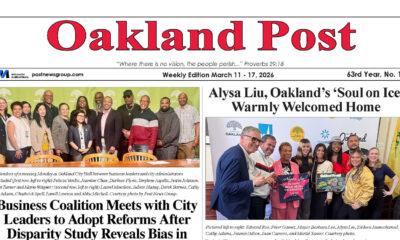
 Activism2 weeks ago
Oakland Post: Week of March 11 -17, 2026
-

 #NNPA BlackPress4 weeks ago
PRESS ROOM: PMG and Cranbrook Horizons-Upward Bound Launch Journey Fellowship Cohort 2
