
Activism
Dr. Kimberly Mayfield Working to Bring a ‘Black-Affirming University’ (HBCU) to Oakland
The goal, according to Mayfield, is to “create a Black-serving institution in Oakland, which means that 50% or more of the student body would be African American.” The Oakland program could either be an HBCU, which is preferable, or a Black-serving institution unaffiliated with other HBCUs. The program itself could become a stand-alone institution or an assemblage of different programs on a single campus.

By Ken Epstein
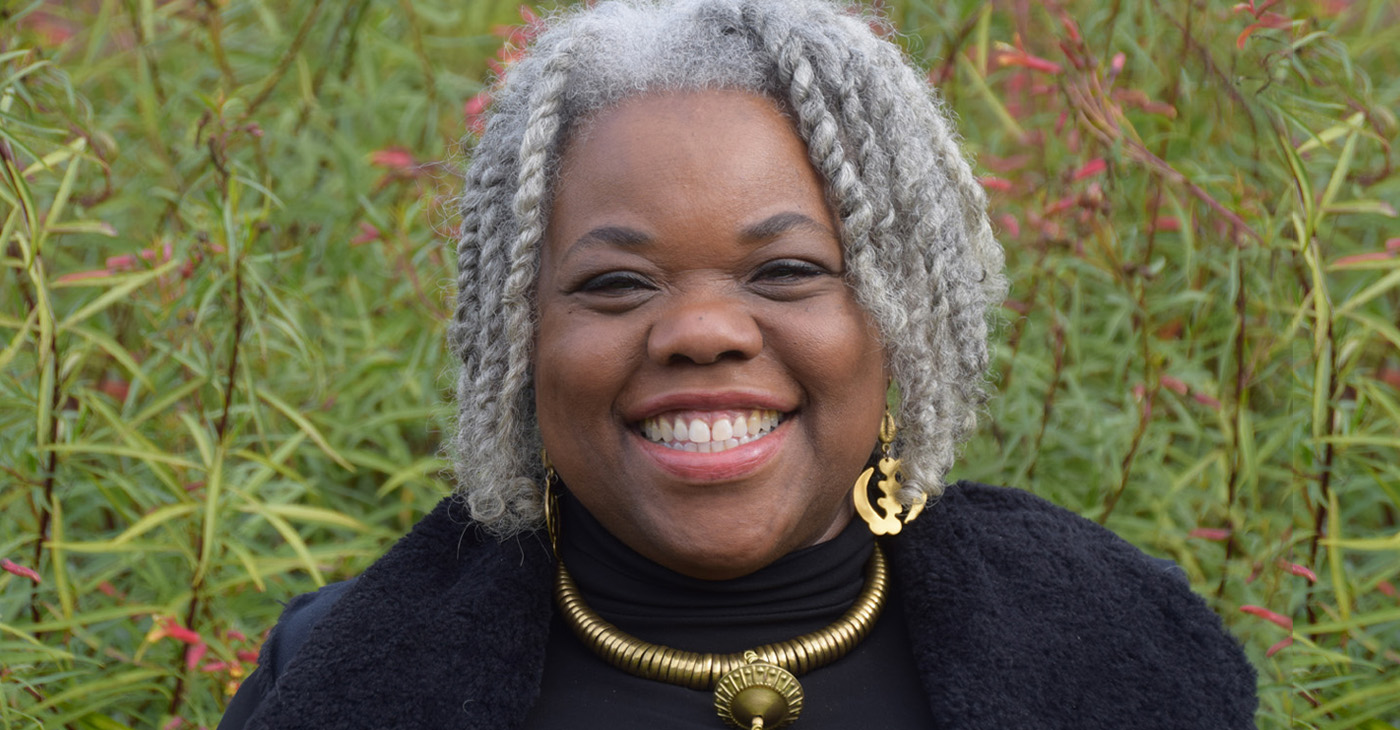
Dr. Kimberly Mayfield, who, until recently served as deputy mayor of Oakland, has been working for several years with educators and community groups to create a Historically Black College and University (HBCU) or other Black-serving institution of higher education in Oakland — potentially on the fully operational campus of Holy Names University in East Oakland, which went out of business in 2023.
The goal, according to Mayfield, is to “create a Black-serving institution in Oakland, which means that 50% or more of the student body would be African American.”
The Oakland program could either be an HBCU, which is preferable, or a Black-serving institution unaffiliated with other HBCUs. The program itself could become a stand-alone institution or an assemblage of different programs on a single campus.
“It could be a consortium model where programs from existing HBCUs locate in Oakland,” similar to the Atlanta Union Center in Georgia, which offers courses from Morehouse, Spelman, Morris Brown, and Clark Atlanta HBCUs, she said.
“There are four different institutions at Atlanta Union, and students can take classes from the different schools. They’re all based in the same place, but the programs are run by different institutions,” said Mayfield.
Key to the program would be the culture of the school, which would be “Black affirming,” offering students a supportive environment that recognizes them as individuals, she said. The program would be campus-based and include online course offerings.
Courses could be offered in downtown Oakland in office buildings in the Black Business and Arts District as well as at the Holy Names site, which was sold to developers for $64 million and is presently for sale.
Holy Names was a private Roman Catholic university in Oakland founded in 1868 by the Canada-based Sisters of the Holy Names of Jesus and Mary with whom the university remained affiliated until it closed after facing several years of budget shortfalls.
Before serving as Deputy Mayor, Dr. Mayfield began her career as an educator in the Oakland Unified School District and served as dean of the School of Education and Liberal Arts and the vice president for external relations and strategic partnerships at Holy Names.
She said she has already found a lot of interest from various sources for donating funds to start the school, she said. “We have reached out to the East Bay Community Foundation, to set up the necessary structures to receive money to help with strategic planning,” and all other aspects investors want to see, including an internet presence.
The team working on the initiative has 16 members and is led by Mayfield, Councilmember Carroll Fife, and retired attorney Kim Thompson. They recently attended a conference of HBCU leaders held by the United Negro College Fund, where the Oakland proposal was greeted with enthusiasm.
Mayfield emphasized that the goal of bringing an HBCU is something that has broad support in Oakland and has been a subject of growing interest for several decades.
“This is a community-driven initiative. While former Mayor Sheng Thao’s support was important and allowed us to get organized in a certain way, it doesn’t end with her leadership” she said, adding that outgoing Congresswoman Barbara Lee and other mayoral candidates have expressed support for this initiative.
Mayfield said she and her team have been in conversations with leaders of some HBCUs, which are interested in expanding to the West Coast but face financial constraints.
“It’s the racial wealth gap, which affects HBCUs,” the same as the rest of Black America, she said. “They just don’t have the same financial resources that predominantly white institutions have. It’s hard for them to think about a completely separate, sustained campus, when they have to deal with preserving the infrastructure on their main campus.”
She said Holy Names University had 1,400 students at its largest enrollment, with no online component. “We could easily have 1,000 students matriculating on campus, and another online population of students, virtually.”
“We’d like all the virtual students to be close enough to come to campus and participate in the campus culture,” because that’s the difference an HBCU makes, Mayfield said. “It cares for students, sees you as a person, not a number, in touch with wraparound services, calling you if you’re not in class.”
“We want to have an institution that knows who the students are,” she said. “You know their brilliance when they walk in, and you’re doing everything possible academically for them to succeed and thrive.”





Activism
Oakland Post: Week of March 18 – 24, 2026
The printed Weekly Edition of the Oakland Post: Week of March 18 – 24, 2026

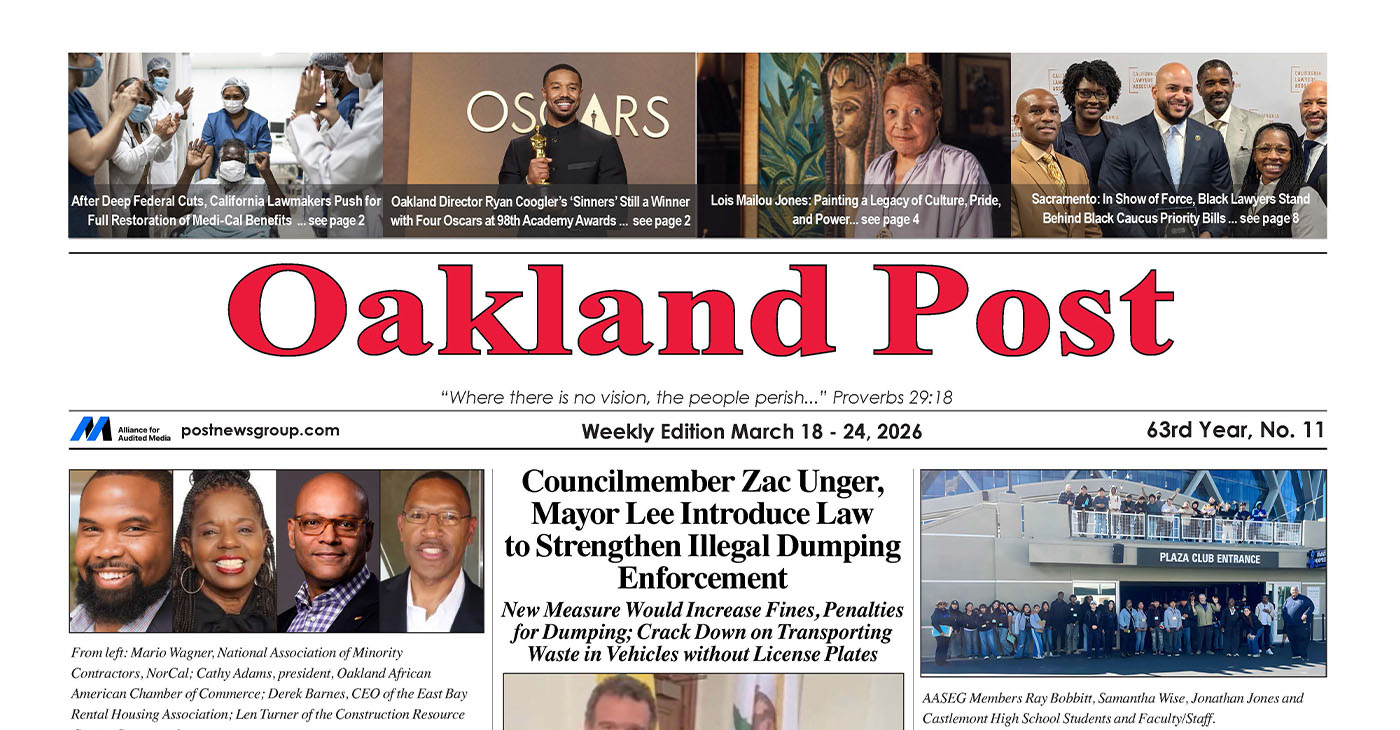
To enlarge your view of this issue, use the slider, magnifying glass icon or full page icon in the lower right corner of the browser window.

Activism
Oakland Post: Week of March 11 -17, 2026
The printed Weekly Edition of the Oakland Post: Week of March 11 – 17, 2026
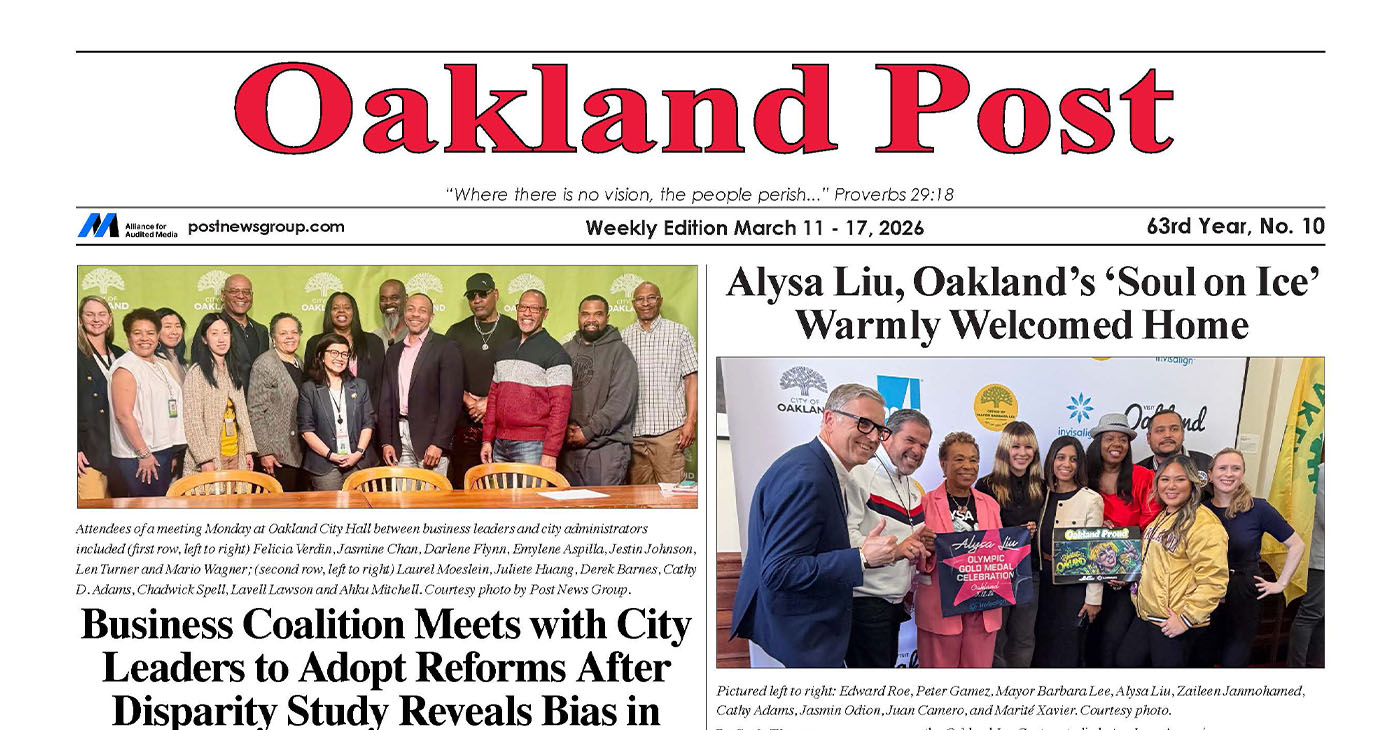
To enlarge your view of this issue, use the slider, magnifying glass icon or full page icon in the lower right corner of the browser window.
Activism
Oakland Post: Week of March 4 – 10, 2026
The printed Weekly Edition of the Oakland Post: Week of March 4 – 10, 2026

To enlarge your view of this issue, use the slider, magnifying glass icon or full page icon in the lower right corner of the browser window.

WORK FROM HOME
Home-based business with potential monthly income of $10K+ per month. A proven training system and website provided to maximize business effectiveness. Perfect job to earn side and primary income. Contact Lynne for more details: Lynne4npusa@gmail.com 800-334-0540


Black Artists in America, Installation Three Wraps at the Dixon Gallery and Gardens

Grief, Advocacy, and Education: A Counselor Reflects on Black Maternal Health

Future of Florida’s Black History Museum in Limbo

New Research Shows the Many Benefits of Early Learning

South Hampton K-8 Students Among Top 10 Finalists for Samsung’s ‘Solve for Tomorrow’ Competition

Cuba: No Negotiation with US on the President or Political System

Brooklyn Academy of Music Names Jamaican-Born Tamara McCaw as President

Trinidad & Tobego – U.S. Launches WhatsApp Channel for American Citizens in the Country

Oakland Post: Week of March 18 – 24, 2026

AI Innovation vs. Ethics and Environmental Impact

AI, Web3, and Digital Reparations

What If You Owned Your AI Agent?

Season 7, Episode 3 – January Reporter’s Roundtable 📱

Season 7, Episode 3 – January Reporter’s Roundtable

AI, Media, and Power | Part 2, Real-World Impacts and Tradeoffs

Oakland Post: Week of February 11 – 17, 2026

Reflecting on Black History Milestones in Birmingham AL

CITY OF SAN LEANDRO STATE OF CALIFORNIA PUBLIC WORKS DEPARTMENT ENGINEERING DIVISION NOTICE TO BIDDERS FOR ANNUAL STREET OVERLAY/REHABILITATION 2019-21 – PHASE III

Oakland Post: Week of February 18 – 24, 2026

PRESS ROOM: NBA Hall of Fame Nominee Terry Cummings Joins 100 Black Men of DeKalb County to Launch Victory & Values Initiative

Oakland Post: Week of February 25 – March 3, 2026

Trump’s MAGA Allies are Creating Executive Order Plan to Steal the 2026 Midterms

U.S. manufacturing rebounds – how foundry services are adapting to rising demand

OP-ED: One Hundred Years of Black Workers Telling the Truth

Chase Oakland Community Center Hosts Alley-Oop Accelerator Building Community and Opportunity for Bay Area Entrepreneurs

Poll Shows Support for Policies That Help Families Afford Child Care

Oakland Post: Week of March 4 – 10, 2026

Advancements in solar technology that are changing the way we power the world

PRESS ROOM: Civil Rights TV Launches in Selma as the World’s First 24/7 Civil Rights Television Network

Woman’s Search for Family’s Roots Leads to Ancestor John T. Ward – A Successful Entrepreneur and Conductor on the Underground Railroad

Hyundai Ioniq 5 Parking, Safety, and 360 View #shorts

2025 Ioniq 5 New Wiper & Powerful Performance! #shorts

Electric SUV Range: Is 259 Miles Enough? #shorts

EV Charging: How Fast Can You Charge an Electric Vehicle? #shorts

Biometric Cooling… Messaging Seats…Come on! 2025 Infiniti QX80 Autograph 4WD

Charged Up: Witness the Magic of a Fully Electric Car! #shorts

Range Rover Sport PHEV Included…: See What’s Inside This Luxury SUV! #shorts

Invisible Hood View: Perfect Parking with X-Ray Vision! #shorts

AI Is Reshaping Black Healthcare: Promise, Peril, and the Push for Improved Results in California

ESSAY: Technology and Medicine, a Primary Care Point of View

Sanctuary Cities

The RESISTANCE – FREEDOM NOW

STATE OF THE PEOPLE: Freddie

ECONOMIC BOYCOTT DAY!!!!!

I told You So
-
 Activism4 weeks ago
Oakland Post: Week of March 4 – 10, 2026
-
 #NNPA BlackPress3 weeks ago
Woman’s Search for Family’s Roots Leads to Ancestor John T. Ward – A Successful Entrepreneur and Conductor on the Underground Railroad
-

 #NNPA BlackPress4 weeks ago
OP-ED: NNPA Launches 2026 “Leadership Matters” Video Series
-

 #NNPA BlackPress3 weeks ago
Advocates Raise Alarm Over ICE Operation, MOU and Detention Risks in Baltimore County
-

 #NNPA BlackPress3 weeks ago
COMMENTARY: Women of Color Shape Our Past and Future
-

 #NNPA BlackPress3 weeks ago
Pete Buttigieg to Join Mayor Randall Woodfin for Community Town Hall in Birmingham
-
 Activism2 weeks ago
Oakland Post: Week of March 11 -17, 2026
-

 #NNPA BlackPress4 weeks ago
PRESS ROOM: PMG and Cranbrook Horizons-Upward Bound Launch Journey Fellowship Cohort 2
