
Activism
Feds, State Take Steps to Ease Burden on Some Student Loan Borrowers
According to a report by California Student Loan and Debt Service Review Workgroup (CSLDSRW) — established under the state’s Budget Act of 2020 — and the National Center for Education Statistic (NCES), 84.9% of Blacks who earned bachelor’s degrees from 2015 to 2016 owed an average of $34,000 upon graduation.

By Antonio Ray Harvey | California Black Media
Lillian Lewis earned multiple degrees from California State University Sacramento.
Before the pandemic began, Lewis said, paying down the high student loan debt she accrued to cover her tuition and living expenses while in school put a strain on her monthly budget. Those arrears (“in the thousands”) with growing interest made it difficult for her to make ends meet.
But last month, Lewis and about 30,000 other American student loan borrowers across the United States received some unanticipated good news. The Biden administration announced a $2 billion relief program that expanded the Public Service Loan Forgiveness (PSLF) program.
“It took a huge load off my finances and will improve my credit, which was not bad anyway,” said Lewis, who does social work and now lives in Las Vegas. “It was taking forever to pay off. Now, I don’t have to worry anymore.”
PSLF wipes out student loan debt for borrowers who commit to public service careers or work full time for public or nonprofit organizations.
The relief program launched about three months before the federal government lifts a freeze on student loan payments on Jan. 31, 2022. In March 2020, as the COVID-19 pandemic gripped the country, the feds paused monthly payments for Americans who owe student loans, stopped all collection activity, and applied a temporary zero-interest rate to all debt.
In California, there are thousands of African Americans like Lewis: saddled with huge balances stemming from loans they took out to pay for tuition not covered by scholarships, living arrangements, textbooks, and other expenses.
In November, highlighting one borrower’s story, United States Education Secretary Miguel Cardona tweeted, “we are just getting started” to provide student debt relief for millions of Americans.
According to a report by California Student Loan and Debt Service Review Workgroup (CSLDSRW) — established under the state’s Budget Act of 2020 — and the National Center for Education Statistic (NCES), 84.9% of Blacks who earned bachelor’s degrees from 2015 to 2016 owed an average of $34,000 upon graduation.
CSLDSRW’s study also found that Californians of color default more on their student loans. Neighborhoods in the San Francisco Bay Area with the largest percentages of Black and Latino residents had 19.9% of borrowers in delinquency and 15% in default.
In Los Angeles, borrowers living in ZIP codes with high minority populations had double the amount of default rates than borrowers in ZIP codes that are predominantly white.
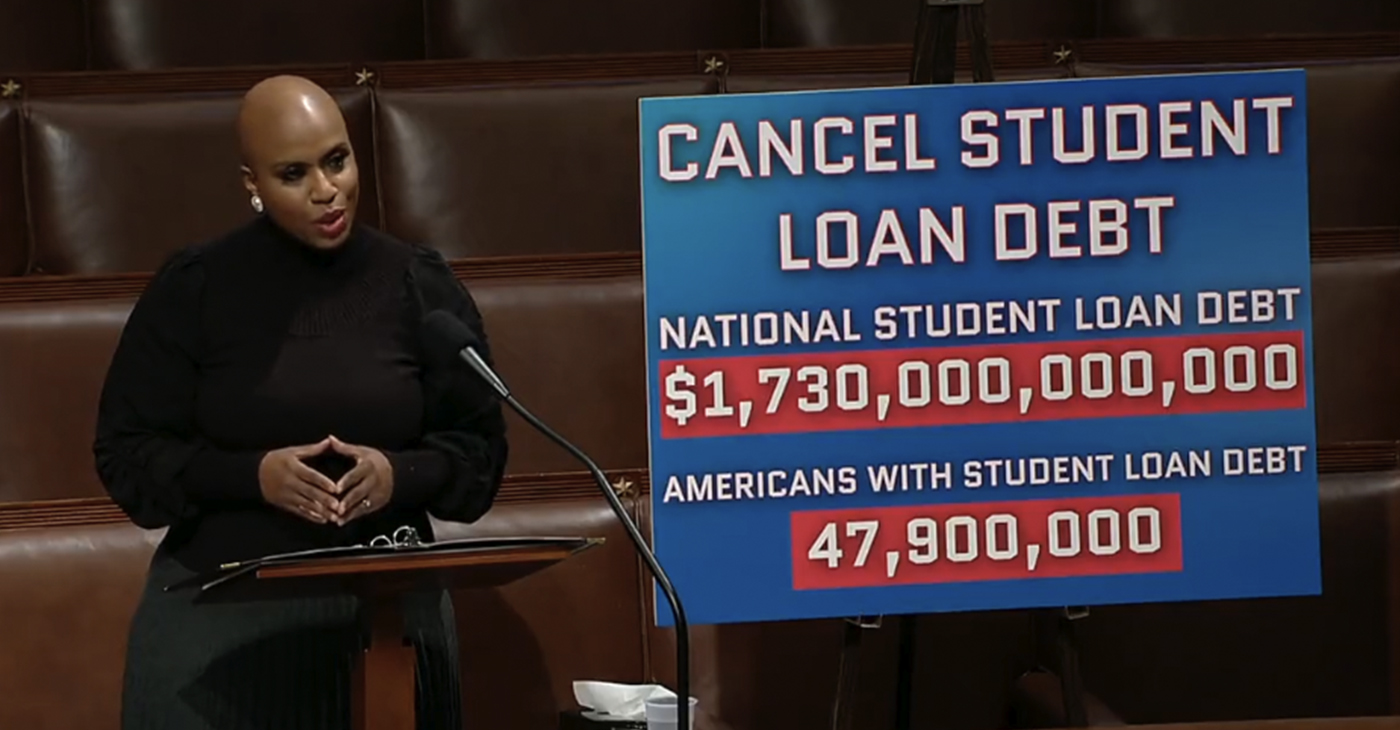
U.S. Congresswoman Ayanna Pressley (D-Massachusetts) told the media at an event hosted by the American Federation of Teachers earlier this year that she, too, had defaulted on her student loans.
Black women carry 20% more in student debt than white women, according to the American Association of University Women, an advocacy group that fights for fair pay and economic opportunities for women.
“Like 85% of Black students, I had to borrow; and like so many of those students, I had also defaulted on those loans. We know that Black and Brown students are five times more likely to default for those loans than our white counterparts,” said Pressley.
CSLDSRW’s reported that among all borrowers, Black women accrued more student debt, an average of $37,558, from their undergraduate studies than any other group.
According to EducationData.org, a website that addresses the rising cost of higher education, Black college graduates owe an average of $52,000 in student-loan debt – nearly $25,000 more than their white counterparts.
In October, Gov. Gavin Newsom signed Assembly Bill (AB) 424, the Private Student Loan Collection Reform Act, which places new documentation requirements on private student loan lenders before activating any collection activity. AB 424 becomes law on July 1, 2022.
“We’re turning commitments into reality by ensuring that our students have more access to high-quality educational opportunities, creating a change of course for generations to come and bolstering California’s innovation economy,” Newsom said when he signed the legislation.
“Californians have thrived at our world class universities for decades, but not everyone has had similar access – today that’s changing,” he continued. Everyone deserves a shot at the ‘California Dream.”
The U.S. Department of Education expects thousands more to benefit in the coming months from more federally funded debt relief programs.
Over 45 million Americans have a total of $1.7 trillion worth of student loan debt. Progressive lawmakers have pushed Biden to wipe out all federally held debts up to $50,000 and they are making efforts to stop repayments of loans.
“89% of student borrowers say they aren’t financially ready to resume student loan payments & 27% will be spending at least a third of their income on payments when they resume,” tweeted Sen. Elizabeth Warren (D-MA). “Student debt is dragging down our communities and economy@POTUS should #CancelStudentDebt.”












Activism
Oakland Post: Week of March 18 – 24, 2026
The printed Weekly Edition of the Oakland Post: Week of March 18 – 24, 2026

To enlarge your view of this issue, use the slider, magnifying glass icon or full page icon in the lower right corner of the browser window.
Activism
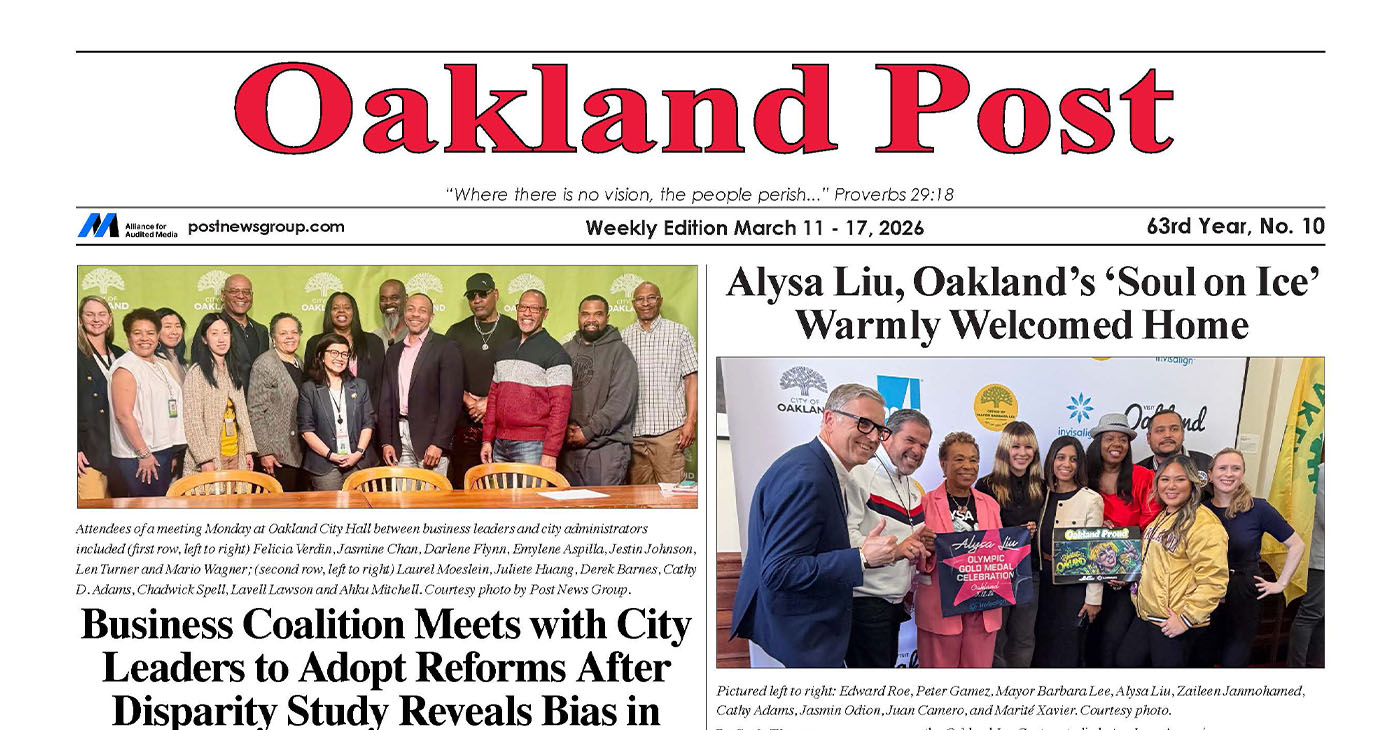
Oakland Post: Week of March 11 -17, 2026
The printed Weekly Edition of the Oakland Post: Week of March 11 – 17, 2026
To enlarge your view of this issue, use the slider, magnifying glass icon or full page icon in the lower right corner of the browser window.
Activism
Oakland Post: Week of March 4 – 10, 2026
The printed Weekly Edition of the Oakland Post: Week of March 4 – 10, 2026

To enlarge your view of this issue, use the slider, magnifying glass icon or full page icon in the lower right corner of the browser window.


WORK FROM HOME
Home-based business with potential monthly income of $10K+ per month. A proven training system and website provided to maximize business effectiveness. Perfect job to earn side and primary income. Contact Lynne for more details: Lynne4npusa@gmail.com 800-334-0540


Black Artists in America, Installation Three Wraps at the Dixon Gallery and Gardens

Grief, Advocacy, and Education: A Counselor Reflects on Black Maternal Health

Future of Florida’s Black History Museum in Limbo

New Research Shows the Many Benefits of Early Learning

South Hampton K-8 Students Among Top 10 Finalists for Samsung’s ‘Solve for Tomorrow’ Competition

Cuba: No Negotiation with US on the President or Political System

Brooklyn Academy of Music Names Jamaican-Born Tamara McCaw as President

Trinidad & Tobego – U.S. Launches WhatsApp Channel for American Citizens in the Country

Oakland Post: Week of March 18 – 24, 2026

AI Innovation vs. Ethics and Environmental Impact

AI, Web3, and Digital Reparations

What If You Owned Your AI Agent?

Season 7, Episode 3 – January Reporter’s Roundtable 📱

Season 7, Episode 3 – January Reporter’s Roundtable

AI, Media, and Power | Part 2, Real-World Impacts and Tradeoffs

Reflecting on Black History Milestones in Birmingham AL

CITY OF SAN LEANDRO STATE OF CALIFORNIA PUBLIC WORKS DEPARTMENT ENGINEERING DIVISION NOTICE TO BIDDERS FOR ANNUAL STREET OVERLAY/REHABILITATION 2019-21 – PHASE III

Oakland Post: Week of February 18 – 24, 2026

Oakland Post: Week of February 25 – March 3, 2026

PRESS ROOM: NBA Hall of Fame Nominee Terry Cummings Joins 100 Black Men of DeKalb County to Launch Victory & Values Initiative

Trump’s MAGA Allies are Creating Executive Order Plan to Steal the 2026 Midterms

U.S. manufacturing rebounds – how foundry services are adapting to rising demand

Chase Oakland Community Center Hosts Alley-Oop Accelerator Building Community and Opportunity for Bay Area Entrepreneurs

Oakland Post: Week of March 4 – 10, 2026

OP-ED: One Hundred Years of Black Workers Telling the Truth

Poll Shows Support for Policies That Help Families Afford Child Care

Advancements in solar technology that are changing the way we power the world

PRESS ROOM: Civil Rights TV Launches in Selma as the World’s First 24/7 Civil Rights Television Network

Woman’s Search for Family’s Roots Leads to Ancestor John T. Ward – A Successful Entrepreneur and Conductor on the Underground Railroad

Ghana Mourns a Son of the African World

Hyundai Ioniq 5 Parking, Safety, and 360 View #shorts

2025 Ioniq 5 New Wiper & Powerful Performance! #shorts

Electric SUV Range: Is 259 Miles Enough? #shorts

EV Charging: How Fast Can You Charge an Electric Vehicle? #shorts

Biometric Cooling… Messaging Seats…Come on! 2025 Infiniti QX80 Autograph 4WD

Charged Up: Witness the Magic of a Fully Electric Car! #shorts

Range Rover Sport PHEV Included…: See What’s Inside This Luxury SUV! #shorts

Invisible Hood View: Perfect Parking with X-Ray Vision! #shorts

AI Is Reshaping Black Healthcare: Promise, Peril, and the Push for Improved Results in California

ESSAY: Technology and Medicine, a Primary Care Point of View

Sanctuary Cities

The RESISTANCE – FREEDOM NOW

STATE OF THE PEOPLE: Freddie

ECONOMIC BOYCOTT DAY!!!!!

I told You So
-
 Activism4 weeks ago
Oakland Post: Week of March 4 – 10, 2026
-
 #NNPA BlackPress3 weeks ago
Woman’s Search for Family’s Roots Leads to Ancestor John T. Ward – A Successful Entrepreneur and Conductor on the Underground Railroad
-

 #NNPA BlackPress4 weeks ago
OP-ED: NNPA Launches 2026 “Leadership Matters” Video Series
-

 #NNPA BlackPress3 weeks ago
Advocates Raise Alarm Over ICE Operation, MOU and Detention Risks in Baltimore County
-

 #NNPA BlackPress3 weeks ago
COMMENTARY: Women of Color Shape Our Past and Future
-
 Activism2 weeks ago
Oakland Post: Week of March 11 -17, 2026
-

 #NNPA BlackPress3 weeks ago
Pete Buttigieg to Join Mayor Randall Woodfin for Community Town Hall in Birmingham
-

 Advice2 weeks ago
Financial Wellness and Mental Health: Managing Money Stress in College
