
California Black Media
Gov. Newsom Announces He Backs a Ban on Cellphones in Schools
Gov. Gavin Newsom wants to restrict the use of smartphones in K-12 schools statewide, he announced on Tuesday. The Governor stated his intentions amid warnings from President Joe Biden on the harmful impact of social media on children. The announcement followed a report released by the U.S. Surgeon General Vivek Murthy that calls on Congress to regulate social media platforms.


By California Black Media
Gov. Gavin Newsom wants to restrict the use of smartphones in K-12 schools statewide, he announced on Tuesday.
The Governor stated his intentions amid warnings from President Joe Biden on the harmful impact of social media on children. The announcement followed a report released by the U.S. Surgeon General Vivek Murthy that calls on Congress to regulate social media platforms.
Proposed regulations include warning labels on harmful content that may hurt minors active on social media. The Governor stated that he plans to sign a law that authorizes school districts to limit or ban the use of smartphones by students or require the supervision of a school employee.
“As the Surgeon General affirmed, social media is harming the mental health of our youth. Building on legislation I signed in 2019, I look forward to working with the Legislature to restrict the use of smartphones during the school day,” said Newsom.
“When children and teens are in school, they should be focused on their studies — not their screens,” he said.
In 2022, Newsom authored a letter urging companies in the tech industry to drop a lawsuit against the children’s online safety law he signed that same year. Newsom aims to take online safety laws a step further allowing school districts to ban or limit the use of smartphones to help protect children from the harmful effects of social media.
The California School Boards Association argues that any rules on the use of smartphones should be regulated by school districts as opposed to the state.
Troy Flint, the school board association’s spokesperson, said that school districts should make the final decision on regulations over smartphones.
“We support legislation which empowers school leaders to make policy decisions at a local level that reflect their community’s concerns and what’s necessary to support their students,” said Flint.
The Los Angeles Unified School District (LAUSD) supports Gov. Newsom’s plan to ban smartphones during school hours, stating that smartphones and devices distract students from learning and facilitate cyberbullying.
On June 18, LAUSD voted to ban the use of cellphones during the school day.
In a similar light, Sen. Henry Stern (D-Malibu) proposed SB 1283 earlier this year. If passed, the legislation will give school districts more authority to limit the use of social media at school. SB 1283 is currently under review in the Assembly Education Committee.
“It’s just too hard for every teacher, every school, or every parent to have to figure this out on their own,” said Stern. “There are sometimes when government just has to step in and make some bigger rules of the road.”
A similar bill, AB 3216, introduced by Assemblymembers Josh Hoover (R-Folsom), Josh Lowenthal (D-Long Beach) and Al Muratsuchi (D-Rolling Hills Estates), is being considered by the Senate Education Committee.
The bills would take effect in January if passed by the Legislature and is approved by the Board of Education in school districts that support the cellphone ban.











Activism
Up to the Job: How San Francisco’s PRC Is Providing Work Opportunities That Turn Into Lasting Stability
Each year, PRC serves more than 5,000 clients through a wide range of programs. These include housing navigation, legal advocacy to ensure access to health and public benefits, supportive housing, job and life-skills training, and residential treatment programs.
By Joe Kocurek, California Black Media
Seville Christian arrived in San Francisco in the 1990s from Kansas City, Mo., a transgender woman coming from a time and place still hostile to who she was.
San Francisco offered a deeper LGBTQ+ history and a more visible community of people like her, but even in a city known for acceptance, building a stable life from scratch was no small task.
After arriving in the city, she turned to Positive Resource Center (PRC) looking for work — and for a foothold — in a new place.
“PRC gave me my first job,” Christian said. “A simple gig — passing out magazines at the San Francisco Pride Parade.”
That first opportunity marked the beginning of a decades-long relationship with PRC, one that has seen Christian grow from client to valued employee, and eventually to policy fellow.
“Today, I’ve been with PRC for 27 years, going on 28,” she said.
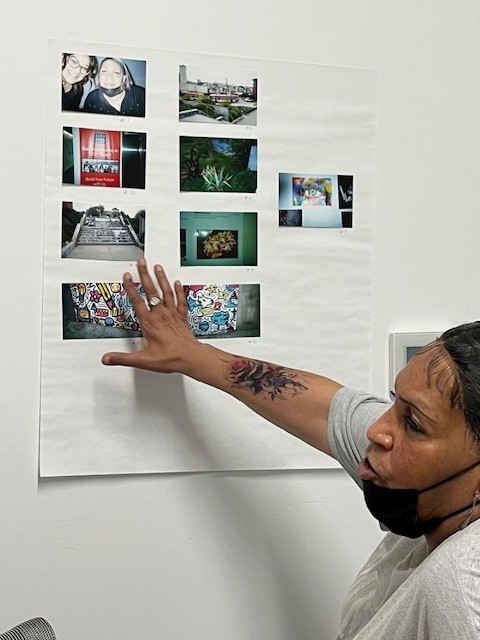
Seville Christian’s decades-long relationship with PRC includes as a client, fellow and beloved employee. Photo courtesy of PRC.
Helping people access employment and build sustainable careers has been a cornerstone of PRC’s mission since its inception nearly four decades ago. In its most recent annual impact report, PRC served 443 clients through workforce development services, including career counseling, educational programs, hands-on training, and job search assistance. The average wage earned by PRC clients is $26.48 per hour — approximately 38% above San Francisco’s minimum wage.
To advance this work, organizations like PRC have benefited from funding through California’s Stop the Hate Program, which provides direct support to community-based organizations leading anti-hate initiatives.
Christian’s path was not without challenges. During some rocky years, she experienced periods of housing instability and struggled with addiction. Through PRC, she enrolled in a life-skills program that emphasized using her own lived experience as a means of helping others. The program helped set her on a path toward completing an associate’s degree and ultimately launching a career in case management.
“Today, whether someone is new to the city or has lived here their whole life, I know how to help them navigate to where they need to be,” Christian said.
Each year, PRC serves more than 5,000 clients through a wide range of programs. These include housing navigation, legal advocacy to ensure access to health and public benefits, supportive housing, job and life-skills training, and residential treatment programs.
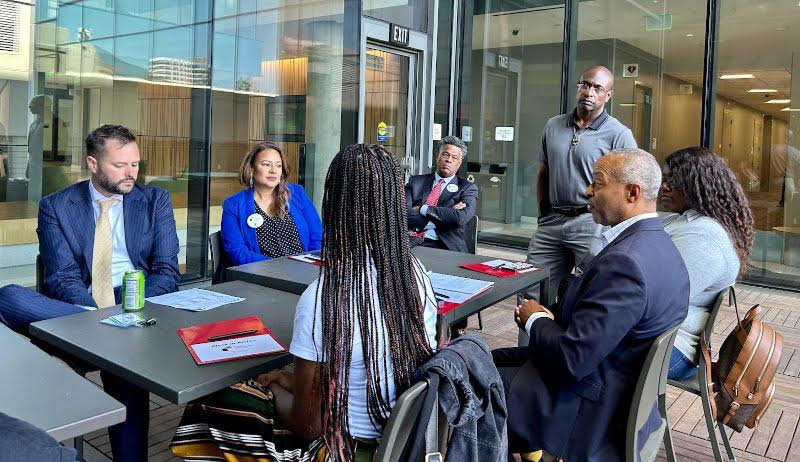
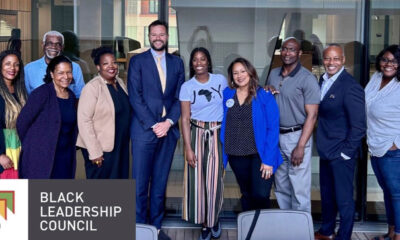
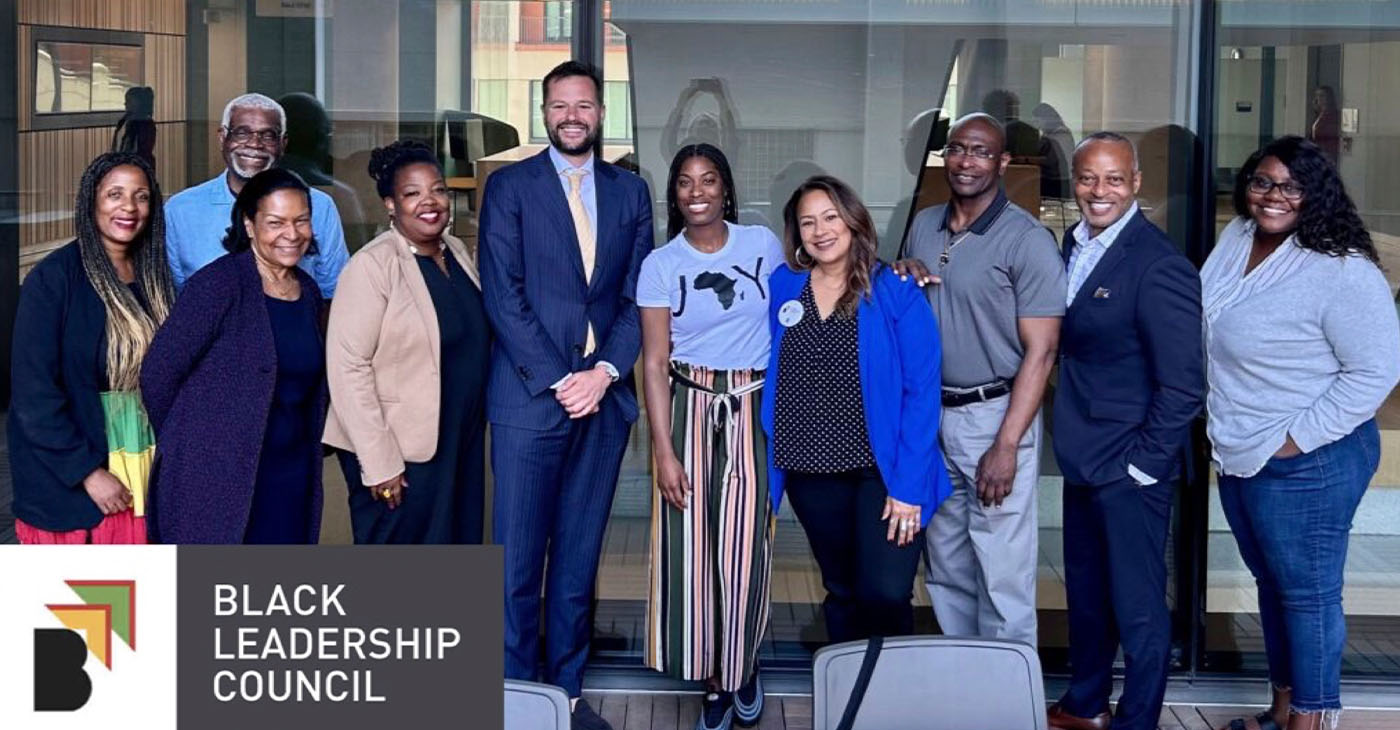
Members of PRC’s Black Leadership Council meet with a lawmaker in Sacramento. Photo courtesy of PRC.
While PRC was founded to serve people living with HIV, its mission has expanded over the decades to meet the needs of people with disabilities, individuals experiencing homelessness, and those facing mental health and substance use challenges.
According to PRC’s Chief of Public Policy and Public Affairs, Tasha Henneman, some of the organization’s earliest programs remain as vital today as they were at the start.
“Our emergency financial assistance program helped more than 1,200 people this year pay rent, cover medical bills, and keep the lights on,” Henneman said. “And over 1,400 people reached out for legal advocacy, resulting in more than $2.5 million in retroactive benefits unlocked.”
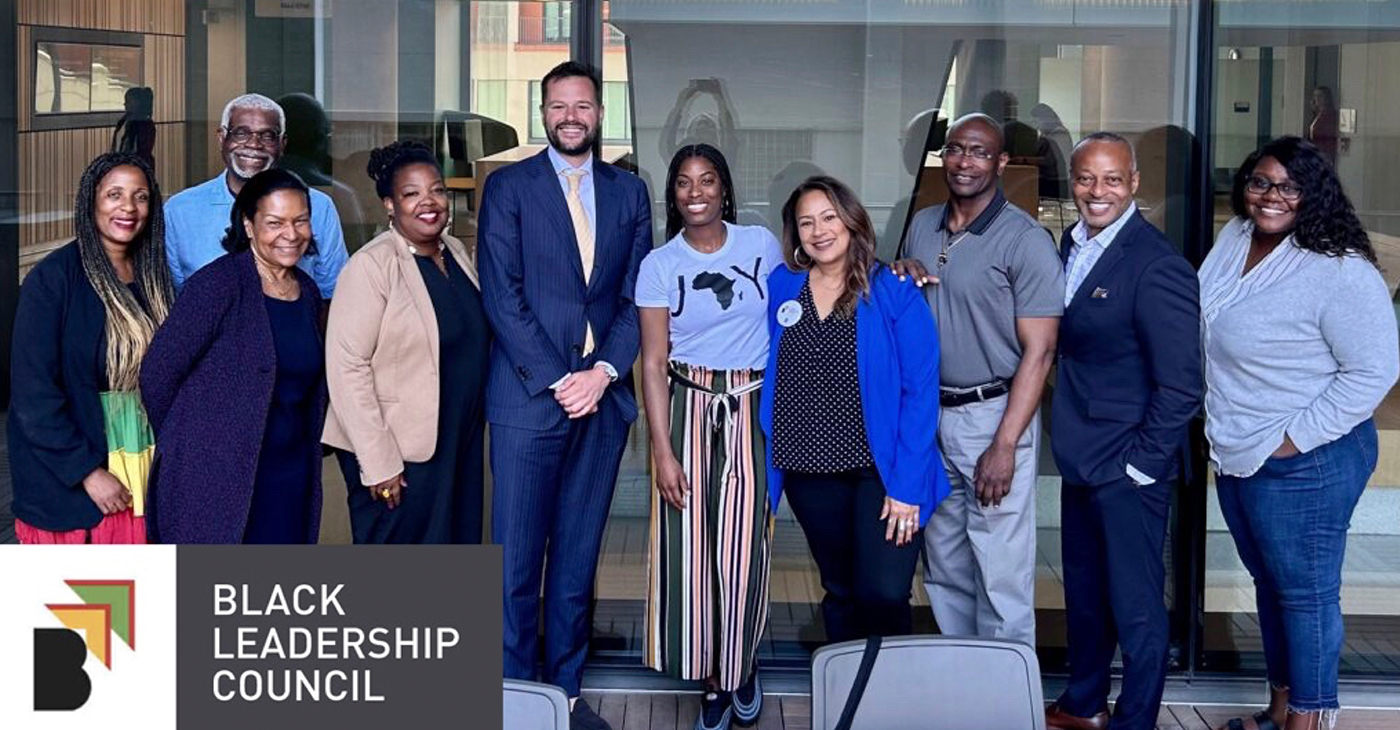
Beyond direct services, PRC is deeply committed to community empowerment and policy change. Programs such as the Black Leadership Council support community leaders in advocating for systemic reform, while the Black Trans Initiative focuses on addressing the unique challenges faced by Black transgender individuals.
A recent study from the Williams Institute highlighted findings that 71% of transgender homicide victims in the U.S. between 2010 and 2021 were Black and that nearly a third of the transgender homicides during that period were confirmed or suspected hate crimes.
PRC’s direct and indirect services can be a lifeline for people experiencing hate and are an example of the resources people can get connected with through the state’s CA vs Hate hotline.
PRC is now also producing a film project that centers the lived experiences of Black trans clients, including individuals like Christian.
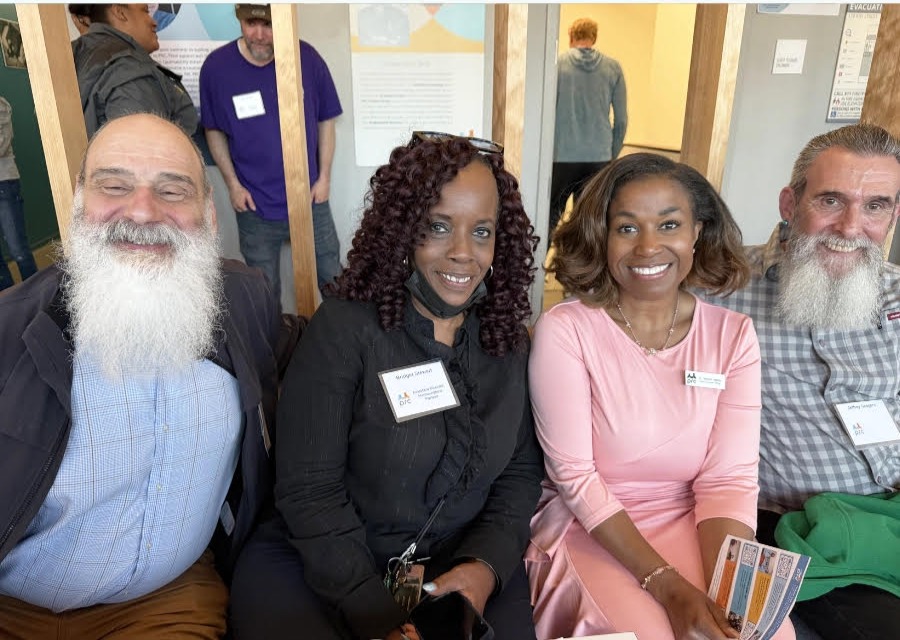
PRC welcomed guests to their annual Open House in April, an evening dedicated to connection, reflection, and learning more about the programs and people working every day to support San Franciscans experiencing housing instability, unemployment, and behavioral health challenges. Photo courtesy of PRC.
“Our film highlights the health journeys and lived experiences of some of PRC’s Black trans clients,” Henneman said. “Our goal is to give voice, visibility, and agency to the participants — and to bring their stories, both harrowing and inspirational, to policymakers and the broader public.”
The film, expected to be released later this year, is directed by Yule Caise, with assistant director Zarina Codes, a Black transgender San Francisco resident.
Today, Christian continues her relationship with PRC as an ambassador, reflecting on a journey that began with a single job opportunity and grew into a lifelong commitment to service.
“Sometimes I’ll be riding the bus or standing in a grocery store, and someone will come up to me from a women’s shelter,” she said. “They’ll say, ‘Oh, Miss Seville, I just want to thank you. You really helped me with what I was dealing with.’”
She paused, smiling.
“And in those moments,” Christian said, “I think to myself, “Well!.”
A single word that sums up pride in a journey to find the best in herself.
Get Support After Hate:
California vs Hate is a non-emergency, multilingual hotline and online portal offering confidential support for hate crimes and incidents. Victims and witnesses can get help anonymously by calling 833-8-NO-HATE (833-866-4283), Monday to Friday, 9 a.m.–6 p.m. PT, or online at any time. Anonymous. Confidential. No Police. No ICE.
This story was produced in partnership with CA vs Hate. Join them for the first-ever CA Civil Rights Summit on May 11, 2026. More information at www.cavshate.org/summit.
Activism
Oakland Post: Week of April 22 – 28, 2026
The printed Weekly Edition of the Oakland Post: Week of April 22 – 28, 2026
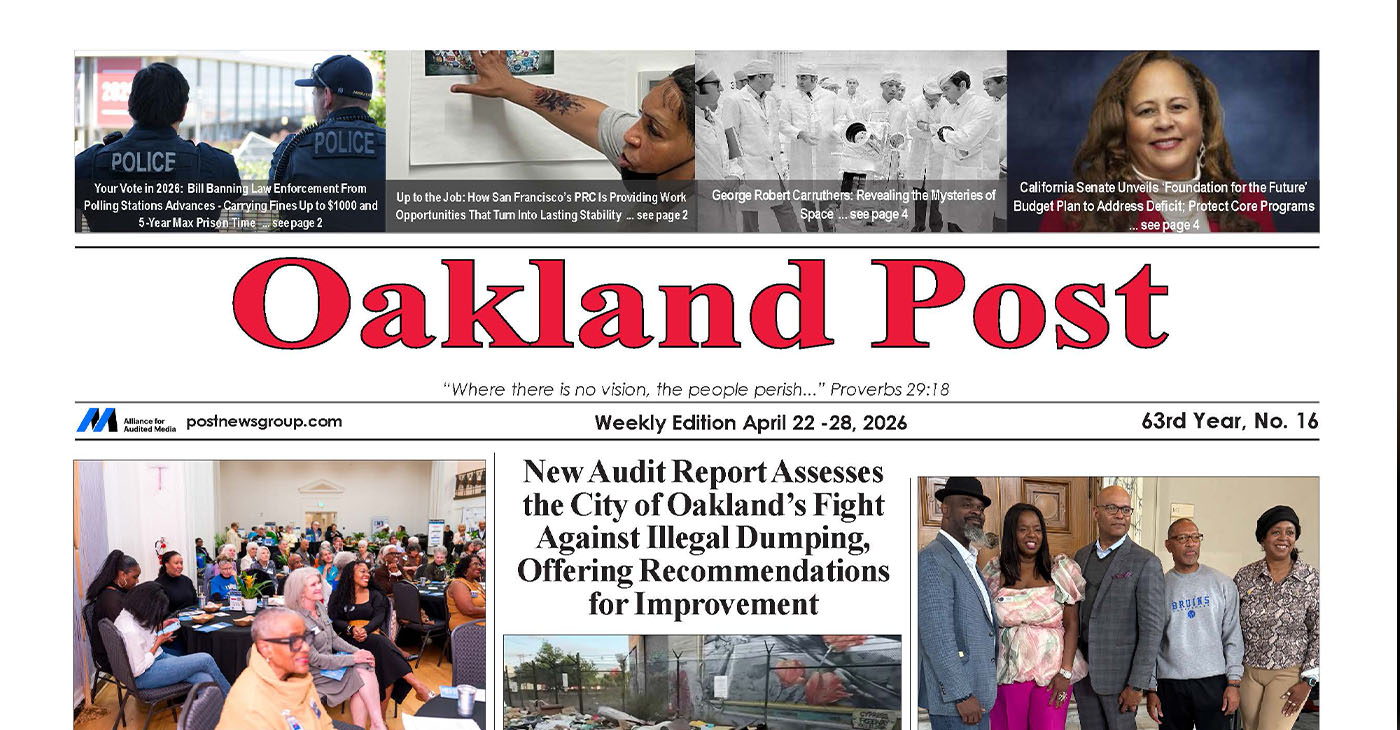
To enlarge your view of this issue, use the slider, magnifying glass icon or full page icon in the lower right corner of the browser window.
Activism
Up to the Job: How San Francisco’s PRC Is Providing Work Opportunities That Turn Into Lasting Stability
Each year, PRC serves more than 5,000 clients through a wide range of programs. These include housing navigation, legal advocacy to ensure access to health and public benefits, supportive housing, job and life-skills training, and residential treatment programs.
Joe Kocurek | California Black Media
Seville Christian arrived in San Francisco in the 1990s from Kansas City, Mo., a transgender woman coming from a time and place still hostile to who she was.
San Francisco offered a deeper LGBTQ+ history and a more visible community of people like her, but even in a city known for acceptance, building a stable life from scratch was no small task.
After arriving in the city, she turned to Positive Resource Center (PRC) looking for work — and for a foothold — in a new place.
“PRC gave me my first job,” Christian said. “A simple gig — passing out magazines at the San Francisco Pride Parade.”
That first opportunity marked the beginning of a decades-long relationship with PRC, one that has seen Christian grow from client to valued employee, and eventually to policy fellow.
“Today, I’ve been with PRC for 27 years, going on 28,” she said.
Helping people access employment and build sustainable careers has been a cornerstone of PRC’s mission since its inception nearly four decades ago. In its most recent annual impact report, PRC served 443 clients through workforce development services, including career counseling, educational programs, hands-on training, and job search assistance. The average wage earned by PRC clients is $26.48 per hour — approximately 38% above San Francisco’s minimum wage.
To advance this work, organizations like PRC have benefited from funding through California’s Stop the Hate Program, which provides direct support to community-based organizations leading anti-hate initiatives.
Christian’s path was not without challenges. During some rocky years, she experienced periods of housing instability and struggled with addiction. Through PRC, she enrolled in a life-skills program that emphasized using her own lived experience as a means of helping others. The program helped set her on a path toward completing an associate’s degree and ultimately launching a career in case management.
“Today, whether someone is new to the city or has lived here their whole life, I know how to help them navigate to where they need to be,” Christian said.
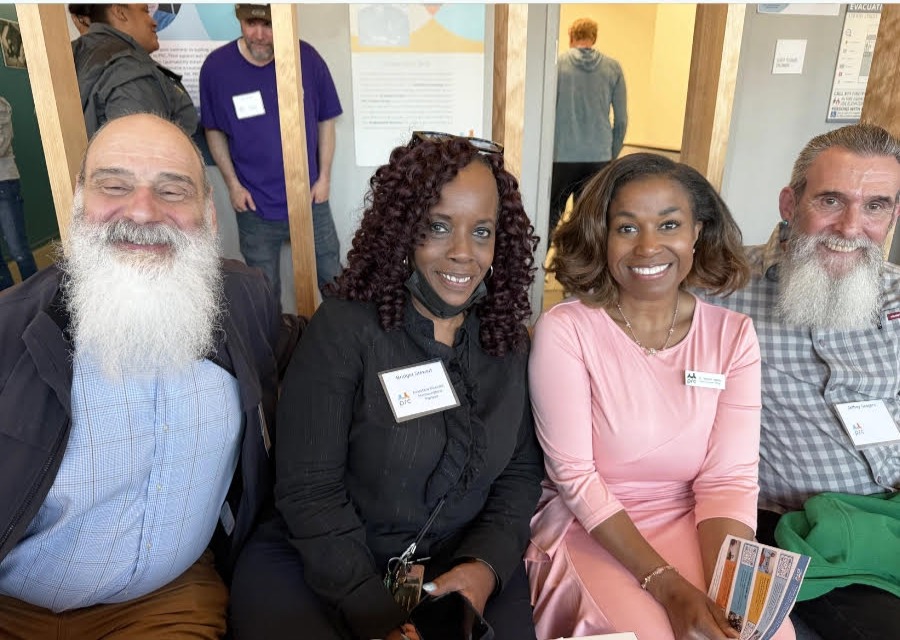
PRC welcomed guests to their annual Open House in April, an evening dedicated to connection, reflection, and learning more about the programs and people working every day to support San Franciscans experiencing housing instability, unemployment, and behavioral health challenges.
Each year, PRC serves more than 5,000 clients through a wide range of programs. These include housing navigation, legal advocacy to ensure access to health and public benefits, supportive housing, job and life-skills training, and residential treatment programs.
While PRC was founded to serve people living with HIV, its mission has expanded over the decades to meet the needs of people with disabilities, individuals experiencing homelessness, and those facing mental health and substance use challenges.
According to PRC’s Chief of Public Policy and Public Affairs, Tasha Henneman, some of the organization’s earliest programs remain as vital today as they were at the start.
“Our emergency financial assistance program helped more than 1,200 people this year pay rent, cover medical bills, and keep the lights on,” Henneman said. “And over 1,400 people reached out for legal advocacy, resulting in more than $2.5 million in retroactive benefits unlocked.”
Beyond direct services, PRC is deeply committed to community empowerment and policy change. Programs such as the Black Leadership Council support community leaders in advocating for systemic reform, while the Black Trans Initiative focuses on addressing the unique challenges faced by Black transgender individuals.
A recent study from the Williams Institute highlighted findings that 71% of transgender homicide victims in the U.S. between 2010 and 2021 were Black and that nearly a third of the transgender homicides during that period were confirmed or suspected hate crimes.
PRC’s direct and indirect services can be a lifeline for people experiencing hate and are an example of the resources people can get connected with through the state’s CA vs Hate hotline.
PRC is now also producing a film project that centers the lived experiences of Black trans clients, including individuals like Christian.
“Our film highlights the health journeys and lived experiences of some of PRC’s Black trans clients,” Henneman said. “Our goal is to give voice, visibility, and agency to the participants — and to bring their stories, both harrowing and inspirational, to policymakers and the broader public.”
The film, expected to be released later this year, is directed by Yule Caise, with assistant director Zarina Codes, a Black transgender San Francisco resident.
Today, Christian continues her relationship with PRC as an ambassador, reflecting on a journey that began with a single job opportunity and grew into a lifelong commitment to service.
“Sometimes I’ll be riding the bus or standing in a grocery store, and someone will come up to me from a women’s shelter,” she said. “They’ll say, ‘Oh, Miss Seville, I just want to thank you. You really helped me with what I was dealing with.’”
She paused, smiling.
“And in those moments,” Christian said, “I think to myself, “Well!.”
A single word that sums up pride in a journey to find the best in herself.
Get Support After Hate:
California vs Hate is a non-emergency, multilingual hotline and online portal offering confidential support for hate crimes and incidents. Victims and witnesses can get help anonymously by calling 833-8-NO-HATE (833-866-4283), Monday to Friday, 9 a.m.–6 p.m. PT, or online at any time. Anonymous. Confidential. No Police. No ICE.This story was produced in partnership with CA vs Hate. Join them for the first-ever CA Civil Rights Summit on May 11, 2026. More information at www.cavshate.org/summit.

WORK FROM HOME
Home-based business with potential monthly income of $10K+ per month. A proven training system and website provided to maximize business effectiveness. Perfect job to earn side and primary income. Contact Lynne for more details: Lynne4npusa@gmail.com 800-334-0540


State of Preschool Yearbook Provides an Annual Snapshot of State-Funded Preschool

Which features on the 2026 Volkswagen Golf GTI Autobahn are actually worth having?
Panoramic Roof & Rear Seats: The Ultimate EV Comfort! #shorts
Does the 2026 Volkswagen Golf GTI Autobahn actually fit your lifestyle?
Subaru EV Blends Modern Design with Unmatched Confidence & Power! #shorts
Subaru Uncharted EV: Confidence, Control, and Daily Usability for You! #shorts
VW GTI Under the Hood: Turbocharged Engine & DSG #shorts
2026 Mazda CX‑90 PHEV Premium Plus — Luxury SUV or Overpriced Plug‑In? | Walkaround Review
Why Time Is the Most Expensive Part of Car Buying | The Color of Our Money Is Green Ep5
2026 Subaru Unchartered GT: Future of Driving is HERE! #shorts
Golf GTI Digital Cockpit Pro & HUD: Your Ultimate Driving Experience #shorts

Up to the Job: How San Francisco’s PRC Is Providing Work Opportunities That Turn Into Lasting Stability

Oakland Post: Week of April 22 – 28, 2026

Up to the Job: How San Francisco’s PRC Is Providing Work Opportunities That Turn Into Lasting Stability

Mayor Barbara Lee Proclaims April 9 as ‘100 Black Men of the Bay Area Day’

Oakland Post: Week of March 18 – 24, 2026

New Research Shows the Many Benefits of Early Learning

Grief, Advocacy, and Education: A Counselor Reflects on Black Maternal Health

Brooklyn Academy of Music Names Jamaican-Born Tamara McCaw as President

Black Artists in America, Installation Three Wraps at the Dixon Gallery and Gardens

Trinidad & Tobego – U.S. Launches WhatsApp Channel for American Citizens in the Country

Future of Florida’s Black History Museum in Limbo

Cuba: No Negotiation with US on the President or Political System

South Hampton K-8 Students Among Top 10 Finalists for Samsung’s ‘Solve for Tomorrow’ Competition

AI Innovation vs. Ethics and Environmental Impact

Oakland Post: Week of April 8 – 14, 2026

Oakland Post: Week of April 1 – 7, 2026

Season 7, Episode 3 – January Reporter’s Roundtable 📱

AI, Web3, and Digital Reparations

The racist Obama ape image, historical context and response

Hyundai Ioniq 5 Parking, Safety, and 360 View #shorts

2025 Ioniq 5 New Wiper & Powerful Performance! #shorts

Electric SUV Range: Is 259 Miles Enough? #shorts

EV Charging: How Fast Can You Charge an Electric Vehicle? #shorts

Biometric Cooling… Messaging Seats…Come on! 2025 Infiniti QX80 Autograph 4WD

Charged Up: Witness the Magic of a Fully Electric Car! #shorts

Range Rover Sport PHEV Included…: See What’s Inside This Luxury SUV! #shorts

Invisible Hood View: Perfect Parking with X-Ray Vision! #shorts

AI Is Reshaping Black Healthcare: Promise, Peril, and the Push for Improved Results in California

ESSAY: Technology and Medicine, a Primary Care Point of View

Sanctuary Cities

The RESISTANCE – FREEDOM NOW

STATE OF THE PEOPLE: Freddie

ECONOMIC BOYCOTT DAY!!!!!

I told You So
-
 Activism3 weeks ago
Oakland Post: Week of April 8 – 14, 2026
-
 Activism4 weeks ago
Oakland Post: Week of April 1 – 7, 2026
-

 Alameda County2 weeks ago
Stanford Health Care Collaborates with Alameda Health System Affiliate, Expanding Access to Care in East Bay
-
 Activism2 weeks ago
Mayor Barbara Lee Proclaims April 9 as ‘100 Black Men of the Bay Area Day’
-
 #NNPA BlackPress2 weeks ago
IN MEMORIAM: Rest in Power — Minnesota Loses a True Warrior in Yusef Mgeni
-

 #NNPA BlackPress2 weeks ago
Mamdani Plans City Grocery Store in East Harlem
-

 Activism2 weeks ago
Building Bridges of Support: How AAPI Equity Alliance Is Strengthening California’s Anti-Hate Network
-

 Activism2 weeks ago
Oakland Post: Week of April 15 – 21, 2026
