
Bay Area
Help Save North Oakland Missionary Baptist Church, the 2nd oldest Black Church in Oakland
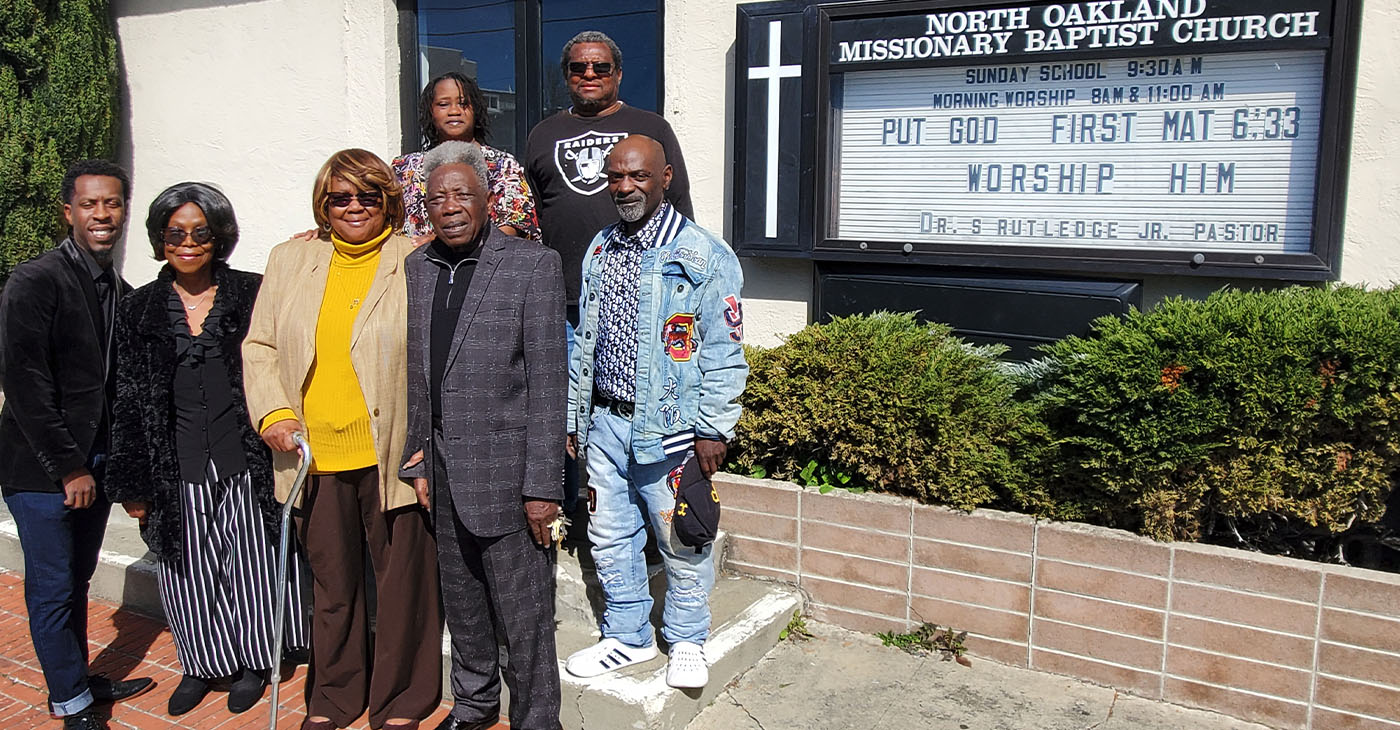
North Oakland Missionary Baptist Church (NOMBC) located at 1060 32nd St. is the second oldest Black church in Oakland, at 118 years. Having served the community for nearly 32 years, Reverend Sylvester Rutledge leads the church as its 5th pastor. For Rutledge, it has been an honor to lead a congregation, share his faith and be a resource for the community.

By Carla Thomas
North Oakland Missionary Baptist Church (NOMBC) located at 1060 32nd St. is the second oldest Black church in Oakland, at 118 years. Having served the community for nearly 32 years, Reverend Sylvester Rutledge leads the church as its 5th pastor.
For Rutledge, it has been an honor to lead a congregation, share his faith and be a resource for the community. The church shepherds 65 units of senior housing, feeds the homeless three times a week and has assisted some of the most vulnerable citizens of the city. Now, Rutledge is in need of the community’s help to save the church from a forced courthouse sale on March 17.
Currently the church owes $43,000 in back taxes owed on the parking lot on an adjacent property bought by the church. The church has been unable to make the payments. With a two-week deadline, the situation has placed a high level of stress on church members and its leadership.
Rutledge, age 86, explained that prior to becoming pastor, houses on the property were removed to create a parking lot, with taxes exempted. While paying annual city taxes, church administrators believed all taxes were current, until the County advised the church they were in arrears by 5 years. Rutledge says church administrators worked with the county to get the bill reduced but COVID interrupted some of the communications and processes. “With offices closed and no continuity during the pandemic, it created more barriers than solutions,” said Rutledge.
With no alternatives, the church is hoping to raise the funds needed to keep the church. Without a church home, dozens of congregants would be displaced.
For Dr. Wayne E. Gaddis, president of the California Missionary Baptist Church State Conference, the matter is both urgent and personal. “Last August, our California Missionary Baptist Church Conference anniversary celebration was held at North Oakland Missionary Baptist Church because our conference was birthed there,” said Gaddis who just found out about NOMBC’s crisis last week.
“We cannot afford to lose another Black church. We’ve set up donation accounts through Givlify and CashApp. My executive board and I plan to use the donations to issue a check and present to the Office of the Alameda County Assessor’s Office next week.” Gaddis says through his organization, funds collected can not only help save (NOMBC), but other organizations that may have a similar need if donations exceed the initial need. Donation vehicles include CashApp: $CMBSC for North Oakland Release Fund and Givelify: California Missionary Baptist State Convention. Cash or in-person donations can be sent to CMBSC Headquarters, 8704 N. Figueroa St., Los Angeles, California 90003.
Reverend Rutledge says he will be grateful for any and all donations to save the church.
Oakland Post Publisher Paul Cobb immediately visited Pastor Rutledge and offered a $1,000 challenge donation that would be paid directly to the county. Cobb called several pastors and immediately received commitments from Rev. Gerald Agee, Rev. Lawrence Van Hook, Rev. Ray Williams, Rev. Raymond Lankford and several other ministers.
He expects to raise the remaining $25,000 on or before March 10.
“Ironically, several ministers and the Post had just completed a planning session to create a faith-based city-wide one-hundred-million-dollar trust fund for the purposes of saving church properties, building affordable housing for their seniors and other members, renovating, upgrading and making energy efficient “green sanctuaries.”
Cobb also announced that he and five ministers would ask several Asian community leaders to petition the mayor and the governor to provide a continual racial healing help grant of one million dollars to the 12 Oakland churches that provide food up to three times weekly to all visitors.
“Because North Oakland Baptist is a beacon of light for hope and cooperation, because it is located between the “Ghost-town” and “Dog-Town” neighborhoods and it is heart-warming to see the early-bird Asian neighbors patiently and fearlessly waiting in line alongside their young Black neighbors,” Cobb said.
Rev. Van Hook and Rev. Agee are encouraging donors to make checks to the County Assessor’s Office to prevent the foreclosure of historic North Oakland Baptist.
NOMBC has a long-standing history. Prior to becoming North Oakland Missionary Baptist Church in 1922, the first congregation was organized in 1904-1905 as Richard Clark Memorial Church.
The church body had first met in the homes of members until the church made its home at 843 29th Street near San Pablo Avenue.
By 1921, the church expanded to include the building at 32nd and Linden which had been home to St. Paul’s English Evangelical Lutheran Church. In 1930, the church building burned, but the congregation soon rebuilt.
The old building on 29th is now home to the True Gospel Missionary Baptist Church.







Activism
Oakland Post: Week of April 1 – 7, 2026
The printed Weekly Edition of the Oakland Post: Week of April 1 – 7, 2026
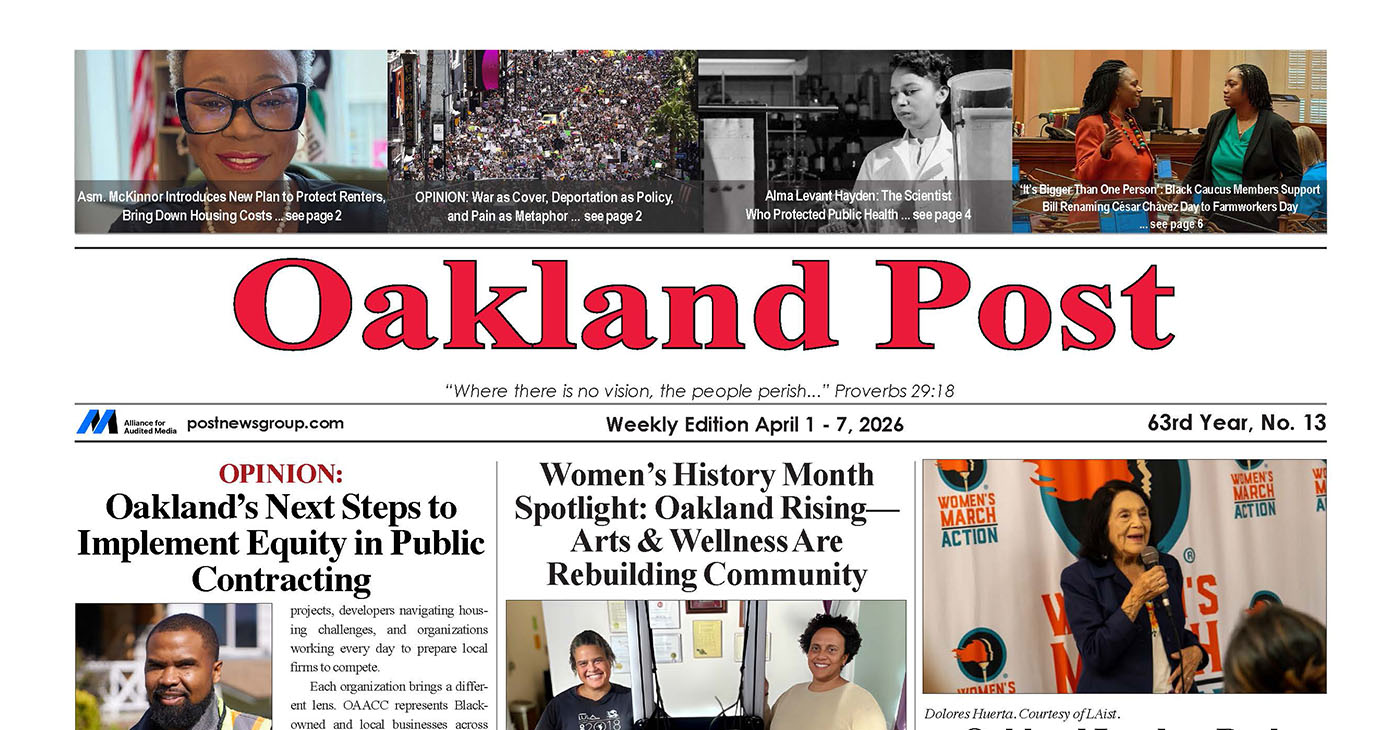
To enlarge your view of this issue, use the slider, magnifying glass icon or full page icon in the lower right corner of the browser window.
Activism
Oakland Post: Week of March 18 – 24, 2026
The printed Weekly Edition of the Oakland Post: Week of March 18 – 24, 2026
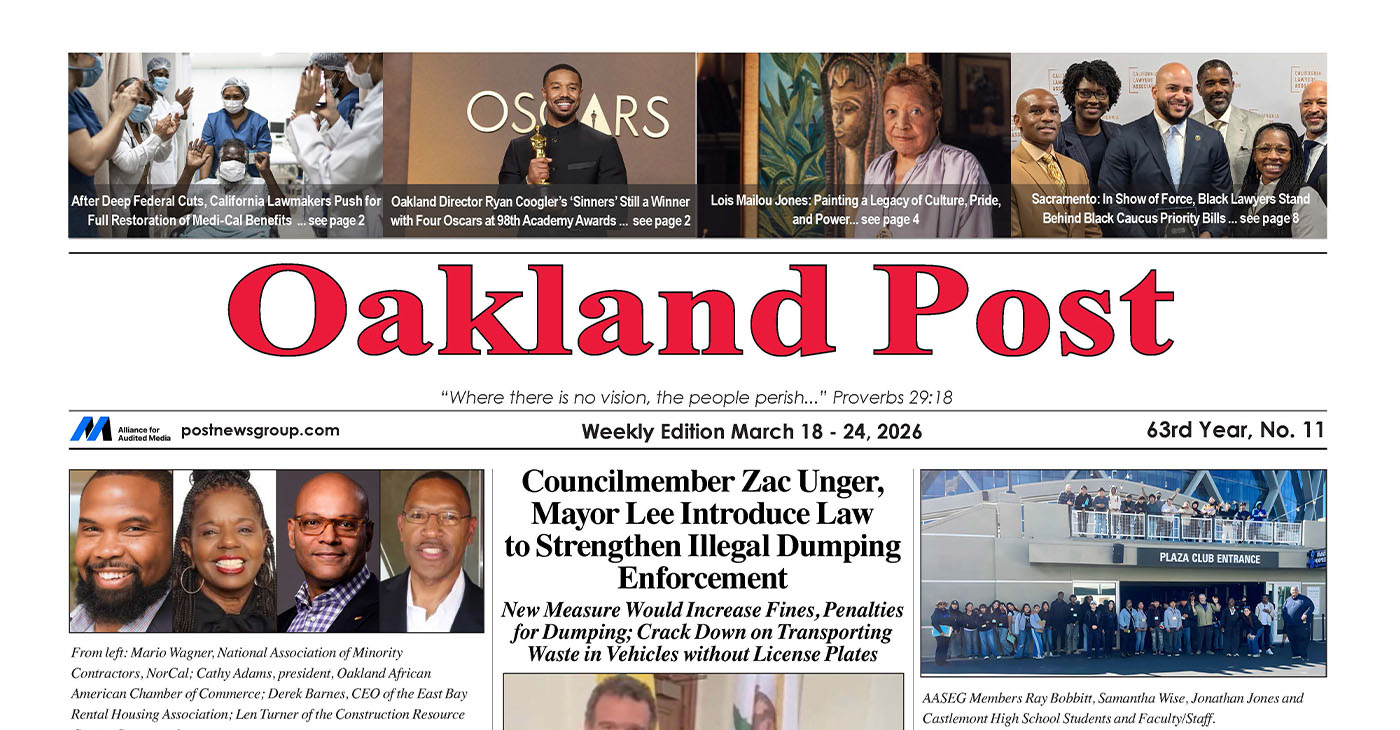
To enlarge your view of this issue, use the slider, magnifying glass icon or full page icon in the lower right corner of the browser window.
Activism
Oakland Post: Week of March 11 -17, 2026
The printed Weekly Edition of the Oakland Post: Week of March 11 – 17, 2026
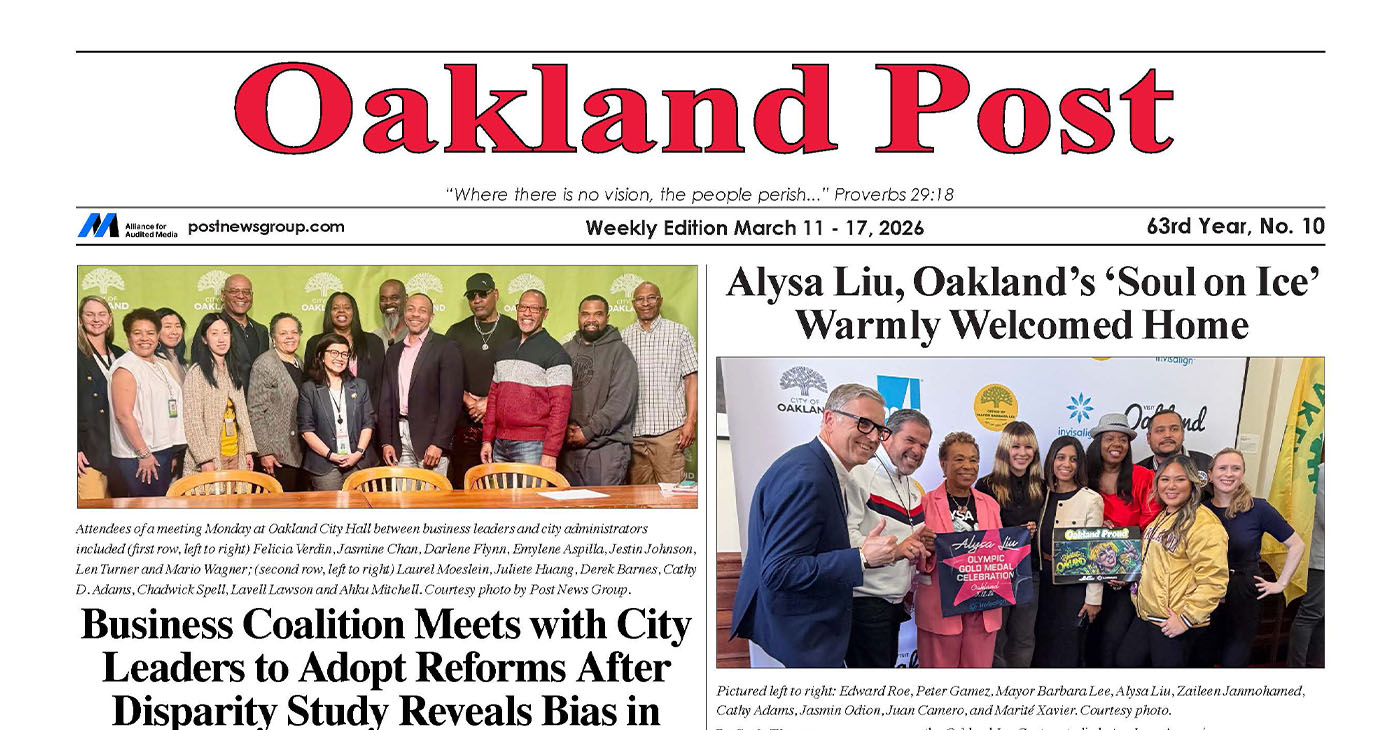
To enlarge your view of this issue, use the slider, magnifying glass icon or full page icon in the lower right corner of the browser window.

WORK FROM HOME
Home-based business with potential monthly income of $10K+ per month. A proven training system and website provided to maximize business effectiveness. Perfect job to earn side and primary income. Contact Lynne for more details: Lynne4npusa@gmail.com 800-334-0540


Oakland Post: Week of April 1 – 7, 2026

Black Artists in America, Installation Three Wraps at the Dixon Gallery and Gardens

Grief, Advocacy, and Education: A Counselor Reflects on Black Maternal Health

Future of Florida’s Black History Museum in Limbo

New Research Shows the Many Benefits of Early Learning

South Hampton K-8 Students Among Top 10 Finalists for Samsung’s ‘Solve for Tomorrow’ Competition

Cuba: No Negotiation with US on the President or Political System

Brooklyn Academy of Music Names Jamaican-Born Tamara McCaw as President

Trinidad & Tobego – U.S. Launches WhatsApp Channel for American Citizens in the Country

Oakland Post: Week of March 18 – 24, 2026

AI Innovation vs. Ethics and Environmental Impact

AI, Web3, and Digital Reparations

What If You Owned Your AI Agent?

Season 7, Episode 3 – January Reporter’s Roundtable 📱

Season 7, Episode 3 – January Reporter’s Roundtable

Reflecting on Black History Milestones in Birmingham AL

Oakland Post: Week of February 25 – March 3, 2026

PRESS ROOM: NBA Hall of Fame Nominee Terry Cummings Joins 100 Black Men of DeKalb County to Launch Victory & Values Initiative

Oakland Post: Week of March 4 – 10, 2026

Trump’s MAGA Allies are Creating Executive Order Plan to Steal the 2026 Midterms

U.S. manufacturing rebounds – how foundry services are adapting to rising demand

Poll Shows Support for Policies That Help Families Afford Child Care

OP-ED: One Hundred Years of Black Workers Telling the Truth

Oakland Post: Week of March 11 -17, 2026

Advancements in solar technology that are changing the way we power the world
Oakland Post: Week of March 18 – 24, 2026

Woman’s Search for Family’s Roots Leads to Ancestor John T. Ward – A Successful Entrepreneur and Conductor on the Underground Railroad

COMMENTARY: Women of Color Shape Our Past and Future

PRESS ROOM: Civil Rights TV Launches in Selma as the World’s First 24/7 Civil Rights Television Network

Financial Wellness and Mental Health: Managing Money Stress in College

Hyundai Ioniq 5 Parking, Safety, and 360 View #shorts

2025 Ioniq 5 New Wiper & Powerful Performance! #shorts

Electric SUV Range: Is 259 Miles Enough? #shorts

EV Charging: How Fast Can You Charge an Electric Vehicle? #shorts

Biometric Cooling… Messaging Seats…Come on! 2025 Infiniti QX80 Autograph 4WD

Charged Up: Witness the Magic of a Fully Electric Car! #shorts

Range Rover Sport PHEV Included…: See What’s Inside This Luxury SUV! #shorts

Invisible Hood View: Perfect Parking with X-Ray Vision! #shorts

AI Is Reshaping Black Healthcare: Promise, Peril, and the Push for Improved Results in California

ESSAY: Technology and Medicine, a Primary Care Point of View

Sanctuary Cities

The RESISTANCE – FREEDOM NOW

STATE OF THE PEOPLE: Freddie

ECONOMIC BOYCOTT DAY!!!!!

I told You So

-
 Activism3 weeks ago
Oakland Post: Week of March 11 -17, 2026
-
 Activism2 weeks ago
Oakland Post: Week of March 18 – 24, 2026
-
 #NNPA BlackPress4 weeks ago
Woman’s Search for Family’s Roots Leads to Ancestor John T. Ward – A Successful Entrepreneur and Conductor on the Underground Railroad
-
 #NNPA BlackPress4 weeks ago
COMMENTARY: Women of Color Shape Our Past and Future
-
 Advice3 weeks ago
Financial Wellness and Mental Health: Managing Money Stress in College
-

 #NNPA BlackPress4 weeks ago
Advocates Raise Alarm Over ICE Operation, MOU and Detention Risks in Baltimore County
-

 #NNPA BlackPress4 weeks ago
Pete Buttigieg to Join Mayor Randall Woodfin for Community Town Hall in Birmingham
-
 #NNPA BlackPress2 weeks ago
Brooklyn Academy of Music Names Jamaican-Born Tamara McCaw as President
