
World
Islamic State Claims Responsibility for Tunisia Attack


Tunisian police officers carry the coffin of elite security member Aymen Morjen, Thursday March 19, 2015 in Tunis. Morjen was killed in the Wednesday attack at the Bardo National museum. The Islamic State group issued a statement Thursday claiming responsibility for the deadly attack on Tunisia’s national museum that killed 23 people, mostly tourists. (AP Photo/Khazri)
JAMEY KEATEN, Associated Press
PAUL SCHEMM, Associated Press
TUNIS, Tunisia (AP) — The Islamic State group claimed responsibility Thursday for the attack that killed 21 people at a museum. But Tunisian authorities said the two slain gunmen had no clear links to extremists, and analysts said existing militant cells are merely being inspired by the group, rather than establishing its presence across North Africa.
Police announced the arrest of five people described as directly tied to the two gunmen who opened fire Wednesday at the National Bardo Museum. Four others said to be supporters of the cell also were arrested in central Tunisia, not far from where a group claiming allegiance to al-Qaida’s North African branch has been active.
Tunisians stepped around trails of blood and broken glass outside the museum to rally in solidarity with the 21 victims — most of them foreign tourists from cruise ships — and with the country’s fledgling democracy. Marchers carried signs saying, “No to terrorism,” and “Tunisia is bloodied but still standing.”
In claiming responsibility for the attack, the Islamic State group issued a statement and audio on jihadi websites applauding the dead gunmen as “knights” for their “blessed invasion of one of the dens of infidels and vice in Muslim Tunisia.”
Several well-armed groups in neighboring and chaotic Libya have already pledged their allegiance to Islamic State based in Iraq and Syria, but the attack of such magnitude in Tunisia — the only country to emerge from the Arab Spring uprisings with a functioning democracy — raised concern about the spread of extremism to the rest of North Africa.
Analysts cautioned against seeing every such attack as evidence of a well-organized, centrally controlled entity spanning the Middle East, saying instead that small groups could merely be taking inspiration from the high-profile militant group.
“I think (the Islamic State) is probably taking credit for something it may not have played a role in,” said Geoff Porter, a security analyst for North Africa.
Even as it is under pressure from rival militias in Libya and U.S.-backed forces in Iraq, the extremist group appears to be trying to raise its profile by associating itself with attacks around the region.
Confronted with a poor economy, young Tunisians have disproportionately gone abroad to fight with extremist groups in Libya, Syria and Iraq, including some affiliated with the Islamic State. Upon their return home, some may have decided to carry out attacks on their own.
Tunisian authorities have estimated that of the 3,000 young people who left the country to fight with radical groups, about 500 have returned.
“It could have been people who fought with the Islamic State or were inspired by it,” said Raffaello Pantucci, director of International Security Studies at the Royal United Services Institute, a British think tank. “Some guys may have come back, not liked what the government is doing, and attacked the tourist industry to hurt the economy — a classic move.”
Until now, Tunisia’s most deadly group was the Oqba Ibn Nafaa brigade, which is allied to al-Qaida and based in the mountains near the Algerian border. Previously, it has confined its attacks to political figures and security services.
“While Tunisia’s ultra-radical Islamist fringe was most associated with al-Qaida, there is no reason why the jihadi underground shouldn’t have changed its tutelage,” said Jon Marks, associate fellow at Chatham House, a London think tank. “However, whether this ‘rebranding’ goes as far as direct command and compliance structures is far from clear.”
While militant attacks may not necessarily have been centrally planned, they have succeeded in spreading fear and damaging the economy — and giving the impression of an all-powerful radical Islamic network extending its reach.
Tunisia is particularly vulnerable to such attacks because its economy has struggled since the country became the birthplace of the Arab Spring by overthrowing its dictator in 2011.
At a news conference Thursday, Prime Minister Habib Essid announced new security measures around the country, including a crackdown on websites seen as promoting terrorism.
The deaths of so many foreigners will damage Tunisia’s tourism industry, which draws thousands of foreigners to its Mediterranean beaches, desert oases and ancient Roman ruins. The industry had just started to recover after years of decline.
Two cruise ships that had 17 passengers among the dead quickly left the port of Tunis early Thursday, citing safety concerns, and the vessels’ operators suspended visits to the country.
Culture Minister Latifa Lakhdar gave a defiant news conference at the museum, where blood still stained the floor amid the Roman-era mosaics.
“They are targeting knowledge. They are targeting science. They are targeting reason. They are targeting history. They are targeting memory, because all these things mean nothing in their eyes,” she told reporters.
In the afternoon, authorities opened the gates of the museum for a rally in defiance of the bloodshed. About 500 people — some carrying flowers for the victims — held a moment of silence before singing Tunisia’s national anthem. Participants included black-robed lawyers, families with children, and teenagers swathed in the red-and-white Tunisian flag.
A funeral was held for Aymen Morjen — an elite member of Tunisia’s security force who was killed at the museum. Interior Minister Mohamed Najem Gharsalli and House Speaker Mohamed Ennaceur attended the service.
It was among the museum’s Roman-era mosaics that the militants dressed in military uniforms and armed with grenades and assault rifles took hostages and began shooting the foreigners.
“Suddenly, we started to hear the gunshots, so we all tried to escape and all of us tried to save ourselves as best we could,” said Bruna Scherini, an Italian who arrived by cruise ship. She told Sky TG24 from her hospital bed: “We tried to hide behind the exhibits and in the corners where there was a little hiding place.”
A Spanish man and a pregnant Spanish woman who survived hid in the museum all night in fear. Spain’s foreign minister said police searched all night before Juan Carlos Sanchez and Cristina Rubio were found Thursday morning by security forces.
The Health Ministry said the death toll rose to 23 on Thursday — 20 of them foreign tourists. Nearly 50 people were wounded. Three Tunisians were killed, including the two attackers.
Dr. Samar Samoud of the Health Ministry said six of the dead foreigners remained unidentified. She listed the rest of the foreign victims as three from Japan, three from France, two from Spain, and one each from Australia, Colombia, Britain, Poland, Belgium and Italy.
The Costa Crociere cruise line said four Italians and a Russian were among the dead. It was not immediately clear whether they were the victims not yet identified by the ministry. MSC Cruises said 12 of its guests were killed.
The two cruise lines said they suspended visits to Tunisian following the attack.
MSC chairman Pierfrancesco Vago said the company hoped to return to Tunisia, but that for now tourists view it as a “no-go zone.” MSC said it was suspending Tunisian ports of call for the rest of the 2015 summer season, with its ships docking instead in Malta, Palma de Mallorca, Sardinia or Corfu, Greece. Costa didn’t say how long its suspension would last and that it was still figuring out alternative itineraries.
The two Spaniards who died were celebrating their 50th wedding anniversary, and it was the first time they had traveled outside Spain, the Spanish foreign minister said. Their two children were flying to Tunis to retrieve the bodies.
___
Schemm reported from Rabat. Associated Press reporters John-Thor Dahlburg in Brussels, Maggie Michael in Cairo, Nicole Winfield in Rome, Jeff Schaeffer and Bouazza ben Bouazza in Tunis, Monika Scislowska in Warsaw, Harold Heckle in Madrid and Lori Hinnant in Paris contributed to this report.
Copyright 2015 The Associated Press. All rights reserved. This material may not be published, broadcast, rewritten or redistributed.






Activism
African Union Group to Award Rev. Dr. Amos Brown for Bringing Civil Rights Movement to Global Stage
Dr. Macaulay Kalu, secretary general of AU6RG, will present Dr. Brown with the Global Peace Builder Award. Other presenters include Rev. Dr. Freddie Haynes, senior pastor of Friendship West Baptist Church in Dallas; Oakland Mayor Barbara Lee, long-time advocate for appropriations to Africa as a congressmember; Rick Callendar, California-Hawaii president of the NAACP; Dr. Ike Neliaku, president and chairman of the Nigerian Institute of Public Relations; Pastor Ituah Ighodalo, head of the African Leadership Group and Ambassador Thompson and John William Templeton, founder of the Journal of Black Innovation National Black Business Month®.

By Carla Thomas and John William Templeton
On Aug. 31, the Third Baptist Church of San Francisco will mark its 173rd anniversary with an event steeped in history and global significance. This year’s commemoration, themed “Achieving Dr. King’s Promised Land Together,” will honor the lifelong achievements of Dr. Amos C. Brown, Sr.— a towering figure in the Civil Rights Movement — on a day that also observes the International Day for People of African Descent.
Brown will be recognized by the African Union’s organ for Africans abroad for ‘planetizing’ the civil rights movement gains at San Francisco’s Third Baptist Church, 1399 McAllister St., at 3 p.m.
The African Union, made up of 54 countries on the African continent, consists of five regions. It created a sixth region, the African Union Sixth Region Global (AU6RG), for the 400 million Africans living abroad. On Sept. 7, the second AU-Caribbean Community Summit occurs in Addis Ababa, Ethiopia.
Dr. Macaulay Kalu, secretary general of AU6RG, will present Dr. Brown with the Global Peace Builder Award. Other presenters include Rev. Dr. Freddie Haynes, senior pastor of Friendship West Baptist Church in Dallas; Oakland Mayor Barbara Lee, long-time advocate for appropriations to Africa as a congressmember; Rick Callendar, California-Hawaii president of the NAACP; Dr. Ike Neliaku, president and chairman of the Nigerian Institute of Public Relations; Pastor Ituah Ighodalo, head of the African Leadership Group and Ambassador Thompson and John William Templeton, founder of the Journal of Black Innovation National Black Business Month®.
Held during the 173rd anniversary of the church, the event called “Africa-America: Achieving Dr. King’s Promised Land Together” is a Diaspora-wide discussion led by Dr. Brown on what Martin Luther King, Jr. would say today.
Galvanized by the horrific 1955 slaying of Emmett Till, Dr. Brown’s journey in activism began in Jackson, Mississippi, where a neighbor, Medgar Evers, the NAACP’s first field secretary in that state, encouraged Brown to found the Mississippi NAACP Youth Council.
In 1956, Evers personally drove Brown to the NAACP convention in San Francisco, where Brown would first hear Dr. Martin Luther King Jr. speak. Brown became a prominent Freedom Rider, later attending Morehouse College and taking the only class Dr. King ever taught there. Thirteen years after Evers was assassinated in Jackson, Brown arrived at Third Baptist Church in 1976, serving with distinction for 49 years before his recent retirement. Under his stewardship, the church solidified its commitment to social justice and international unity.
His Excellency Rev. Ladi Peter Thompson, deputy secretary general for peace and security of AU6RG, said, “As a mentee of Medgar Evers, Freedom Rider and student of Dr. Martin Luther King Jr., Dr. Brown is the perfect authority for the young people of the Diaspora on achieving the prophetic goal that Dr. King foresaw in Memphis.”
Lady Dentaa Amoateng, founder of Grow, Unite, Build Africa (GUBA), will also announce that Dr. Brown is an honoree at the GUBA Award in Bridgetown, Barbados in November. The popular actress in Ghana and the United Kingdom will attend in person.
Dr. Lezli Baskerville, president/counsel of the National Association for Equal Opportunity in Higher Education, which includes 105 Historically Black Colleges and Universities (HBCUs) and 90 predominantly Black institutions (PBIs), invites its students, faculty, and alumni to attend or join remotely.
“HBCUs produced both Dr. King and Dr. Kwame Nkrumah and are the fountainhead for Diaspora unity,” said Baskerville.
Templeton, author of “ReUNION: State of Black Business, 22d edition,” said “Our movement will advocate the continuance of tariff-free treatment for Africa and the Caribbean; respect for African-American and African elected officials and the 13th, 14th, and 15th Amendments and the strengthening of educational and research connections across the Diaspora.”
Templeton said Black institutions have been at the forefront of defining the image of 1.5 billion Black people globally, a mission that is even more important as African youth will be the majority of the world’s young people in the coming decades.
ABOUT THIRD BAPTIST CHURCH
Founded on West Indian Emancipation Day on Aug.1, 1852, Third Baptist said in its annual report in 1858 that its sole purpose was the elimination of American chattel slavery and took an active role among the California abolitionists who convinced President Abraham Lincoln to issue the Emancipation Proclamation. The current sanctuary is constructed with wood from the Goodall Mansion, where President U.S. Grant stayed after leaving the White House, and is the last place where Dr. W.E.B. DuBois spoke before leaving for Africa in 1958.
Activism
Newsom, Pelosi Welcome Election of First American Pope; Call for Unity and Compassion
“In his first address, he reminded us that God loves each and every person,” said Newsom. “We trust that he will shepherd us through the best of the Church’s teachings: to respect human dignity, care for the poor, and wish for the common good of us all.” Newsom also expressed hope that the pontiff’s leadership would serve as a unifying force in a time of global instability.
By Bo Tefu, California Black Media
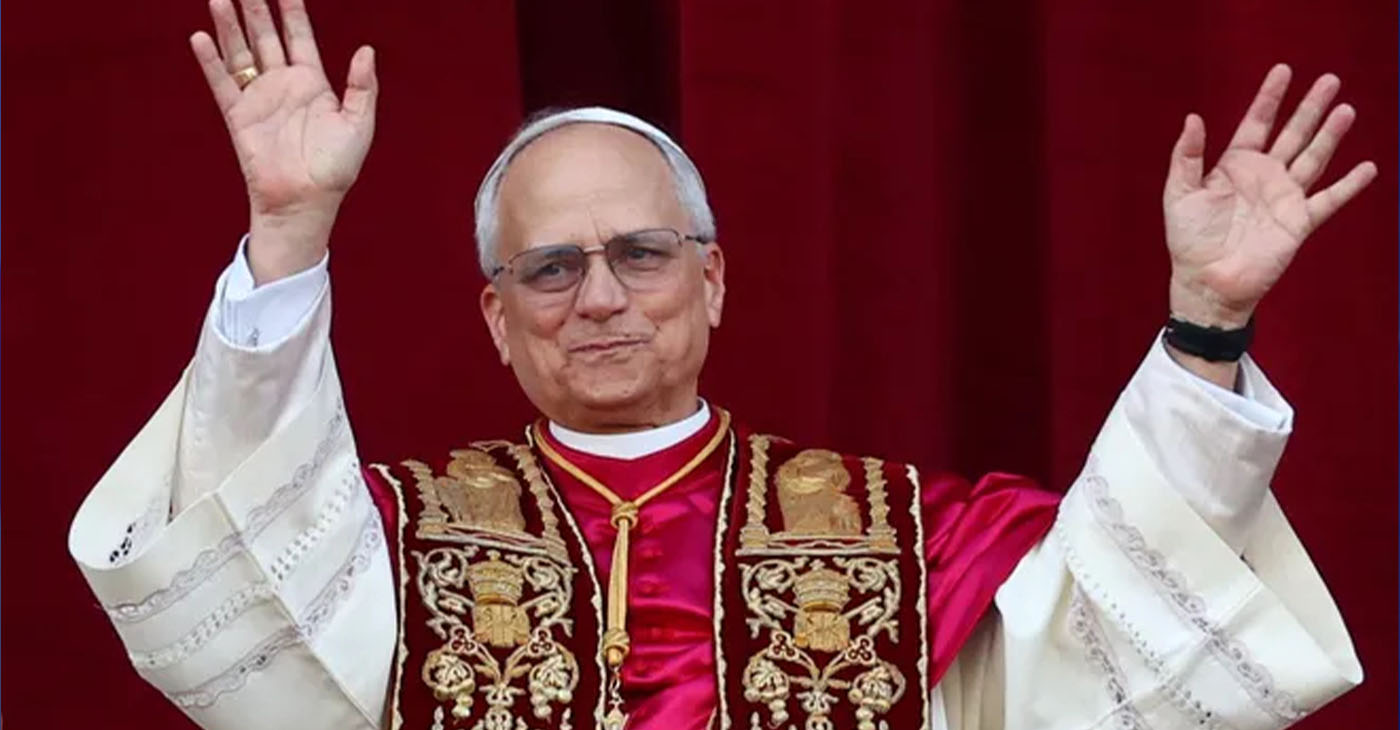
Gov. Gavin Newsom and First Partner Jennifer Siebel Newsom on May 8 issued a statement congratulating Pope Leo XIV on his historic election as the first American to lead the Catholic Church.
The announcement has drawn widespread reaction from U.S. leaders, including former House Speaker Nancy Pelosi, who called the moment spiritually significant and aligned with the values of service and social justice.
In their statement, the Newsoms expressed hope that the newly elected pope would guide the Church with a focus on compassion, dignity, and care for the most vulnerable. Newsom said he and the First Partner joined others around the world in celebrating the milestone and were encouraged by the pope’s first message.
“In his first address, he reminded us that God loves each and every person,” said Newsom. “We trust that he will shepherd us through the best of the Church’s teachings: to respect human dignity, care for the poor, and wish for the common good of us all.”
Newsom also expressed hope that the pontiff’s leadership would serve as a unifying force in a time of global instability.
“May he remind us that our better angels are not far away — they’re always within us, waiting to be heard,” he said.
Pelosi, a devout Catholic, also welcomed the pope’s election and noted his symbolic connection to earlier church leaders who championed workers’ rights and social equality.
“It is heartening that His Holiness continued the blessing that Pope Francis gave on Easter Sunday: ‘God loves everyone. Evil will not prevail,’” said Pelosi.
Activism
Retired Bay Area Journalist Finds Success in Paris with Black History Tours
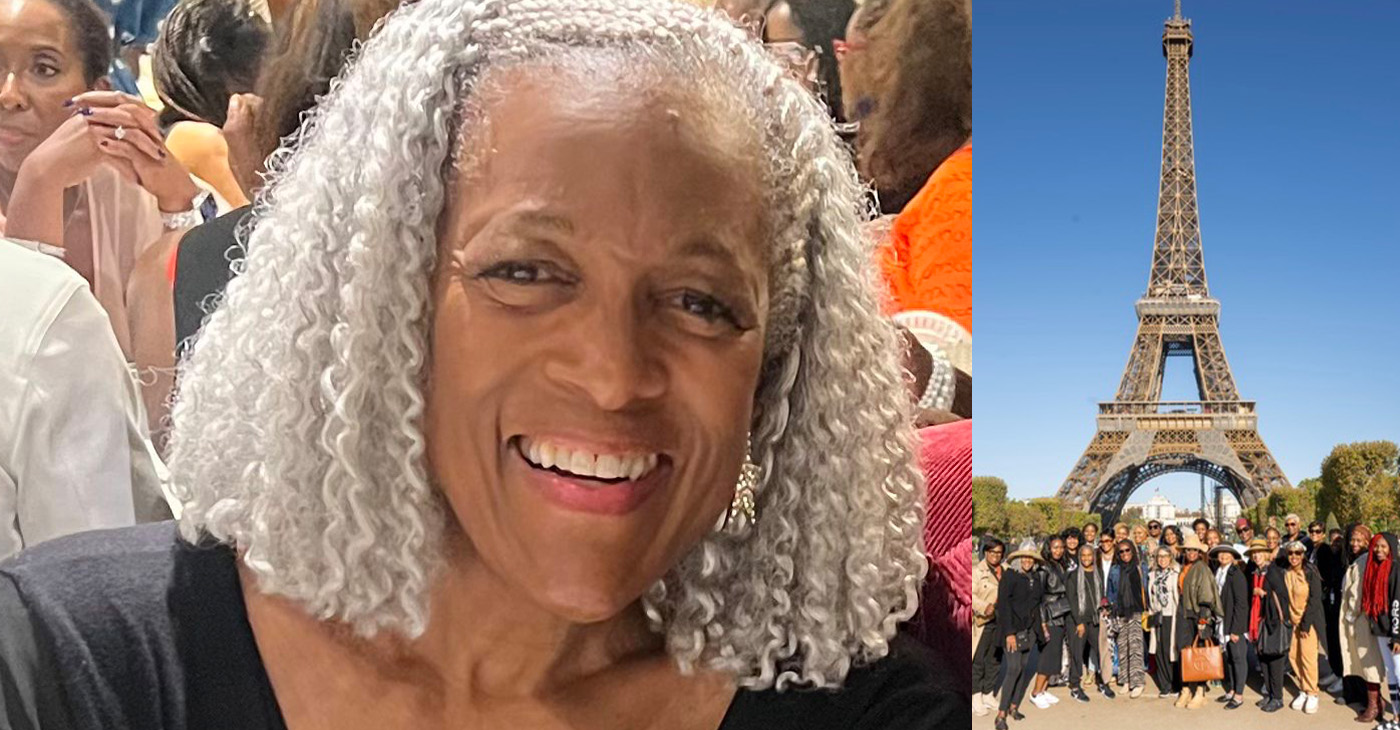
In the late 90s, Stevenson finally realized her dream of living in Paris, now with her daughter. She started exploring the history of Africans in the city and would go on to teach others the same. Her business, which she named Black Paris Tours (BPT), received a significant boost when a family friend gave her a stack of cash and encouraged her to expand on the knowledge that she had only started to share with people she knew.
By Post Staff
There were two things Oakland-born, East Palo Alto-raised Ricki Stevenson always dreamed of:
- Going to New York as a newscaster to tell the true story of Blacks in America.
- Living and working in Paris one day.
Her dreams of life in Paris began when she was three years old and her mother, a former professional dancer, took her to see Josephine Baker perform. She was 11 when her parents took her to the Stanford University campus to meet James Baldwin, who was speaking about his book, “The Fire Next Time.” Ricki says that’s when she knew she’d one day live in Paris, “the city of light!”
But before that would ever happen, she had a tumultuous career as a newscaster across the country that was inspired by her family’s history.
Stevenson recalls marching with Cesar Chavez as he fought for labor rights for farm workers in California.
“Are we Mexican too?” she asked her parents. “No, but we will fight for everyone’s human rights,” they responded to her.
Ironically, Ricki’s paternal family roots went back to Greenwood, Oklahoma, infamous for the 1921 bombing of Black Wall Street. A time when Black people had oil wells, banks, and a thriving business community.
This background would propel her into a 25-year journalism career that gave her the opportunity to interview greats like President Jimmy Carter, PLO leader Yassir Arafat, James Baldwin, Rev. Jesse Jackson, UN Ambassador Andrew Young, Miriam Makeba, and the leaders of South African liberation movements.

A job offer from KCBS radio brought her back to the Bay Area in the 1980s. Then came the switch to TV when she was hired as a Silicon Valley business reporter with KSTS TV, working at the first Black-owned television station in northern CA (created and owned by John Douglas). Along the way, Stevenson worked as an entertainment reporter with BET; coproduced, with her disc jockey brother Isaac, a Bay Area show called “Magic Number Video;” lived in Saudi Arabia; worked as an international travel reporter with News Travel Network; and worked at KRON TV a news anchor and talk show host.
In 1997, Stevenson realized her dream of living in Paris with her young daughter, Dedie. She started exploring the history of Africans in the city and would go on to teach others the same. Her business, which she named Black Paris Tours (BPT), received a significant boost when a family friend, Admiral Robert Toney put a chunk of money in her hand. He said, “Ricki, my wife and I have been coming to Paris for 20 years, but in just two days with you and Dedie, we’ve learned and seen more than we ever did before.”
Years after BPT took off, Ricki met Nawo Carol Crawford and Miguel Overton Guerra, who she recruited as senior scholar guides for Black Paris Tours.
Guerra says he is proud of his work with Black Paris Tours in that it provides a wealth of information about the rich legacy of African and African American history and influence in Paris and Europe.
“I tend to have a feeling for history always being a means of a reference point backwards … you start to understand the history, that it isn’t just the United States, that it began with African people,” Guerra says.
He said that it’s been a pleasure to watch people learn something they didn’t know before and to take them through the city to key points in Black history, like hangout spots for writers like Baldwin and Richard Wright, restaurants in the busiest parts of Paris, the home of Josephine Baker and so much more.
Although the tours are open to all, Guerra hopes that those of African descent from all over the world can embrace that they don’t have to just stay where they are because movies and media have portrayed cities like Paris to be only white, it’s multicultural and accepting to all.
“We’ve been here, and we’ve been there, going way back when. And we shouldn’t be considered or consider ourselves to be strangers in any place that we go to,” he said.
Stevenson notes they’ve had 150,000 people take their tour over the years, with notables like former NFL quarterback Colin Kaepernick, Smokey Robinson, Steve Harvey, Miriam Makeba, and more.
Friends and former media colleagues of Stevenson compliment the BPT crew on their knowledge of the city and their ability to always keep it interesting.
“He [Guerra] just had a deep, deep wealth of knowledge and he was constantly supplanting information with historical facts and the like. I love that it was demonstrating and showing how Black people have thrived in Paris or contributed to the culture in Paris,” Candice Francis said.
She toured in the summer of 2022 and stated that in the two weeks that they visited Paris, BPT was the highlight of her trip. She shared that she was proud of Stevenson and the life she’d managed to manifest and build for herself.
“Even if you’re visiting Paris for the tenth time, if you haven’t taken the tour, then by all means, take it,” Francis emphasized.
Magaly Muñoz, Gay Plair and Paul Cobb also contributed to this story. You can book your own adventure with Black Paris Tours at www.blackparistour.com.


WORK FROM HOME
Home-based business with potential monthly income of $10K+ per month. A proven training system and website provided to maximize business effectiveness. Perfect job to earn side and primary income. Contact Lynne for more details: Lynne4npusa@gmail.com 800-334-0540


OP-ED: AB 1349 Puts Corporate Power Over Community

Oakland Post: Week of December 31, 2025 – January 6, 2026

Big God Ministry Gives Away Toys in Marin City

First 5 Alameda County Distributes Over $8 Million in First Wave of Critical Relief Funds for Historically Underpaid Caregivers

2025 in Review: Seven Questions for Assemblymember Lori Wilson — Advocate for Equity, the Environment, and More

2025 in Review: Seven Questions for Assemblymember Tina McKinnor, Champion of Reparations, Housing and Workers’ Rights

2025 in Review: Seven Questions for Sen. Laura Richardson, Who Made Legislative History This Year

2025 in Review: Seven Questions for Sen. Lola Smallwood-Cuevas – an Advocate for Jobs and Justice

Alfred Cralle: Inventor of the Ice Cream Scoop

BOOK REVIEW: Let Me Be Real With You

Oakland Post: Week of December 24 – 30, 2025

Bling It On: Holiday Lights Brighten Dark Nights All Around the Bay

Oakland Council Expands Citywide Security Cameras Despite Major Opposition

Lu Lu’s House is Not Just Toying Around with the Community

Desmond Gumbs — Visionary Founder, Mentor, and Builder of Opportunity

Oakland Post: Week of November 26 – December 2, 2025

Seth Curry Makes Impressive Debut with the Golden State Warriors

LIHEAP Funds Released After Weeks of Delay as States and the District Rush to Protect Households from the Cold

Seven Steps to Help Your Child Build Meaningful Connections

Seven Steps to Help Your Child Build Meaningful Connections

Post Salon to Discuss Proposal to Bring Costco to Oakland Community meeting to be held at City Hall, Thursday, Dec. 18

Mayor Lee, City Leaders Announce $334 Million Bond Sale for Affordable Housing, Roads, Park Renovations, Libraries and Senior Centers

FBI Report Warns of Fear, Paralysis, And Political Turmoil Under Director Kash Patel

Oakland Post: Week of December 10 – 16, 2025

Trinidad and Tobago – Prime Minister Confirms U.S. Marines Working on Tobago Radar System

Oakland School Board Grapples with Potential $100 Million Shortfall Next Year

Fayeth Gardens Holds 3rd Annual Kwanzaa Celebration at Hayward City Hall on Dec. 28

A Nation in Freefall While the Powerful Feast: Trump Calls Affordability a ‘Con Job’

2025 in Review: Seven Questions for Black Women’s Think Tank Founder Kellie Todd Griffin

Teens Reject Today’s News as Trump Intensifies His Assault on the Press

Hyundai Ioniq 5 Parking, Safety, and 360 View #shorts

2025 Ioniq 5 New Wiper & Powerful Performance! #shorts

Electric SUV Range: Is 259 Miles Enough? #shorts

EV Charging: How Fast Can You Charge an Electric Vehicle? #shorts

Biometric Cooling… Messaging Seats…Come on! 2025 Infiniti QX80 Autograph 4WD

Charged Up: Witness the Magic of a Fully Electric Car! #shorts

Range Rover Sport PHEV Included…: See What’s Inside This Luxury SUV! #shorts

Invisible Hood View: Perfect Parking with X-Ray Vision! #shorts

AI Is Reshaping Black Healthcare: Promise, Peril, and the Push for Improved Results in California

ESSAY: Technology and Medicine, a Primary Care Point of View

Sanctuary Cities

The RESISTANCE – FREEDOM NOW

STATE OF THE PEOPLE: Freddie

ECONOMIC BOYCOTT DAY!!!!!

I told You So
-
 Bay Area4 weeks ago
Post Salon to Discuss Proposal to Bring Costco to Oakland Community meeting to be held at City Hall, Thursday, Dec. 18
-
 Activism4 weeks ago
Mayor Lee, City Leaders Announce $334 Million Bond Sale for Affordable Housing, Roads, Park Renovations, Libraries and Senior Centers
-
 Activism4 weeks ago
Oakland Post: Week of December 10 – 16, 2025
-
 Activism4 weeks ago
Oakland School Board Grapples with Potential $100 Million Shortfall Next Year
-
 Arts and Culture4 weeks ago
Fayeth Gardens Holds 3rd Annual Kwanzaa Celebration at Hayward City Hall on Dec. 28
-
 Activism4 weeks ago
2025 in Review: Seven Questions for Black Women’s Think Tank Founder Kellie Todd Griffin
-

 Advice4 weeks ago
COMMENTARY: If You Don’t Want Your ‘Black Card’ Revoked, Watch What You Bring to Holiday Dinners
-

 Activism4 weeks ago
Ann Lowe: The Quiet Genius of American Couture
