
Black History
Kevin Woolfolk: The Innovator Behind the Modern Hamster Exercise Wheel
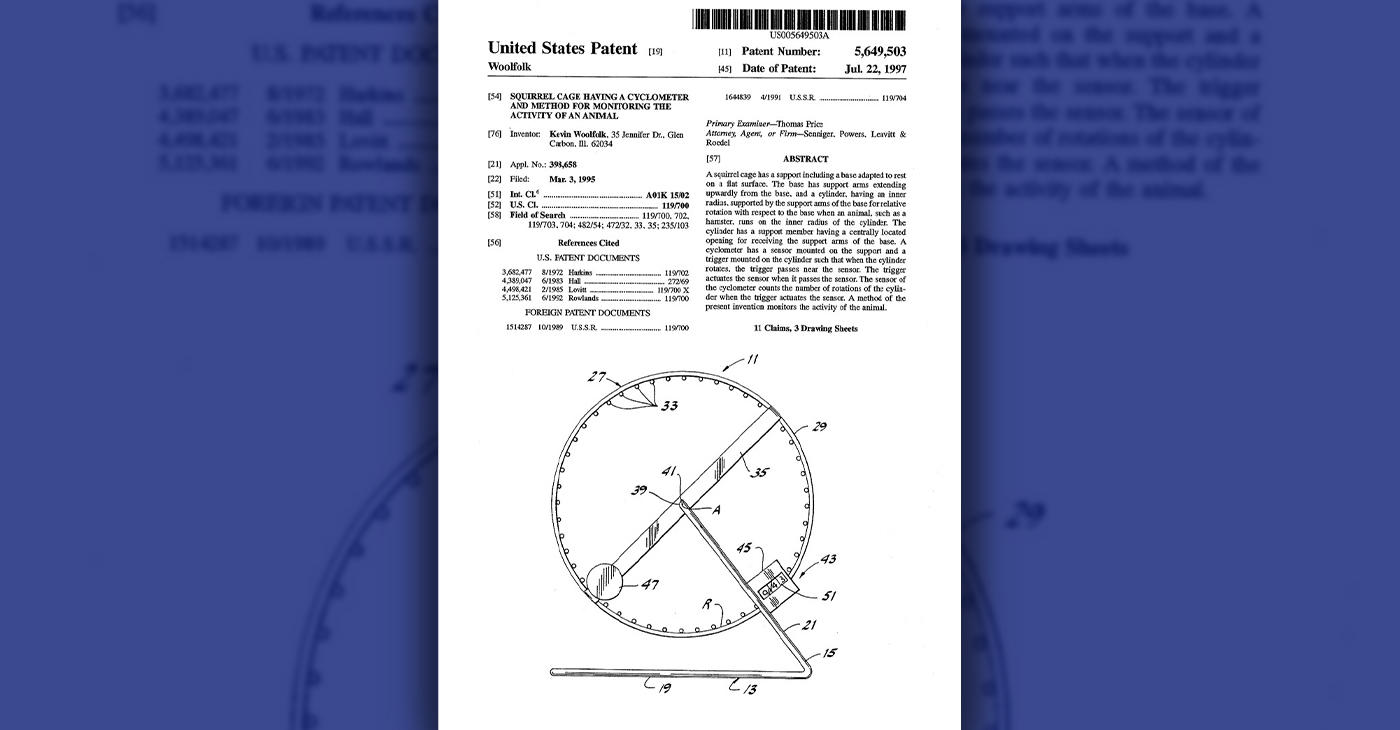
Recognizing the potential value of his invention for other pet owners and researchers, he patented his improved hamster exercise wheel, making him the known inventor of this type of measuring device. His patent (US 5,649,503) describes “a squirrel cage” with “a cyclometer having a sensor mounted on the support and a trigger mounted on the cylinder such that when the cylinder rotates, the trigger passes near the sensor.”

By Tamara Shiloh
In the world of pet care innovation, some of the most impactful inventions come from the simplest observations. Such is the case with Kevin Woolfolk, an inventor whose curiosity about his pet hamster led to a revolutionary improvement in small animal exercise equipment that continues to benefit pets and their owners today.
There isn’t much written about Woolfolk’s life, but his story begins in 1969 when he was exercising on his stationary bike one evening in Normal, Illinois. As he diligently recorded the mileage of his workout, he noticed his hamster, Burt, running energetically on his wheel. This simple observation sparked a question that would lead to a significant innovation: just how far was Burt traveling during his nightly runs?
Unlike many inventors who start with complex technical problems, his inspiration came from genuine curiosity about his pet’s activity levels. He wondered about the distance Burt was covering as he ran on the traditional hamster wheel, which at the time provided exercise but no way to measure the animal’s activity.
Driven by this curiosity, Woolfolk created a prototype that could measure his hamster’s exercise routine. His solution was simple: he constructed a mouse wheel equipped with a small magnetic counter purchased from a local store. This addition transformed the basic exercise wheel into a device capable of tracking the distance traveled by the animal.
After placing the prototype in Burt’s cage, Woolfolk left his hamster to complete his nightly exercise routine. The results were astounding — upon waking up, he discovered that Burt had run an impressive 23,300 feet, equivalent to roughly 4.5 miles. This revelation not only satisfied his curiosity but also demonstrated the significant exercise needs of small pets like hamsters.
Motivated by this eye-opening figure, he decided to put his creative juices to work. About a year after drafting the idea, he filed and was granted a patent for a “squirrel cage having a cyclometer … and method for monitoring the activity of an animal.” The patent detailed the mechanics of effectively tracking the animal’s activity via wheel rotation.
Recognizing the potential value of his invention for other pet owners and researchers, he patented his improved hamster exercise wheel, making him the known inventor of this type of measuring device. His patent (US 5,649,503) describes “a squirrel cage” with “a cyclometer having a sensor mounted on the support and a trigger mounted on the cylinder such that when the cylinder rotates, the trigger passes near the sensor.”
This innovation represented more than just a gadget for curious pet owners. The ability to measure small animal exercise provided valuable data for veterinarians, researchers, and pet enthusiasts who wanted to better understand and monitor their pets’ health and activity levels.
Woolfolk’s invention has had lasting impact on the pet industry. His idea was eventually picked up by pet companies and commercialized, making the measuring hamster wheel available to consumers worldwide. Today, variations of his design can be found in pet stores and are used by hamster owners who want to track their pets’ exercise routines.

Black History
COMMENTARY: Mental Health Crisis Among Black Men — A Growing Concern
WORD IN BLACK — Data from the Centers for Disease Control and Prevention show twice as many people died by suicide in 2023 as from homicide. In fact, it was the second leading cause of death among people aged 10 to 34 and the fourth leading cause of death among individuals between the ages of 35 and 44.


By Jennifer Porter Gore | Word In Black
Black men are dying from a mental health crisis that too often goes unseen.
As deaths from suicide, overdoses, and alcohol abuse rise among Black Americans, experts warn that cultural expectations around masculinity, mistrust of mental health systems, and a shortage of Black providers are preventing many men from getting help before it is too late.
In the waning days of the pandemic, the U.S. saw the number of deaths from suicide, alcohol use, and drug overdoses — called “deaths of despair” — among Black Americans surpass occurrences among whites for the first time. Between 2013 and 2022, the rates of these deaths tripled among Black Americans.
Painful numbers
Data from the Centers for Disease Control and Prevention show twice as many people died by suicide in 2023 as from homicide. In fact, it was the second leading cause of death among people aged 10 to 34 and the fourth leading cause of death among individuals between the ages of 35 and 44.
That same year, the suicide rate among males was nearly 4 times higher than among females, with Black men also being four times as likely to die from suicide as Black women.
Among younger Black men, the trajectory is especially troubling.
University of Georgia researchers last year found that childhood exposure to trauma, poverty, and racism leads many young Black men to believe they don’t have value and are unable to trust community support systems. Between 2007 and 2020, the suicide rate among Black youth ages 10 to 17 nearly tripled, rising faster than any other racial or ethnic group.
Suicide is now the second leading cause of death for people between the ages of 20 and 24. For Black men in the same age group, however, the suicide rate surpassed that of their white peers in 2024—a dreadful historical first.
Playing tough can be fatal
Traditional definitions of masculinity — stoicism, staunchly self-reliant and emotionally controlled — are found to increase the likelihood that men of all age ranges will avoid professional help. Researchers find those men fear being judged as weak, a perception that significantly raises stress and contributes to untreated depression and anxiety.
In 2023, just 17 percent of American men saw a mental health professional, roughly half the rate of women. Among men who said they were depressed, only one in four received any counseling or therapy in the past year. Black adults, however, were 36 percent less likely to have received mental health treatment in the previous year, even though they had similar or higher rates of anxiety and depression as whites.
In a newly released report, the JED Foundation, a nonprofit dedicated to protecting the emotional health and preventing suicide for teens and young adults, found that boys are socialized from an early age to internalize their emotions rather than express them.
Suicide is now the second leading cause of death for people between ages 20 and 24. For Black men in the same age group, however, the suicide rate surpassed that of their white peers in 2024—a dreadful historical first.
The report, titled The Emotional Lives of Boys and Young Men, found that when that distress surfaces, it often looks very different from the depression and inactivity seen in girls and young women.
Instead, according to the report, boys and young men are more likely to disguise their distress by withdrawing, displaying anger or aggression, or engaging in daredevil behavior— reckless driving, substance abuse, compulsive gambling, or risky sexual encounters.
At the same time, online environments such as video games and social media can be a double-edged sword, according to the report.
“Digital environments can amplify both harmful and supportive pathways, with opportunities for humor, distraction, and connection,” the report says, but also provides “exposure to harmful content, cyberbullying, and gambling and sports betting.”
Black provider shortage
While research indicates that having a caregiver of the same gender and race is beneficial, Black practitioners are still an extreme minority in all segments of the mental health profession. Only 4% of psychologists are Black, and just 2% of psychiatrists, who are medical doctors, and a scant 11% of licensed professional counselors are Black.
But research has shown that peer-based support groups can be effective in communities plagued by a lack of access to mental health professionals, as well as mistrust of clinical environments.
Organizations such as JED have launched partnerships with fraternal organizations to reverse these trends. Last month, JED announced it is working with Alpha Phi Alpha Fraternity, Inc. as part of The JED Greek-Letter Organizations (GLO) programs.
“The Jed Foundation recognizes that fraternities and sororities are powerful communities for connection, leadership, and identity development,” Dr. ShirDonna Lawrence, senior manager of JED GLO, said in a statement. “This makes them essential partners in advancing student mental health and well-being on and off campus.”
It’s also a mutually beneficial relationship, which “strengthens Alpha’s enduring mission and advances JED’s work in culturally responsive, community-centered mental health promotion,” Lawrence said.

Black History
COMMENTARY: Our Voices — When Armed Power Appears at the Ballot Box
TEXAS METRO NEWS — “What terrifies me most is how casually these conversations are now happening. We are discussing armed federal presence near elections as though this were a normal political debate. Fifty years ago, Americans would have recognized immediately how dangerous this sounded.”
By Rev. Peter Johnson | Texas Metro News
There are sounds you never forget once you have heard them. The slow crunch of gravel beneath a sheriff’s boots outside a voting station. The sound of a shotgun being cocked. The silence of Black citizens standing in line, afraid to make eye contact. The sound of a church mother whispering, “Baby, if I don’t come home tonight, tell your daddy I tried.”
I remember grown men trembling before voter registration tables, not because they were weak, but because they understood exactly what power could do to a Black body in America. I remember pastors watching police cars circle churches where voter meetings were being held. I remember people disappearing from movements overnight. I remember fear sitting beside democracy like an armed guard.
That is why my spirit turned cold when I heard the discussion of ICE agents and Border Patrol officers being present at polling stations. Some of us have seen this movie before, and we know how it ends.
America keeps pretending voter intimidation belongs only to history books. It does not. It evolves. It changes uniforms. It changes language. But it always carries the same message: “Some of you should think twice before showing up here.”

Today, the target may be immigrants, Latino communities, Muslims, asylum seekers, or mixed-status families. Tomorrow it will expand. It always expands. History teaches that once fear is allowed near the ballot box, democracy itself begins gasping for air.
Deputy Attorney General Todd Blanche publicly defended the idea of immigration enforcement officers near polling locations, asking why people would object. The answer is painfully simple: because law enforcement presence has long been used in America to discourage unwanted people from voting.
Not to protect elections. Control them.
During Jim Crow, intimidation was often psychological before it became physical. Officers stood near entrances. White citizens took photographs. Names were written down. Questions were asked loudly enough for everybody else in line to hear. The goal was not merely arrest. The goal was humiliation. The goal was fear. The goal was to make people decide that voting simply cost too much.
And let me say this plainly: federal immigration agents do not symbolize safety to immigrant communities. They symbolize raids, deportation, detention centers, separated children, midnight knocks, and disappeared neighbors.
People in Washington know this. That is exactly why the idea is dangerous.
You do not place armed immigration authority near polling stations unless you understand the chilling effect it creates. A grandmother who is a legal citizen may stay home simply because her undocumented grandson lives with her. A young Latino voter may avoid the polls because he fears being questioned. A Muslim family may decide silence is safer than participation.
Fear spreads faster than policy. That is what America keeps forgetting.
Some readers will accuse me of exaggeration. But I lived through and experienced enough to watch this country repeat sins it swore it had already repented. Every generation believes democracy is sturdier than it really is. It’s not.
Democracy survives only as long as ordinary citizens believe they can approach the ballot box without fear of government intimidation.
The moment fear enters that space, something sacred begins dying.
What terrifies me most is how casually these conversations are now happening. We are discussing armed federal presence near elections as though this were a normal political debate. Fifty years ago, Americans would have recognized immediately how dangerous this sounded.
Now people shrug.
That is how nations drift toward authoritarianism. Not all at once. Slowly. Quietly. One normalized outrage after another. First comes the rhetoric. Then comes the fear. Then comes the silence. Then comes the surrender.
I buried too many of my freedom fighter friends to stay quiet while America plays games with voting rights again. I have stood in churches where old men still carried scars from police beatings tied directly to voter registration efforts. I have spoken with women who were fired from jobs for attempting to vote. I have listened to stories of bodies found hanging from trees because somebody dared believe democracy included them, too.
So no, I will not calmly dismiss this moment, because history whispers before it screams, and what I hear whispering right now sounds disturbingly familiar.
The presence of ICE or Border Patrol near polling stations may begin as “security.” But history warns us that government power, once normalized around elections, rarely retreats peacefully. It expands. It tests limits. It searches for new targets.
That is why every American, regardless of party, should reject this path now. Not later. Now. Once citizens associate voting with fear, democracy is no longer functioning freely. It is surviving on borrowed time.
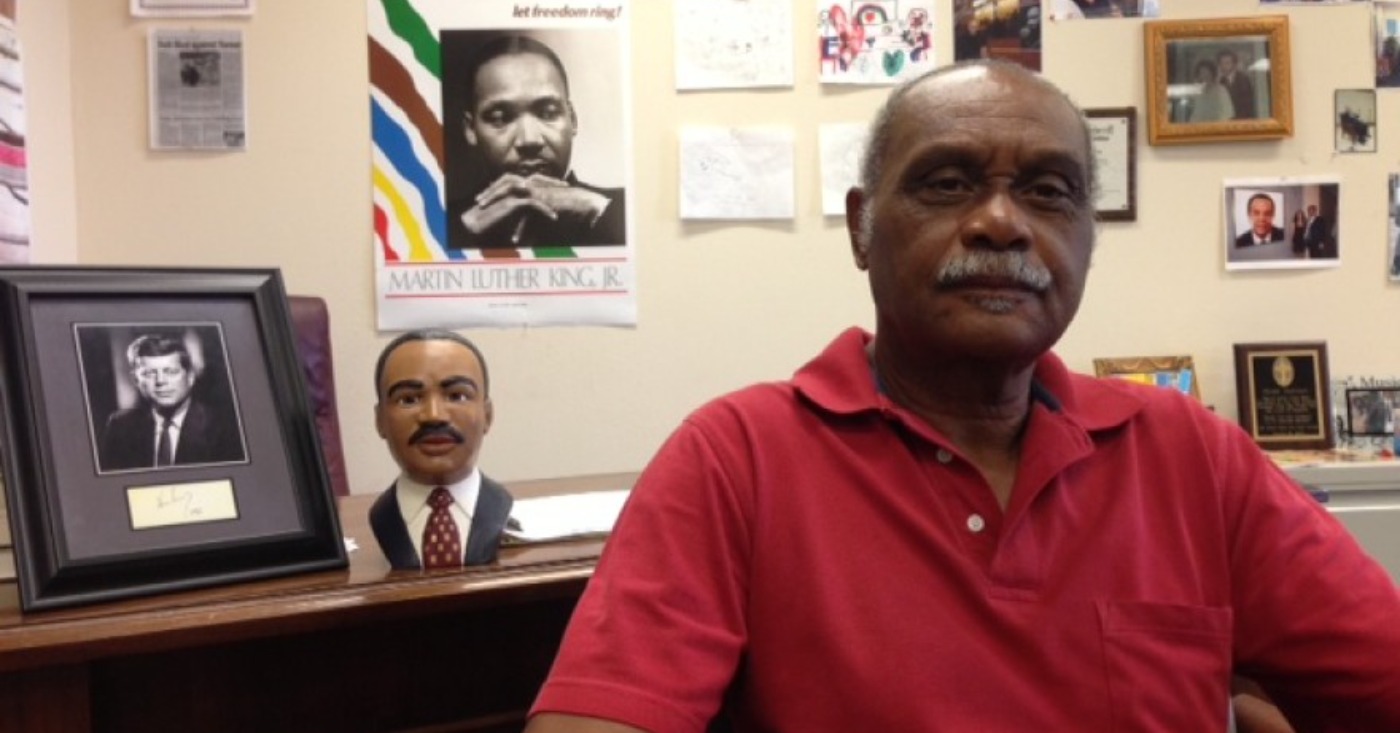
Peter Jerome Johnson, was the youngest staff member of the Southern Christian Leadership Conference under Dr. Martin Luther King, Jr. An alum of Southern University, he founded the Peter Johnson Institute on Nonviolence.
Art
BOOK REVIEW: Never Tell a Black Girl How to Black Girl: Essays
Growing up in North Carolina, she Black Girled her hair her entire life. Her grandma made her sit for box braids when she was small, telling Brown that she was “tenderheaded.” Later, Brown had relaxed hair until she “went broke” and couldn’t afford the process anymore. That was when she got acquainted with her natural hair – although she returned to box braids at least once, and loved them all over again.
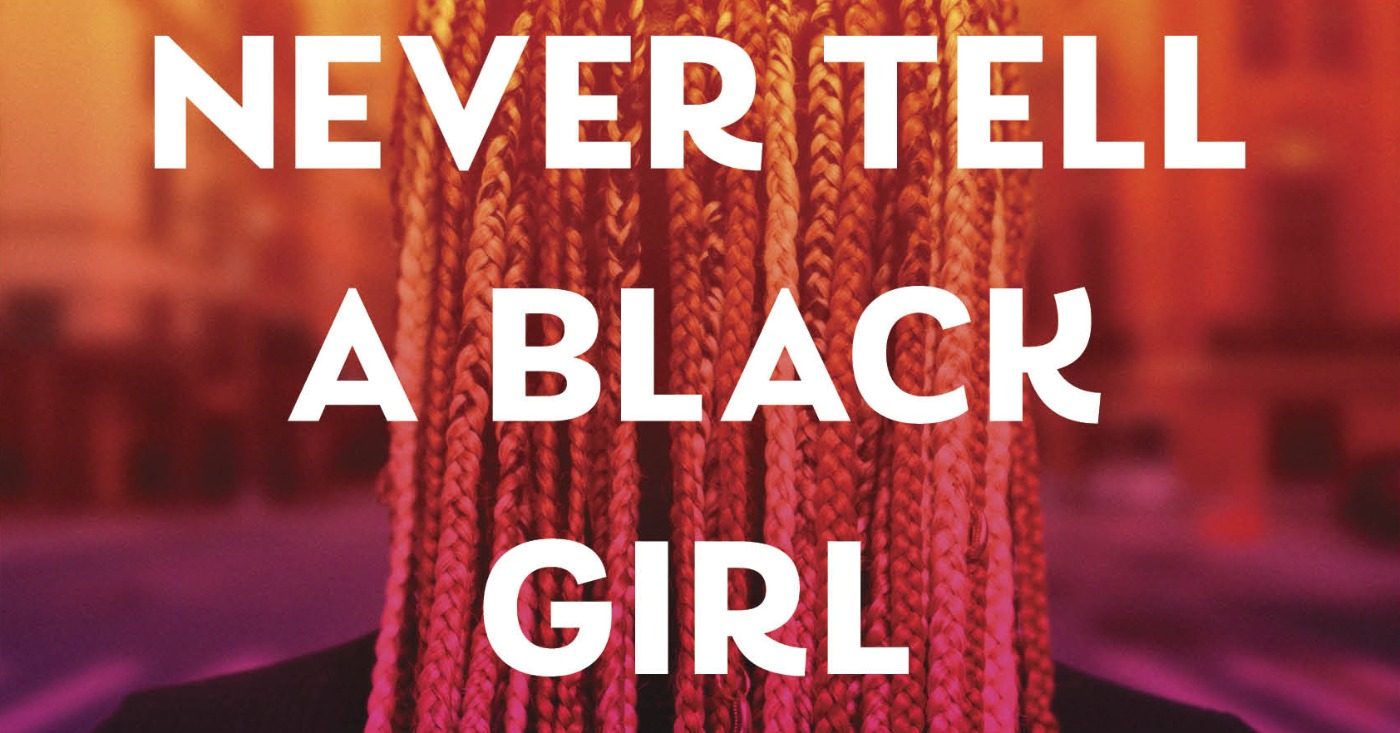
Author: Amena Brown, Copyright: c.2026, Publisher: Tiny Rep Books, SRP: $30.00, Page Count: 320 pages
Some things can really make you cross.
People telling you your business, for instance. People asking questions they have no reason to know the answers to. Folks who criticize your hair or clothes or life. These things would set anyone off; they’d be the last straw for anybody. As in the new book, “Never Tell a Black Girl How to Black Girl” by Amena Brown, some folks just cross the line.
In a way, it’s a matter of grammar.
Depending on how you say it, “Black Girl is a noun and a verb,” says Brown. A Black Girl can be a Black Girl… and she can Black Girl. Brown herself has done it “in six countries.”

Growing up in North Carolina, she Black Girled her hair her entire life. Her grandma made her sit for box braids when she was small, telling Brown that she was “tenderheaded.” Later, Brown had relaxed hair until she “went broke” and couldn’t afford the process anymore. That was when she got acquainted with her natural hair – although she returned to box braids at least once, and loved them all over again.

As the child of a strict Pentecostal mother, Brown was a “late bloomer.” She didn’t drink alcohol until she was in her twenties. She was chaste while dating and a better church girl than a party girl. After she left the church, she began experimenting with wine first, then cocktails. She learned to cook, reasoning that the path to finding love started in a kitchen, one that happened to be her grandmother’s. And yes, love did eventually come in the form of a red-headed White man who was her friend before he became her boyfriend — and before he became her mother-sanctioned, grandma-approved husband.
Overall, says Brown, there is no single right method for doing this.
“There are so many ways to Black Girl, which means the way you Black Girl is beautiful, and the way I Black Girl is beautiful too.”
Looking for a collection of addictive, can’t-read-just-one essays that’ll make you laugh but that also feel like author Amena Brown is peeking at your life? Want a book that speaks to every corner of your existence?
Yeah, then you want “Never Tell a Black Girl How to Black Girl.”
You know how it is when you spot something so profound, so right, that you just have to call your friends and read it out loud to them? That’s what you’ll find here: truth told with humor that’s also oozing with warmth. Add honesty that’s smart and bold and practically begging for a “Heck, YES!” and you’ve got your new favorite book.
The essays here are short enough to read in a few minutes, but compelling enough to make you want more, so give yourself room.
This is a book for twenty- and thirty-somethings, but also for their mothers and grandmas who can handle respectful irreverence and surefooted playfulness. Can men enjoy “Never Tell a Black Girl How to Black Girl”? Sure, but it’s more for women, cross your heart.

WORK FROM HOME
Home-based business with potential monthly income of $10K+ per month. A proven training system and website provided to maximize business effectiveness. Perfect job to earn side and primary income. Contact Lynne for more details: Lynne4npusa@gmail.com 800-334-0540


COMMENTARY: Mental Health Crisis Among Black Men — A Growing Concern

COMMENTARY: Our Voices — When Armed Power Appears at the Ballot Box

Councilman Johnson calls for Action to Keep Mavericks in Dallas – Garland Journal

Automatic Draft Registration Raises Questions Among Young Americans

Scotland Defeats Haiti 1-0 in World Cup Opener

Ivory Coast Finds the Net Late Securing a 1-0 Victory Over Ecuador

What the insurance industry sees when it looks at your home

What the insurance industry sees when it looks at your home

BOOK REVIEW: Never Tell a Black Girl How to Black Girl: Essays

Assemblymember Mike Gipson: Tragic Compton Shootings Drive Home Need for Stronger Gun Control Legislation

Gov. Gavin Newsom Signs Law Streamlining Affordable Housing Rules

Oakland Celebrates $125 Million Coliseum Sale

OPINION: Board VP Valarie Bachelor Says OUSD Is Moving Ahead Under Committed Leadership

Oakland Children’s Hospital Workers and Patients Rally for Pediatric Medical Care

Alameda County Board of Supervisors Honors 100 Black Men of the Bay Area

After 10-Year Wait, Fillmore Heritage Center Reopens in San Francisco

Oakland Post: Week of June 3 – 9, 2026


Oakland Post: Week of June 17 – 23, 2026

IN MEMORIAM: Oakland Dance Legend Reginald Ray-Savage, 67

UC Berkeley Named Top Public University in the U.S. and No. 7 in the World by ‘U.S. News’

COMMENTARY: Black Music is the Sound of Black Freedom: Let Us Reclaim Both This Juneteenth

Oakland Post: Week of June 10 – 16, 2026

Ferry Fares to Increase July 1 as Ridership Hits Record Highs

2026 World Cup is Here and Atlanta is Ready For It

Sale of Coliseum to African American Developers Moves Toward Completion

Oakland Director Boots Dazzles Once Again in ‘I Love Boosters’

NCBW-OBAC Champions Black Women Entrepreneurs at Business en Blaque Expo

Oakland Post: Week of July 1 – 7, 2026

A Long Time Coming: School District Kicks Off Massive $97 Million Renovation of West Oakland’s McClymonds High School

The Conversation With Al McFarlane 6/23/26

Media Monday 6/22/26

LIVE! ASK ALMA! — TUES. 6.23.26 7PM EST

Car Buying Secrets: 4 Hidden Checks Before You Sign!

Is This 550 HP Charger Worth YOUR Money? AutoNetwork Review

Celebrating Juneteenth – Frederick Douglass on education and resistance

LIVE! — ASK ALMA! — TUES. 6.19.26 7PM EST

Hyundai Ioniq 5 Parking, Safety, and 360 View #shorts

2025 Ioniq 5 New Wiper & Powerful Performance! #shorts

Electric SUV Range: Is 259 Miles Enough? #shorts

EV Charging: How Fast Can You Charge an Electric Vehicle? #shorts

Biometric Cooling… Messaging Seats…Come on! 2025 Infiniti QX80 Autograph 4WD

Charged Up: Witness the Magic of a Fully Electric Car! #shorts

Range Rover Sport PHEV Included…: See What’s Inside This Luxury SUV! #shorts

Invisible Hood View: Perfect Parking with X-Ray Vision! #shorts
-
 Activism4 weeks ago
 -
 Arts and Culture4 weeks ago
IN MEMORIAM: Oakland Dance Legend Reginald Ray-Savage, 67
-
 Bay Area4 weeks ago
UC Berkeley Named Top Public University in the U.S. and No. 7 in the World by ‘U.S. News’
-
 Alameda County4 weeks ago
Ferry Fares to Increase July 1 as Ridership Hits Record Highs
-
 Activism4 weeks ago
NCBW-OBAC Champions Black Women Entrepreneurs at Business en Blaque Expo
-
 Activism2 weeks ago
Oakland Post: Week of July 1 – 7, 2026
-
 Bay Area4 weeks ago
A Long Time Coming: School District Kicks Off Massive $97 Million Renovation of West Oakland’s McClymonds High School
-
 Activism4 weeks ago
Oakland Museum Presents Landmark Retrospective Celebrating Beloved Bay Area Artist Mildred Howard
