
#NNPA BlackPress
MacKenzie Scott’s Billion-Dollar Defiance of America’s War on Diversity
BLACKPRESSUSA NEWSWIRE — Her most recent gifts to historically Black colleges and universities surpass $400 million this year alone. These are not gestures. They are declarations. They say that the education of Black students is not optional, not expendable and not dependent on the approval of those who fear what an educated Black citizenry represents.

By Stacy M. Brown
Black Press USA Senior National Correspondent
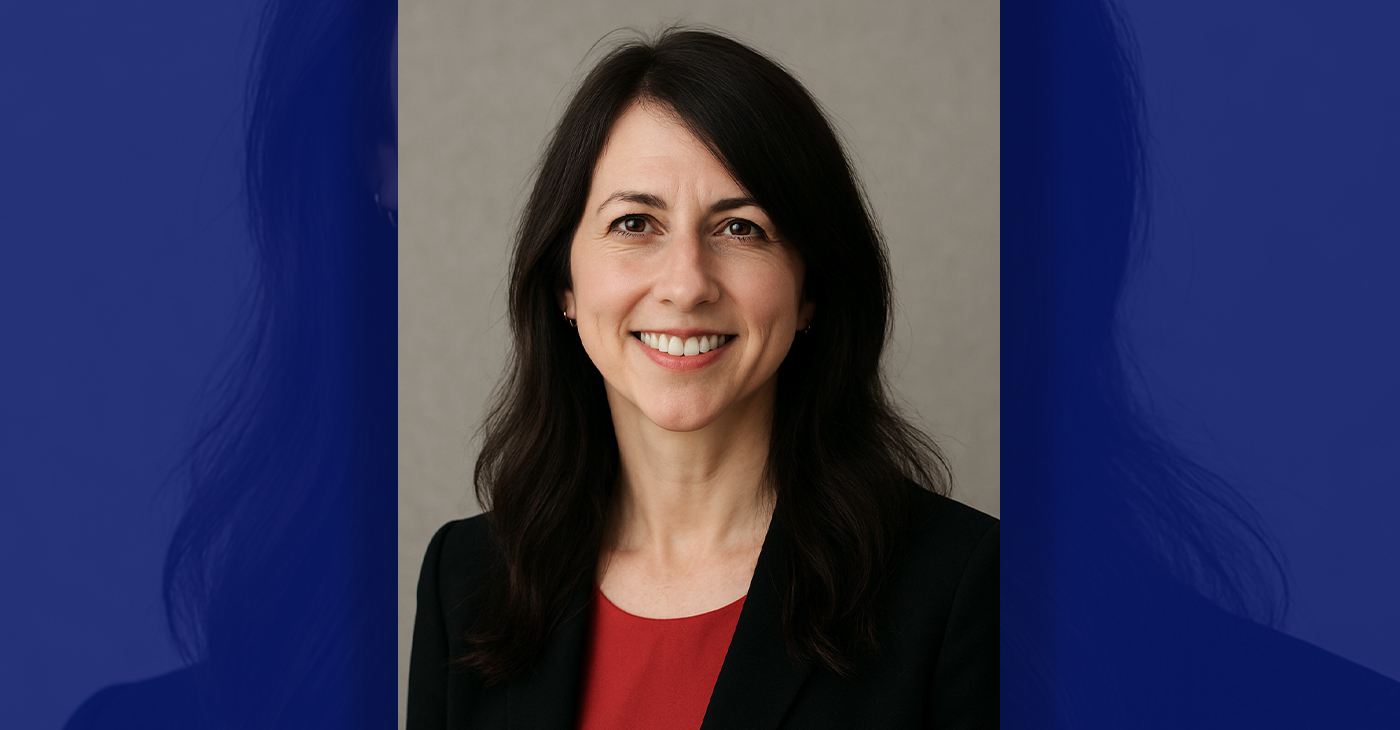
There are moments in American life when truth steps forward and refuses to be convenient. MacKenzie Scott has chosen such a moment. As political forces move to strip diversity from classrooms, silence Black scholarship, and erase equity from public life, she has gone in the opposite direction. She has invested her wealth in the communities this country has spent centuries trying to marginalize.
Her most recent gifts to historically Black colleges and universities have surpassed $400 million this year alone. These are not gestures. They are declarations. They say that the education of Black students is not optional, not expendable, and not dependent on the approval of those who fear what an educated Black citizenry represents.
And she is not the only woman doing what America’s institutions have refused to do. Melinda French Gates has invested billions in supporting women and girls worldwide, ensuring that those whose rights are most fragile receive the most assistance. At a time when this nation tries to erase Black history and restrict the rights of women, two white women, once married to two of the richest white men in the world, have made clear where they stand. They have said, through their giving, that marginalized people deserve not just acknowledgment but investment.
At Prairie View A and M University, Scott’s $63 million gift became the largest in the institution’s 149-year history. “This gift is more than generous. It is defining and affirming,” President Tomikia P. LeGrande said. “MacKenzie Scott’s investment amplifies the power and promise of Prairie View A and M University.” The university said it plans to strengthen scholarships, expand faculty research, and support critical programs in artificial intelligence, public health, agricultural sustainability, and cybersecurity.
Howard University received an $80 million donation that leaders described as transformative. “On behalf of the entire Howard University community, I want to extend my deepest gratitude to Ms. MacKenzie Scott for her extraordinary generosity and steadfast belief in Howard University’s mission,” Wayne A. I. Frederick said. The gift will support student aid, infrastructure, and key expansions in academic and medical research.
Elsewhere, the impact ripples outward. Voorhees University received the most significant gift in its 128-year history. Norfolk State, Morgan State, Spelman, Winston-Salem State, Virginia State, Alcorn State, and the University of Maryland Eastern Shore all confirmed contributions that will reshape their futures. Bowie State University received $50 million, also a historic mark. “We are profoundly grateful to MacKenzie Scott for her visionary commitment to education and equity,” President Aminta Breaux said. “The gift empowers us to expand access and uplift generations of students who will lead, serve, and innovate.”
These gifts arrive at a moment when America attempts to revise its own memory. Curriculum bans seek to remove Black history from classrooms. Political movements claim that diversity is dangerous. Women’s contributions are minimized. And institutions that have served Black communities for more than a century must withstand both political hostility and financial neglect.
Scott’s philanthropy does not simply counter these forces. It exposes them. It asserts that Black students, Black institutions, and Black futures deserve resources commensurate with their brilliance. It declares that women’s leadership is not marginal but central to the fight for justice.
This is where the mission of the Black Press becomes intertwined with the story unfolding. For nearly two centuries, the Black Press of America has chronicled the truth of Black life. It has told the stories that others refused to tell, preserved the history that others attempted to bury, and spoken truths that others feared. The National Newspaper Publishers Association, representing more than 200 Black and women-owned newspapers and media companies, continues that mission today despite financial threats that jeopardize independent Black journalism.
Like the HBCUs Scott uplifts, the Black Press has always been more than a collection of institutions. It is a safeguard. It is a mirror. It is the memory of a people whose presence in this nation has been met with both hostility and unimaginable strength. It survives not because it is funded but because it is essential.
Scott’s giving suggests an understanding of this. She has aligned herself with institutions that protect truth, expand opportunity, and preserve the stories this country tries to erase. She has chosen the side of history that refuses to be silent.
“When Bowie State thrives,” declared Brent Swinton, the university’s vice president of Philanthropic Engagement, “our tight-knit community of alumni, families, and partners across the region and beyond thrives with us.”











#NNPA BlackPress
Lock In Car Price: Avoid Dealer Payment Traps!
Watch the long-form video https://youtu.be/YANxGwD2CjI Don’t get swayed by monthly payments! Always settle the out-of-the-door price first, including all fees. Only then discuss monthly payments, terms, and potential add-ons. #AutoNetwork #CarBuyingTips #CarSales #DealershipSecrets #Negotiation
The post Lock In Car Price: Avoid Dealer Payment Traps! appeared first on BlackPressUSA.


Watch the long-form video
Don’t get swayed by monthly payments! Always settle the out-of-the-door price first, including all fees. Only then discuss monthly payments, terms, and potential add-ons. #AutoNetwork #CarBuyingTips #CarSales #DealershipSecrets #Negotiation
The post Lock In Car Price: Avoid Dealer Payment Traps! appeared first on BlackPressUSA.

#NNPA BlackPress
Sell Your Car: Get Offers BEFORE Visiting Dealerships!
Watch the video https://youtu.be/zJF32l2Fz8I. Before you step onto a lot, get a written offer for your trade-in from CarMax, Carvana, or even a competing dealer. Make them beat it, or they lose your business. Get that number on paper, not just in your head. #AutoNetwork #TradeInTips #CarBuying #Negotiation #SmartShopping
The post Sell Your Car: Get Offers BEFORE Visiting Dealerships! appeared first on BlackPressUSA.

Watch the video
Before you step onto a lot, get a written offer for your trade-in from CarMax, Carvana, or even a competing dealer. Make them beat it, or they lose your business. Get that number on paper, not just in your head. #AutoNetwork #TradeInTips #CarBuying #Negotiation #SmartShopping
The post Sell Your Car: Get Offers BEFORE Visiting Dealerships! appeared first on BlackPressUSA.
#NNPA BlackPress
The Conversation With Al McFarlane 6/23/26
The conversation continues.
The post The Conversation With Al McFarlane 6/23/26 appeared first on BlackPressUSA.

The conversation continues.
The post The Conversation With Al McFarlane 6/23/26 appeared first on BlackPressUSA.
WORK FROM HOME
Home-based business with potential monthly income of $10K+ per month. A proven training system and website provided to maximize business effectiveness. Perfect job to earn side and primary income. Contact Lynne for more details: Lynne4npusa@gmail.com 800-334-0540


Diabetes in Black California: Turning the Tide from Crisis to Control

Oakland Post: Week of July 1 – 7, 2026

Prescott Circus Theatre Presents Free Summer Performance Series

NPRC Joins National Grand Jury Proceedings Seeking Accountability, Constitutional Restoration

Local Civil Rights Attorney, Activist Walter Riley Reveals Life Lessons from 70 Years in the Movement

50 Years Later, ‘Wake Up Everybody!’ Still Resonates During Black Music

Inaugural Juneteenth Awards Ceremony Celebrates the Fillmore’s Black History, Leadership and Resilience

Thousands Come Out to Celebrate Juneteenth in Richmond

East Oakland COGIC Celebrates Re-Dedication

Black Repertory Group Needs Volunteers to Help Shape the Next Generation of Artists and Leaders

Oakland Post: Week of June 24 – 30, 2026


Oakland Museum Presents Landmark Retrospective Celebrating Beloved Bay Area Artist Mildred Howard

Ferry Fares to Increase July 1 as Ridership Hits Record Highs

Stop the Hate Symposium Brings Oakland Together Through Dialogue, Partnership, and Community Healing

After 10-Year Wait, Fillmore Heritage Center Reopens in San Francisco

Oakland Post: Week of June 3 – 9, 2026

Oakland Post: Week of May 27 – June 2, 2026

COMMENTARY: Black Music is the Sound of Black Freedom: Let Us Reclaim Both This Juneteenth

2026 World Cup is Here and Atlanta is Ready For It

5 Cleveland Police Officers Injured, Gunfire Erupts During East Side Pursuit

Oakland Director Boots Dazzles Once Again in ‘I Love Boosters’

Oakland Post: Week of June 10 – 16, 2026

Sale of Coliseum to African American Developers Moves Toward Completion

Oakland Post: Week of June 17 – 23, 2026

Venus Williams Calls a Sabalenka Exit a Tragedy

COMMENTARY: Using Art, Healing, And Community to Transform Mental Health Dialogue

Study: Waiting Lists for Child Care Assistance Nearly Doubled
Ferry Fares to Increase July 1 as Ridership Hits Record Highs

The Conversation With Al McFarlane 6/23/26

Media Monday 6/22/26

LIVE! ASK ALMA! — TUES. 6.23.26 7PM EST

Car Buying Secrets: 4 Hidden Checks Before You Sign!

Is This 550 HP Charger Worth YOUR Money? AutoNetwork Review

Celebrating Juneteenth – Frederick Douglass on education and resistance

LIVE! — ASK ALMA! — TUES. 6.19.26 7PM EST

Hyundai Ioniq 5 Parking, Safety, and 360 View #shorts

2025 Ioniq 5 New Wiper & Powerful Performance! #shorts

Electric SUV Range: Is 259 Miles Enough? #shorts

EV Charging: How Fast Can You Charge an Electric Vehicle? #shorts

Biometric Cooling… Messaging Seats…Come on! 2025 Infiniti QX80 Autograph 4WD

Charged Up: Witness the Magic of a Fully Electric Car! #shorts

Range Rover Sport PHEV Included…: See What’s Inside This Luxury SUV! #shorts

Invisible Hood View: Perfect Parking with X-Ray Vision! #shorts
-
 Art4 weeks ago
After 10-Year Wait, Fillmore Heritage Center Reopens in San Francisco
-
 Activism4 weeks ago
Oakland Post: Week of June 3 – 9, 2026
-
 Arts and Culture4 weeks ago
COMMENTARY: Black Music is the Sound of Black Freedom: Let Us Reclaim Both This Juneteenth
-
 Activism2 weeks ago
 -
 Art4 weeks ago
Oakland Director Boots Dazzles Once Again in ‘I Love Boosters’
-
 Activism4 weeks ago
Oakland Post: Week of June 10 – 16, 2026
-
 Business3 weeks ago
Sale of Coliseum to African American Developers Moves Toward Completion
-
 Activism3 weeks ago
Oakland Post: Week of June 17 – 23, 2026
