
Bay Area
Mayor London Breed Announces Mid-Market Vibrancy and Safety Plan
Increased police presence will combine with community ambassadors to cover every block of the area that stretches from U.N. Plaza to Powell Street

Mayor London N. Breed announced on Tuesday the Mid-Market Vibrancy and Safety Plan, which is aimed at creating a safer and more welcoming environment in the Mid-Market and Tenderloin area.
The plan includes both a visible increase in police presence to deter criminal activity and a community ambassador program to connect people in need with services, and provide a welcoming presence for residents, workers, visitors, and businesses.
Community-based safety ambassadors will be stationed on every block of the area from Powell Station (5th Street) to 8th Street on Market Street and adjacent areas just south of Market Street, UN Plaza, and the Tenderloin blocks bordered by Larkin Street and Eddy Street.
Both the law enforcement and community initiatives will work in tandem to address challenges in the area and coordinate appropriate responses. Funding for this program will be included in Breed’s upcoming budget proposal and will be supplemented by private funding. However, key aspects of this plan will begin immediately using existing funding. This program will also be supported by new State funding secured by UC Hastings.
“All of our residents and workers deserve to feel safe, and this area of the City continues to face a number of challenges that need to be addressed,” said Breed. “With this plan, we’re focusing on both addressing the illegal activity that is unacceptable and will not be allowed to continue, while also building up our community presence so that this area is more welcoming, friendly, and accessible to everyone who lives, works, and visits the area. This effort is really a collaboration with support and guidance from the community, especially the many families with children, workers, and senior communities that live and work here. This sustained, focused approach will make a noticeable difference on the street as our City reopens and we continue to move forward with our economic recovery.”
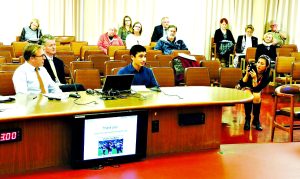
The plan for Mid-Market is to add additional City, private, and community resources so that law enforcement personnel and community ambassadors are visible and active in the area. It will be composed of two main efforts:
Community-Based Safety Ambassadors on Every Block
This initiative will support the Mid-Market/Tenderloin Community-Based Safety Program, a collaboration between the Mid-Market Business Association, Tenderloin, Mid-Market and Civic Center Community Benefit Districts (CBDs), Urban Alchemy, BART, SFMTA, San Francisco Public Works, and San Francisco Police Department (SFPD) to coordinate daily management of cleaning and safety services in the targeted Mid-Market area.
Every day, community ambassadors will be stationed on each block of the area for 10-12 hours per day, to engage with residents and visitors, support people in need and connect them with services, address safety issues, and support the cleanliness of the area.
These ambassadors, provided by Urban Alchemy, will work in coordination with other City initiatives, including the Healthy Streets Operation Center, the new Street Response Teams, and others to ensure the appropriate response for different situations that may arise. With existing funding, the program will launch June 15, 2021.
Increased Public Safety Presence
Beginning immediately, the SFPD will also increase deployments in the area, including foot patrols, motorcycle and bicycle deployments, and officers on horseback. They will focus on providing a visible presence in the Mid-Market, UN Plaza, and Tenderloin areas.
The strategy will embody multiple objectives outlined in the SFPD Community Policing Strategic Plan — a key element to emerge from the department’s Collaborative Reform Initiative to be a model of 21st century policing — enabling SFPD officers to collaboratively identify and develop responses to issues that affect local residents, businesses and visitors; to connect individuals in need to appropriate resources when services fall outside the scope of police work; and to increase the visible presence of officers though positive, trust-building engagements with the residents, businesses and visitors they’re sworn to safeguard.
In alignment with Mayor Breed’s focus on reimagining public safety, community policing will be the basis of the increased public safety investment in this area, emphasizing community partnerships and proactive problem-solving with mutual respect between the police and the people of San Francisco that they serve.
SFPD will operate this coordinated initiative from a UN Plaza location, where sister agencies and community-based partners will meet daily for updates and information sharing.
“San Francisco residents and businesses made enormous sacrifices over the past year to make our City’s COVID-19 response a nationally recognized success, and nowhere were those sacrifices greater than in our Tenderloin and Mid-Market neighborhoods,” said Chief of Police Bill Scott. “Mayor Breed’s Mid-Market Vibrancy and Safety Plan is another bold step that makes good on our shared civic commitment to come back even stronger than before. For all of us in the San Francisco Police Department, we’re grateful for this opportunity to showcase what community policing and 21st century police reform looklike.”
The police presence and the initial launch of the Community Ambassadors effort will be funded with existing City resources. To sustain the Community Ambassadors efforts for the longer-term, the mayor is proposing to provide $5 million in funding in her upcoming budget, while UC Hastings has dedicated $3 million in state funding. Working together in partnership with the mayor’s administration, UC Hastings has sought and received the support of Gov. Gavin Newsom, who has included in his May Revision budget proposal an allocation of $3 million over three years to fund Urban Alchemy’s services contiguous to its campus. This financial investment over a three-year period is a significant complement to this initiative.
The police deployment will begin Wednesday, May 19 and the Community Ambassadors will begin June 15 and ramp up to full coverage over the summer.
The community response has been positive, so far.
“Since mid-2020, the group Urban Alchemy has been patrolling the first block of Sixth Street and Market Street around that area,” said Dan Jordan, a Sixth Street resident. “I have found that it is safer to walk through the area because there are far less drug dealers and users out on the sidewalks and that these people stop those people from hassling other people.”
Max Young, owner of Mr. Smith’s
“Knowing that the area around my business will become safer for my customers will motivate me to start working on reopening” said Max Young, owner of Mr. Smith’s. “This makes a huge difference.”
San Francisco Mayor London Breed’s Office of Communications created this report.


Activism
Oakland Post: Week of March 18 – 24, 2026
The printed Weekly Edition of the Oakland Post: Week of March 18 – 24, 2026

To enlarge your view of this issue, use the slider, magnifying glass icon or full page icon in the lower right corner of the browser window.

Activism
Oakland Post: Week of March 11 -17, 2026
The printed Weekly Edition of the Oakland Post: Week of March 11 – 17, 2026
To enlarge your view of this issue, use the slider, magnifying glass icon or full page icon in the lower right corner of the browser window.
Activism
Oakland Post: Week of March 4 – 10, 2026
The printed Weekly Edition of the Oakland Post: Week of March 4 – 10, 2026

To enlarge your view of this issue, use the slider, magnifying glass icon or full page icon in the lower right corner of the browser window.


WORK FROM HOME
Home-based business with potential monthly income of $10K+ per month. A proven training system and website provided to maximize business effectiveness. Perfect job to earn side and primary income. Contact Lynne for more details: Lynne4npusa@gmail.com 800-334-0540


Black Artists in America, Installation Three Wraps at the Dixon Gallery and Gardens

Grief, Advocacy, and Education: A Counselor Reflects on Black Maternal Health

Future of Florida’s Black History Museum in Limbo

New Research Shows the Many Benefits of Early Learning

South Hampton K-8 Students Among Top 10 Finalists for Samsung’s ‘Solve for Tomorrow’ Competition

Cuba: No Negotiation with US on the President or Political System

Brooklyn Academy of Music Names Jamaican-Born Tamara McCaw as President

Trinidad & Tobego – U.S. Launches WhatsApp Channel for American Citizens in the Country

Oakland Post: Week of March 18 – 24, 2026

AI Innovation vs. Ethics and Environmental Impact

AI, Web3, and Digital Reparations

What If You Owned Your AI Agent?

Season 7, Episode 3 – January Reporter’s Roundtable 📱

Season 7, Episode 3 – January Reporter’s Roundtable

AI, Media, and Power | Part 2, Real-World Impacts and Tradeoffs

Reflecting on Black History Milestones in Birmingham AL

CITY OF SAN LEANDRO STATE OF CALIFORNIA PUBLIC WORKS DEPARTMENT ENGINEERING DIVISION NOTICE TO BIDDERS FOR ANNUAL STREET OVERLAY/REHABILITATION 2019-21 – PHASE III

Oakland Post: Week of February 18 – 24, 2026

Oakland Post: Week of February 25 – March 3, 2026

PRESS ROOM: NBA Hall of Fame Nominee Terry Cummings Joins 100 Black Men of DeKalb County to Launch Victory & Values Initiative

Trump’s MAGA Allies are Creating Executive Order Plan to Steal the 2026 Midterms

Oakland Post: Week of March 4 – 10, 2026

Chase Oakland Community Center Hosts Alley-Oop Accelerator Building Community and Opportunity for Bay Area Entrepreneurs

U.S. manufacturing rebounds – how foundry services are adapting to rising demand

Poll Shows Support for Policies That Help Families Afford Child Care

OP-ED: One Hundred Years of Black Workers Telling the Truth

Advancements in solar technology that are changing the way we power the world

Woman’s Search for Family’s Roots Leads to Ancestor John T. Ward – A Successful Entrepreneur and Conductor on the Underground Railroad

Oakland Post: Week of March 11 -17, 2026

PRESS ROOM: Civil Rights TV Launches in Selma as the World’s First 24/7 Civil Rights Television Network

Hyundai Ioniq 5 Parking, Safety, and 360 View #shorts

2025 Ioniq 5 New Wiper & Powerful Performance! #shorts

Electric SUV Range: Is 259 Miles Enough? #shorts

EV Charging: How Fast Can You Charge an Electric Vehicle? #shorts

Biometric Cooling… Messaging Seats…Come on! 2025 Infiniti QX80 Autograph 4WD

Charged Up: Witness the Magic of a Fully Electric Car! #shorts

Range Rover Sport PHEV Included…: See What’s Inside This Luxury SUV! #shorts

Invisible Hood View: Perfect Parking with X-Ray Vision! #shorts

AI Is Reshaping Black Healthcare: Promise, Peril, and the Push for Improved Results in California

ESSAY: Technology and Medicine, a Primary Care Point of View

Sanctuary Cities

The RESISTANCE – FREEDOM NOW

STATE OF THE PEOPLE: Freddie

ECONOMIC BOYCOTT DAY!!!!!

I told You So
-
 Activism4 weeks ago
Oakland Post: Week of March 4 – 10, 2026
-
 #NNPA BlackPress4 weeks ago
Woman’s Search for Family’s Roots Leads to Ancestor John T. Ward – A Successful Entrepreneur and Conductor on the Underground Railroad
-
 Activism3 weeks ago
Oakland Post: Week of March 11 -17, 2026
-

 #NNPA BlackPress4 weeks ago
COMMENTARY: Women of Color Shape Our Past and Future
-

 #NNPA BlackPress4 weeks ago
OP-ED: NNPA Launches 2026 “Leadership Matters” Video Series
-

 #NNPA BlackPress4 weeks ago
Advocates Raise Alarm Over ICE Operation, MOU and Detention Risks in Baltimore County
-

 Advice3 weeks ago
Financial Wellness and Mental Health: Managing Money Stress in College
-

 #NNPA BlackPress4 weeks ago
Pete Buttigieg to Join Mayor Randall Woodfin for Community Town Hall in Birmingham
