
City Government
Mayor London Breed Signs Balanced Budget to Support Economic Recovery, Meet City’s Top Challenges
Two-year budget funds City priorities in supporting a sustained and equitable economic recovery and addressing critical issues that include homelessness, public safety, behavioral health, and youth and family support


San Francisco Mayor London N. Breed signed into law the City and County of San Francisco’s balanced budget for Fiscal Years (FY) 2021-2022 and 2022-2023. The budget advances new investments to support San Francisco’s economic recovery; continue the COVID-19 response; ensure public safety; provide behavioral health care; prevent homelessness and transition people into services and housing; create more housing; promote nonprofit sustainability and equity initiatives; and support children, youth and their families.
Announced on July 29, the annual $13.1 billion for FY 2021-22 and $12.8 billion for FY 2022-23 budget will respond to the City’s most urgent needs as it moves forward on the road to recovery from the COVID-19 pandemic, while preserving long-term financial sustainability.
The final adopted budget follows months of collaborative work with elected officials, City departments, non-profit organizations, neighborhood groups, merchants, residents, and other stakeholders.
Breed and her staff conducted a comprehensive public outreach process, consisting of a public meeting to obtain input on budget priorities, two town halls, and online feedback to hear from residents on their priorities and reflect them in the budget.
“I’m excited to be signing this two-year budget today after months of hard work from everyone involved. It is something that we should all be proud of,” said Breed. “With these investments, we are addressing our most pressing issues by prioritizing the residents and businesses that have been hit hardest by the COVID-19 pandemic. This budget will lay the groundwork for our City’s economy and set San Francisco on a path to emerge from this pandemic stronger than ever.”
“This is a recovery budget that will provide critical support for our residents and small businesses who are still struggling due to the impacts of this pandemic. It will launch new innovative approaches and provide historic investments to confront the health, mental health, economic, housing, and safety challenges facing our city,” said Supervisors Matt Haney, who serves as the Board of Supervisors Budget Chair. “We are all committed to moving forward to deliver on the commitments and investments made in this budget to improve the quality of life and opportunities for everyone in our city.”
Driving a Sustained and Equitable Economic Recovery and Continuing City’s COVID-19 Response
The final adopted budget invests nearly $525 million over the two years for various initiatives to drive and accelerate the City’s economic recovery, while also supporting the City’s COVID-19 response.
Major recovery initiatives include Community Ambassadors and events and activities to enliven San Francisco’s downtown, backfilling the loss of hotel tax revenue for the arts, addressing student learning loss, the Women and Families First Initiative, incentivizing the return of conventions at the Moscone Center, a new Trans Basic Income pilot program, a Free Muni for Youth pilot program, and continuing the JobsNow workforce program and Working Families Credit.
The budget also includes $12 million to support the First Year Free program, which will waive various fees associated with starting a new business in San Francisco, and a $32 million investment to augment the over $90 million in rental relief funds received from the state and federal.
Additionally, the budget includes a $6.4 million annual investment to support the maintenance and expansion of the City’s pitstop program.
Of this total, about $378 million will be spent to continue the City’s COVID-19 shelter response, food security programs, vaccination efforts, testing operations, and the COVID-19 Command Center. Funding will also support community-based COVID-19 recovery programming, specifically targeting resources to populations disproportionately impacted by the pandemic.
This funding includes targeted small business support, economic relief, workforce development funds, and various arts, cultural, and recreational programming.
Making Historic Investments in Homelessness and Housing
The final adopted budget includes significant investments to address homelessness in San Francisco and expand the work started through the Homelessness Recovery Plan to create 6,000 placements for people experiencing homelessness.
In total, the budget leverages over $1 billion over the next two years in local, state, and federal resources to add up to 4,000 new housing placements, prevent homelessness and eviction for over 7,000 households, support additional safe parking sites, and fund the continuation of a new 40-bed emergency shelter for families.
All of these investments are in addition to prior commitments. This funding will enable the City to cap all Permanent Supportive Housing (PSH) rents in the City’s PSH portfolio at 30% of a tenant’s income.
Supporting Long-Term Economic Justice Strategies
The final adopted budget maintains the City’s $60 million annual investment in the Dream Keeper Initiative, which Breed launched last summer to reinvest City funds in services and programs that support San Francisco’s Black and African American community. The proposed budget also includes funding to waive additional fees and fines paid to the City by San Francisco residents.
Additionally, the budget supports the City’s efforts to promote diversity, equity and inclusion and ensure citywide coordination of equity work. The budget also makes a significant investment in the sustainability of the City’s nonprofit partners with $76.4 million for an ongoing cost of doing business increase.
Expanding Mental Health and Substance Use Support
Continuing on a commitment to help people with behavioral health and substance use issues, the final adopted budget contains approximately $300 million in new investments for behavioral health services. Included in the budget is funding to prevent overdoses through medication assisted treatment, a drug sobering site, and expanded naloxone distribution. The budget also includes funding to support new and existing Street Response Teams, including the Street Crisis Response Team, Street Wellness Response Team, and Street Overdose Response Team.
This investment will fund the City’s plan to add over 340 new treatment beds, provide case management and care coordination for people receiving services, and expand services at the City’s Behavioral Health Access Center. This investment will also provide targeted services for transgender and Transitional Age Youth clients and increase services for clients in shelters and Permanent Supportive Housing.
Investing in Public Safety, Victims’ Services, and Justice Innovations
The final adopted budget makes investments to prevent violence, support victims, and continues the City’s investments in alternative responses to non-criminal activity. The budget includes over $11 million to expand violence prevention programming and funding for victims’ rights, including targeted investments to support community-based violence prevention and intervention work, and to San Francisco’s Asian and Pacific Islander community.
The final budget includes funding to support police staffing levels, funding two 40-person police academies in FY 2021-22 and one 50-person academy in FY 2022-23. The final budget also includes $3.8 million over the two years to support the addition of 10 paramedics to the Fire Department’s ambulance unit.
To strengthen the City’s non-law enforcement response to non-criminal activity, the final budget includes new funding for a Street Wellness Response Team and resources to support call diversion, including a $3 million investment to support other alternative response models.
Supporting Children, Youth, and Their Families
The final budget includes over $134 million over the two years to lay the groundwork for early learning and universal preschool in San Francisco. This includes funding for childcare subsidies, workforce compensation for childcare providers, and child health and wellbeing. The budget also maintains the City’s existing investments in children and youth, invests significant new funding to address learning loss, funds mental health for SFUSD students, and supports the Mayor’s Opportunities for All initiative.
Investing in Capital Projects and Affordable Housing
The final adopted budget includes significant investments in capital and one-time projects, which will create jobs and spur economic recovery. The budget provides $50.6 million to support affordable housing developments in San Francisco. The budget also includes $208 million for projects from the City’s Capital Plan, including street and parks infrastructure improvements, an expansion of fiber to affordable housing, and community facility improvements. The budget also includes funding to replace aging equipment in the Fire and Police departments, as well as funding to purchase a site for an LGBT Cultural Museum.
Ensuring Financial Resilience
The budget makes the above significant investments in a way that is financially responsible. By utilizing funding from the American Rescue Plan and other one-time sources, the City is able to maintain its reserves. This budget preserves the City’s Rainy Day Reserve for future uncertainty and risk. To hedge against future risk and uncertainty, the budget re-allocates unappropriated funds to create two new reserves that will help to manage unforeseen costs due to potential FEMA reimbursement disallowances and to manage future budget shortfalls.









Activism
Oakland Post: Week of April 1 – 7, 2026
The printed Weekly Edition of the Oakland Post: Week of April 1 – 7, 2026

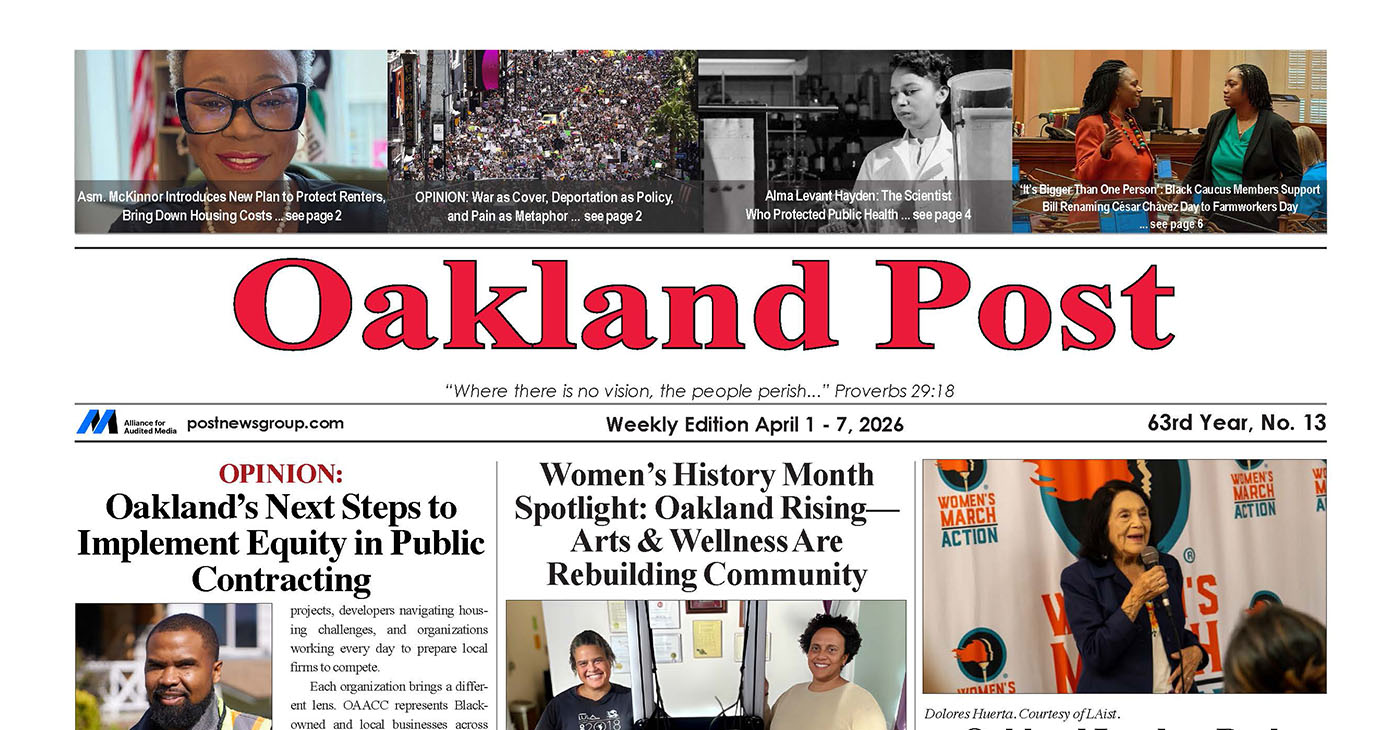
To enlarge your view of this issue, use the slider, magnifying glass icon or full page icon in the lower right corner of the browser window.

Activism
Oakland Post: Week of March 18 – 24, 2026
The printed Weekly Edition of the Oakland Post: Week of March 18 – 24, 2026
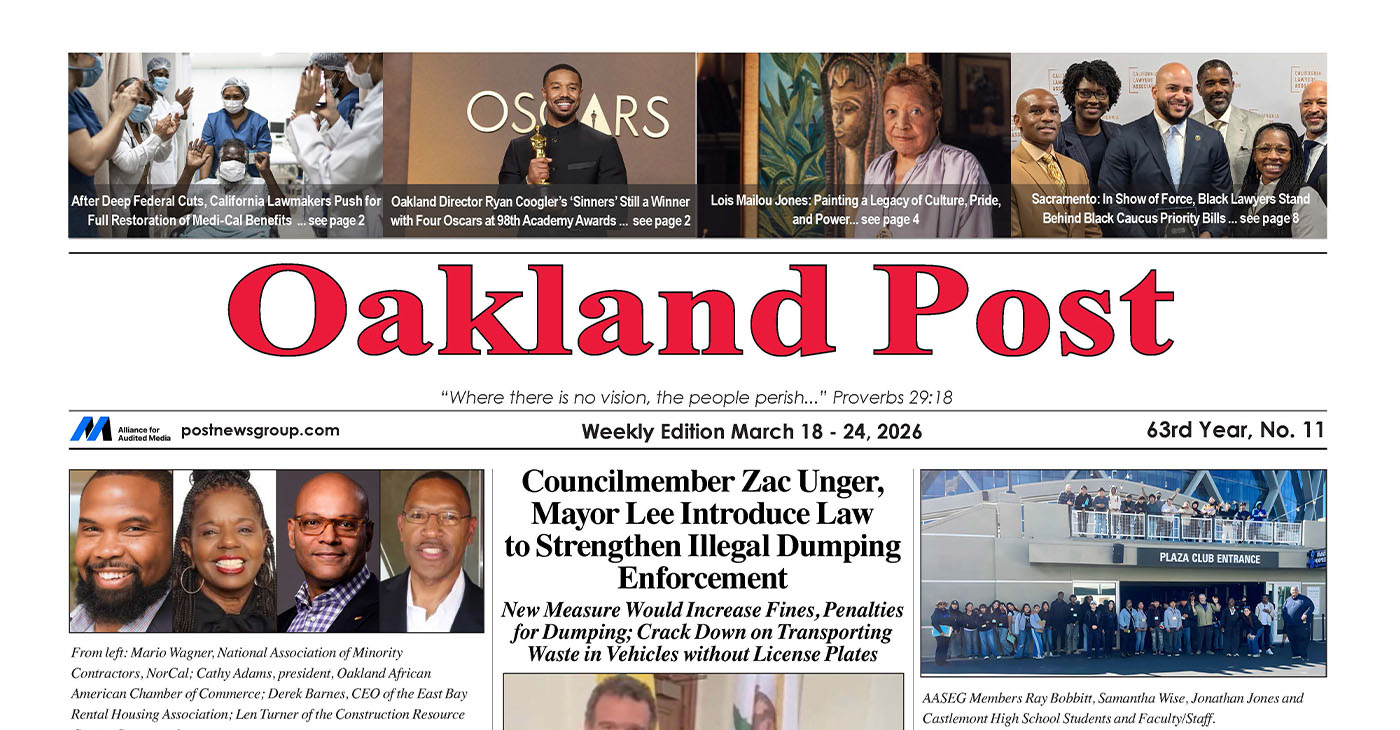
To enlarge your view of this issue, use the slider, magnifying glass icon or full page icon in the lower right corner of the browser window.
Activism
Oakland Post: Week of March 11 -17, 2026
The printed Weekly Edition of the Oakland Post: Week of March 11 – 17, 2026
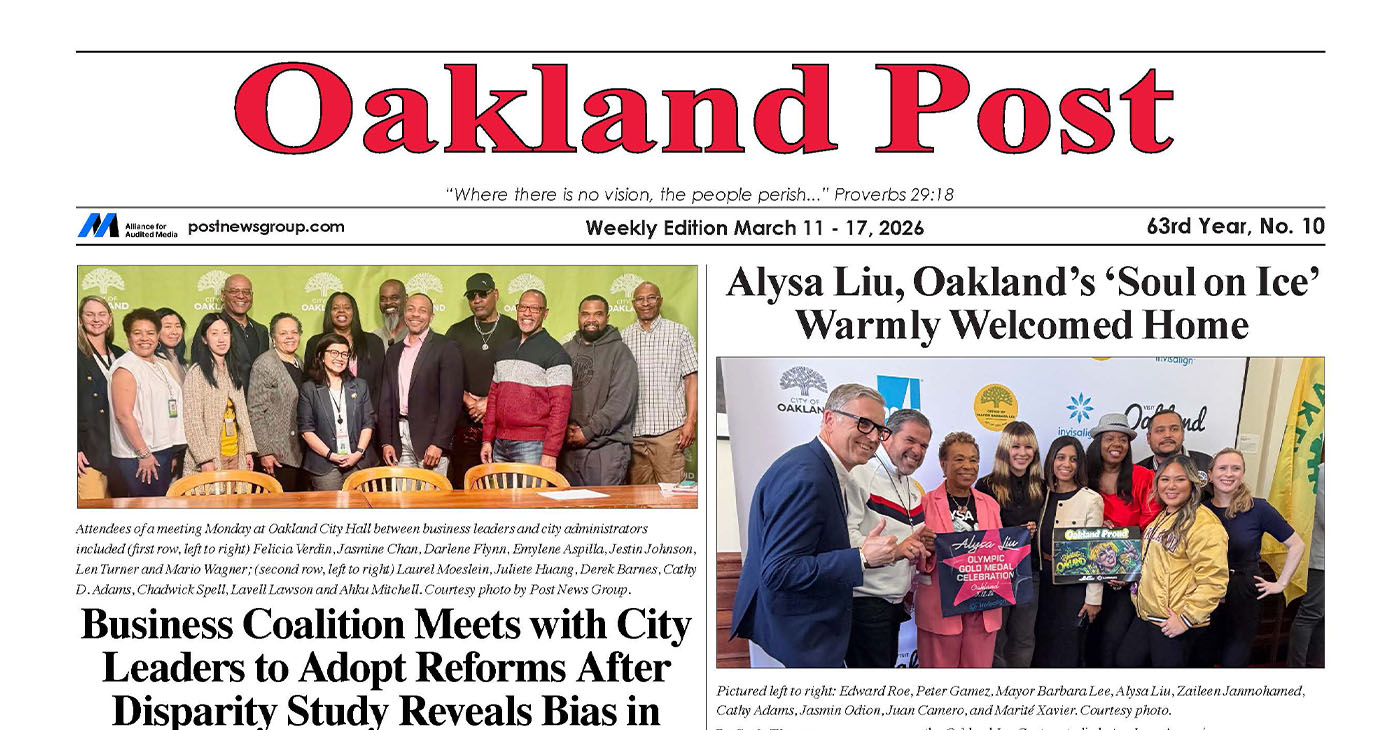
To enlarge your view of this issue, use the slider, magnifying glass icon or full page icon in the lower right corner of the browser window.

WORK FROM HOME
Home-based business with potential monthly income of $10K+ per month. A proven training system and website provided to maximize business effectiveness. Perfect job to earn side and primary income. Contact Lynne for more details: Lynne4npusa@gmail.com 800-334-0540


Oakland Post: Week of April 1 – 7, 2026

Black Artists in America, Installation Three Wraps at the Dixon Gallery and Gardens

Grief, Advocacy, and Education: A Counselor Reflects on Black Maternal Health

Future of Florida’s Black History Museum in Limbo

New Research Shows the Many Benefits of Early Learning

South Hampton K-8 Students Among Top 10 Finalists for Samsung’s ‘Solve for Tomorrow’ Competition

Cuba: No Negotiation with US on the President or Political System

Brooklyn Academy of Music Names Jamaican-Born Tamara McCaw as President

Trinidad & Tobego – U.S. Launches WhatsApp Channel for American Citizens in the Country

Oakland Post: Week of March 18 – 24, 2026

AI Innovation vs. Ethics and Environmental Impact

AI, Web3, and Digital Reparations

What If You Owned Your AI Agent?

Season 7, Episode 3 – January Reporter’s Roundtable 📱

Season 7, Episode 3 – January Reporter’s Roundtable

Reflecting on Black History Milestones in Birmingham AL

Oakland Post: Week of February 25 – March 3, 2026

PRESS ROOM: NBA Hall of Fame Nominee Terry Cummings Joins 100 Black Men of DeKalb County to Launch Victory & Values Initiative

Oakland Post: Week of March 4 – 10, 2026

Trump’s MAGA Allies are Creating Executive Order Plan to Steal the 2026 Midterms

U.S. manufacturing rebounds – how foundry services are adapting to rising demand

Poll Shows Support for Policies That Help Families Afford Child Care

OP-ED: One Hundred Years of Black Workers Telling the Truth

Oakland Post: Week of March 11 -17, 2026

Advancements in solar technology that are changing the way we power the world
Oakland Post: Week of March 18 – 24, 2026

Woman’s Search for Family’s Roots Leads to Ancestor John T. Ward – A Successful Entrepreneur and Conductor on the Underground Railroad

COMMENTARY: Women of Color Shape Our Past and Future

PRESS ROOM: Civil Rights TV Launches in Selma as the World’s First 24/7 Civil Rights Television Network

Financial Wellness and Mental Health: Managing Money Stress in College

Hyundai Ioniq 5 Parking, Safety, and 360 View #shorts

2025 Ioniq 5 New Wiper & Powerful Performance! #shorts

Electric SUV Range: Is 259 Miles Enough? #shorts

EV Charging: How Fast Can You Charge an Electric Vehicle? #shorts

Biometric Cooling… Messaging Seats…Come on! 2025 Infiniti QX80 Autograph 4WD

Charged Up: Witness the Magic of a Fully Electric Car! #shorts

Range Rover Sport PHEV Included…: See What’s Inside This Luxury SUV! #shorts

Invisible Hood View: Perfect Parking with X-Ray Vision! #shorts

AI Is Reshaping Black Healthcare: Promise, Peril, and the Push for Improved Results in California

ESSAY: Technology and Medicine, a Primary Care Point of View

Sanctuary Cities

The RESISTANCE – FREEDOM NOW

STATE OF THE PEOPLE: Freddie

ECONOMIC BOYCOTT DAY!!!!!

I told You So
-
 Activism3 weeks ago
Oakland Post: Week of March 11 -17, 2026
-
 Activism2 weeks ago
Oakland Post: Week of March 18 – 24, 2026
-
 #NNPA BlackPress4 weeks ago
Woman’s Search for Family’s Roots Leads to Ancestor John T. Ward – A Successful Entrepreneur and Conductor on the Underground Railroad
-
 #NNPA BlackPress4 weeks ago
COMMENTARY: Women of Color Shape Our Past and Future
-
 Advice3 weeks ago
Financial Wellness and Mental Health: Managing Money Stress in College
-

 #NNPA BlackPress4 weeks ago
Advocates Raise Alarm Over ICE Operation, MOU and Detention Risks in Baltimore County
-

 #NNPA BlackPress4 weeks ago
Pete Buttigieg to Join Mayor Randall Woodfin for Community Town Hall in Birmingham
-
 #NNPA BlackPress2 weeks ago
Brooklyn Academy of Music Names Jamaican-Born Tamara McCaw as President
