
Bay Area
OP-ED: Balancing the Budget—and the Needs of Our Residents
When I took office in January, I knew that my Administration would be facing a large deficit. In fact, with a $360 million shortfall over the next two years, it is the largest deficit in Oakland’s history. This inherited shortfall is largely the result of two factors: the loss of federal pandemic funding and a decline in revenue generated from the real estate transfer tax and transient occupancy tax.


By Mayor Sheng Thao
When I took office in January, I knew that my Administration would be facing a large deficit.
In fact, with a $360 million shortfall over the next two years, it is the largest deficit in Oakland’s history. This inherited shortfall is largely the result of two factors: the loss of federal pandemic funding and a decline in revenue generated from the real estate transfer tax and transient occupancy tax.
But when you’re in need of City services, something I know about all too well, it doesn’t matter why there’s a shortfall, it matters if you’ll have a job, whether you have an affordable place to live, whether you live in a city that has opportunities and resources for your children and your family.
With this in mind, our challenge was unprecedented, but our mandate was clear: Balance the budget, invest in our communities, preserve jobs.
Thanks to the ingenuity and hard work of our City staff, our “One Oakland” proposed budget accomplishes all of the above—while also making significant investments in our communities, including the largest in affordable housing in the city’s history.
Yes, we were forced to make difficult decisions, but it was also an opportunity to create efficiencies and improve coordination in City government, reducing costs and strengthening our ability to serve our communities.
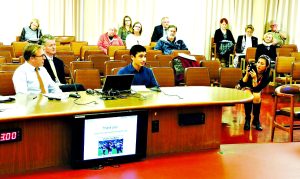
As a result, our proposed budget includes a new reorganization of City departments— Department of Homelessness & Housing Development; Department of Children, Youth and Families; and Department of Planning, Building and Economic Development.
The reorganization will ensure each department has a clear mission related to community priorities and save $2 million per year, allowing us to preserve vital services in these challenging times.
This reorganization will be supported by an improved management structure in the City Administrator’s Office. Departments with related services will be grouped into “channels” and report to or coordinate with a dedicated Deputy or Assistant City Administrator.
To further close the gap, we are freezing vacant positions—300 in total—many of which have been open for a long period of time; allowing for attrition, meaning if a position becomes vacant, we will hold off hiring a replacement until funding becomes available; and delaying on spending.
In all cases, we did this with the goal of minimizing impacts on services. And we will prioritize hiring for these positions if revenue exceeds forecasts.
This budget is a reflection of my Administration’s values: Centering Equity; Valuing the City Workforce; and Strategic Thinking.
This is why, despite the environment we face, the proposed budget allocates more than $200 million over the next two years toward affordable housing; expands early childhood education through Oakland’s Head Start and Early Head Start program; includes more than $106 million to build, repair and upgrade parks, recreation facilities, libraries, storm drains and non-road infrastructure; and invests more than $9.1 million toward street safety.
The proposed budget will also allow for better coordination of key public safety goals while continuing the ‘civilianization’ of certain functions of the Police Department.
This is a budget that manages our fiscal situation responsibly, responds to the needs of our residents and local businesses, and reflects my Administration’s commitment to direct investments in our communities—all while avoiding layoffs.
I applaud our City staff for this huge accomplishment, balancing not just the budget but the needs of our residents.
I look forward to hearing community input through a series of public forums—and to adopting this budget on June 30 so we can move forward together, as One Oakland.
Sheng Thao is the 51st and current Mayor of Oakland.







Activism
Oakland Post: Week of March 18 – 24, 2026
The printed Weekly Edition of the Oakland Post: Week of March 18 – 24, 2026
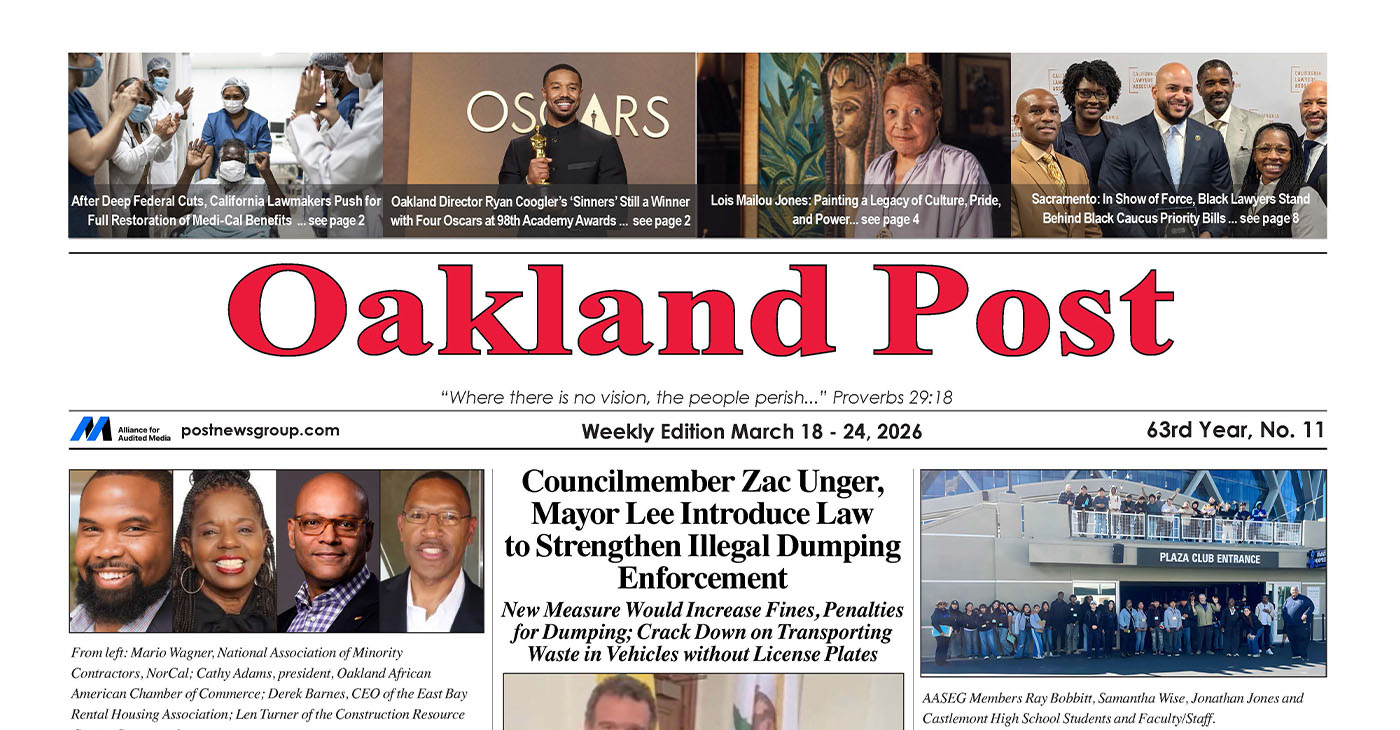
To enlarge your view of this issue, use the slider, magnifying glass icon or full page icon in the lower right corner of the browser window.
Activism
Oakland Post: Week of March 11 -17, 2026
The printed Weekly Edition of the Oakland Post: Week of March 11 – 17, 2026

To enlarge your view of this issue, use the slider, magnifying glass icon or full page icon in the lower right corner of the browser window.
Activism
Oakland Post: Week of March 4 – 10, 2026
The printed Weekly Edition of the Oakland Post: Week of March 4 – 10, 2026
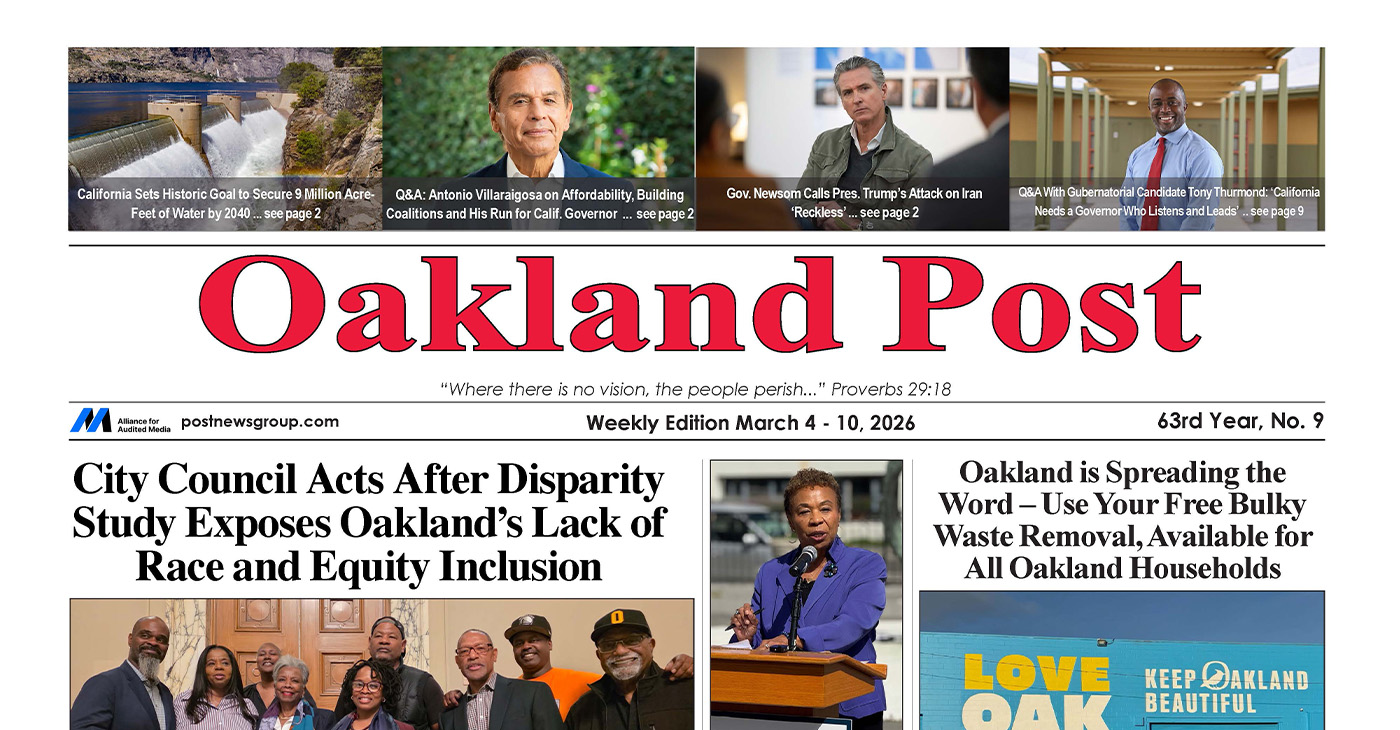
To enlarge your view of this issue, use the slider, magnifying glass icon or full page icon in the lower right corner of the browser window.


WORK FROM HOME
Home-based business with potential monthly income of $10K+ per month. A proven training system and website provided to maximize business effectiveness. Perfect job to earn side and primary income. Contact Lynne for more details: Lynne4npusa@gmail.com 800-334-0540


Black Artists in America, Installation Three Wraps at the Dixon Gallery and Gardens

Grief, Advocacy, and Education: A Counselor Reflects on Black Maternal Health

Future of Florida’s Black History Museum in Limbo

New Research Shows the Many Benefits of Early Learning

South Hampton K-8 Students Among Top 10 Finalists for Samsung’s ‘Solve for Tomorrow’ Competition

Cuba: No Negotiation with US on the President or Political System

Brooklyn Academy of Music Names Jamaican-Born Tamara McCaw as President

Trinidad & Tobego – U.S. Launches WhatsApp Channel for American Citizens in the Country

Oakland Post: Week of March 18 – 24, 2026

AI Innovation vs. Ethics and Environmental Impact

AI, Web3, and Digital Reparations

What If You Owned Your AI Agent?

Season 7, Episode 3 – January Reporter’s Roundtable 📱

Season 7, Episode 3 – January Reporter’s Roundtable

AI, Media, and Power | Part 2, Real-World Impacts and Tradeoffs

Reflecting on Black History Milestones in Birmingham AL

CITY OF SAN LEANDRO STATE OF CALIFORNIA PUBLIC WORKS DEPARTMENT ENGINEERING DIVISION NOTICE TO BIDDERS FOR ANNUAL STREET OVERLAY/REHABILITATION 2019-21 – PHASE III

Oakland Post: Week of February 18 – 24, 2026

Oakland Post: Week of February 25 – March 3, 2026

PRESS ROOM: NBA Hall of Fame Nominee Terry Cummings Joins 100 Black Men of DeKalb County to Launch Victory & Values Initiative

Trump’s MAGA Allies are Creating Executive Order Plan to Steal the 2026 Midterms

Oakland Post: Week of March 4 – 10, 2026

Chase Oakland Community Center Hosts Alley-Oop Accelerator Building Community and Opportunity for Bay Area Entrepreneurs

U.S. manufacturing rebounds – how foundry services are adapting to rising demand

Poll Shows Support for Policies That Help Families Afford Child Care

OP-ED: One Hundred Years of Black Workers Telling the Truth

Advancements in solar technology that are changing the way we power the world

Woman’s Search for Family’s Roots Leads to Ancestor John T. Ward – A Successful Entrepreneur and Conductor on the Underground Railroad

PRESS ROOM: Civil Rights TV Launches in Selma as the World’s First 24/7 Civil Rights Television Network

Oakland Post: Week of March 11 -17, 2026

Hyundai Ioniq 5 Parking, Safety, and 360 View #shorts

2025 Ioniq 5 New Wiper & Powerful Performance! #shorts

Electric SUV Range: Is 259 Miles Enough? #shorts

EV Charging: How Fast Can You Charge an Electric Vehicle? #shorts

Biometric Cooling… Messaging Seats…Come on! 2025 Infiniti QX80 Autograph 4WD

Charged Up: Witness the Magic of a Fully Electric Car! #shorts

Range Rover Sport PHEV Included…: See What’s Inside This Luxury SUV! #shorts

Invisible Hood View: Perfect Parking with X-Ray Vision! #shorts

AI Is Reshaping Black Healthcare: Promise, Peril, and the Push for Improved Results in California

ESSAY: Technology and Medicine, a Primary Care Point of View

Sanctuary Cities

The RESISTANCE – FREEDOM NOW

STATE OF THE PEOPLE: Freddie

ECONOMIC BOYCOTT DAY!!!!!

I told You So
-
 Activism4 weeks ago
Oakland Post: Week of March 4 – 10, 2026
-
 #NNPA BlackPress4 weeks ago
Woman’s Search for Family’s Roots Leads to Ancestor John T. Ward – A Successful Entrepreneur and Conductor on the Underground Railroad
-
 Activism3 weeks ago
Oakland Post: Week of March 11 -17, 2026
-

 #NNPA BlackPress4 weeks ago
COMMENTARY: Women of Color Shape Our Past and Future
-

 #NNPA BlackPress4 weeks ago
OP-ED: NNPA Launches 2026 “Leadership Matters” Video Series
-

 #NNPA BlackPress4 weeks ago
Advocates Raise Alarm Over ICE Operation, MOU and Detention Risks in Baltimore County
-

 #NNPA BlackPress4 weeks ago
Pete Buttigieg to Join Mayor Randall Woodfin for Community Town Hall in Birmingham
-

 Advice3 weeks ago
Financial Wellness and Mental Health: Managing Money Stress in College
