
#NNPA BlackPress
OP-ED: Mississippi Black History
NNPA NEWSWIRE — As many governors, school boards and educational systems are trying to erase history by banning certain books in our schools and public libraries, how powerful to have ABC’s mini-series “Women of the Movement: the story of Mamie Till Mobley,” told at this particular time. Some governors have even said that they would penalize schools, teachers and principals if such material is taught. The mini-series was and should be painful to watch for all who watched it. We need to be reminded of atrocities such as these.
The post OP-ED: Mississippi Black History first appeared on BlackPressUSA.


By Paulette Patton, Contributing Guest Writer to The Mississippi Link
After recently watching ABC’s mini-series, “Women of the Movement: the story of Mamie Till Mobley,” I was reminded, as I often am, of memories growing up in Mississippi.
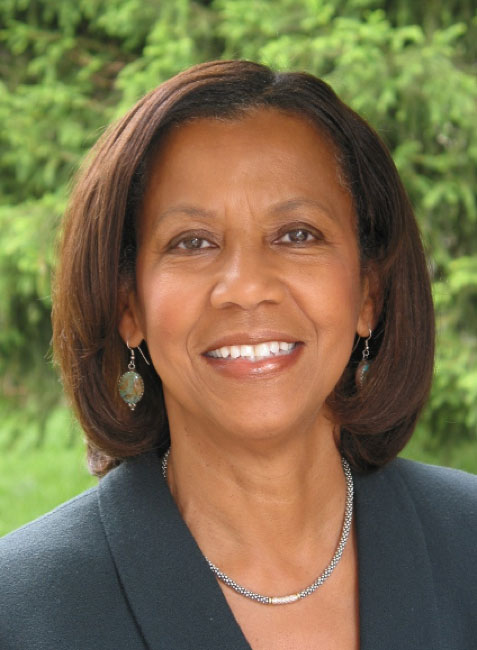
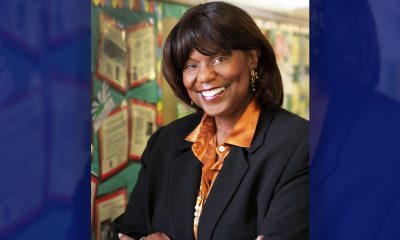
Paulette Patton
This docu-drama chronicled the life of Mamie Till Mobley, who devoted her life to seeking justice for her son Emmett Till. Till was abducted and killed for allegedly flirting with a white woman in Money, Mississippi.
I can remember looking at that iconic photo of Emmett Till in Jet Magazine when I was just 7 years old. I only recall how awful it looked. I don’t remember even asking my parents about it. Thanks to executive co-producers, Will Smith and Jay-Z, this true story was a painful reminder of Mississippi’s history during that perilous era.
As many governors, school boards and educational systems are trying to erase such history by banning certain books in our schools and public libraries, how powerful to have this story retold at this particular time. Some governors have even said that they would penalize schools, teachers and principals if such material is taught. The mini-series was and should be painful to watch to all who watched it. We need to be reminded of atrocities such as these.
For ten years, I helped plan and accompanied a group of Ursinus College (Collegeville, PA) students and their professors to Mississippi to visit sites around the state to have a firsthand look at some of the most treacherous and unforgiving parts of the history of the American South. We would start our journey in Jackson where we visited Jackson State University, (formerly Jackson College). Ursinus students learned about the killing of Phillip J. Gibbs and James E. Green and the shooting of twelve others on campus by the State Police in 1970.
Tougaloo College was another stop on our journey. Tougaloo’s history is rich in the Civil Rights Movement. Student activism was commonplace. Tougaloo College Archives, as stated on its website, has a collection of personal papers, oral histories, photographs and other memorabilia of persons who were active in the movement.
Hollis Watkins, a Tougaloo graduate and activist, is founder and director of Southern Echo. At this stop, students learned about the importance of community organizing. Watkins and others travelled all over the state of Mississippi teaching communities how essential it is for citizens to organize and have an impact on economic development, educational and environmental decisions.
While also in Jackson, we visited the home of one of those activists, Medgar Evers. We toured the Evers House, now a National Historic Landmark, where we saw the trajectory of the bullets that went into the home. We stood on the driveway where Evers was murdered.
Farish Street was another stop. Farish Street was the “largest economically independent” business section in Jackson, where Black businesses thrived. Recently, my sisters and I strolled down a few blocks of a mostly deserted community. We stopped at The Alamo Theatre where Black folks could see a movie without fear of being arrested because of segregation. Most of the businesses were shuttered. The Big Apple Inn, commonly known back then as Big John’s, was first opened in 1936, was still open.
Another stop, for the students, on our journey was Bolton, Mississippi to visit another Tougaloo College graduate and activist, Congressman Bennie Thompson, who is in his 13th term in the U.S. House of Representatives. Visiting Thompson’s office was always one of the highlights of the trip for many reasons, perhaps because he is a living legend, especially now as he chairs the January 6 Committee investigating the Insurrection that took place on our nation’s Capital.
Philadelphia, Mississippi was another stop. We saw the jail where Goodman, Chaney and Schwerner were detained and toured the courthouse where Edgar Ray Killen and seven klansmen and white supremacists were tried for their murder. Chaney, from Meridian, MS, and Goodman and Schwerner from New York, were working to help Black Mississippians register to vote. These three activists were abducted and murdered in Neshoba County, Mississippi in 1964. Our tour was led by Leroy Clemons, former president of the local chapter of the NAACP. Clemons is currently the executive director of the Neshoba Youth Coalition. Our tour ended at the murder site of Goodman, Chaney and Schwerner.
Many times, I would look at the faces of the students where tears flowed as Clemons told the story of their brutal murders as we stood on the site where they were buried.
As we journeyed to the Mississippi Delta, many times the ride was quiet as we looked out on cotton fields, as we tried to prepare ourselves for the last leg of the trip. Our first stop was in Ruleville, Mississippi to visit the gravesite of Fannie Lou Hamer, a voting and women’s rights activist, a leader in the Civil Rights Movement and co-founder of the Freedom Democratic Party. Here we paid homage to her and her lifetime of work. She is buried next to her beloved husband, Perry “Pap” Hamer.
From there to Glendora, Mississippi. We visited the Emmett Till Interpretive Center/Museum. This Museum was established by Mayor Johnny B Thomas. Thomas would meet us at the museum for a private tour. We were able to see a replica of the cotton gin fan that was tied around the neck of Till. The end of our journey was in Money, Mississippi. We stood on the very ground of Bryant’s store where Till and his cousins had entered to buy candy. This is the location where he was falsely accused.
Visiting all these places gave me the opportunity as an adult to visit places I never went as a child. I’m sure my parents were trying to spare us from the brutal nature of violence perpetrated against Blacks. As a parent and grandparent, I can understand wanting to protect your child. But our history should not be erased. Books should not be banned.
One place that I have been intrigued by since a student at Tougaloo was Mound Bayou, Mississippi. I was intrigued by the fact that there was an all-Black town in Mississippi that once thrived. I had a romanticized vision of this Black community. I don’t recall knowing about Mound Bayou as a child. It certainly was not in our history books. Recently, my sisters and I decided to take a road trip to Cleveland, Mississippi which would include Mound Bayou.
As portrayed in the mini-series, Mound Bayou was a thriving community. Not only was it thriving, it was a thriving Black community. It was founded by two cousins, Isiah and Joshua Montgomery and Benjamin Gill. It was founded in 1887 and aptly called “the Jewel of the Delta.” There was a hospital where Blacks all over the state would come for good medical care. The all-Black school was compared favorably with the best white schools in the state. There were several churches, a zoo, swimming pool, newspaper(s), insurance company, banks, credit union and sawmill, all owned by Black folks.
Today, like Farish Street, most of those businesses are gone. The hospital still stands and is used as the Delta Health Center.
Exploring and learning more about our history is very rewarding. Choose a place and set out on an adventure. As watching the Emmett Till story and visiting these places allowed us to see how we have survived as we struggle for self-determination. As we confront our history, we struggle with love and anger. Understanding our history is challenging and uplifting. But we must push forward. In the words of Maya Angelou, “And Still I Rise.”
James Hampton, reference librarian at the Eudora Welty Library in Jackson, MS, contributed to this article.
The post OP-ED: Mississippi Black History first appeared on BlackPressUSA.







#NNPA BlackPress
A Nation in Freefall While the Powerful Feast: Trump Calls Affordability a ‘Con Job’
BLACKPRESSUSA NEWSWIRE — There are seasons in this country when the struggle of ordinary Americans is not merely a condition but a kind of weather that settles over everything.


By Stacy M. Brown
Black Press USA Senior National Correspondent
There are seasons in this country when the struggle of ordinary Americans is not merely a condition but a kind of weather that settles over everything. It enters the grocery aisle, the overdue bill, the rent notice, and the long nights spent calculating how to get through the next week. The latest numbers show that this season has not passed. It has deepened.
Private employers cut 32,000 jobs in November, according to ADP. Because the nation has been hemorrhaging jobs since President Trump took office, the administration has halted publishing the traditional monthly report. The ADP report revealed that small businesses suffered the heaviest losses. Establishments with fewer than 50 workers shed 120,000 positions, including 74,000 from companies with 20 to 49 workers. Larger firms added 90,000 jobs, widening the split between those rising and those falling.
Meanwhile, wealth continues to climb for the few who already possess most of it. Federal Reserve data shows the top 1 percent now holds $52 trillion. The top 10 percent added $5 trillion in the second quarter alone. The bottom half gained only 6 percent over the past year, a number so small it fades beside the towering fortunes above it.
“Less educated and poorer people tend to make worse mistakes,” John Campbell said to CBS News, while noting that the complexity of the system leaves many families lost before they even begin. Campbell, a Harvard University economist and coauthor of a book examining the country’s broken personal finance structure, pointed to a system built to confuse and punish those who lack time, training, or access.
“Creditors are just breathing down their necks,” Carol Fox told Bloomberg News, while noting that rising borrowing costs, shrinking consumer spending, and trade battles under the current administration have left owners desperate. Fox serves as a court-appointed Subchapter V trustee in Southern Florida and has watched the crisis unfold case by case.
During a cabinet meeting on Tuesday, Trump told those present that affordability “doesn’t mean anything to anybody.” He added that Democrats created a “con job” to mislead the public.
However, more than $30 million in taxpayer funds reportedly have supported his golf travel. Reports show Kristi Noem and FBI Director Kash Patel have also made extensive use of private jets through government and political networks. The administration approved a $40 billion bailout of Argentina. The president’s wealthy donors recently gathered for a dinner celebrating his planned $300 million White House ballroom.
During an appearance on CNBC, Mark Zandi, an economist, warned that the country could face serious economic threats. “We have learned that people make many mistakes,” Campbell added. “And particularly, sadly, less educated and poorer people tend to make worse mistakes.”

#NNPA BlackPress
The Numbers Behind the Myth of the Hundred Million Dollar Contract
BLACKPRESSUSA NEWSWIRE — Odell Beckham Jr. did not spark controversy on purpose. He sat on The Pivot Podcast and tried to explain the math behind a deal that looks limitless from the outside but shrinks fast once the system takes its cut.

By Stacy M. Brown
Black Press USA Senior National Correspondent
Odell Beckham Jr. did not spark controversy on purpose. He sat on The Pivot Podcast and tried to explain the math behind a deal that looks limitless from the outside but shrinks fast once the system takes its cut. He looked into the camera and tried to offer a truth most fans never hear. “You give somebody a five-year $100 million contract, right? What is it really? It is five years for sixty. You are getting taxed. Do the math. That is twelve million a year that you have to spend, use, save, invest, flaunt,” said Beckham. He added that buying a car, buying his mother a house, and covering the costs of life all chip away at what people assume lasts forever.
The reaction was instant. Many heard entitlement. Many heard a millionaire complaining. What they missed was a glimpse into a professional world built on big numbers up front and a quiet erasing of those numbers behind the scenes.
The tax data in Beckham’s world is not speculation. SmartAsset’s research shows that top NFL players often lose close to half their income to federal taxes, state taxes, and local taxes. The analysis explains that athletes in California face a state rate of 13.3 percent and that players are also taxed in every state where they play road games, a structure widely known as the jock tax. For many players, that means filing up to ten separate returns and facing a combined tax burden that reaches or exceeds 50 percent.
A look across the league paints the same picture. The research lists star players in New York, Philadelphia, Chicago, Detroit, and Cleveland, all giving up between 43 and 47 percent of their football income before they ever touch a dollar. Star quarterback Phillip Rivers, at one point, was projected to lose half of his playing income to taxes alone.
A second financial breakdown from MGO CPA shows that the problem does not only affect the highest earners. A $1 million salary falls to about $529,000 after federal taxes, state and city taxes, an agent fee, and a contract deduction. According to that analysis, professional athletes typically take home around half of their contract value, and that is before rent, meals, training, travel, and support obligations are counted.
The structure of professional sports contracts adds another layer. A study of major deals across MLB, the NBA, and the NFL notes that long-term agreements lose value over time because the dollar today has more power than the dollar paid in the future. Even the largest deals shrink once adjusted for time. The study explains that contract size alone does not guarantee financial success and that structure and timing play a crucial role in a player’s long-term outcomes.
Beckham has also faced headlines claiming he is “on the brink of bankruptcy despite earning over one hundred million” in his career. Those reports repeated his statement that “after taxes, it is only sixty million” and captured the disbelief from fans who could not understand how money at that level could ever tighten.
Other reactions lacked nuance. One article wrote that no one could relate to any struggle on eight million dollars a year. Another described his approach as “the definition of a new-money move” and argued that it signaled poor financial choices and inflated spending.
But the underlying truth reaches far beyond Beckham. Professional athletes enter sudden wealth without preparation. They carry the weight of family support. They navigate teams, agents, advisors, and expectations from every direction. Their earning window is brief. Their career can end in a moment. Their income is fragmented, taxed, and carved up before the public ever sees the real number.
The math is unflinching. Twenty million dollars becomes something closer to $8 million after federal taxes, state taxes, jock taxes, agent fees, training costs, and family responsibilities. Over five years, that is about $40 million of real, spendable income. It is transformative money, but not infinite. Not guaranteed. Not protected.
Beckham offered a question at the heart of this entire debate. “Can you make that last forever?”
#NNPA BlackPress
FBI Report Warns of Fear, Paralysis, And Political Turmoil Under Director Kash Patel
BLACKPRESSUSA NEWSWIRE — Six months into Kash Patel’s tenure as Director of the Federal Bureau of Investigation, a newly compiled internal report from a national alliance of retired and active-duty FBI agents and analysts delivers a stark warning about what the Bureau has become under his leadership.

Six months into Kash Patel’s tenure as Director of the Federal Bureau of Investigation, a newly compiled internal report from a national alliance of retired and active-duty FBI agents and analysts delivers a stark warning about what the Bureau has become under his leadership. The 115-page document, submitted to Congress this month, is built entirely on verified reporting from inside field offices across the country and paints a picture of an agency gripped by fear, divided by ideology, and drifting without direction.
The report’s authors write that they launched their inquiry after receiving troubling accounts from inside the Bureau only four months into Patel’s tenure. They describe their goal as a pulse check on whether the ninth FBI director was reforming the Bureau or destabilizing it. Their conclusion: the preliminary findings were discouraging.
Reports Describe Widespread Internal Distrust and Open Hostility Toward President Trump
Sources across the country told investigators that a large number of FBI employees openly express hostility toward President Donald Trump. One source reported seeing an “increasing number of FBI Special Agents who dislike the President,” adding that these employees were exhibiting what they called “TDS” and had lost “their ability to think critically about an issue and distinguish fact from fiction.” Another source described employees making off-color comments about the administration during office conversations.
The sentiment reportedly extends beyond domestic lines. Law enforcement and intelligence partners in allied countries have privately expressed fear that the Trump administration could damage long-term international cooperation according to a sub-source who reported those concerns directly to investigators.
Pardon Backlash and Fear of Retaliation
The President’s January 20 pardons of individuals convicted for their roles in the January 6 attack ignited what the report calls demoralization inside the Bureau. One FBI employee said they were “demoralized” that individuals “rightfully convicted” were pardoned and feared that some of those individuals or their supporters might target them or their family for carrying out their duties. Another source described widespread anger that lists of personnel who worked on January 6 investigations had been provided to the Justice Department for review, noting that agents “were just following orders” and now worry those lists could leak publicly.
Morale In Decline
Morale among FBI employees appears to be sinking fast. There were a few scattered positive notes, but the weight of the reporting describes morale as low, bad, or terrible. Agents with more than a decade of service told investigators they feel marginalized or ignored. Some are counting the days until they can retire. One even uses a countdown app on their phone.
Culture Of Fear
Layered over that unhappiness is something far more corrosive. A culture of fear. Sources say Patel, though personable, created mistrust from the start because of harsh remarks he made about the FBI before taking office. Agents took those comments personally. They now work in an atmosphere where employees keep their heads down and speak carefully. Managers wait for directions because they are afraid a wrong move could cost them their jobs. One source said agents dread coming to work because nobody knows who will be reassigned or fired next.
Leadership Concerns
The report also paints a picture of leaders unprepared for the jobs they hold. Multiple sources said Patel is in over his head and lacks the breadth of experience required to understand the Bureau’s complex programs. Some said Deputy Director Dan Bongino should never have been appointed because the role requires deep institutional knowledge of FBI operations. A sub-source recounted Bongino telling employees during a field office visit that “the truth is for chumps.” Employees who heard it were stunned and offended.
Social Media and Communication Breakdowns
Communication inside the Bureau has become another source of frustration. Sources said Patel and Bongino spend too much time posting on social media and not enough time communicating with employees in clear and official ways. Several told investigators they learn more about FBI operations from tweets than from internal channels.
ICE Assignments Raise Alarm
Nothing has sparked more frustration inside the FBI than the orders requiring agents to assist Immigration and Customs Enforcement. The reporting shows widespread resentment and fear over these assignments. Agents say they have little training in immigration law and were ordered into operations without proper planning. Some said they were put in tactically unsafe positions. They also warned that being pulled away from counterterrorism and counterintelligence investigations threatens national security. One sub-source asked, “If we’re not working CT and CI, then who is?”
DEI Program Removal
Even the future of diversity programs became a point of division. Some agents praised Patel’s removal of DEI initiatives. Others said the old system left them afraid to speak honestly because they worried about being labeled racist. The reporting shows a deep and unresolved conflict over whether DEI strengthened the organization or weakened it.
Notable Incidents
The document also details several incidents that have become part of FBI lore. Patel ordered all employees to remove pronouns and personal messages from their email signatures yet used the number nine in his own. Agents laughed at what they saw as hypocrisy. In another episode, FBI employees who discussed Patel’s request for an FBI-issued firearm were ordered to take polygraph examinations, which one respected source described as punitive. And in Utah, Patel refused to exit a plane without a medium-sized FBI raid jacket. A team scrambled to find one and finally secured a female agent’s jacket. Patel still refused to step out until patches were added. SWAT members removed patches from their own uniforms to satisfy the demand.
A Bureau at a Crossroad
The Alliance warns that the Bureau stands at a difficult crossroads. They write that the FBI faces some of the most daunting challenges in its history. But even in despair, a few voices say something different. One veteran source said “It is early, but most can see the mission is now the priority. Case work and threats are the focus again. Reform is headed in the right direction.”

WORK FROM HOME
Home-based business with potential monthly income of $10K+ per month. A proven training system and website provided to maximize business effectiveness. Perfect job to earn side and primary income. Contact Lynne for more details: Lynne4npusa@gmail.com 800-334-0540


OP-ED: AB 1349 Puts Corporate Power Over Community

Oakland Post: Week of December 31, 2025 – January 6, 2026

Big God Ministry Gives Away Toys in Marin City

First 5 Alameda County Distributes Over $8 Million in First Wave of Critical Relief Funds for Historically Underpaid Caregivers

2025 in Review: Seven Questions for Assemblymember Lori Wilson — Advocate for Equity, the Environment, and More

2025 in Review: Seven Questions for Assemblymember Tina McKinnor, Champion of Reparations, Housing and Workers’ Rights

2025 in Review: Seven Questions for Sen. Laura Richardson, Who Made Legislative History This Year

2025 in Review: Seven Questions for Sen. Lola Smallwood-Cuevas – an Advocate for Jobs and Justice

Alfred Cralle: Inventor of the Ice Cream Scoop

BOOK REVIEW: Let Me Be Real With You

Oakland Post: Week of December 24 – 30, 2025

Bling It On: Holiday Lights Brighten Dark Nights All Around the Bay

Oakland Council Expands Citywide Security Cameras Despite Major Opposition

Lu Lu’s House is Not Just Toying Around with the Community

Desmond Gumbs — Visionary Founder, Mentor, and Builder of Opportunity

Seth Curry Makes Impressive Debut with the Golden State Warriors

LIHEAP Funds Released After Weeks of Delay as States and the District Rush to Protect Households from the Cold

Seven Steps to Help Your Child Build Meaningful Connections

Post Salon to Discuss Proposal to Bring Costco to Oakland Community meeting to be held at City Hall, Thursday, Dec. 18

Seven Steps to Help Your Child Build Meaningful Connections

Mayor Lee, City Leaders Announce $334 Million Bond Sale for Affordable Housing, Roads, Park Renovations, Libraries and Senior Centers

FBI Report Warns of Fear, Paralysis, And Political Turmoil Under Director Kash Patel

Oakland Post: Week of December 10 – 16, 2025

Oakland School Board Grapples with Potential $100 Million Shortfall Next Year

Trinidad and Tobago – Prime Minister Confirms U.S. Marines Working on Tobago Radar System

2025 in Review: Seven Questions for Black Women’s Think Tank Founder Kellie Todd Griffin

Fayeth Gardens Holds 3rd Annual Kwanzaa Celebration at Hayward City Hall on Dec. 28

A Nation in Freefall While the Powerful Feast: Trump Calls Affordability a ‘Con Job’

COMMENTARY: If You Don’t Want Your ‘Black Card’ Revoked, Watch What You Bring to Holiday Dinners

Teens Reject Today’s News as Trump Intensifies His Assault on the Press

Hyundai Ioniq 5 Parking, Safety, and 360 View #shorts

2025 Ioniq 5 New Wiper & Powerful Performance! #shorts

Electric SUV Range: Is 259 Miles Enough? #shorts

EV Charging: How Fast Can You Charge an Electric Vehicle? #shorts

Biometric Cooling… Messaging Seats…Come on! 2025 Infiniti QX80 Autograph 4WD

Charged Up: Witness the Magic of a Fully Electric Car! #shorts

Range Rover Sport PHEV Included…: See What’s Inside This Luxury SUV! #shorts

Invisible Hood View: Perfect Parking with X-Ray Vision! #shorts

AI Is Reshaping Black Healthcare: Promise, Peril, and the Push for Improved Results in California

ESSAY: Technology and Medicine, a Primary Care Point of View

Sanctuary Cities

The RESISTANCE – FREEDOM NOW

STATE OF THE PEOPLE: Freddie

ECONOMIC BOYCOTT DAY!!!!!

I told You So

-
 Bay Area4 weeks ago
Post Salon to Discuss Proposal to Bring Costco to Oakland Community meeting to be held at City Hall, Thursday, Dec. 18
-
 Activism4 weeks ago
Mayor Lee, City Leaders Announce $334 Million Bond Sale for Affordable Housing, Roads, Park Renovations, Libraries and Senior Centers
-
 Activism4 weeks ago
Oakland School Board Grapples with Potential $100 Million Shortfall Next Year
-
 Activism4 weeks ago
2025 in Review: Seven Questions for Black Women’s Think Tank Founder Kellie Todd Griffin
-
 Arts and Culture4 weeks ago
Fayeth Gardens Holds 3rd Annual Kwanzaa Celebration at Hayward City Hall on Dec. 28
-
 Advice4 weeks ago
COMMENTARY: If You Don’t Want Your ‘Black Card’ Revoked, Watch What You Bring to Holiday Dinners
-

 Activism4 weeks ago
Ann Lowe: The Quiet Genius of American Couture
-
 Activism3 weeks ago
Desmond Gumbs — Visionary Founder, Mentor, and Builder of Opportunity
