
Community
Project to Restore Allensworth, Historic All-Black Calif. Town
“Allensworth has not been part of the conversations of reparations,” Broomfield said. “But (GEIG) is now bringing it to the forefront so that family members of the original Allensworth community, who are still living, are able to get reparations.”

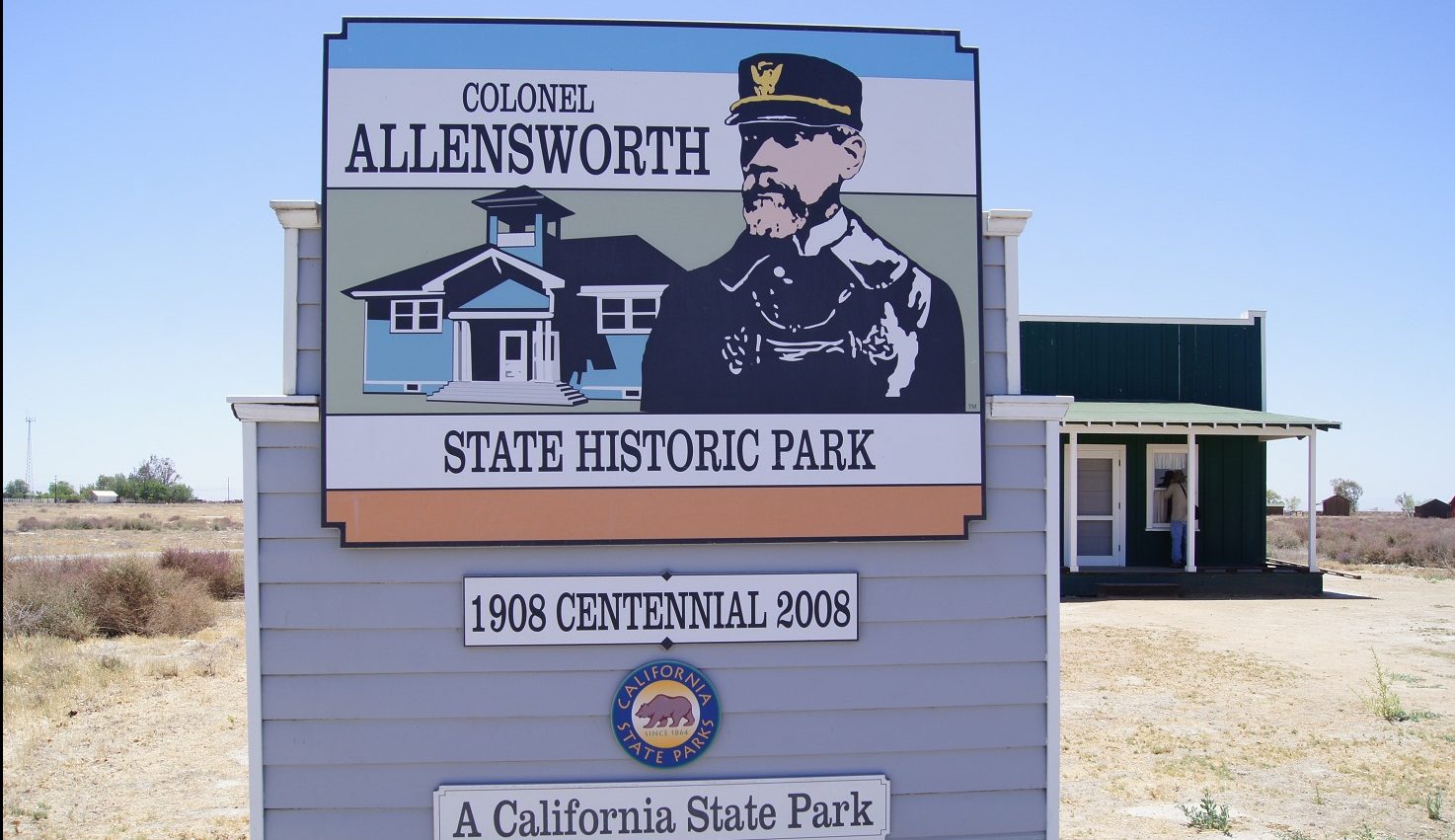
As the California reparations task force determines the impact of slavery on the lives of Black Californians, a Black-led business management group in the Central Valley is revitalizing an obscure national treasure: Lt. Col. Allen Allensworth State Historical Park.
The project pays tribute to Allensworth, California, a town founded by African Americans in 1908. The history of the settlement speaks to the perseverance of African Americans and the terror that they experienced.
Last week, at a ceremony held at the park, Global Economic Impact Group, LLC (GEIG) and the African American Network of Kern County (AANKC) announced the launch of their revitalization effort.
At the event, California State Parks and Recreation official Russ Dingman gave details about the groups’ plans to continue the late Lt. Col. Allen Allensworth’s vision, one of the town’s founders and its namesake.
“Col. Allensworth, with three other families, built this because of Jim Crow-ism,” said Randall Cooper, CEO of GEIG. “We want to be a part of the restoration.”
About 50 people attended the launch event held at Allensworth visitors’ center. Among guests were members of the Black American Political Association of California-Fresno (BAPAC), San Joaquin Valley Chapter of Black Women Organized for Political Action (BWOPA), Fresno Black Farmers, Friends of Allensworth and others.

State officials present, virtually and in-person, included representatives from Gov. Gavin Newsom’s office.
Remnants of the colony that had a population of about 300 Black residents during its heyday can be found at the park.
Allensworth was an educator and U.S. Army’s chaplain to four Black regiments. He was born into slavery in Kentucky. After leaving the Army, he moved to Los Angeles with his wife Josephine Leavell Allensworth.
In 1908, Allensworth and Pasadena-based educator William Payne formed two organizations: the California Colony and Home Promotion Association (HPA) to create a settlement where Black people could live free from discrimination and racism.
The organizations purchased 900 acres for the town. By 1909, Allensworth had become the first California town founded, financed, and governed by Black Americans.
The town had a church, post office, hotel, library, two schools and numerous businesses that offered the essentials and comforts of a thriving community.
Socially, Allensworth bustled with activity. There were sewing circles, holiday events, glee clubs, an orchestra, fishing, hunts for jackrabbits, and more.
By 1914, “a difficult year for the town” the brochure states, Allensworth began suffering from droughts and the lack of irrigation for farmlands.
Some historians believe, by 1925, racist White authorities intimidated by Allensworth’s success were behind the Pacific Farming Company’s decision to cut off the town’s irrigation water supply. Fighting the action in court helped to deplete Allensworth finances.
The Santa Fe Railroad closed a major railway stop important to the town’s commerce, citing Allensworth’s low water level. That also factored into Allensworth’s economic decline.
Also, that year, the town’s inspirational leader Allensworth was struck by a motorcycle as he crossed the street in Monrovia, California. He died on Sept. 14, 1914, at the age of 72.
The residents of the Black town tried to carry on Allensworth’s vision but struggled when drought, poor crop harvests, and other hardships further deteriorated living conditions.
Recruitment of the town’s men to fight in World War I also decimated Allensworth’s population.
Allensworth has been the target of demolition many times dating back to the 1960s, but the state of California bought the land in 1974 and turned it into a state park. About 70,000 guests visit every year.
Gail Crooms, who lives in Central Valley, says it is important to keep the Black heritage of the area alive.
“I wanted to be a part of this the first time I visited Allensworth in 1999,” said Crooms, who is GEIG’s Director of Business Development.
“It had always been my dream to put a Historical Black College and University (HBCU) on this site.”
California’s Assembly Bill (AB) 3121, signed into law in 2020, created a nine-member task force to investigate the history and costs of slavery in California and around the United States.
The commission is examining the extent of California’s involvement in slavery, segregation, and the denial of Black citizens their constitutional rights.
It is also studying incidents of state-backed racial crimes, like the illegal shutting down and state acquisition of Black-owned property.
“Allensworth has not been part of the conversations of reparations,” Broomfield said. “But (GEIG) is now bringing it to the forefront so that family members of the original Allensworth community, who are still living, are able to get reparations.”
GEIG plans to restore landmarks and build a museum, an amphitheater, a water park, campground and other attractions.
“You don’t hear about Black history in California and the West Coast,” Broomfield said. “Because of what happened to Black Wall Street people are becoming aware of what happened to Black communities.”










Arts and Culture
COMMENTARY: Black Music is the Sound of Black Freedom: Let Us Reclaim Both This Juneteenth
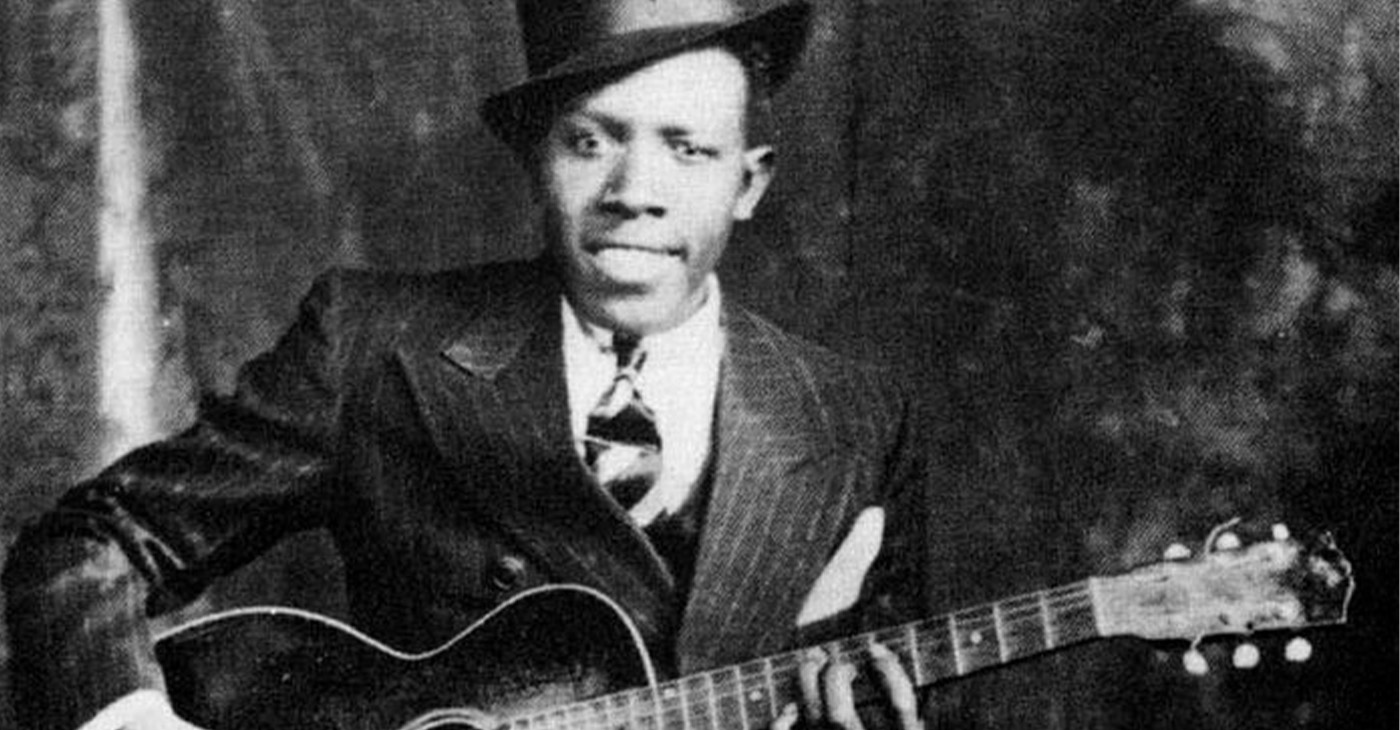
Black Music Month started when Black Music Association members Ed Wright, Kenny Gamble and his wife, journalist and radio host Dyanna Williams were able to persuade President Jimmy Carter to establish the observation on June 7, 1979.

By Wanda Ravernell
Black Music Month and Juneteenth are inextricably linked – Black music is the sound of our freedom.
From the plaintive moans of the enslaved Africans’ ‘sorrow songs,’ to the fields of Civil War battle where Black soldiers picked up abandoned bugles, to the upright piano played in juke joints on Saturday night and churches come Sunday morning, our ancestors’ innovation in the face of want, fear, degradation, and hopelessness has yielded genres of music imitated ’round the world.
Black Music Month started when Black Music Association members Ed Wright, Kenny Gamble and his wife, journalist and radio host Dyanna Williams were able to persuade President Jimmy Carter to establish the observation on June 7, 1979.
In 2000, Congress made it official. In 2009, Pres. Barack Obama changed the name to African American Music Heritage Month and in 2023, Pres. Joe Biden changed it back to Black Music Month, two years after he declared Juneteenth a national holiday, the result of a movement led by Opal Lee.
Our ancestors battle for freedom over these last 400 years and the music that allowed them expression of their humanity deserved to be honored.
But we may be losing sight of the value of their sacrifices.
‘Sing a Song Full of the Faith That the Dark past Has Taught Us…’
Along with the long-known exploitation of Black musicians whose recordings were stolen by record companies, the commercialization of Juneteenth feels like another kind of theft.
I had never heard of Juneteenth until I moved to the Bay Area from my hometown of Philadelphia. I didn’t know it was one of many freedom festivals celebrated by descendants of enslaved people in the United States.
Emancipation Day was Jan. 1 in Pennsylvania, April 16 in Wash., D.C., May 20 in Florida, and Aug. 8 in Kentucky. But Juneteenth, June 19, has the most renown, known in Texas as the ‘colored peoples’ Fourth of July.’
It was marked by parades, beauty pageants, rodeos, backyard barbecues and church picnics.
Yes, church.
The formerly enslaved began the day praying in thanks for their freedom just as they had prayed for Jubilee – the day of freedom – when they had chains on their feet and hands. They ‘testified’ about their past suffering and how they had managed to overcome.
And they sang.
Although, we will not hold it this year, Omnira Institute’s Juneteenth Ritual of Remembrance recalled this part of Juneteenth with prayers in the languages of the African captives. In the middle of the ceremony, a soloist would lead us in singing “Many Thousand Gone” while we took turns reciting portions of the Emancipation Proclamation, the news of freedom that took more than two years to reach Texas – two months after the Civil War ended.
“Many Thousand Gone” was famously recorded by Black luminary Paul Robeson in 1947:
“No more auction block for me,
No more, no more
No more auction black for me
Many thousand gone.”
Other verses refer to the ‘pint of salt’ and the ‘driver’s lash,’ the realities of enslavement that they had survived.
‘Sing a Song Full of the Hope That the Present has Brought Us’
All of the genres of African American music have at their root songs like that, the essence being, as Stevie Wonder, wrote, “the joy inside our pain.” So Black music is not just music. It is our story, our history, our very strength.
During the Civil Rights Movement, which peaked 100 years after slavery ended, the people testified that it was the freedom songs – based on spirituals – that gave them the heart to march, face attack dogs, fire hoses, beatings, and shootouts with vigilantes.
The music reminded them that power was in the people. That music, our music, can do so again. We don’t have to accept the commodification of the products of our culture.
The power of those songs is showing a resurgence across the South as we battle again for the right to self-determination through the ballot box.
Those songs are the voices of our ancestors, voices forged in their blood, their sweat, their tears, joy and, above all, faith. Those songs, those prayers live in our blood and our very breath.
This Juneteenth, let us reclaim those holy voices expressed in Black music for ourselves. It is our birthright. It can neither be bought nor sold. No more. Never again.
Wanda Ravernell is the executive director of Omnira Institute, sponsor for 18 years of the Juneteenth Ritual of Remembrance and Oakland’s 11th Annual Black-Eyed Pea Festival, which will take place on Sept. 12.

Activism
Oakland Post: Week of June 3 – 9, 2026
The printed Weekly Edition of the Oakland Post: Week of June 3 – 9, 2026

To enlarge your view of this issue, use the slider, magnifying glass icon or full page icon in the lower right corner of the browser window.
#NNPA BlackPress
Study: Waiting Lists for Child Care Assistance Nearly Doubled
BLACKPRESS USA NEWSWIRE — “Since the expiration of tens of billions of dollars in federal child care funding in 2023 and 2024, an already fragile child care system has been pushed even closer to the brink.”
The post Study: Waiting Lists for Child Care Assistance Nearly Doubled appeared first on BlackPressUSA.

By National Women’s Law Center
The National Women’s Law Center released its annual State Child Care Assistance Policies report, finding that the number of children placed on waiting lists for federally funded child care assistance nearly doubled between 2024 and 2025 — and that number has only continued to grow.
The report serves as a key resource for state lawmakers, advocates, and policymakers by tracking state child care assistance policies and identifying where states are strengthening support for families and early educators — or falling behind.
“This deeply troubling increase in the number of children on child care waiting lists is the result of a failure to invest in this crucial sector,” said Karen Schulman, senior director of state child care policy and author of the report. “Since the expiration of tens of billions of dollars in federal child care funding in 2023 and 2024, an already fragile child care system has been pushed even closer to the brink.”
Key findings in the report related to waiting lists for child care assistance include:
• 17 states had waiting lists or a freeze on intake for child care assistance in February 2025, up from 13 states in February 2024.
• Approximately 106,700 children nationwide were added to waiting lists between February 2024 and February 2025, bringing the total to 225,500 children in February 2025 — a 90 percent increase compared to February 2024.

• The numbers climbed even further between February 2025 and summer/fall 2025, with more than 175,000 additional children added to state waiting lists in just a few months — a 78 percent increase.
• At least seven states newly began placing families on waiting lists or freezing intake, while at least 10 additional states saw their waiting lists grow, after February 2025.
The report also includes state-by-state data on key child care assistance policies, including income eligibility limits, parent copayments, provider payment rates, and eligibility policies for parents searching for work.
Click the link to learn more: Warning Signs: State Child Care Assistance Policies 2025.
The post Study: Waiting Lists for Child Care Assistance Nearly Doubled appeared first on BlackPressUSA.

WORK FROM HOME
Home-based business with potential monthly income of $10K+ per month. A proven training system and website provided to maximize business effectiveness. Perfect job to earn side and primary income. Contact Lynne for more details: Lynne4npusa@gmail.com 800-334-0540


COMMENTARY: Black Music is the Sound of Black Freedom: Let Us Reclaim Both This Juneteenth

Oakland Post: Week of June 3 – 9, 2026

Study: Waiting Lists for Child Care Assistance Nearly Doubled

Venus Williams Calls a Sabalenka Exit a Tragedy

COMMENTARY: Using Art, Healing, And Community to Transform Mental Health Dialogue

Uptown Music Theatre Summer Camp Returns to Inspire the Next Generation of Performers

5 Cleveland Police Officers Injured, Gunfire Erupts During East Side Pursuit

15-YEAR-OLD COLUMBUS GIRL DIES, Community Mourns as Authorities Urge Water Safety Awareness

Let’s Talk Karmelo Anthony!

2026 World Cup is Here and Atlanta is Ready For It

COMMENTARY: What Andrew Young Reminded Me About Baltimore

COMMENTARY: When Politics Intersects with Professional Sports

K4: Crucial Driving Advice BEFORE You Buy! #shorts
The Conversation with Al McFarlane – MINNESOTANS ORGANIZING FOR CHANGE
Negotiate Car Add-Ons: Don’t Get Ripped Off! #shorts

Book Review: Books for College-Bound Students

Against All Odds: Mary Jackson’s Journey to NASA Engineer

Up to the Job: How San Francisco’s PRC Is Providing Work Opportunities That Turn Into Lasting Stability

Q&A with Steven Bradford: Why He Wants Your Vote for California Insurance Commissioner

OPINION: The Fire of Oakland’s Justin Jones

The Marin City Flea Market Is Back

California Launches Free Diaper Program for Newborns Statewide

OP-ED: Small Businesses Need Minnesota to Act on Pass-Through Tax Policy

The Ladies of Delta Sigma Theta Hold Day of Advocacy at the Capitol in Sacramento

EBMUD Enshrines the Legacy of its First Black Board Member William ‘Bill’ Patterson

Snoop Dogg Celebrates 10 Til’ Midnight at the Compound

Oakland Post: Week of May 6 – 12, 2026

2026 Lucid Air Grand Touring Review — Is This $136K EV Sedan Worth It?

Oakland Mayor Pushes Charter Overhaul to Clarify Roles in City Government, Increase Accountability and Improve Service Delivery

Marin City Public Housing Residents Demand a Voice in County’s Renovation Plans

Hyundai Ioniq 5 Parking, Safety, and 360 View #shorts

2025 Ioniq 5 New Wiper & Powerful Performance! #shorts

Electric SUV Range: Is 259 Miles Enough? #shorts

EV Charging: How Fast Can You Charge an Electric Vehicle? #shorts

Biometric Cooling… Messaging Seats…Come on! 2025 Infiniti QX80 Autograph 4WD

Charged Up: Witness the Magic of a Fully Electric Car! #shorts

Range Rover Sport PHEV Included…: See What’s Inside This Luxury SUV! #shorts

Invisible Hood View: Perfect Parking with X-Ray Vision! #shorts

AI Is Reshaping Black Healthcare: Promise, Peril, and the Push for Improved Results in California

ESSAY: Technology and Medicine, a Primary Care Point of View

Sanctuary Cities

The RESISTANCE – FREEDOM NOW

STATE OF THE PEOPLE: Freddie

ECONOMIC BOYCOTT DAY!!!!!

I told You So
-
 Advice3 weeks ago
Book Review: Books for College-Bound Students
-
 Arts and Culture4 weeks ago
Against All Odds: Mary Jackson’s Journey to NASA Engineer
-
 Bay Area3 weeks ago
Q&A with Steven Bradford: Why He Wants Your Vote for California Insurance Commissioner
-
 Activism3 weeks ago
OPINION: The Fire of Oakland’s Justin Jones
-
 Alameda County4 weeks ago
The Marin City Flea Market Is Back
-
 Activism3 weeks ago
California Launches Free Diaper Program for Newborns Statewide
-
 Activism3 weeks ago
The Ladies of Delta Sigma Theta Hold Day of Advocacy at the Capitol in Sacramento
-
 Activism4 weeks ago
EBMUD Enshrines the Legacy of its First Black Board Member William ‘Bill’ Patterson
