
Antonio Ray Harvey
S. F. NAACP Clarifies Statement on $5M Payouts: Reparations Should Be Cash Payments, Plus ‘Investments’
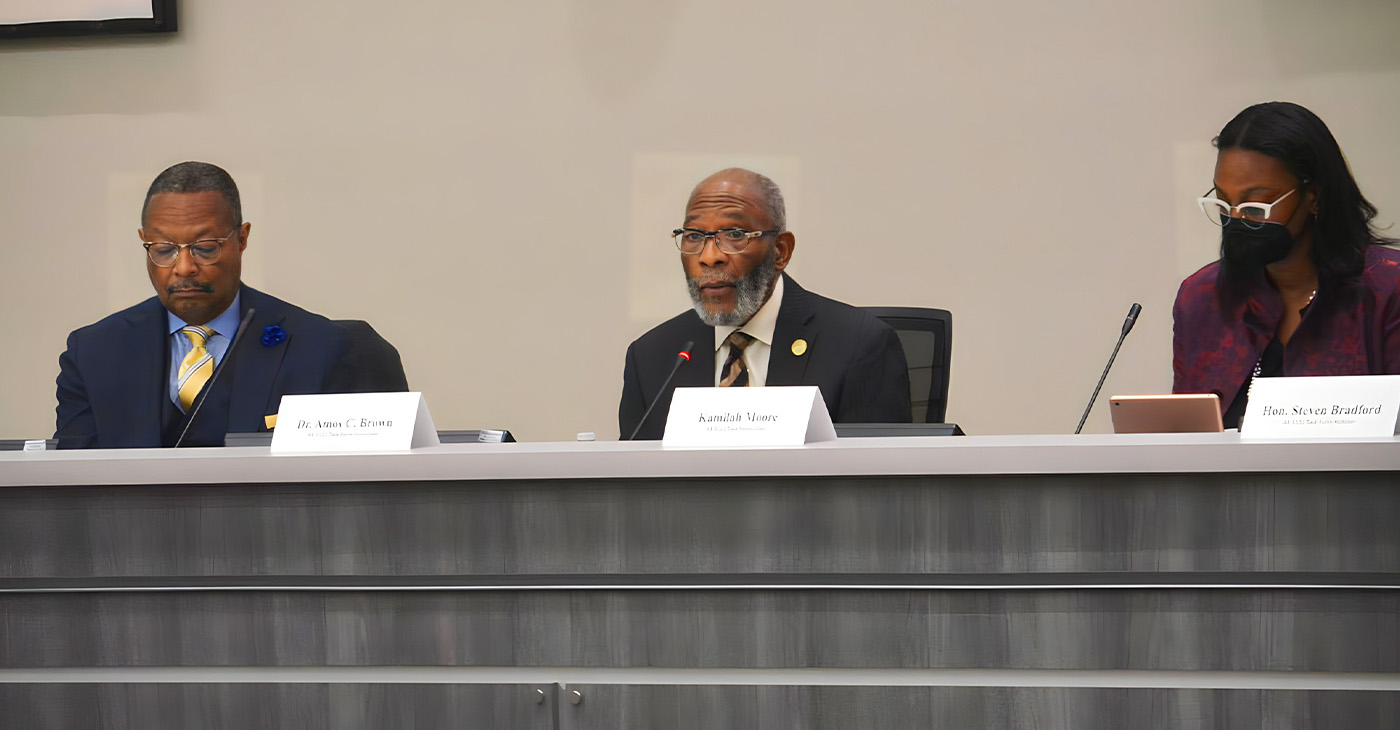
The San Francisco Branch of the NAACP is engaged in a public information blitz to clarify a press release it sent out urging the San Francisco city government to reject a proposal to pay each qualifying Black city resident a one-time lump sum reparation payment of $5 million. The Rev. Amos Brown, a member of the San Francisco reparations board, pastor of Third Baptist Church, and the president of the San Francisco NAACP, released a March 14 statement before the recommendations were presented to the supervisors rejecting the $5 million payout.

By Antonio Ray Harvey and Manny Otiko, California Black Media
Note: This article has been updated and republished for clarity. A view about the inability of the City of San Francisco to afford paying reparations payments to its Black residents who qualify was expressed by several San Francisco Board of Supervisors members. That perspective was accurately captured in the story. However, that point of view was attributed to one member, Dean E. Preston, in a direct quote that did not reflect his words verbatim.
The San Francisco Branch of the NAACP is engaged in a public information blitz to clarify a press release it sent out urging the San Francisco city government to reject a proposal to pay each qualifying Black city resident a one-time lump sum reparation payment of $5 million.
The Rev. Amos Brown, a member of the San Francisco reparations board, pastor of Third Baptist Church, and the president of the San Francisco NAACP, released a March 14 statement before the recommendations were presented to the supervisors rejecting the $5 million payout.
Reparations should focus on investments and opportunities in five areas: education, employment, housing, healthcare, and a culture center for San Francisco’s Black residents, the prepared statement reads.
“We strongly believe that creating and funding programs that can improve the lives of those who have been impacted by racism and discrimination is the best path forward toward equality and justice,” Brown stated. Brown is the vice-chairperson of the California Reparation Task Force, which is proposing recommendations for two million Black residents in California.
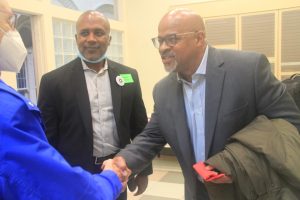
Eric McDowell, right, the chairperson for San Francisco’s African American Reparations Advisory Committee (AARAC), said the committee presented 111 recommendations of reparations to the city’s Board of Supervisors. CBM photo by Antonio Ray Harvey. December 2022.
The NAACP’s press release was met with immediate backlash by supporters in the movement for reparations across the country who have, for decades now, invested time, energy and money into bringing the issue to national attention.
In 2020, California became the first state to set up a task force to investigate the state’s involvement in slavery, state-sanctioned atrocities against African Americans and all other forms of discrimination and discriminatory policy that excluded Black Californians from state benefits or protections or that prevented them from gaining social or economic power.
“This is reprehensible. It is a betrayal to Black Americans,” tweeted Bishop Talbert Swan on March 17 reacting to the press release.
“As a life member of the NAACP and the longest-serving president in the history of my branch, I am ashamed by the position taken by the San Francisco branch.”
Brown has since clarified in several public appearances that he is not against the idea of a cash payout but only wants the recommendation to be a reasonable compromise — one, he says, that does not give the city’s Black residents “false hope.”
“We don’t want to get set up for another study or for them to put this up on a shelf to collect dust,” said Brown in an interview with Roland Martin. “We must have action. We believe in cash-plus — not either or.”
Eric McDowell, chairperson of the African American Reparations Advisory Committee (AARAC) — a task force set up by San Francisco city government — said that recommendations presented to the Board of Supervisors is an “appraisal” and he is “hopeful” that the city will deliver much needed compensation for the Black community.
McDowell made the statements in an interview with San Francisco’s KRON 4 News on March 24. AARAC presented recommendations on March 14 to address the harms and struggles Black Americans have endured since they began migrating west after the Civil War.
“What the city will decide to do is fully in the hands of the supervisors, mayor’s office and full leadership of the city,” McDowell said in the six-minute segment. “We’re hopeful as a committee that they will take up the charge and do what they believe both is right to do and have the capacity to do.”
The recommendations, McDowell said, are only in “draft” form at this stage. They cover economic empowerment, education, generational wealth building and public policies for the benefit of Black San Franciscans. McDowell referred to the recommendation as an estimation of value.
“Our task (AARAC) was to do the appraisal and it’s the city’s task to determine, based upon recommendations, what they decide to adopt,” McDowell said.
“Once again, that conversation is yet to come: the determination of how it will get financed and made possible,” McDowell continued, talking about reparations payments to San Franciscans who are Black American descendants of enslaved people.
The 14-person reparations committee advises the Board of Supervisors, Mayor London Breed, the Human Rights Commission and the public on the development of a San Francisco Reparations Plan. The plan features ways that San Francisco’s policies have harmed Black lives.
Giving qualifying Black residents individual payments of $5 million, the elimination of personal debt and tax liabilities of African American households and securing annual incomes at a minimum $97,000 for 250 years are part of the package the committee is proposing.
San Francisco’s Black population is 6% of the city’s total number of residents and they make up 38% of the city’s homeless population.
The AARAC has documented decades of policies and laws that systematically affected Black Americans in San Francisco, limiting their access to productive employment property, education and the ability to build generational wealth.
A decision by the Board of Supervisors on the amount of compensation owed to Black residents or the form it will take is not expected until June. Meanwhile, the city is mulling over the fact that providing financial compensation will push it deeper into the red, a point that has been made by some city officials that many who oppose reparations for Black Americans have latched onto and referenced in their arguments.
“I wish we had this kind of money in San Francisco’s general fund, but if we want to maintain the services that exist today, we do not,” said Supervisor Hillary Ronen in a San Francisco Chronicle interview.
San Francisco is currently facing a deficit of more than $720 million over the next 24 months. Supervisor Dean Preston told the San Francisco Chronicle that reparations are warranted but not financially feasible for the city.








Activism
Black Leadership Council Recognizes Assemblymembers Bonta, Jackson for Leadership and Service
“The Black Leadership Council has been imprinted in my heart because I first met with you all when I was a first-year legislator and we talked about what we wanted for our children and our families,” Bonta said. “It’s just an incredible honor to receive this award and share this honor with my partner in this work, Dr. Corey Jackson.”
By Antonio Ray Harvey, California Black Media
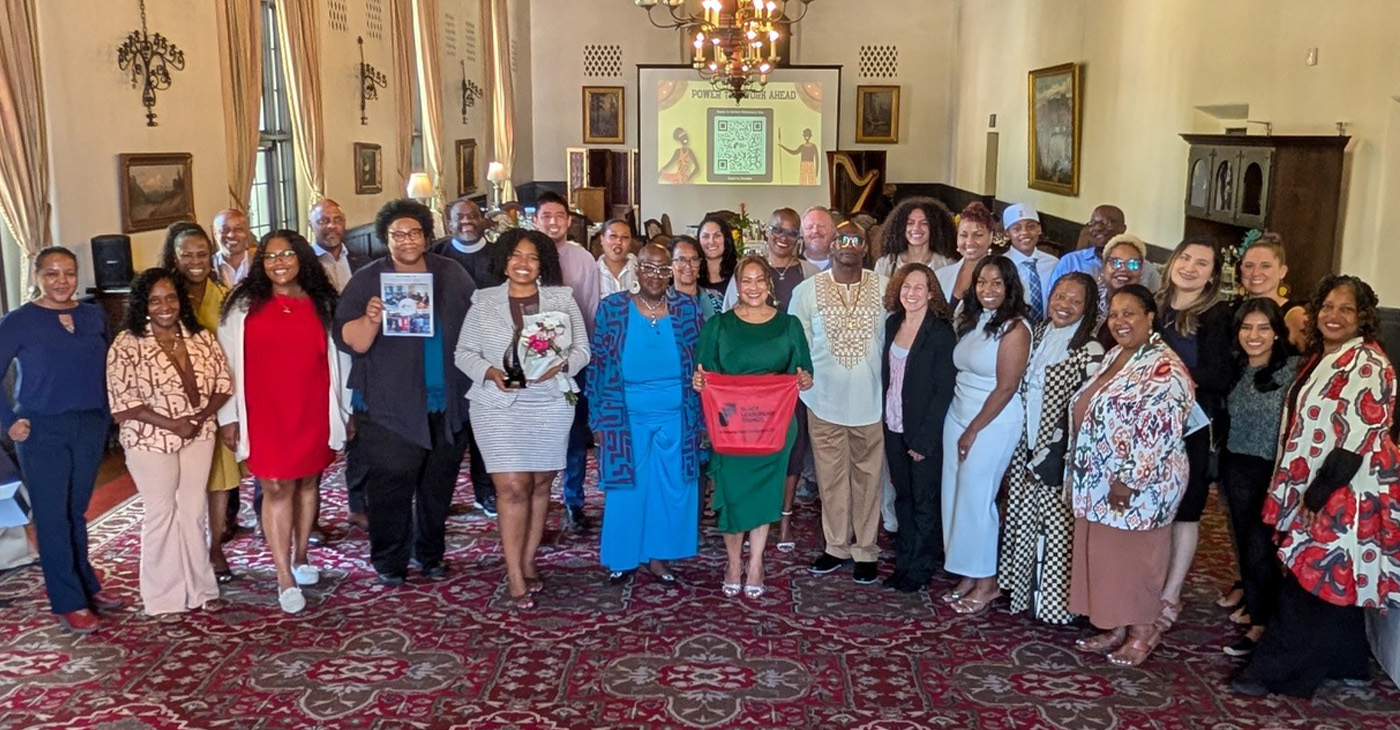
The Black Leadership Council (BLC) honored Assemblymembers Mia Bonta (D-Alameda) and Dr. Corey Jackson (D-Moreno Valley) during its annual Legislative Awards Luncheon for their leadership in advancing racial justice, economic opportunity and community investment.
Both members of the California Legislative Black Caucus (CLBC), Bonta received the Education Equity Champion Award, while Jackson was presented with the Wealth Equity Champion Award.
The luncheon was held June 17 at the Sutter Club in Sacramento following a morning of meetings between BLC members and CLBC senators, assemblymembers and Capitol staff.
“Whenever you’re in the same room and being honored alongside Oakland’s own Mia Bonta, you must be doing something right. One of the things that’s clear is that this nation needs Black leadership more than ever,” Jackson said.
Jackson was recognized for co-authoring legislation that expands economic opportunity, strengthens the social safety net and supports youth and vulnerable communities.
Bonta was honored for establishing the bipartisan California Legislative Children’s Caucus, a bicameral coalition that advocates for investments in childcare, health and education. The caucus promotes evaluating state budgets and public policy through the lens of children’s well-being.
BLC and the CLBC work together to translate community priorities into legislative action. Both lawmakers said the BLC was among the first organizations they met with after taking office.
“The Black Leadership Council has been imprinted in my heart because I first met with you all when I was a first-year legislator and we talked about what we wanted for our children and our families,” Bonta said. “It’s just an incredible honor to receive this award and share this honor with my partner in this work, Dr. Corey Jackson.”
Assemblymember LaShae Sharp-Collins (D-La Mesa) attended the luncheon to celebrate her legislative director, Jerika Edwards, who received the Next Generation Leadership Award. Sharp-Collins credited Edwards with building a distinguished record of civic engagement, public service, voting rights advocacy and social justice leadership.
Nikki A. Beasley, executive director of Richmond Neighborhood Housing Services, received the Housing Equity Champion Award. Carol F. Burton, a health care, criminal justice and behavioral health executive, received the Health Equity Champion Award. BLC member Joya Chavarin, a California-based education researcher, was presented with the Trailblazer Award.
“The Legislative Awards Luncheon offers a valuable opportunity to recognize impactful legislators, their staff, and community leaders,” said Meron Agonafer, a member of the BLC Executive Committee.
Established by PRC, formerly the Positive Resource Center, the BLC is a statewide coalition dedicated to advancing policy and systems change in education, housing, health and justice. Its overarching mission is to achieve “Black prosperity” through statewide advocacy and public policy.
“The council targets a high volume of legislation,” said Dr. Deborah Hawkes, PRC’s chief executive officer, who oversees the BLC’s statewide strategy and community initiatives.
“Freedom means opportunities. It means access to quality education, stable housing, good health, economic security, and the ability for every person to thrive,” Hawkes said. “That work requires investments, it requires leaders who are willing to speak up, organizations that are going to do the work, and partners who are willing to sustain the movement.”
Activism
Black Caucus Bill Requiring Major Corporations in California to Disclose Links to Slavery Moves Forward
“We have a public accounting of the ways that our civic institutions have benefited from chattel slavery and built wealth in the process,” said Asm. Isaac Bryan (D-Ladera Heights), vice chair of the California Legislative Black Caucus (CLBC). “We even had cost estimates of what is true accounting for what that (wealth) would be.”
By Antonio Ray Harvey, California Black Media
In August 2000, the California Legislature confronted a little-known chapter of American history after records uncovered in the state archives revealed that, before the Civil War, some insurance companies issued policies to slaveholders that insured enslaved people against injury, death or escape, treating human beings as property.
That same year, former state Sen. Tom Hayden (D-Los Angeles) authored Senate Bill 2199, landmark legislation requiring insurance companies doing business in California to disclose records of slaveholder insurance policies issued by them or their corporate predecessors.
More than two decades later, California lawmakers are seeking to expand that transparency.
Assembly Bill (AB) 2599, the Truth in Disclosure Act, authored by Asm. Isaac Bryan (D-Ladera Heights), builds on the disclosure framework established by SB 2199. The measure would require certain large corporations to search their historical records and submit sworn affidavits, under penalty of perjury, disclosing documented ties to chattel slavery or profits derived from slavery.
On June 23, AB 2599 passed the Senate Judiciary Committee, chaired by Sen. Tom Umberg (D-Santa Ana), on an 11-1 vote. The measure now heads to the Senate Public Safety Committee.
“We have a public accounting of the ways that our civic institutions have benefited from chattel slavery and built wealth in the process,” said Bryan, vice chair of the California Legislative Black Caucus (CLBC). “We even had cost estimates of what is true accounting for what that (wealth) would be.”

Bryan continued, “This bill is simply about disclosure. We’ve had a conversation about the private sector’s role in extracting that wealth, but this bill starts with that conversation around disclosure.”
Known as the Slavery Era Insurance Policies Act, Hayden’s SB 2199 required insurers licensed in California to examine their archives for antebellum policies covering slaveholders against the loss or death of enslaved people. The results were compiled by the California Department of Insurance.
AB 2599 would extend that transparency requirement beyond the insurance industry. It requires entities doing business in California with more than $100 million in annual worldwide gross receipts to review their records for historical involvement in slavery-related transactions.
The bill specifically identifies industries historically tied to the slave economy, including textile, tobacco, railroad, shipping, rice, sugar, financial and insurance companies.
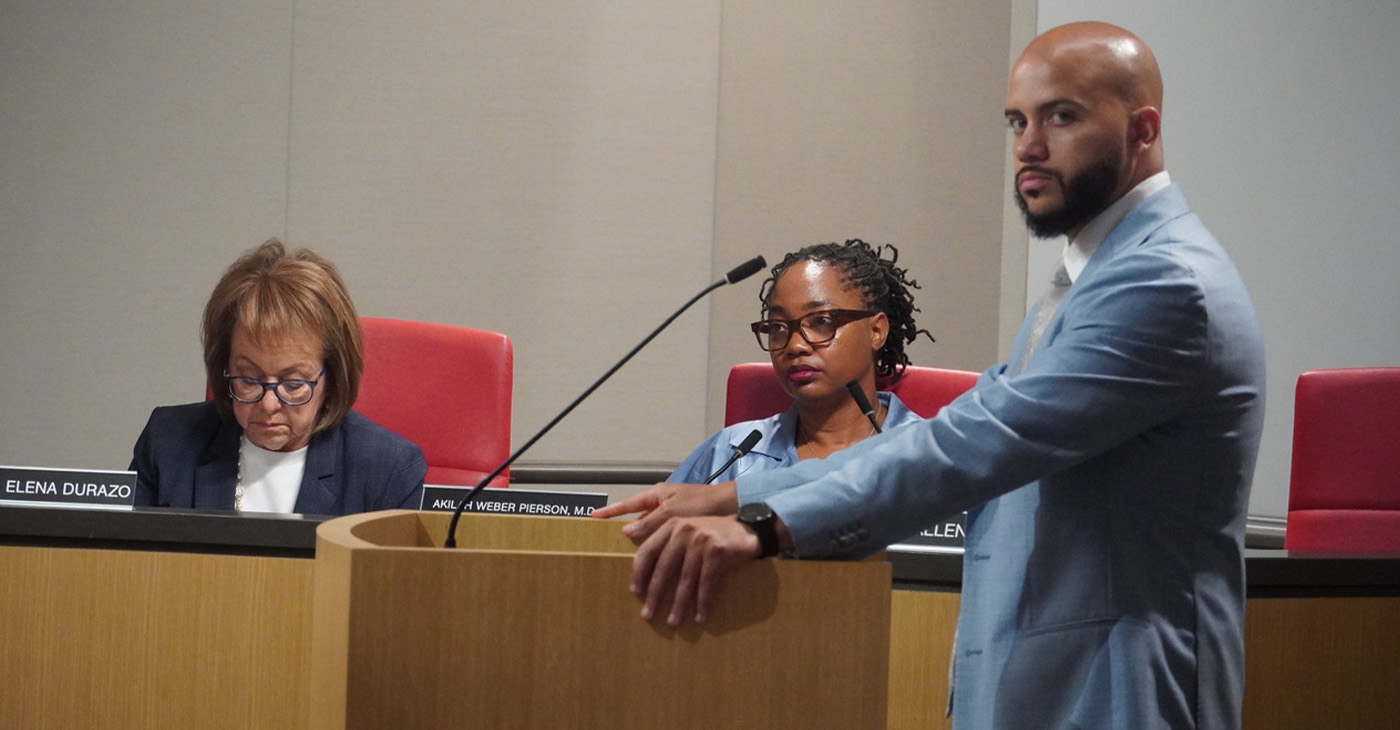
AB 2599 is the CLBC’s sole priority bill this legislative session, according to Sen. Akilah Weber Pierson (D-San Diego), chair of the caucus and a member of the Senate Judiciary Committee.
Weber Pierson cited several financial institutions and insurance companies that have acknowledged or documented historical ties to slavery, including JPMorgan Chase, Citibank, Bank of America, Wells Fargo, New York Life, AIG and Aetna.
“This bill (AB 2599) is extremely important because it acknowledges that many disparities facing Black Americans did not happen by accident. It also talks about the fact that many of the economic opportunities that benefited major institutions did not also happen by accident — but by their participation in chattel slavery,” Weber Pierson said.
The bill’s primary co-sponsor is the Alliance for Reparations, Reconciliation and Truth. Other supporters include Black Women Organized for Political Action (BWOPA), Congregations Organized for Prophetic Engagement, the Ella Baker Center for Human Rights, Healing Justice Santa Barbara, the Black Power Network, the Inland Empire Black Worker Center, LA Voice, the League of Women Voters of California and Starting Over Inc.
Activism
The Ladies of Delta Sigma Theta Hold Day of Advocacy at the Capitol in Sacramento
A member of the “Divine Nine,” Delta Sigma Theta Sorority, Inc., was founded on Jan. 13, 1913, at Howard University in Washington, D.C. The organization was established by 22 women who sought to shift the group’s focus from social activities to public service, academic excellence, and social activism.
By Antonio Ray Harvey, California Black Media
On May 4, members of the Farwest Region of Delta Sigma Theta Sorority, Inc., convened at the California State Capitol for the organization’s 23rd annual Delta Days in Sacramento.
The two-day advocacy event brings together chapters from across California to engage directly in the legislative process, connect with lawmakers, and advocate for policies impacting Black communities.
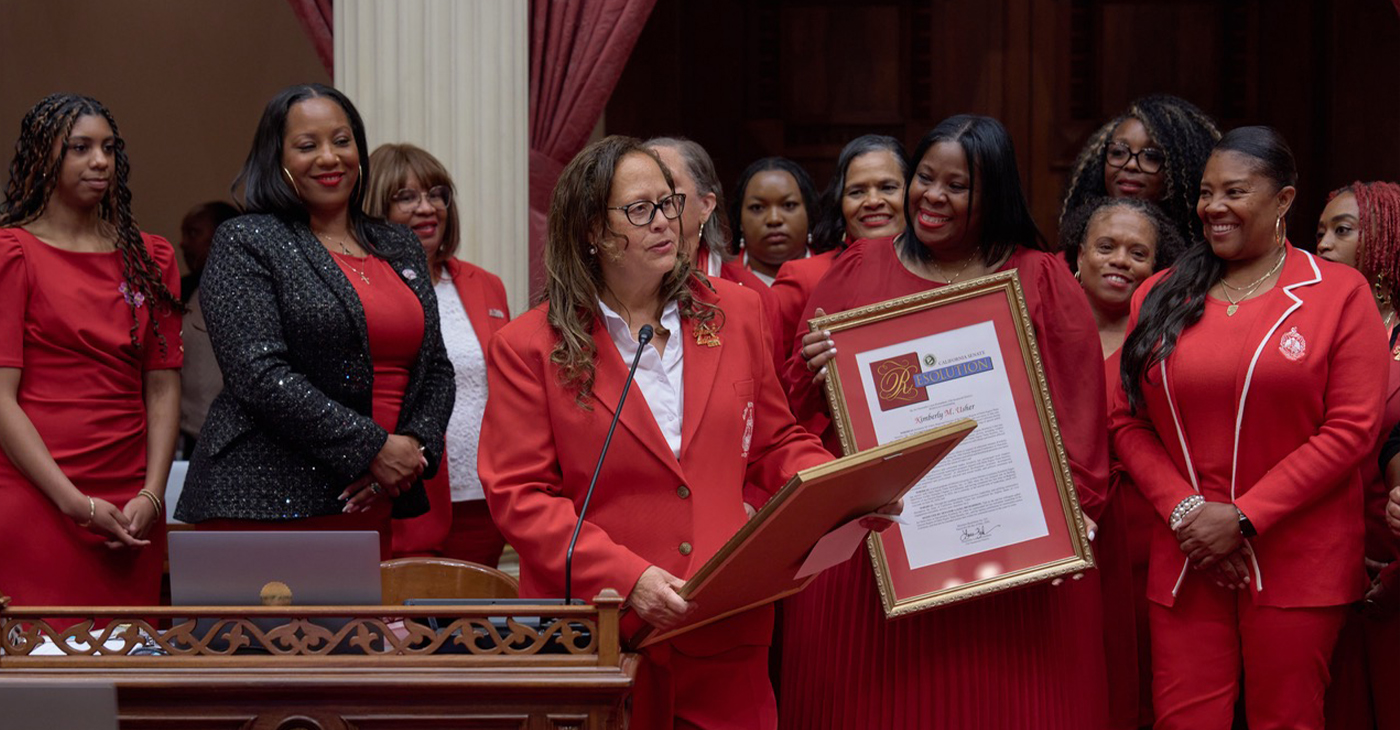
Members of the sorority were honored on the Senate floor by Sen. Laura Richardson (D-San Pedro), who is also a member of Delta Sigma Theta.
Richardson welcomed the Farwest Region during the presentation of a Senate resolution recognizing outgoing Regional Director Kimberly Usher for her leadership and service.
“In addition to the Far West Region, we are led by a fearless leader, regional director Kimberly Usher. She has now served her full term of what’s allowed,” Richardson said. “We are going to be having our regional conference, but we wanted to give it to her here, officially recognizing her service.”
The resolution was co-authored by Richardson and fellow members of the California Legislative Black Caucus (CLBC) and Delta Sigma Theta, Sen. Akilah Weber Pierson (D-San Diego) and Assemblymember Rhodesia Ransom (D-Stockton).
Usher has served in the leadership role since 2022.
A member of the “Divine Nine,” Delta Sigma Theta Sorority, Inc., was founded on Jan. 13, 1913, at Howard University in Washington, D.C. The organization was established by 22 women who sought to shift the group’s focus from social activities to public service, academic excellence, and social activism.

“We are founded on sisterhood that is deeply rooted in scholarship, service, and social action,” said Weber Pierson, a member of the Gamma Alpha chapter of Delta Sigma Theta Sorority.
“Today, we continue a legacy of empowering communities and upholding the high cultural, intellectual, and moral standards established by our founders over a century ago,” she added.

WORK FROM HOME
Home-based business with potential monthly income of $10K+ per month. A proven training system and website provided to maximize business effectiveness. Perfect job to earn side and primary income. Contact Lynne for more details: Lynne4npusa@gmail.com 800-334-0540


COMMENTARY: Mental Health Crisis Among Black Men — A Growing Concern

COMMENTARY: Our Voices — When Armed Power Appears at the Ballot Box

Councilman Johnson calls for Action to Keep Mavericks in Dallas – Garland Journal

Automatic Draft Registration Raises Questions Among Young Americans

Scotland Defeats Haiti 1-0 in World Cup Opener

Ivory Coast Finds the Net Late Securing a 1-0 Victory Over Ecuador

What the insurance industry sees when it looks at your home

What the insurance industry sees when it looks at your home

BOOK REVIEW: Never Tell a Black Girl How to Black Girl: Essays

Assemblymember Mike Gipson: Tragic Compton Shootings Drive Home Need for Stronger Gun Control Legislation

Gov. Gavin Newsom Signs Law Streamlining Affordable Housing Rules

Oakland Celebrates $125 Million Coliseum Sale

OPINION: Board VP Valarie Bachelor Says OUSD Is Moving Ahead Under Committed Leadership

Oakland Children’s Hospital Workers and Patients Rally for Pediatric Medical Care

Alameda County Board of Supervisors Honors 100 Black Men of the Bay Area

After 10-Year Wait, Fillmore Heritage Center Reopens in San Francisco

Oakland Post: Week of June 3 – 9, 2026


Oakland Post: Week of June 17 – 23, 2026

IN MEMORIAM: Oakland Dance Legend Reginald Ray-Savage, 67

UC Berkeley Named Top Public University in the U.S. and No. 7 in the World by ‘U.S. News’

COMMENTARY: Black Music is the Sound of Black Freedom: Let Us Reclaim Both This Juneteenth

Oakland Post: Week of June 10 – 16, 2026

Ferry Fares to Increase July 1 as Ridership Hits Record Highs

2026 World Cup is Here and Atlanta is Ready For It

Sale of Coliseum to African American Developers Moves Toward Completion

Oakland Director Boots Dazzles Once Again in ‘I Love Boosters’

NCBW-OBAC Champions Black Women Entrepreneurs at Business en Blaque Expo

Oakland Post: Week of July 1 – 7, 2026

A Long Time Coming: School District Kicks Off Massive $97 Million Renovation of West Oakland’s McClymonds High School

The Conversation With Al McFarlane 6/23/26

Media Monday 6/22/26

LIVE! ASK ALMA! — TUES. 6.23.26 7PM EST

Car Buying Secrets: 4 Hidden Checks Before You Sign!

Is This 550 HP Charger Worth YOUR Money? AutoNetwork Review

Celebrating Juneteenth – Frederick Douglass on education and resistance

LIVE! — ASK ALMA! — TUES. 6.19.26 7PM EST

Hyundai Ioniq 5 Parking, Safety, and 360 View #shorts

2025 Ioniq 5 New Wiper & Powerful Performance! #shorts

Electric SUV Range: Is 259 Miles Enough? #shorts

EV Charging: How Fast Can You Charge an Electric Vehicle? #shorts

Biometric Cooling… Messaging Seats…Come on! 2025 Infiniti QX80 Autograph 4WD

Charged Up: Witness the Magic of a Fully Electric Car! #shorts

Range Rover Sport PHEV Included…: See What’s Inside This Luxury SUV! #shorts

Invisible Hood View: Perfect Parking with X-Ray Vision! #shorts
-
 Activism4 weeks ago
 -
 Arts and Culture4 weeks ago
IN MEMORIAM: Oakland Dance Legend Reginald Ray-Savage, 67
-
 Bay Area4 weeks ago
UC Berkeley Named Top Public University in the U.S. and No. 7 in the World by ‘U.S. News’
-
 Alameda County4 weeks ago
Ferry Fares to Increase July 1 as Ridership Hits Record Highs
-
 Activism4 weeks ago
NCBW-OBAC Champions Black Women Entrepreneurs at Business en Blaque Expo
-
 Activism2 weeks ago
Oakland Post: Week of July 1 – 7, 2026
-
 Bay Area4 weeks ago
A Long Time Coming: School District Kicks Off Massive $97 Million Renovation of West Oakland’s McClymonds High School
-

 Activism4 weeks ago
Oakland Museum Presents Landmark Retrospective Celebrating Beloved Bay Area Artist Mildred Howard
