
Activism
Striving for Quality and Affordable Health for Everyone: Six Questions for The California Endowment
The California Endowment’s (TCE) mission is to expand access to affordable, high-quality health care for underserved individuals and communities, and to promote fundamental improvements in the health status of all Californians. Since the organization’s establishment in 1996, TCE has awarded more than 22,000 grants amounting to over $2.9 billion to community-based organizations across California, making it the largest private health foundation in the state.

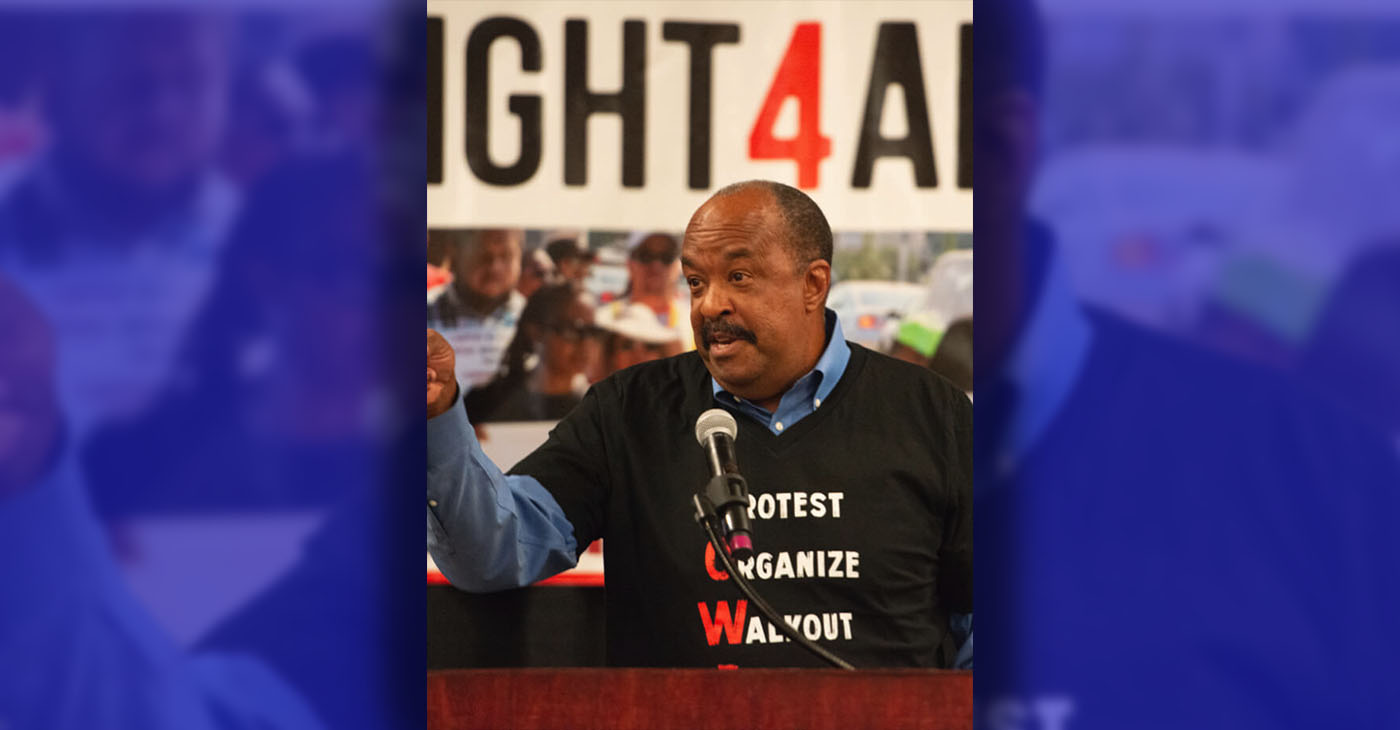
By Edward Henderson
California Black Media
The California Endowment’s (TCE) mission is to expand access to affordable, high-quality health care for underserved individuals and communities, and to promote fundamental improvements in the health status of all Californians.
Since the organization’s establishment in 1996, TCE has awarded more than 22,000 grants amounting to over $2.9 billion to community-based organizations across California, making it the largest private health foundation in the state.
TCE provides funding to 501(c)(3) nonprofit organizations that are not private foundations, California state and local government entities, and faith-based organizations that welcome and serve all state residents.
California Black Media (CBM) spoke with Castle Redmond, Managing Director of TCE about the organization’s impact, challenges and achievements over the last year.
What does your organization do to improve the lives of Black people in California?
We fund organizations doing work within our strategic focus areas. We Many of them work on behalf of Black people and the community, not exclusively, but it’s a big part of what we want to accomplish in California.
What was your greatest success over the course of the last year?
We focus on public education. We’re trying to transform the public education system in California by supporting organizations that are doing the work to transform it. Over the last year, some of the best work we did is funding community groups supporting mental health in the school system. For example, The Alliance for Boys and Men of Color is an organization we support to ensure that funding gets to schools that have high numbers of Black students.
In your view, what is the biggest challenge Black Californians face?
There are a host of challenges that are systemic and not new. Structural racism and inequities hit the same folks who were hit hardest by slavery, indigenous genocide, by Jim Crow, northern and western segregation, redlining, and the rest. The same folks are hit with structural racism now. In California, Black people are, by far, the most affected by homelessness. It’s the same with incarceration and gun violence. The backlash from structural racism is landing on us. The aftermath of COVID – the deathrates and lockdowns — with schools being closed for the longest, we’re still reeling and trying to recover from that. Lastly, our schools in the districts that serve large numbers of Black students are being hit by a fiscal crisis. All of that stems from structural inequities.
What was your organization’s biggest challenge?
The biggest challenge is figuring out exactly how to move from strategy to implementation. Figuring out those levers that will have the greatest impact.
Does your organization support or plan to get involved in the push for reparations in California?
We support our grantees. We don’t take the lead, but we support organizations that are pushing for reparations. One of these organizations is the California Black Freedom Fund. We are finishing up our giving of a $10 million grant to the Fund.
How can more Californians of all backgrounds get involved in the work you are doing?
Join local organizing efforts that are led by and for Black people in your community or nearby. They can also give to the Black Freedom Fund.







Activism
Oakland Post: Week of April 1 – 7, 2026
The printed Weekly Edition of the Oakland Post: Week of April 1 – 7, 2026
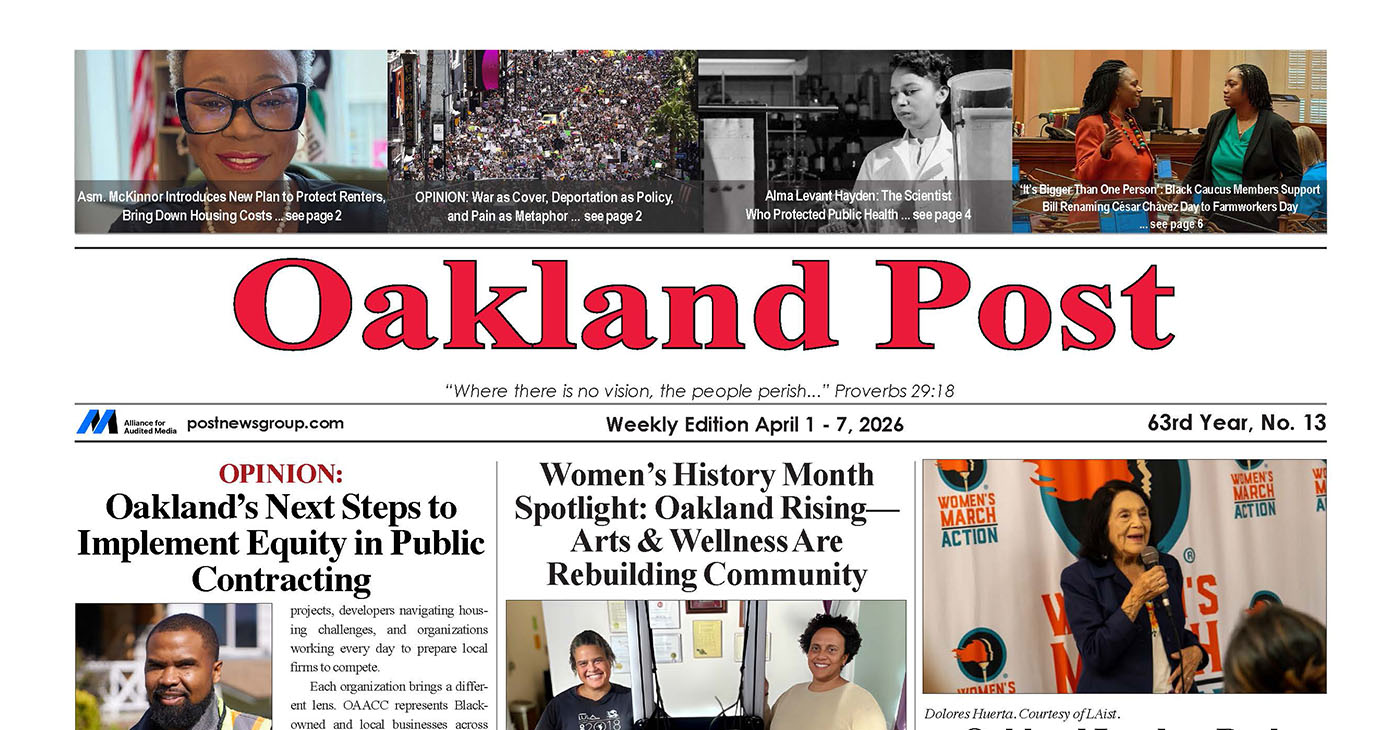
To enlarge your view of this issue, use the slider, magnifying glass icon or full page icon in the lower right corner of the browser window.
Activism
Oakland Post: Week of March 18 – 24, 2026
The printed Weekly Edition of the Oakland Post: Week of March 18 – 24, 2026

To enlarge your view of this issue, use the slider, magnifying glass icon or full page icon in the lower right corner of the browser window.
Activism
Oakland Post: Week of March 11 -17, 2026
The printed Weekly Edition of the Oakland Post: Week of March 11 – 17, 2026
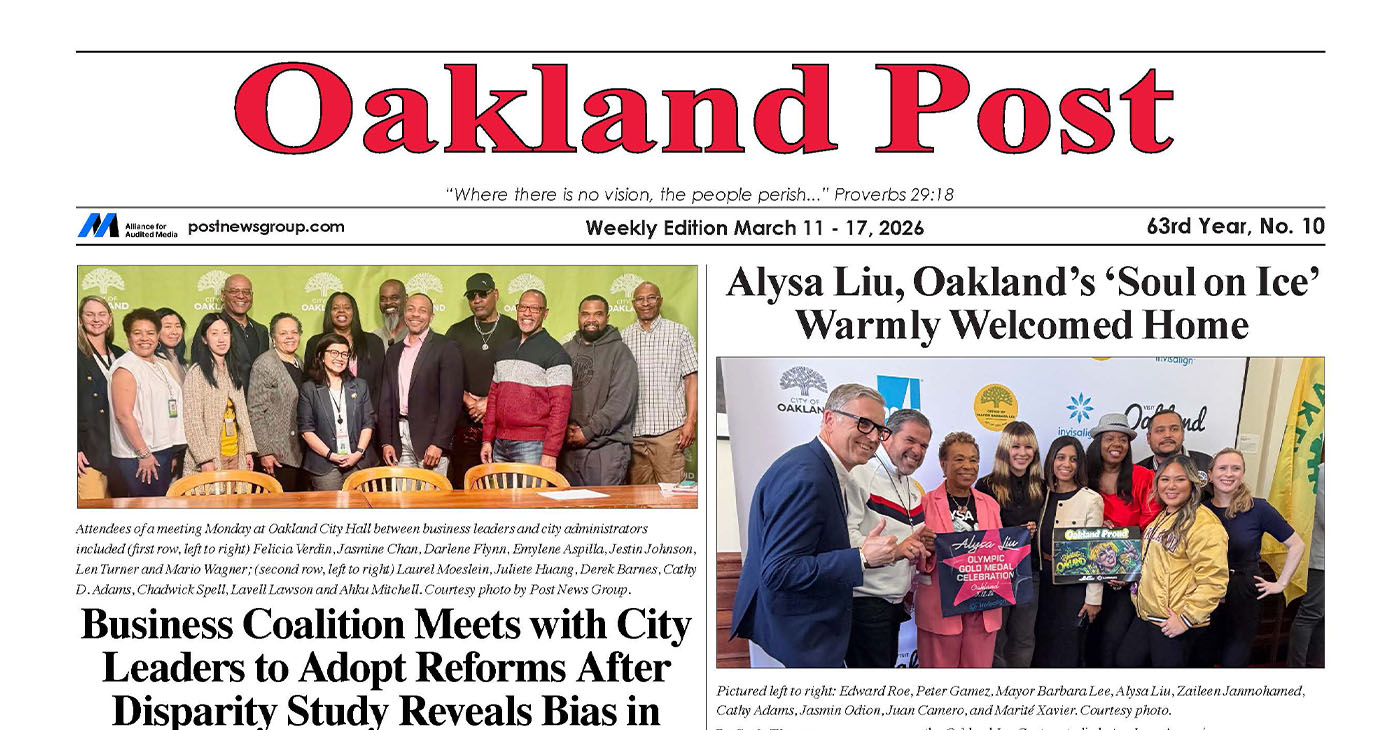
To enlarge your view of this issue, use the slider, magnifying glass icon or full page icon in the lower right corner of the browser window.


WORK FROM HOME
Home-based business with potential monthly income of $10K+ per month. A proven training system and website provided to maximize business effectiveness. Perfect job to earn side and primary income. Contact Lynne for more details: Lynne4npusa@gmail.com 800-334-0540


Oakland Post: Week of April 1 – 7, 2026

Black Artists in America, Installation Three Wraps at the Dixon Gallery and Gardens

Grief, Advocacy, and Education: A Counselor Reflects on Black Maternal Health

Future of Florida’s Black History Museum in Limbo

New Research Shows the Many Benefits of Early Learning

South Hampton K-8 Students Among Top 10 Finalists for Samsung’s ‘Solve for Tomorrow’ Competition

Cuba: No Negotiation with US on the President or Political System

Brooklyn Academy of Music Names Jamaican-Born Tamara McCaw as President

Trinidad & Tobego – U.S. Launches WhatsApp Channel for American Citizens in the Country

Oakland Post: Week of March 18 – 24, 2026

AI Innovation vs. Ethics and Environmental Impact

AI, Web3, and Digital Reparations

What If You Owned Your AI Agent?

Season 7, Episode 3 – January Reporter’s Roundtable 📱

Season 7, Episode 3 – January Reporter’s Roundtable

Reflecting on Black History Milestones in Birmingham AL

CITY OF SAN LEANDRO STATE OF CALIFORNIA PUBLIC WORKS DEPARTMENT ENGINEERING DIVISION NOTICE TO BIDDERS FOR ANNUAL STREET OVERLAY/REHABILITATION 2019-21 – PHASE III

Oakland Post: Week of February 18 – 24, 2026

Oakland Post: Week of February 25 – March 3, 2026

PRESS ROOM: NBA Hall of Fame Nominee Terry Cummings Joins 100 Black Men of DeKalb County to Launch Victory & Values Initiative

Trump’s MAGA Allies are Creating Executive Order Plan to Steal the 2026 Midterms

Oakland Post: Week of March 4 – 10, 2026

Chase Oakland Community Center Hosts Alley-Oop Accelerator Building Community and Opportunity for Bay Area Entrepreneurs

U.S. manufacturing rebounds – how foundry services are adapting to rising demand

Poll Shows Support for Policies That Help Families Afford Child Care

OP-ED: One Hundred Years of Black Workers Telling the Truth

Advancements in solar technology that are changing the way we power the world

Oakland Post: Week of March 11 -17, 2026

Woman’s Search for Family’s Roots Leads to Ancestor John T. Ward – A Successful Entrepreneur and Conductor on the Underground Railroad

COMMENTARY: Women of Color Shape Our Past and Future

Hyundai Ioniq 5 Parking, Safety, and 360 View #shorts

2025 Ioniq 5 New Wiper & Powerful Performance! #shorts

Electric SUV Range: Is 259 Miles Enough? #shorts

EV Charging: How Fast Can You Charge an Electric Vehicle? #shorts

Biometric Cooling… Messaging Seats…Come on! 2025 Infiniti QX80 Autograph 4WD

Charged Up: Witness the Magic of a Fully Electric Car! #shorts

Range Rover Sport PHEV Included…: See What’s Inside This Luxury SUV! #shorts

Invisible Hood View: Perfect Parking with X-Ray Vision! #shorts

AI Is Reshaping Black Healthcare: Promise, Peril, and the Push for Improved Results in California

ESSAY: Technology and Medicine, a Primary Care Point of View

Sanctuary Cities

The RESISTANCE – FREEDOM NOW

STATE OF THE PEOPLE: Freddie

ECONOMIC BOYCOTT DAY!!!!!

I told You So
-
 Activism4 weeks ago
Oakland Post: Week of March 4 – 10, 2026
-
 #NNPA BlackPress4 weeks ago
Woman’s Search for Family’s Roots Leads to Ancestor John T. Ward – A Successful Entrepreneur and Conductor on the Underground Railroad
-
 Activism3 weeks ago
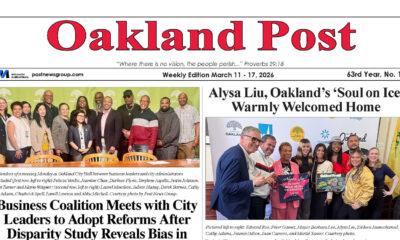
Oakland Post: Week of March 11 -17, 2026
-
 #NNPA BlackPress4 weeks ago
COMMENTARY: Women of Color Shape Our Past and Future
-

 #NNPA BlackPress4 weeks ago
Advocates Raise Alarm Over ICE Operation, MOU and Detention Risks in Baltimore County
-

 Advice3 weeks ago
Financial Wellness and Mental Health: Managing Money Stress in College
-
 Activism2 weeks ago
Oakland Post: Week of March 18 – 24, 2026
-

 #NNPA BlackPress4 weeks ago
Pete Buttigieg to Join Mayor Randall Woodfin for Community Town Hall in Birmingham
