
Education
Student-Led Project Brings ‘Soul’ into Science Classrooms


In spring 2017, 57 students in San Francisco State University science courses spent five minutes of class time writing in a journal. Then they spent five minutes talking about what they wrote. That seemingly insignificant exercise sparked a quiet revolution — one that has spread from those first 57 students to more than 1,800.
The journaling exercise, part of a student-run initiative called the Alma Project, is a way to give students the space to express themselves in their science courses. “When we walk into that first biology class, I always feel like we’re not our authentic selves. We just zip up this new identity so we can assimilate into that particular setting,” said Khanh Tran, a recent San Francisco State graduate and one of the project’s two leaders. “I feel like my experiences as an immigrant or as a queer person, that’s what makes me a stronger person.”
The team started with just three courses, asking students to write and discuss questions that were more personal than what you would usually hear in a science classroom: less “Do I understand this topic?” and more “Why am I here?”
Watching these exercises happen weekly over the course of the semester, the team discovered that providing students with the space to reflect on and talk about their identity tends to spark a sense of closeness. “By the end, they come into the classroom as a group instead of one person at a time. I see that every semester,” said Tran.
Tran’s inspiration came from an exercise in a class taught by Director of Asian American & Pacific Islander Student Services Arlene Daus-Magbual. Recent graduate Imani Davis, the project’s other leader, had a similar reaction to her courses in SF State’s College of Ethnic Studies, where such exercises are often built into the curriculum. “Our science classes were more content-based, while our ethnic studies classes were more building a relationship to what we were learning and bringing our experiences into the content,” Davis explained.
The project’s name reflects its focus on the individual: Alma is the Spanish word for “soul.”
There’s research to show that this kind of journaling can benefit students, especially those from underrepresented groups. That made the project a natural fit for SF BUILD, an initiative at SF State aimed at making the University environment more welcoming for underrepresented students pursuing biomedical careers, which has funded the project since then.
Since their humble beginnings, the project has expanded to include all courses in SF State’s Supplemental Instruction program, a set of one-unit courses linked to large introductory classes that offer additional support to students in a smaller classroom setting. The journaling and discussion exercises have also been incorporated into the Department of Physics and Astronomy’s intro lab courses thanks to the help of Professor of Physics and Astronomy Kim Coble, who specializes in science education. “I’m just so impressed with each of them: as individuals — their personal stories — and how they’ve worked as a team to do this,” said Coble. “They’re operating at a Ph.D. level.”
Although the Alma Project is staggeringly large for a student-led intervention, Tran says that reach is secondary to their goal. More important is the project’s impact on students and their sense of belonging. And nowhere is that impact clearer than in the case of Mireya Arreguin, who was in the first class of journaling students in 2017. Struck by the impact of journaling, she decided to join the team as a researcher. Now that both of the team’s leaders have graduated, she’s making sure it lives on by taking over as the project leader in the fall.
“I saw the project had a purpose, and it was going to help other students like me who felt out of place in a big community,” Arreguin said. “It really helped me connect with other people who I didn’t know were like me.”

Activism
Desmond Gumbs — Visionary Founder, Mentor, and Builder of Opportunity
Gumbs’ coaching and leadership journey spans from Bishop O’Dowd High School, Oakland High School, Stellar Prep High School. Over the decades, hundreds of his students have gone on to college, earning academic and athletic scholarships and developing life skills that extend well beyond sports.


Special to the Post
For more than 25 years, Desmond Gumbs has been a cornerstone of Bay Area education and athletics — not simply as a coach, but as a mentor, founder, and architect of opportunity. While recent media narratives have focused narrowly on challenges, they fail to capture the far more important truth: Gumbs’ life’s work has been dedicated to building pathways to college, character, and long-term success for hundreds of young people.
A Career Defined by Impact
Gumbs’ coaching and leadership journey spans from Bishop O’Dowd High School, Oakland High School, Stellar Prep High School. Over the decades, hundreds of his students have gone on to college, earning academic and athletic scholarships and developing life skills that extend well beyond sports.
One of his most enduring contributions is his role as founder of Stellar Prep High School, a non-traditional, mission-driven institution created to serve students who needed additional structure, belief, and opportunity. Through Stellar Prep numerous students have advanced to college — many with scholarships — demonstrating Gumbs’ deep commitment to education as the foundation for athletic and personal success.

NCAA football history was made this year when Head Coach from
Mississippi Valley State, Terrell Buckley and Head Coach Desmond
Gumbs both had starting kickers that were women. This picture was
taken after the game.
A Personal Testament to the Mission: Addison Gumbs
Perhaps no example better reflects Desmond Gumbs’ philosophy than the journey of his son, Addison Gumbs. Addison became an Army All-American, one of the highest honors in high school football — and notably, the last Army All-Americans produced by the Bay Area, alongside Najee Harris.
Both young men went on to compete at the highest levels of college football — Addison Gumbs at the University of Oklahoma, and Najee Harris at the University of Alabama — representing the Bay Area on a national level.
Building Lincoln University Athletics From the Ground Up
In 2021, Gumbs accepted one of the most difficult challenges in college athletics: launching an entire athletics department at Lincoln University in Oakland from scratch. With no established infrastructure, limited facilities, and eventually the loss of key financial aid resources, he nonetheless built opportunities where none existed.
Under his leadership, Lincoln University introduced:
- Football
- Men’s and Women’s Basketball
- Men’s and Women’s Soccer
Operating as an independent program with no capital and no conference safety net, Gumbs was forced to innovate — finding ways to sustain teams, schedule competition, and keep student-athletes enrolled and progressing toward degrees. The work was never about comfort; it was about access.
Voices That Reflect His Impact
Desmond Gumbs’ philosophy has been consistently reflected in his own published words:
- “if you have an idea, you’re 75% there the remaining 25% is actually doing it.”
- “This generation doesn’t respect the title — they respect the person.”
- “Greatness is a habit, not a moment.”
Former players and community members have echoed similar sentiments in public commentary, crediting Gumbs with teaching them leadership, accountability, confidence, and belief in themselves — lessons that outlast any single season.
Context Matters More Than Headlines
Recent articles critical of Lincoln University athletics focus on logistical and financial hardships while ignoring the reality of building a new program with limited resources in one of the most expensive regions in the country. Such narratives are ultimately harmful and incomplete, failing to recognize the courage it takes to create opportunity instead of walking away when conditions are difficult.
The real story is not about early struggles — it is about vision, resilience, and service.
A Legacy That Endures
From founding Stellar PREP High School, to sending hundreds of students to college, to producing elite athletes like Addison Gumbs, to launching Lincoln University athletics, Desmond Gumbs’ legacy is one of belief in young people and relentless commitment to opportunity.
His work cannot be reduced to headlines or records. It lives on in degrees earned, scholarships secured, leaders developed, and futures changed — across the Bay Area and beyond.

Activism
Oakland School Board Grapples with Potential $100 Million Shortfall Next Year
The school board approved Superintendent Denise Saddler’s plan for major cuts to schools and the district office, but they are still trying to avoid outside pressure to close flatland schools.

By Post Staff
The Oakland Board of Education is continuing to grapple with a massive $100 million shortfall next year, which represents about 20% of the district’s general fund budget.
The school board approved Superintendent Denise Saddler’s plan for major cuts to schools and the district office, but they are still trying to avoid outside pressure to close flatland schools.
Without cuts, OUSD is under threat of being taken over by the state. The district only emerged from state receivership in July after 22 years.
“We want to make sure the cuts are away from the kids,” said Kampala Taiz-Rancifer, president of the Oakland Education Association, the teachers’ union. “There are too many things that are important and critical to instruction, to protecting our most vulnerable kids, to safety.”
The school district has been considering different scenarios for budget cuts proposed by the superintendent, including athletics, libraries, clubs, teacher programs, and school security.
The plan approved at Wednesday’s board meeting, which is not yet finalized, is estimated to save around $103 million.
Staff is now looking at decreasing central office staff and cutting extra-curricular budgets, such as for sports and library services. It will also review contracts for outside consultants, limiting classroom supplies and examine the possibility of school closures, which is a popular proposal among state and county officials and privatizers though after decades of Oakland school closures, has been shown to save little if any money.
Activism
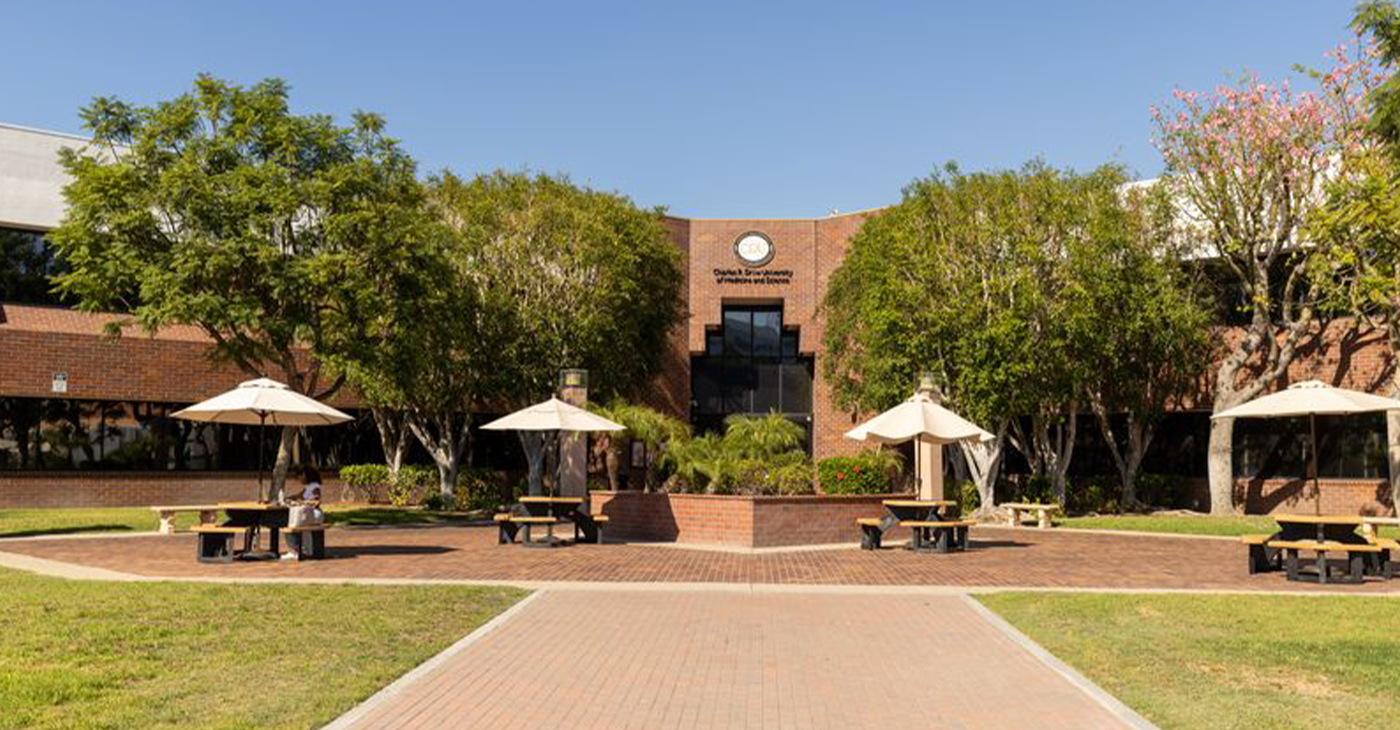
How Charles R. Drew University Navigated More Than $20 Million in Fed Cuts – Still Prioritizing Students and Community Health
Named after the pioneering physician Dr. Charles R. Drew, famous for his work in blood preservation, CDU’s mission is to cultivate “diverse health professional leaders dedicated to social justice and health equity for underserved populations through education, research, clinical service, and, above all, community engagement.”
Charlene Muhammad | California Black Media

Earlier this year, when the federal government slashed more than $20 million in grants to Charles R. Drew University of Medicine and Science (CDU), the leadership of California’s only historically Black medical school scrambled to stabilize its finances — while protecting its staff and students.
Named after the pioneering physician Dr. Charles R. Drew, famous for his work in blood preservation, CDU’s mission is to cultivate “diverse health professional leaders dedicated to social justice and health equity for underserved populations through education, research, clinical service, and, above all, community engagement.”
The school is widely recognized as a vital pipeline for Black doctors and other health professionals throughout California.

Dr. David Carlisle (center), President of Charles R. Drew University of Medicine and Science (CDU), with two of the university’s students. Photo Courtesy of Charles R. Drew University of Medicine and Science.
Dr. Jose Torres-Ruiz, CDU’s Executive Vice President for Academic Affairs and Provost, said the university—designated as a Historically Black Graduate Institution (HBGI)—was notified in early March 2025 that most of its major grants, including the Research Centers in Minority Institutions (RCMI) award, known at CDU as the “Accelerating Excellence in Translational Science” (AXIS Grant), would be terminated. Initially renewed, the grant was later revoked because its language did not align with the current federal administration’s priorities.

The AXIS Grant provides $4.5 million per year for five years through the National Institutes of Health’s National Institute on Minority Health and Health Disparities. CDU quickly reallocated other funds to protect its scientists, staff, and technicians, though some personnel losses were unavoidable.
“We didn’t want to fire them because these people have expertise that takes years to gain,” Torres-Ruiz said.
The grant is crucial, he added, funding research in cancer, diabetes, and metabolic diseases that affect the Willowbrook community in South Los Angeles, training the next generation of scientists, and supporting community outreach.
Programs at the school, including its youth and teen mentoring programs reach beyond the walls of the university, impacting the lives and quality of health care of people in the surrounding community, one of the most underserved areas in Los Angeles County.
Confronted with the harsh reality of funding cuts, the university’s leadership made an early, strategic choice to honor its foundational commitment and prioritize its students. Dr. Deborah Prothrow-Stith, dean of CDU’s College of Medicine, highlighted the school’s deliberate focus on admitting students from economically disadvantaged backgrounds — many of whom are Pell Grant recipients and graduates of public high schools.
“We are staying true to our mission, finding creative ways to prioritize what’s most important,” she said. “I’m optimistic because of our students—they are dedicated and committed to service.”
In addition, the $2 million-per-year John Lewis NIMHD Research Endowment Program, intended to strengthen CDU’s research infrastructure, was terminated with three years remaining after a February 2025 freeze on nearly all federal grants for public health, education, and infrastructure projects.
Following an appeal, CDU learned in June that the RCMI grant had been fully reinstated, along with all but eight smaller grants. The university’s next priority is restoring the John Lewis Endowment.
“We are working with NIH staff to adjust the language. Certain words like ‘diversity’ and ‘equity,’ which are core values of our institution, are now under scrutiny,” Torres-Ruiz explained.
CDU has also expanded funding sources by targeting foundations and private donors. “This may happen again. We cannot rely solely on federal agencies,” Torres-Ruiz said, emphasizing the importance of building relationships with politicians and private partners.
Prothrow Stith echoed Ruiz’s perspective on cultivating multiple funding sources. “Building bridges with private foundations helps, but it doesn’t erase the disruption,” she said.
Many students rely on federal loans, CDU leaders say. Those loans are now capped at $150,000. So, most medical students graduate with $300,000–$350,000 in debt when accounting for tuition and living expenses.
To lower the burden on students, CDU is exploring options to make education more affordable, including overlapping school years to reduce annual costs.
Students like Isaiah Hoffman and Bailey Moore epitomize CDU’s values.
Hoffman, an aspiring orthopedic surgeon from Inglewood, credits Drew for inspiring his career choice. Out of 12 medical school acceptances, he chose CDU to give back to his community and continue Drew’s legacy. Hoffman also founded H.O.M.I.E.S. Inc., a nonprofit pairing Black K–12 students with mentors to support academic and personal growth.
Moore, 23, from Southeast Washington, D.C., pursued CDU to address maternal health disparities she observed in her own community – an underserved area of the nation’s capital city. “CDU pours into you. It emphasizes service, and I hope for a world without health disparities,” she said. “Drew may be small, but Drew is mighty. It was created out of necessity to save lives and empower communities.”
CDU President and CEO Dr. David Carlisle acknowledged during the Aug. 28 “State of the University” that the institution faces ongoing challenges. Political threats and grant disruptions contributed to a sizable unrestricted budget deficit, despite achievements over the past year.
Successful appeals and alternative sources of funding, led by Vice Provost Dr. Ali Andallibi, have now restored all the monies previously lost in research funding, he said.
Carlisle expressed gratitude to L.A. Care Health Plan and Sutter Health for providing multimillion-dollar scholarships and highlighted that CDU would welcome approximately 1,050 incoming students—near its highest enrollment ever. “I’m deeply grateful for the resolve, diligence, and unwavering commitment of everyone here, even when the path is not easy,” he said.
At the gathering, Carlisle referred to the sounds of ambulances passing by with blaring sirens as- the “music of healthcare,” while students and the school’s leadership attending expressed resilience in their speeches and conversations. The activities of the day captured the institution’s focus on education, service and advancing health care across disadvantaged communities in California – and beyond.
Video Report: How Charles Drew Stayed Strong Amid Federal Funding Cuts


WORK FROM HOME
Home-based business with potential monthly income of $10K+ per month. A proven training system and website provided to maximize business effectiveness. Perfect job to earn side and primary income. Contact Lynne for more details: Lynne4npusa@gmail.com 800-334-0540


OP-ED: AB 1349 Puts Corporate Power Over Community

Oakland Post: Week of December 31, 2025 – January 6, 2026

Big God Ministry Gives Away Toys in Marin City

First 5 Alameda County Distributes Over $8 Million in First Wave of Critical Relief Funds for Historically Underpaid Caregivers

2025 in Review: Seven Questions for Assemblymember Lori Wilson — Advocate for Equity, the Environment, and More

2025 in Review: Seven Questions for Assemblymember Tina McKinnor, Champion of Reparations, Housing and Workers’ Rights

2025 in Review: Seven Questions for Sen. Laura Richardson, Who Made Legislative History This Year

2025 in Review: Seven Questions for Sen. Lola Smallwood-Cuevas – an Advocate for Jobs and Justice

Alfred Cralle: Inventor of the Ice Cream Scoop

BOOK REVIEW: Let Me Be Real With You

Oakland Post: Week of December 24 – 30, 2025

Bling It On: Holiday Lights Brighten Dark Nights All Around the Bay

Oakland Council Expands Citywide Security Cameras Despite Major Opposition

Lu Lu’s House is Not Just Toying Around with the Community

Desmond Gumbs — Visionary Founder, Mentor, and Builder of Opportunity

Seth Curry Makes Impressive Debut with the Golden State Warriors

LIHEAP Funds Released After Weeks of Delay as States and the District Rush to Protect Households from the Cold

Seven Steps to Help Your Child Build Meaningful Connections

Post Salon to Discuss Proposal to Bring Costco to Oakland Community meeting to be held at City Hall, Thursday, Dec. 18

Seven Steps to Help Your Child Build Meaningful Connections

Mayor Lee, City Leaders Announce $334 Million Bond Sale for Affordable Housing, Roads, Park Renovations, Libraries and Senior Centers

FBI Report Warns of Fear, Paralysis, And Political Turmoil Under Director Kash Patel

Oakland Post: Week of December 10 – 16, 2025

Oakland School Board Grapples with Potential $100 Million Shortfall Next Year

Fayeth Gardens Holds 3rd Annual Kwanzaa Celebration at Hayward City Hall on Dec. 28

2025 in Review: Seven Questions for Black Women’s Think Tank Founder Kellie Todd Griffin

A Nation in Freefall While the Powerful Feast: Trump Calls Affordability a ‘Con Job’

COMMENTARY: If You Don’t Want Your ‘Black Card’ Revoked, Watch What You Bring to Holiday Dinners

Ann Lowe: The Quiet Genius of American Couture

The Numbers Behind the Myth of the Hundred Million Dollar Contract

Hyundai Ioniq 5 Parking, Safety, and 360 View #shorts

2025 Ioniq 5 New Wiper & Powerful Performance! #shorts

Electric SUV Range: Is 259 Miles Enough? #shorts

EV Charging: How Fast Can You Charge an Electric Vehicle? #shorts

Biometric Cooling… Messaging Seats…Come on! 2025 Infiniti QX80 Autograph 4WD

Charged Up: Witness the Magic of a Fully Electric Car! #shorts

Range Rover Sport PHEV Included…: See What’s Inside This Luxury SUV! #shorts

Invisible Hood View: Perfect Parking with X-Ray Vision! #shorts

AI Is Reshaping Black Healthcare: Promise, Peril, and the Push for Improved Results in California

ESSAY: Technology and Medicine, a Primary Care Point of View

Sanctuary Cities

The RESISTANCE – FREEDOM NOW

STATE OF THE PEOPLE: Freddie

ECONOMIC BOYCOTT DAY!!!!!

I told You So
-
 Activism4 weeks ago
Desmond Gumbs — Visionary Founder, Mentor, and Builder of Opportunity
-

 Activism4 weeks ago
Families Across the U.S. Are Facing an ‘Affordability Crisis,’ Says United Way Bay Area
-
 Alameda County3 weeks ago
Oakland Council Expands Citywide Security Cameras Despite Major Opposition
-
 Alameda County3 weeks ago
Bling It On: Holiday Lights Brighten Dark Nights All Around the Bay
-

 Activism4 weeks ago
Black Arts Movement Business District Named New Cultural District in California
-
 Activism4 weeks ago
Lu Lu’s House is Not Just Toying Around with the Community
-
 Activism4 weeks ago
Oakland Post: Week of December 17 – 23, 2025
-
 Activism2 weeks ago
First 5 Alameda County Distributes Over $8 Million in First Wave of Critical Relief Funds for Historically Underpaid Caregivers
