
Bay Area
Unsatisfied with Wages, Working Conditions, Urban Ore Workers Try to Unionize
Workers at Berkeley’s popular salvaged goods store, Urban Ore, filed a petition to the National Labor Relations Board (NLRB) stating their intention to form a union through the Industrial Workers of the World (IWW) on February 2.


By Zack Haber
Workers at Berkeley’s popular salvaged goods store, Urban Ore, filed a petition to the National Labor Relations Board (NLRB) stating their intention to form a union through the Industrial Workers of the World (IWW) on February 2.
That same day, an Instagram account associated with the union drive posted a statement voicing support for the store and its mission of stopping waste while also pushing for higher wages and scheduling reform for workers.
“We are proud to work at Urban Ore, and we want to make it even better,” reads the statement. “Urban Ore allows its customers a more sustainable alternative for shopping, and we want it to provide more sustainable jobs.”
On February 5, workers held a rally to support their union drive outside of the store. Members of East Bay DSA and several unions, such as ILWU, Bay Area TANC, and the National Union of Health Care Workers, accompanied the workers.
The NLRB will soon hold a secret ballot election for the store’s 25 union eligible employees. If a majority votes to approve the union, it will be officially recognized.
Benno Giammarinaro, who works in Urban Ore’s merchandise receiving department, said he’s “definitely optimistic” employees will secure enough ‘yes’ votes to unionize. As part of their union petition filing, a majority of the store’s employees have already submitted signed cards indicating a desire to form a union.
Mary Van Deventer told this reporter that she and fellow Urban Ore co-owner Dan Knapp would not do an interview. She did, however, e-mail a written statement from the store saying it “respects the rights of its employees to unionize if that is what a majority desire.”
Van Deventer’s statement also said the company offers “very competitive pay.” Urban Ore pays its non-managerial staff a base wage of $13.60 an hour, which is less than Berkeley’s minimum wage of $16.99. But these employees also get fluctuating additional wages as a portion of the store’s gross income goes to them.
In January, this proportion was raised from 10% to 15%. This year the owners estimate the income share to provide a $9.25 boost to the base wage, meaning that, in total, they expect workers to make around $22.85 per hour.
Urban Ore worker Sarah Mossler said that she’s not against income-sharing, but that the current model often leaves her worried about whether or not she can pay her bills.
“I’d be fine with it if we had a stable, minimum living base wage,” said Mossler. “But it’s been incredibly stressful for me because my rent is the same every month while my paychecks aren’t.”
The owners describe the income-share as an “incentive” for workers, but Giammarinaro thinks the current model “puts the risk of the business on the workers,” as factors beyond their control, such as the weather, affect sales.
“If there’s a rainy week,” he said, “merchandise gets damaged, and people don’t come out as much. This means we make several dollars an hour less than usual.”
Ultimately workers feel that their paychecks, even with income-sharing, make living in the Bay Area difficult, and that the wage rate has contributed to high employee turnover.
“We are struggling to afford living in the community that we love,” reads the Urban Ore worker statement on Instagram. “This has created a chronic understaffing problem.”
According to Giammarinaro, 19 Urban Ore employees have left since he first started working there in May of 2021. Currently, the store has 31 workers employed below the senior management level.
Giammarinaro feels the company is in a good position to raise wages to address the turnover as sales have surged since COVID started. The store, which sells mostly donated goods like doors, furniture, appliances and media, has taken in about $7 million in the last two years.
In a letter that Operations Manager Max Wechsler sent to employees this year announcing the income-share percentage rate increase, he stated that, except for its mortgage, Urban Ore is “debt-free.”
Both owners and workers agree that working at Urban Ore is physically demanding. In their statement, the owners describe the jobs as “physical work for all staff,” and that “three tons of goods” enter the store each day.
For most workers, this means lots of lifting. Giammarinaro often finds himself exhausted, saying “almost every day I immediately come home and plop on my bed after work.” Mossler thinks addressing understaffing would make doing such lifting safer.
“When you’re lifting something designed for lots of people to lift,” she said, “and you’re on your own, it’s dangerous.”
Giammarinaro and Mossler both said that in addition to addressing wages and understaffing, they want a union in order to have a say in how the business is run. Recently, Mossler decided to step down from a position in management she had been promoted to in order to be eligible to be a part of a potential Urban Ore union.
While she had taken the management position with the goal of influencing the business and helping co-workers, she didn’t find that method effective.
“I took the job as a manager because I thought that was the way to make the place better and advocate for the people I work with,” she said, “but I quickly saw that I just got more facetime with people that didn’t hear my ideas or take them seriously.”
According to Giammarinaro, one thing workers specifically want is time set aside for cleaning the store. Currently, all in-store cleaning has to be done during business hours, which makes it difficult to maintain the store.
“People could really clean, organize merchandise, and make things look nice if the store could close early once every few weeks, or if people could come in a bit early sometimes,” he said.
In recent years, workers have objected to the manner in which Urban Ore has terminated certain employees. Last summer, 15 workers signed a statement which called for a terminated worker to be rehired. The letter stated the worker had faced “mistreatment” and that their absence would “have a significant impact on revenue, workloads and organizing.”
While that employee was never rehired, workers, like Mossler, want a ‘just cause’ clause in their contract to make it so owners have to give a reason for terminating an employee in the future. Currently, Urban Ore, like all California businesses that don’t have contracts requiring otherwise, can terminate employees “at-will” without giving a reason.
“We think that the at-will employment can rear its ugly head,” said Mossler.
In their e-mail, Urban Ore’s owners stated that this year they are “working toward transitioning to become a worker-owned cooperative,” a transition they have spoken about in the press since 2017.
According to Giammarinaro, workers support such an idea but want to have a voice, through a union, in how a potential cooperative could be structured.
“We agree with a worker-owned cooperative model and thinking unionizing first will help,” he said. “We don’t think we need a coop to start making workplace democracy.”











Bay Area
Oakland Mayor Pushes Charter Overhaul to Clarify Roles in City Government, Increase Accountability and Improve Service Delivery
Under the proposal, the mayor would serve as Oakland’s chief executive, overseeing city departments, implementing policy, proposing the annual budget, and managing day-to-day operations. The measure would also give the mayor veto power over legislation and the budget, though the City Council could override a veto with a two-thirds vote.

By Oakland Post Staff
Oakland Mayor Barbara Lee is backing a sweeping proposal to restructure Oakland’s government, arguing the changes would make City Hall more accountable and improve the delivery of basic services like public safety, homelessness response, and infrastructure repairs.
The charter reform measure, introduced April 7 and co-sponsored by Oakland City Council President Kevin Jenkins, would ask voters in November to approve a “strong mayor, strong council” system designed to create clearer lines of authority inside city government.
Under the proposal, the mayor would serve as Oakland’s chief executive, overseeing city departments, implementing policy, proposing the annual budget, and managing day-to-day operations. The measure would also give the mayor veto power over legislation and the budget, though the City Council could override a veto with a two-thirds vote.
The City Council, meanwhile, would maintain legislative authority by adopting ordinances, approving budgets, conducting oversight hearings, and confirming key mayoral appointments. The proposal would also create an Independent Budget and Legislative Analyst Office to provide nonpartisan fiscal and policy analysis for councilmembers.
“I’ve spent months listening to Oaklanders across every neighborhood about what they expect from their city government,” Lee said. “The Charter Reform Working Group’s engagement made clear that residents want a system where there are no questions about who is responsible for delivering results on public safety, homelessness, infrastructure, and basic services.”

Jenkins said the proposal would strengthen both executive leadership and council oversight.
“I’ve long believed Oakland works best when residents have clear lines of accountability and a government structure that aligns responsibility with results,” Jenkins said.
The proposal follows recommendations from the Mayor’s Charter Reform Working Group, co-facilitated by the League of Women Voters of Oakland and SPUR.
Over five months, the group conducted more than 60 interviews, held 14 public meetings across Oakland, and engaged more than 750 residents while reviewing governance models used in other cities.
“The process of engaging residents across Oakland surfaced the governance clarity Oakland needs,” said Sujata Srivastava of SPUR. “The Charter Reform Working Group has produced a thoughtful set of recommendations that if adopted could strengthen accountability and improve service delivery across city government.”
Polling cited by the mayor’s office suggests voters may be open to the changes. A February 2026 poll by the East Bay Polling Institute found 64% of voters support adopting a strong-mayor system. Separate polling conducted by the Oakland Chamber of Commerce and David Binder Research found support ranging from 61% to 63% among likely voters.
The measure is scheduled to be heard by the City Council Rules Committee on May 21. If approved by the council, it would appear on the November 2026 ballot, where Oakland voters would have the final say.
Activism
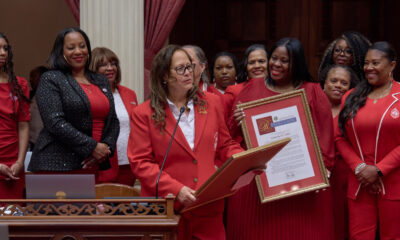
The Ladies of Delta Sigma Theta Hold Day of Advocacy at the Capitol in Sacramento
A member of the “Divine Nine,” Delta Sigma Theta Sorority, Inc., was founded on Jan. 13, 1913, at Howard University in Washington, D.C. The organization was established by 22 women who sought to shift the group’s focus from social activities to public service, academic excellence, and social activism.
By Antonio Ray Harvey, California Black Media
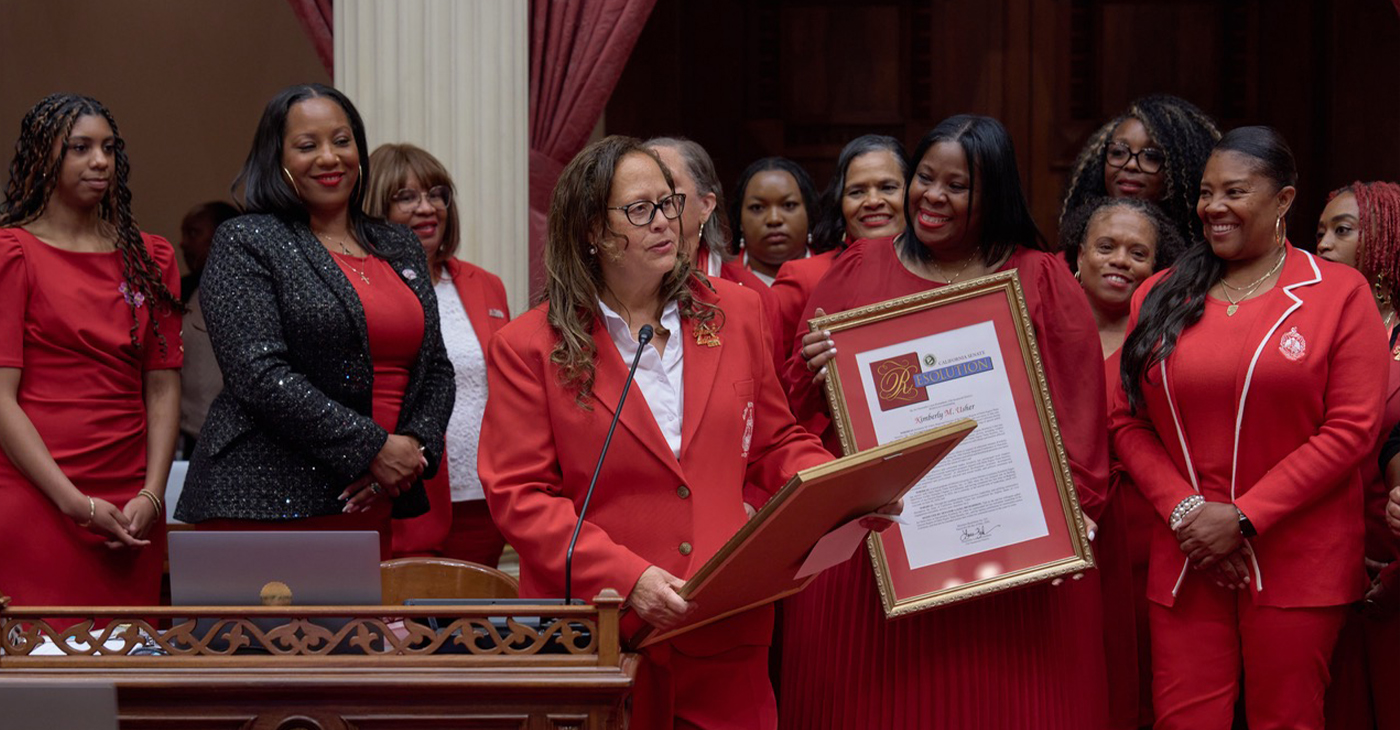
On May 4, members of the Farwest Region of Delta Sigma Theta Sorority, Inc., convened at the California State Capitol for the organization’s 23rd annual Delta Days in Sacramento.
The two-day advocacy event brings together chapters from across California to engage directly in the legislative process, connect with lawmakers, and advocate for policies impacting Black communities.
Members of the sorority were honored on the Senate floor by Sen. Laura Richardson (D-San Pedro), who is also a member of Delta Sigma Theta.
Richardson welcomed the Farwest Region during the presentation of a Senate resolution recognizing outgoing Regional Director Kimberly Usher for her leadership and service.
“In addition to the Far West Region, we are led by a fearless leader, regional director Kimberly Usher. She has now served her full term of what’s allowed,” Richardson said. “We are going to be having our regional conference, but we wanted to give it to her here, officially recognizing her service.”
The resolution was co-authored by Richardson and fellow members of the California Legislative Black Caucus (CLBC) and Delta Sigma Theta, Sen. Akilah Weber Pierson (D-San Diego) and Assemblymember Rhodesia Ransom (D-Stockton).
Usher has served in the leadership role since 2022.
A member of the “Divine Nine,” Delta Sigma Theta Sorority, Inc., was founded on Jan. 13, 1913, at Howard University in Washington, D.C. The organization was established by 22 women who sought to shift the group’s focus from social activities to public service, academic excellence, and social activism.
“We are founded on sisterhood that is deeply rooted in scholarship, service, and social action,” said Weber Pierson, a member of the Gamma Alpha chapter of Delta Sigma Theta Sorority.
“Today, we continue a legacy of empowering communities and upholding the high cultural, intellectual, and moral standards established by our founders over a century ago,” she added.
Bay Area
Q&A with Steven Bradford: Why He Wants Your Vote for California Insurance Commissioner
Known for his work on issues ranging from energy and public safety to economic development, Bradford has also engaged with insurance policy during his time in the Legislature, serving on the Senate Insurance Committee.
By Edward Henderson, California Black Media
As California confronts rising insurance costs, market instability, and growing concerns about access and equity, the race for the state’s top insurance regulator is drawing increased attention.
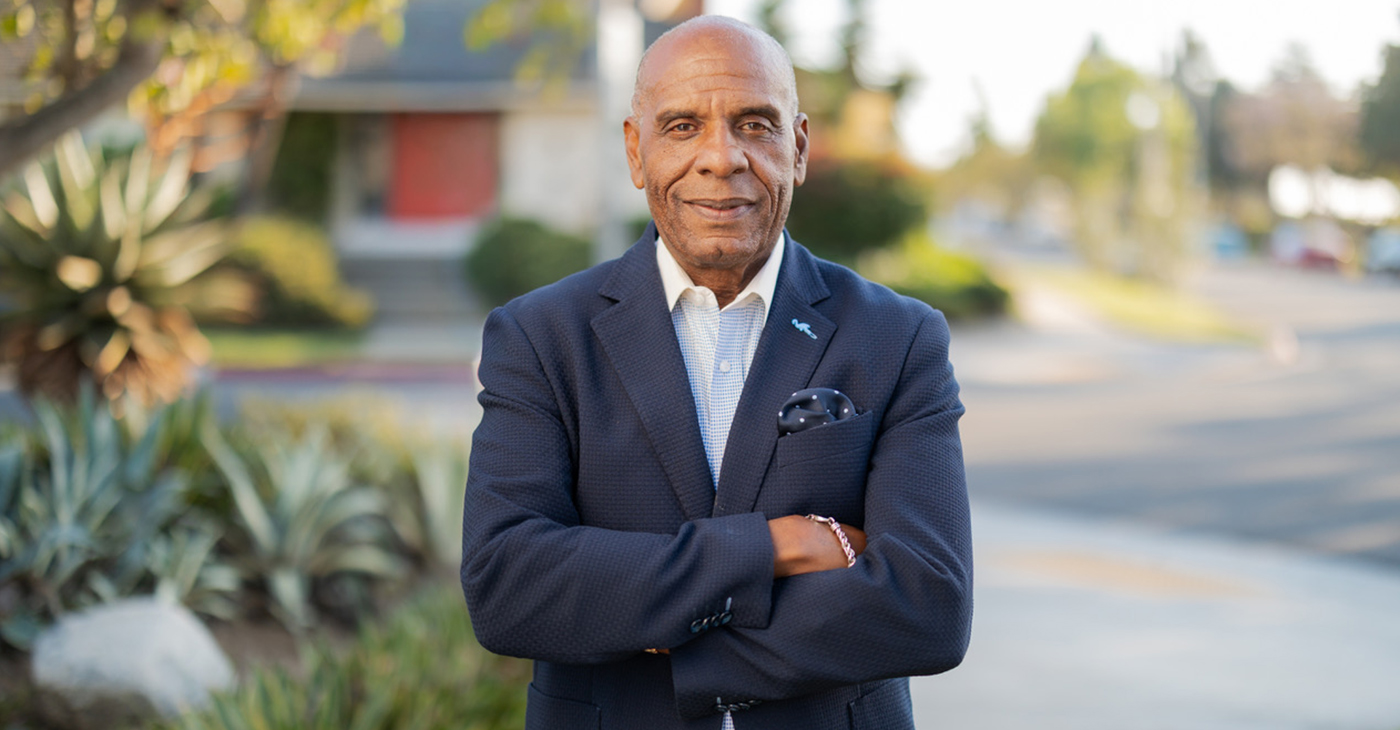
Among the candidates is Steven Bradford, a veteran public servant with more than two decades of experience in government, including eight years in the State Senate and five years in the State Assembly.
Known for his work on issues ranging from energy and public safety to economic development, Bradford has also engaged with insurance policy during his time in the Legislature, serving on the Senate Insurance Committee.
Now, he is making his case to voters for why his background and perspective best position him for the role of California’s next insurance commissioner.
California Black Media (CBM) spoke with Bradford about his campaign experiences, key issues he plans to solve if elected, and his vision for the insurance commissioner role.
For readers who may not be familiar, what does the Insurance Commissioner do, and how would you use that role to address issues impacting communities in California?
The Insurance Commissioner is both a regulator and an administrator. The office oversees the entire insurance market—approving companies to operate, licensing agents and brokers, and reviewing rate increases or decreases.

This role is about oversight and action. The commissioner should be a watchdog, not a bystander, especially in a state like California, which has the third-largest insurance market in the world.
Last year, you shifted your campaign from running for lieutenant governor to the race for insurance commissioner. What spurred that decision?
Insurance impacts every part of people’s lives. You can’t buy a home without it—that contributes to the housing crisis. You can’t legally drive without it—that affects people’s ability to work. And businesses can’t operate without it.
For years, insurance has disproportionately impacted low-income communities and people of color. While everyone is feeling the strain now, those communities have long been hit hardest. That’s why it’s critical that insurance is not just available, but affordable.
What sets you apart from the other candidates in this race?
My record: 26 years of public service. I’ve shown up, stood up, and spoke up for Californians.
A recent Supreme Court decision impacting the Voting Rights Act has raised concerns about representation. What message do you have for voters in California regarding the importance of their vote?
It’s alarming. If people think this doesn’t affect them, they’re mistaken. There’s a real effort to roll back decades of progress and silence voters.
Your vote is your most powerful tool, and we have to use it—every election.
What are you hearing from voters as you campaign across the state?
Affordability and transparency.
People are struggling with rising costs, and many don’t fully understand what their insurance policies cover.
We saw that clearly in places like Altadena and the Palisades—people had insurance but were underinsured. They didn’t realize their coverage wouldn’t meet the cost to rebuild. That’s unacceptable.
We must acknowledge the inequities in the system. The FAIR Plan has roots in discrimination, and today we still see disparities based on ZIP code and income. We need a more competitive and equitable market where consumers have choices.

WORK FROM HOME
Home-based business with potential monthly income of $10K+ per month. A proven training system and website provided to maximize business effectiveness. Perfect job to earn side and primary income. Contact Lynne for more details: Lynne4npusa@gmail.com 800-334-0540

K4: Crucial Driving Advice BEFORE You Buy! #shorts
The Conversation with Al McFarlane – MINNESOTANS ORGANIZING FOR CHANGE
Negotiate Car Add-Ons: Don’t Get Ripped Off! #shorts
First Look 2027 Ford Bronco Filson
Car Buying Secrets: Your Ultimate Buyer’s Guide #shorts
Car Driving Secrets: 4 Hidden Features Revealed! #shorts
2026 Grand Cherokee L: Worth $72,580? #shorts
Headlines and Hot Topics 📱

Is the Jeep Grand Cherokee Right for Your Family? #shorts

Is this Jeep 3-Row SUV Worth Your Family’s Money? We Decide!
Special 2026 District of Columbia Election Broadcast
headlines and Hot Topics 📱
Why businesses are rethinking their Salesforce implementation strategy
HEADLINES AND HOT TOPICS 📱

Oakland Mayor Pushes Charter Overhaul to Clarify Roles in City Government, Increase Accountability and Improve Service Delivery

Oakland Post: Week of April 22 – 28, 2026

Book Review: Books for College-Bound Students

Against All Odds: Mary Jackson’s Journey to NASA Engineer

Up to the Job: How San Francisco’s PRC Is Providing Work Opportunities That Turn Into Lasting Stability

Q&A with Steven Bradford: Why He Wants Your Vote for California Insurance Commissioner

OPINION: The Fire of Oakland’s Justin Jones

The Marin City Flea Market Is Back

OP-ED: Small Businesses Need Minnesota to Act on Pass-Through Tax Policy

Snoop Dogg Celebrates 10 Til’ Midnight at the Compound

California Launches Free Diaper Program for Newborns Statewide

EBMUD Enshrines the Legacy of its First Black Board Member William ‘Bill’ Patterson

2026 Lucid Air Grand Touring Review — Is This $136K EV Sedan Worth It?

The Ladies of Delta Sigma Theta Hold Day of Advocacy at the Capitol in Sacramento

Oakland Post: Week of May 6 – 12, 2026

Marin City Public Housing Residents Demand a Voice in County’s Renovation Plans

Hyundai Ioniq 5 Parking, Safety, and 360 View #shorts

2025 Ioniq 5 New Wiper & Powerful Performance! #shorts

Electric SUV Range: Is 259 Miles Enough? #shorts

EV Charging: How Fast Can You Charge an Electric Vehicle? #shorts

Biometric Cooling… Messaging Seats…Come on! 2025 Infiniti QX80 Autograph 4WD

Charged Up: Witness the Magic of a Fully Electric Car! #shorts

Range Rover Sport PHEV Included…: See What’s Inside This Luxury SUV! #shorts

Invisible Hood View: Perfect Parking with X-Ray Vision! #shorts

AI Is Reshaping Black Healthcare: Promise, Peril, and the Push for Improved Results in California

ESSAY: Technology and Medicine, a Primary Care Point of View

Sanctuary Cities

The RESISTANCE – FREEDOM NOW

STATE OF THE PEOPLE: Freddie

ECONOMIC BOYCOTT DAY!!!!!

I told You So
-
 Advice3 weeks ago
Book Review: Books for College-Bound Students
-
 Arts and Culture3 weeks ago
Against All Odds: Mary Jackson’s Journey to NASA Engineer
-
 Bay Area3 weeks ago
Q&A with Steven Bradford: Why He Wants Your Vote for California Insurance Commissioner
-
 Activism3 weeks ago
OPINION: The Fire of Oakland’s Justin Jones
-
 Alameda County3 weeks ago
The Marin City Flea Market Is Back
-
 Activism3 weeks ago
California Launches Free Diaper Program for Newborns Statewide
-
 Activism3 weeks ago
EBMUD Enshrines the Legacy of its First Black Board Member William ‘Bill’ Patterson
-
 Activism3 weeks ago
The Ladies of Delta Sigma Theta Hold Day of Advocacy at the Capitol in Sacramento
