
Education
USF Honors Alive & Free and Dr. Joseph E. Marshall Jr.

By Mary McInerney, USF News
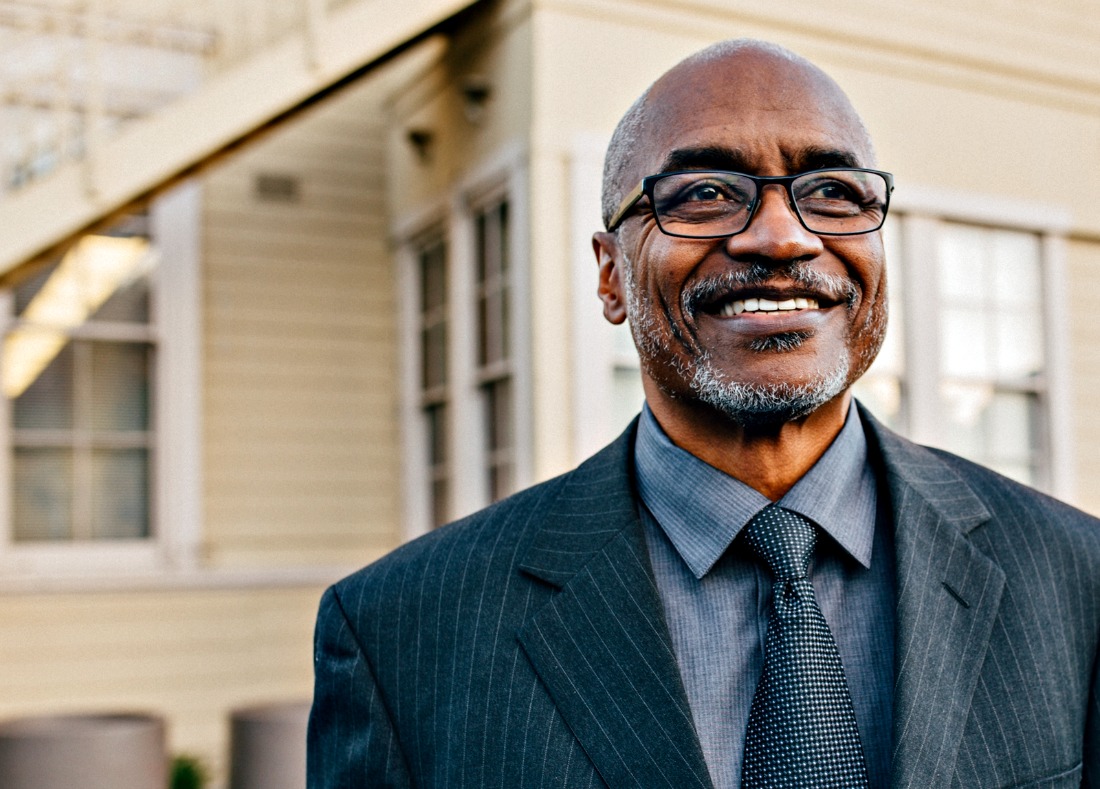
The University of San Francisco is honoring Alive & Free and its co-founder and executive director Dr. Joseph E. Marshall Jr., Class of ’68, with the 2017 California Prize for Service and the Common Good.
Alive & Free, based in San Francisco, offers a community of support to young people, empowering them to avoid peer pressure and situations that can lead to violence, incarceration, drug addiction or dropping out of school. And, it sets them up to be good citizens and build strong families.
Focusing on violence prevention and education through its array of programs, Alive & Free has supported thousands of young people and given hundreds the opportunity to attend college.
To date, 218 young people from the program have graduated from college with funding support from the club’s scholarship fund. Of them, more than 60 have received graduate degrees.
“We are proud of Dr. Marshall and the work his team at Alive & Free is doing for the youth of our city and the world. We honor Alive & Free for sharing the USF mission to create new opportunities for bright and ambitious students who will go on to create a more just, sustainable, and humane world,” said USF President Paul J. Fitzgerald, S.J.

The 2017 California Prize award gala and dinner is April 27. The gala benefits the African American Scholars Project at USF.
The award is particularly meaningful this year: Alive & Free, originally known as Omega Boys Club, celebrates its 30th anniversary in 2017, and Dr. Marshall is the first USF alumnus to receive the California Prize.
There is a “prescription, ” as Dr. Marshall calls it, for keeping young people safe from violence and free from incarceration. He has shared it in dozens of cities across the United States, and in countries around the world including South Africa, Canada, Nigeria, Botswana, Thailand and Haiti.
At the heart of the Alive & Free prescription is the idea that violence is a disease. The prescription helps cure the harmful framework of actions and feelings that contribute to violent behavior and put young people at risk.
Education is Alive & Free’s core response to violence. It offers a Leadership Academy that serves hundreds of young people each year, ages 14 to 24, providing rigorous college-prep classes each week in mathematics, research, and writing.
The students also attend a weekly “Family Meeting” after class during which Dr. Marshall and the Alive & Free staff provide support and answer questions in a group setting.
Many young people say Alive & Free has saved their lives.
“I’m living proof that Alive & Free is not just a name — it’s what they did for me,” says Marcus Byrd Ray. “Thanks to Alive & Free, my mom is not going to bury me, and my kids aren’t going to grow up with a father in prison.”
Instead, he is currently enrolled in college and is a man who his children can look up to, he says.
Bryanna Santee says she hadn’t found herself when she first started at Alive & Free. “I sat in the back and didn’t talk much, but the club challenged me to find my voice.”
That changed everything. She went to Howard University in Washington, D.C., and received her master’s degree in education from San Francisco State. Today she is a special education teacher at A.P. Giannini Middle School in San Francisco’s Sunset District.
In 1968, he was a member of USF’s newly founded Black Student Union. USF, Today, Marshall is a trustee emeritus at USF. He has been awarded the MacArthur Genius Award, the Children’s Defense Fund Leadership Award, the Essence Award, and the Use Your Life Award from Oprah Winfrey. He is a contributing writer to the Huffington Post, and a member of the San Francisco Police Commission.
He also hosts “Street Soldiers” on 106 KMEL FM in San Francisco, a commitment for the past 24 years. His book, Street Soldier, One Man’s Struggle to Save a Generation, One Life at a Time, was published in 1996.
For 25 years, he was a teacher and administrator in the San Francisco Unified School District. In 1994, he left teaching to become an anti-violence activist full-time.
He has a saying, “The more you know, the more you owe.” It’s something his grandmother taught him when he was 6, and it became the foundation of his life’s work. He still likes to repeat it today to the teenagers he works with.




Bay Area
How Is AI Affecting California? The State Wants You to Share Your Story
The program marks the first time the state has opened the platform to all Californians. State officials said the effort is designed to give residents a direct role in discussions about how AI should be regulated and used as the technology rapidly expands across industries.

By Bo Tefu, California Black Media
Gov. Gavin Newsom announced May 7 that California is expanding its Engaged California digital democracy initiative statewide, inviting residents to help shape future state policies on artificial intelligence (AI) and its impact on jobs and the economy.
The program marks the first time the state has opened the platform to all Californians. State officials said the effort is designed to give residents a direct role in discussions about how AI should be regulated and used as the technology rapidly expands across industries.
“We’ve got to be clear-eyed about this moment: AI is moving fast, bringing enormous opportunity, but also real risks,” Newsom said in a statement. “Californians deserve a seat at the table as we shape what’s to come.”
The initiative will roll out in two phases. Beginning immediately, Californians can sign up online to share how AI is affecting their work and communities and provide ideas for possible government action. Later this summer, a smaller group reflecting the state’s workforce demographics will participate in live discussions focused on developing policy recommendations.
State officials said the goal is to identify areas of agreement among Californians and provide policymakers with public feedback as the state develops future AI regulations and workforce strategies.
Engaged California is modeled after digital democracy programs used in Taiwan and is intended to encourage structured public discussion rather than social media-style debate. Officials described the effort as a form of “deliberative democracy” aimed at helping residents engage directly in state decision-making.
“The more Californians are engaged in the democratic process, the better able we’ll be to confront the challenges we face together,” said Nick Maduros, California Secretary of Government Operations, in a statement.
The statewide launch builds on two earlier pilot programs. One pilot gathered public input following the Los Angeles firestorms to help guide recovery efforts, while another collected ideas from state employees about improving government operations.
California has positioned itself as a national leader in AI policy and development. Since 2023, the Newsom administration has introduced initiatives focused on responsible AI use in government, cybersecurity protections, workforce training and regulations targeting risks such as deepfakes and AI-generated robocalls.
The state has also partnered with companies in Silicon Valley — including NVIDIA, Google, Adobe, IBM and Microsoft — to expand AI education and workforce training programs across California schools and universities.
Advice
Book Review: Books for College-Bound Students
The kind of workday your Grandpa had is probably over, and you can’t count on toiling at the same place for 40 years for a pension and a gold watch. You already know that, and these books will help you decide your next step. You’ll learn what kind of worker you are, what’s stopping you from finding a job or occupation you’ll love, how to determine the purpose you envision for your future, and how to get where you need to be.
By Terri Schlichenmeyer
Authors: Various, Copyright: c.2026, Publishers: Various, SRP: $21.00 – $29.00, Page Counts: Various
The videos and news reports were inspiring.
In them, a hesitant prospective college student became a happy, new college-bound student with the click of a key. They were accepted into the college of their dreams – so how can you get the same feeling next spring, when you’re the one with the highest of hopes?
You can start by reading these great books and sharing them with your family…
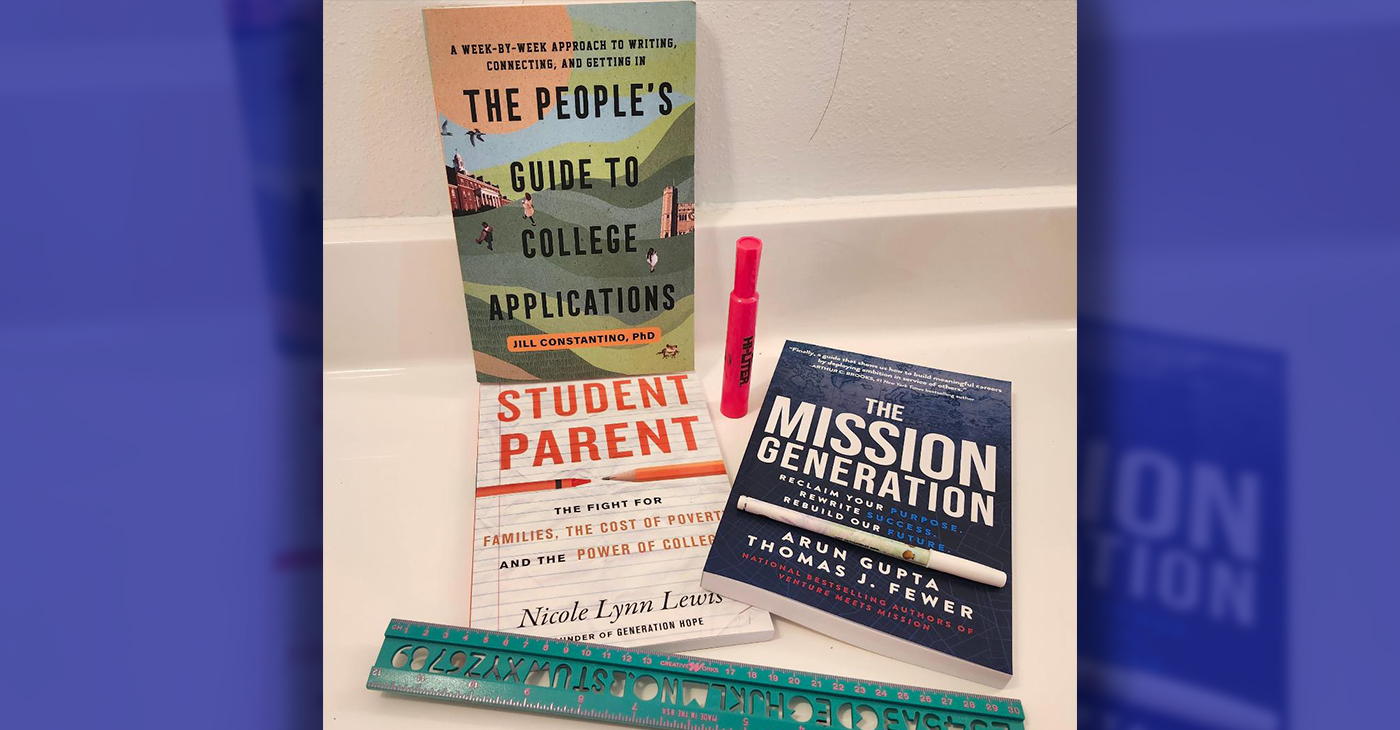
You probably already know that getting into the college of your choice is not something you do last-minute. In “The People’s Guide to College Applications: A Week-by-Week Approach to Writing, Connecting, and Getting in” (Prometheus Books, $ 21.95), Jill Constantino takes you through each step, but not in a frantic way. There’s no pressure here, just easy-to-grasp, makes-sense methods to apply for the college you want. There are reminders here, things you can’t forget and things you can, hints on asking for referrals and writing essays, and plenty of reminders to take a deep breath. Bonus: it’s also a book for parents, who may feel just as much pressure as their child does.

Okay, but let’s say that you’re an adult, a parent who’s sweating those college applications, classes, and the FAFSA for yourself, ugh! Then you’ll want to read “Student Parent: The Fight for Families, the Cost of Poverty, and the Power of College” by Nicole Lynn Lewis (Beacon Press, $26.97). an urgent call meant for nontraditional students who are also Black, Latinx, gay, Moms, or Dads.
Inside this book, you’ll find stats and stories that may already sound familiar, tales of not enough money, not enough support, not enough arms or sleep or resources. If you’re looking for a book of advice, this isn’t it, though. It’s more of a resource that you’ll want to take to your guidance counselor or any local politician.
Alright, but what if you’ve decided that college can wait? Is that okay? Look for “The Mission Generation: Reclaim Your Purpose, Rewrite Success, Rebuild Our Future” by Arun Gupta and Thomas J. Fewer (Wiley, $29.00) because – guess what? – you have many options for your future.
The kind of workday your Grandpa had is probably over, and you can’t count on toiling at the same place for 40 years for a pension and a gold watch. You already know that, and this book will help you decide your next step. You’ll learn what kind of worker you are, what’s stopping you from finding a job or occupation you’ll love, how to determine the purpose you envision for your future, and how to get where you need to be. This book isn’t just for high schoolers, but for anyone ages 16 and beyond who’s feeling restless, ready for change, or who’s thinking about some kind of purposeful retirement.
And if these aren’t the college-based or not-college-bound books you need, then be sure to ask your favorite bookseller or librarian for help on ideas, how-to’s, test prep books, or study guides. They’ll have books for you, and maybe a little inspiration, too.
Arts and Culture
Against All Odds: Mary Jackson’s Journey to NASA Engineer
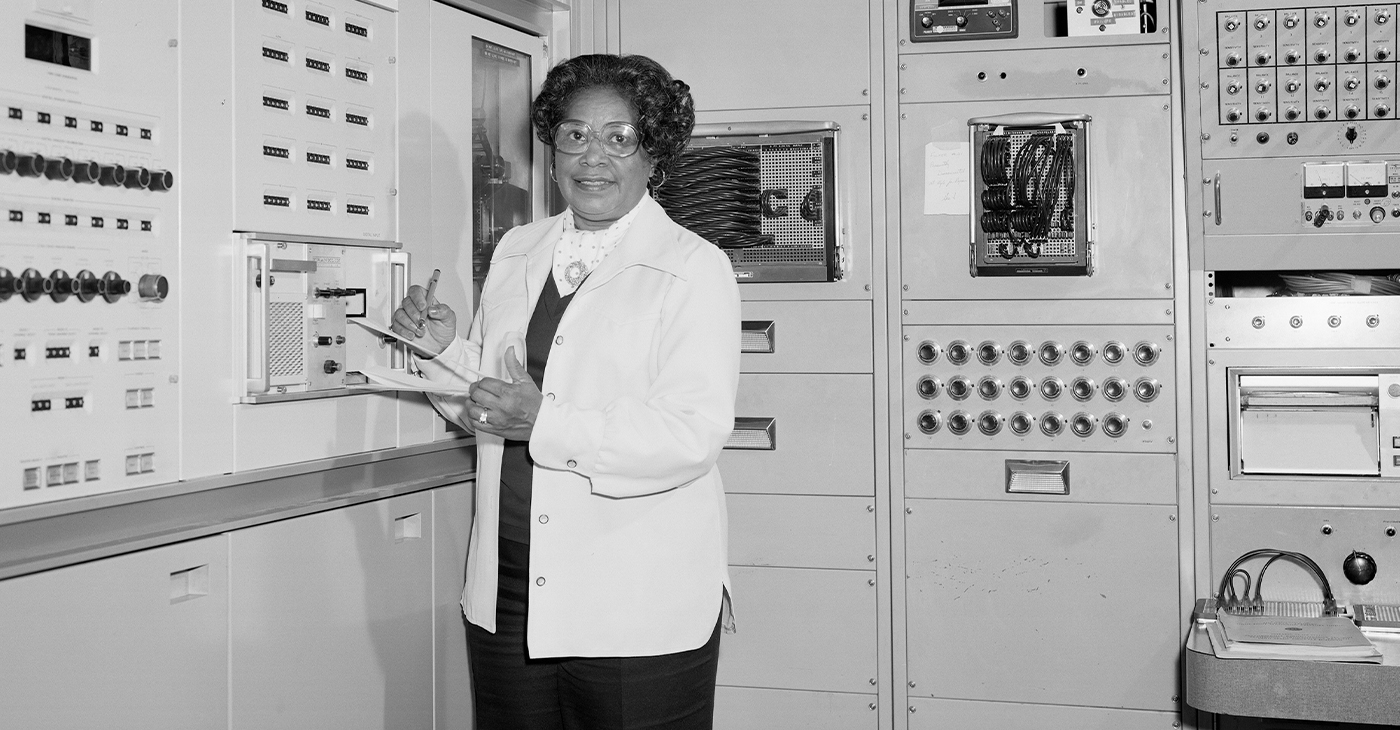
Jackson’s life took a significant turn when she was offered the opportunity to work in a wind tunnel, a facility used to test the effects of air moving over aircraft structures. It was here that her passion for engineering truly took flight. However, there was a challenge: to become an engineer, she needed to take advanced courses that were only offered at a segregated high school.
By Tamara Shiloh
When we talk about breaking barriers in science, technology, engineering, and mathematics, the name Mary Jackson deserves a place at the top of the list.
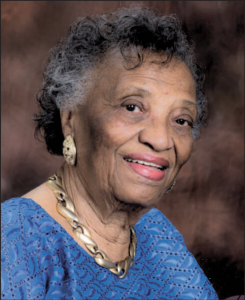
Jackson was born in 1921 in Hampton, Virginia, a place that would later become central to her groundbreaking work. From an early age, she showed a strong aptitude for math and science—subjects that, at the time, were not widely encouraged for African American women. But Jackson was not one to be limited by expectations. She earned degrees in mathematics and physical science from Hampton Institute (now Hampton University), setting the foundation for a career that would change history.
Before joining NASA, Jackson worked as a teacher and later as a research mathematician at the National Advisory Committee for Aeronautics (NACA), the agency that eventually became NASA. Like many African American women of her time, she began her career as a “human computer,” performing complex calculations by hand. It was in this environment that she worked alongside brilliant minds like Katherine Johnson, forming part of a powerful group of African American women whose calculations helped launch America into space.
Jackson’s life took a significant turn when she was offered the opportunity to work in a wind tunnel, a facility used to test the effects of air moving over aircraft structures. It was here that her passion for engineering truly took flight. However, there was a challenge: to become an engineer, she needed to take advanced courses that were only offered at a segregated high school.
Jackson did something truly remarkable. She petitioned the city of Hampton for permission to attend those classes. She didn’t accept “no” as an answer. And she won.
In 1958, Jackson became NASA’s first African American female engineer.
But Jackson’s impact didn’t stop there.
Later in her career, she chose to step away from her engineering position—not because she couldn’t continue, but because she wanted to make a difference. She moved into roles focused on equal opportunity, working to ensure that women and minorities had access to the same opportunities she fought so hard to get.
Jackson’s story gained wider recognition through the book and film Hidden Figures, which highlighted the contributions of African American women at NASA. But long before the spotlight found her, Jackson was doing the work—quietly, persistently, and brilliantly.
Jackson retired from Langley in 1985. Among her many honors were an Apollo Group Achievement Award and being named Langley’s Volunteer of the Year in 1976. She served as the chair of one of the center’s annual United Way campaigns and a member of the National Technical Association (the oldest African American technical organization in the United States).
She and her husband Levi had an open-door policy for young Langley recruits trying to gain their footing in a new town and a new career. A 1976 Langley Researcher profile might have done the best job capturing Mary’s spirit and character, calling her a “gentlelady, wife and mother, humanitarian and scientist.”
For Jackson, science and service went hand in hand.
She died on Feb. 11, 2005, at age 83, at a convalescent home in Hampton, Virginia.

WORK FROM HOME
Home-based business with potential monthly income of $10K+ per month. A proven training system and website provided to maximize business effectiveness. Perfect job to earn side and primary income. Contact Lynne for more details: Lynne4npusa@gmail.com 800-334-0540


Oakland Director Boots Dazzles Once Again in ‘I Love Boosters’

After 10-Year Wait, Fillmore Heritage Center Reopens in San Francisco

COMMENTARY: Black Music is the Sound of Black Freedom: Let Us Reclaim Both This Juneteenth

Oakland Post: Week of June 3 – 9, 2026

Study: Waiting Lists for Child Care Assistance Nearly Doubled

Venus Williams Calls a Sabalenka Exit a Tragedy

COMMENTARY: Using Art, Healing, And Community to Transform Mental Health Dialogue

Uptown Music Theatre Summer Camp Returns to Inspire the Next Generation of Performers

5 Cleveland Police Officers Injured, Gunfire Erupts During East Side Pursuit

15-YEAR-OLD COLUMBUS GIRL DIES, Community Mourns as Authorities Urge Water Safety Awareness

Let’s Talk Karmelo Anthony!

2026 World Cup is Here and Atlanta is Ready For It

COMMENTARY: What Andrew Young Reminded Me About Baltimore

COMMENTARY: When Politics Intersects with Professional Sports

K4: Crucial Driving Advice BEFORE You Buy! #shorts

Book Review: Books for College-Bound Students

Against All Odds: Mary Jackson’s Journey to NASA Engineer

Q&A with Steven Bradford: Why He Wants Your Vote for California Insurance Commissioner

OPINION: The Fire of Oakland’s Justin Jones

The Marin City Flea Market Is Back

California Launches Free Diaper Program for Newborns Statewide

The Ladies of Delta Sigma Theta Hold Day of Advocacy at the Capitol in Sacramento

EBMUD Enshrines the Legacy of its First Black Board Member William ‘Bill’ Patterson

Oakland Mayor Pushes Charter Overhaul to Clarify Roles in City Government, Increase Accountability and Improve Service Delivery

Oakland Post: Week of May 6 – 12, 2026

Mayor Barbara Lee Declares ‘Delroy Lindo Day,’ Presents Acclaimed Actor with Key to the City

OP-ED: Small Businesses Need Minnesota to Act on Pass-Through Tax Policy

How Is AI Affecting California? The State Wants You to Share Your Story

Rep. Kamlager-Dove Introduces Bill to Protect Women in Custody After Reports Detailing Miscarriages and Neglect

Snoop Dogg Celebrates 10 Til’ Midnight at the Compound

Hyundai Ioniq 5 Parking, Safety, and 360 View #shorts

2025 Ioniq 5 New Wiper & Powerful Performance! #shorts

Electric SUV Range: Is 259 Miles Enough? #shorts

EV Charging: How Fast Can You Charge an Electric Vehicle? #shorts

Biometric Cooling… Messaging Seats…Come on! 2025 Infiniti QX80 Autograph 4WD

Charged Up: Witness the Magic of a Fully Electric Car! #shorts

Range Rover Sport PHEV Included…: See What’s Inside This Luxury SUV! #shorts

Invisible Hood View: Perfect Parking with X-Ray Vision! #shorts

AI Is Reshaping Black Healthcare: Promise, Peril, and the Push for Improved Results in California

ESSAY: Technology and Medicine, a Primary Care Point of View

Sanctuary Cities

The RESISTANCE – FREEDOM NOW

STATE OF THE PEOPLE: Freddie

ECONOMIC BOYCOTT DAY!!!!!

I told You So
-
 Advice4 weeks ago
Book Review: Books for College-Bound Students
-
 Arts and Culture4 weeks ago
Against All Odds: Mary Jackson’s Journey to NASA Engineer
-
 Bay Area4 weeks ago
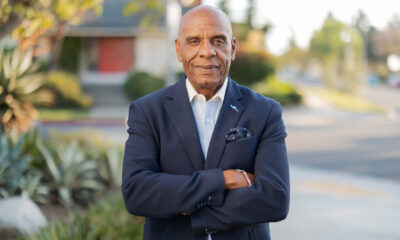
Q&A with Steven Bradford: Why He Wants Your Vote for California Insurance Commissioner
-
 Activism4 weeks ago
OPINION: The Fire of Oakland’s Justin Jones
-
 Alameda County4 weeks ago
The Marin City Flea Market Is Back
-
 Activism4 weeks ago
California Launches Free Diaper Program for Newborns Statewide
-
 Activism4 weeks ago
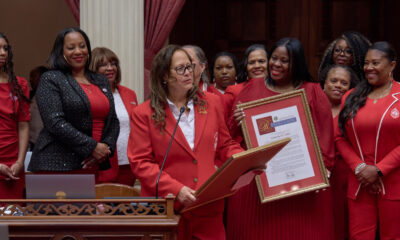
The Ladies of Delta Sigma Theta Hold Day of Advocacy at the Capitol in Sacramento
-
 Activism4 weeks ago
EBMUD Enshrines the Legacy of its First Black Board Member William ‘Bill’ Patterson
