
Community
Van Hook, Evans, Scoggins Receive Judge Carroll Community Service Awards

The Black American Political Action Committee’s (BAPAC) Eighth Annual “Judge George D. Carroll Community Service Awards Reception and Fundraiser” will be on Thursday, May 14, 5:30 p.m. – 7:30 p.m.
George Carroll was elected to the Richmond City Council in 1961. In 1964, he became mayor of Richmond, the first Black man to hold such an office in a major U.S. city, and in 1965, he was the first Black man appointed Judge to the Richmond Municipal Court.
Over six years ago, BAPAC created the Judge George D. Carroll Community Service Award. This distinguished award was established in honor of the judge’s public service record, his belief in family values, individual integrity, personal responsibility, public service and concern for the welfare of others.
This year’s event will be held in the Richmond Memorial Auditorium Lobby, 403 Civic Center Plaza. Tickets are $45, and a reserved table of 8 is $400.
At the event, BAPAC will honor five community leaders who have demonstrated unselfish commitment to public service, family values and tireless work in the community for the common good.
The 2015 honorees are Pastor Alvin C. Bernstine, Charles Evans, Gloria Scoggins, Florene VanHook and Kyra Worthy.
This week’s Richmond Post features Florene Van Hook, Charles Evans, and Gloria Scoggins
Florene Van Hook
Florene Van Hook came to Richmond as a young child with her grandmother Ida Bell Spears, who worked on the Richmond Shipyards. Ms. Van Hook graduated from Richmond High School and attended Contra Costa Community College before transferring to University of California, Berkeley. She married Randolph Van Hook and is the mother of two sons, and the great-grandmother of four.
Van Hook worked as a legal secretary and secretary for the West Contra Costa Unified School District where she distinguished herself by making sure parents of low achieving students received assistance to help them advance.
For more than 35 years she devoted time with other community organizations such as the School Advisory Committee (SAC), School Site Council (SSC), and the District Advisory Committee (DAC). The DAC honored her for “Outstanding Leadership and Commitment.”
She was elected to the National Coalition of Title 1 Parents, and has testified before the U.S. Congress and the Sacramento legislature.
She is an active member of the Mt. Zion Baptist Church in Richmond, pastored by Rev. Ulis Redic. She serves as the Youth Director and helped establish after-school tutorial programs. Some of her other church service activities include the Inspirational Choir, Scholarship Committee and as a Mission Sister, she visits and prepares meals for the sick.
She also volunteers to visit and deliver gifts to the residents of the Vale Health Care Center in San Pablo.
Charles Evans
Charles Evans is an award winning chef and visionary behind CJ’S BBQ & Fish, 3 of the Bay Area’s most well known eateries. Evans is known for his humble, sincere demeanor, warmth and unshakeable work ethic, which has allowed him to win many nationwide cook-offs.
Inspired by his Arkansas family, he learned how to prepare gourmet meals and created his own seasonings and sauces. Mr. Evans launched his first restaurant in 1997, called CJ’s in Fairfield, CA. In 2002, he established his second restaurant in Richmond and later his third in Vallejo.
His exceptional catering is sought after by many officials, including Congresswoman Barbara Lee, the Black Firefighters of Richmond, retired Oakland Raiders, Super Bowl XI champion George Atkinson, singer Lenny Williams, Richmond’s Dwayne Patton and his band. Many companies patronize his business, such as AT&T, Chevron, ILWU local unions, Kaiser Foundation, Richmond’s PAL organization, the George Miller Youth Fund and Congressman George Miller’s Birthday Extravaganza.
He has received many awards for hiring local residents and for his donations to charitable organizations. He is a member of Antioch Baptist Church. His numerous volunteer activities include: Richmond’s Crime Prevention Task Force, Richmond PAL and Richmond Main Street initiative. He received the Republican of the Year 2003 Gold Medal award for his leadership in business.
Mr. Evans, a celebrated grandfather, is also an active community leader who sponsors youth baseball teams, 100 Black Men of America, church organizations, prison rehab programs and mentors juveniles.
At the end of a busy day, Mr. Evans always makes time to sit with his 96-year old mother at her table to eat dinner where, with a smile, he always says, “Today was a good day.”
Gloria Scoggins
Gloria Scoggins, a Richmond native, has been active in education for 44 years. She has continued the legacy of her mother Ernestine Martin, a longtime Richmond resident, business owner and civic leader.
She earned her undergraduate degree in Child Development from California State University, Hayward and Masters Degrees from the University of San Francisco and Mills College in Oakland.
Scoggins has been recognized for her commitment to social justice and public service to the underrepresented and disadvantaged families in West Contra Costa County.
She has been active with the following community organizations and initiatives: the Blackboard of West Contra Costa, Emerging Young Leaders, ASCEND, Girls Inc. of WCCC, Richmond Pioneers, College Bound Girls, RCF (Richmond Community Foundation), Focus Group on Violence, Teacher Training and Mentoring and Church Ministries.
Presently, she serves as the President of the Blackboard of West Contra Costa, an organization that works to eliminate the opportunity gaps of underserved students. She also serves on the RCF Board of Directors where she seeks to build the capacity of the Richmond community.


Advertorial
When children struggle emotionally, it can affect every part of their lives — at home, in school, with friends, and even their physical health. In many Black families, we’re taught to be strong and push through. But our kids don’t have to struggle alone. Medi-Cal provides mental health care for children and youth, with no referral or diagnosis required.
Through California Advancing and Innovating Medi-Cal (CalAIM), the state is transforming how care is delivered. Services are now easier to access and better connected across mental health, physical health, and family support systems. CalAIM brings care into schools, homes, and communities, removing barriers and helping children get support early, before challenges escalate.
Help is Available, and it’s Covered
Under Medi-Cal, every child and teen under age 19 has the right to mental health care. This includes screenings, therapy, medication support, crisis stabilization, and help coordinating services. Parents, caregivers, and children age 12 or older can request a screening at any time, with no diagnosis or referral required.
Medi-Cal’s Mental Health and Substance Use Disorder Program
For children and youth with more serious mental health needs, including those in foster care or involved in the justice system, Medi-Cal offers expanded support, including:
- Family-centered and community-based therapy to address trauma, behavior challenges, or system involvement.
- Wraparound care teams that help keep children safely at home or with relatives.
- Activity funds that support healing through sports, art, music, and therapeutic camps.
- Initial joint behavioral health visits, where a mental health provider and child welfare worker meet with the family early in a case.
- Child welfare liaisons in Medi-Cal health plans who help caregivers and social workers get services for children faster
Keeping Kids Safe from Opioids and Harmful Drugs

DHCS is also working to keep young people safe as California faces rising risks from opioids and counterfeit pills. Programs like Elevate Youth California and Friday Night Live give teens mentorship, leadership opportunities, and positive outlets that strengthen mental well-being.
Through the California Youth Opioid Response, families can learn how to avoid dangerous substances and get treatment when needed. Song for Charlie provides parents and teens with facts and tools to talk honestly about mental health and counterfeit pills.
DHCS also supports groups like Young People in Recovery, which helps youth build skills for long-term healing, and the Youth Peer Mentor Program, which trains teens with lived experience to support others. These efforts are part of California’s strategy to protect young people, prevent overdoses, and help them make healthier choices.
Support for Parents and Caregivers
Children thrive when their caregivers are supported. Through CalAIM’s vision of whole-person care, Medi-Cal now covers dyadic services, visits where a child and caregiver meet together with a provider to strengthen bonding, manage stress, and address behavior challenges.
These visits may include screening the caregiver for depression or anxiety and connecting them to food, housing, or other health-related social needs, aligning with CalAIM’s Community Supports framework. Notably, only the child must be enrolled in Medi-Cal to receive dyadic care.
Family therapy is also covered and can take place in clinics, schools, homes, or via telehealth, reflecting CalAIM’s commitment to flexible, community-based care delivery.
Additionally, BrightLife Kids offers free tools, resources, and virtual coaching for caregivers and children ages 0–12. Families can sign up online or through the BrightLife Kids app. No insurance, diagnosis, or referral is required.
For teens and young adults ages 13–25, California offers Soluna, a free mental health app where young people can chat with coaches, learn coping skills, journal, or join supportive community circles. Soluna is free, confidential, available in app stores, and does not require insurance.
CalHOPE also provides free emotional support to all Californians through a 24/7 support line at (833) 317-HOPE (4673), online chat, and culturally responsive resources.
Support at School — Where Kids Already Are
Schools are often the first place where emotional stress is noticed. Through the Children and Youth Behavioral Health Initiative (CYBHI), public schools, community colleges, and universities can offer therapy, counseling, crisis support, and referrals at no cost to families.
Services are available during school breaks and delivered on campus, by phone or video, or at community sites. There are no copayments, deductibles, or bills.
Medi-Cal Still Covers Everyday Care
Medi-Cal continues to cover everyday mental health care, including therapy for stress, anxiety, depression, or trauma; medication support; crisis stabilization; hospital care when needed; and referrals to community programs through county mental health plans and Medi-Cal health plans.
How to Get Help
- Talk to your child’s teacher, school counselor, or doctor.
- In Alameda County call 510-272-3663 or the toll-free number 1-800-698-1118 and in San Francisco call 855-355-5757 to contact your county mental health plan to request an assessment or services.
- If your child is not enrolled in Medi-Cal, you can apply at com or my.medi-cal.ca.gov.
- In a mental health emergency, call or text 988, the Suicide and Crisis Lifeline.
Every child deserves to grow up healthy and supported. Medi-Cal is working to transform care so it’s accessible, equitable, and responsive to the needs of every family.
Activism
Ann Lowe: The Quiet Genius of American Couture
Lowe was born in Clayton, Alabama, into a family of gifted seamstresses. Her mother and grandmother were well-known dressmakers who created exquisite gowns for women in the area. By the time Lowe was a young girl, she was already showing extraordinary talent — cutting, sewing, and decorating fabric with a skill that far exceeded her age. When her mother died unexpectedly, Lowe – only 16 years old then – took over her mother’s sewing business, completing all the orders herself.
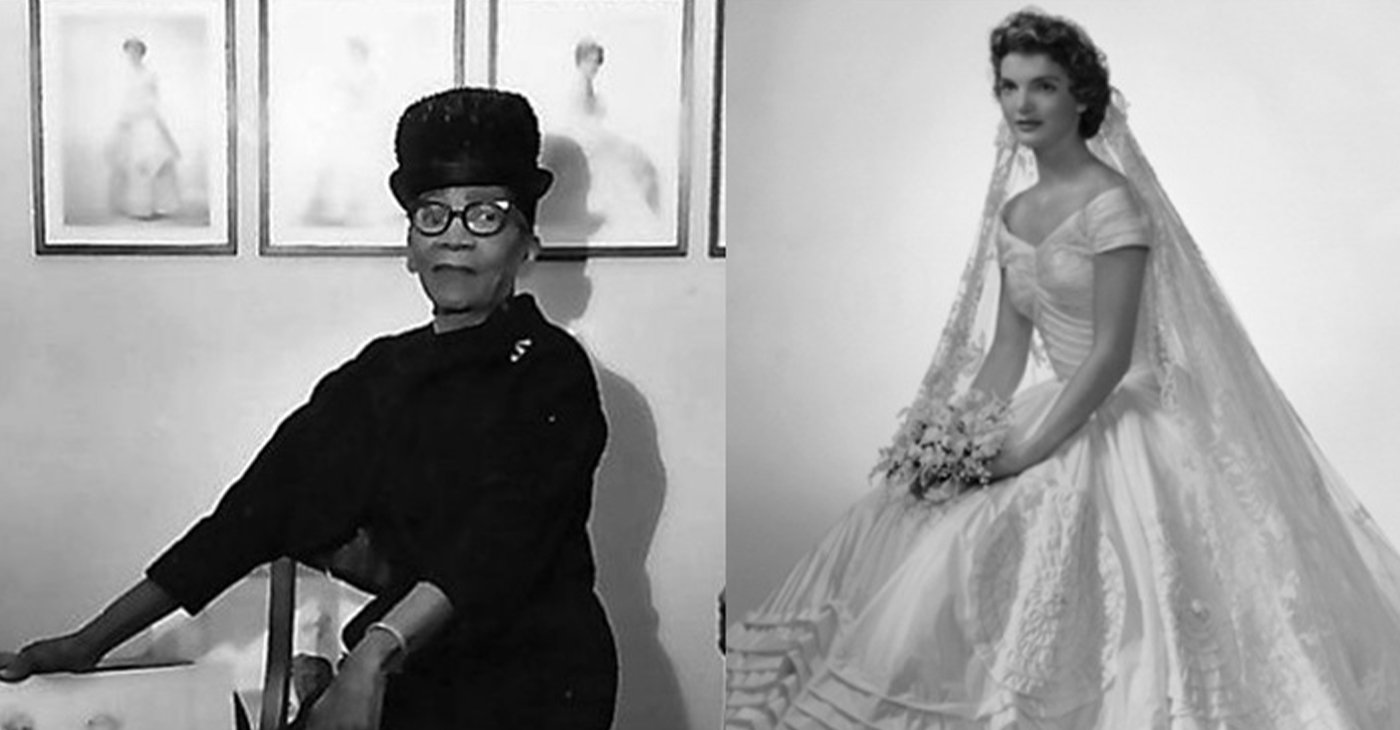
By Tamara Shiloh
Ann Cole Lowe, born Dec.14, 1898, was a pioneering American fashion designer whose extraordinary talent shaped some of the most widely recognized and celebrated gowns in U.S. history.
Although she designed dresses for society’s wealthiest families and created masterpieces worn at historic events, Lowe spent much of her life in the shadows — uncredited, underpaid, yet unmatched in skill. Today, she is celebrated as one of the first nationally recognized African American fashion designers and a true visionary in American couture.
Lowe was born in Clayton, Alabama, into a family of gifted seamstresses. Her mother and grandmother were well-known dressmakers who created exquisite gowns for women in the area. By the time Lowe was a young girl, she was already showing extraordinary talent — cutting, sewing, and decorating fabric with a skill that far exceeded her age. When her mother died unexpectedly, Lowe – only 16 years old then – took over her mother’s sewing business, completing all the orders herself. This early responsibility would prepare her for a lifetime of professional excellence.
In 1917, Lowe moved to New York City to study at the S.T. Taylor Design School. Although she was segregated from White students and forced to work separately, she, of course, excelled, graduating earlier than expected. Her instructors quickly recognized that her abilities were far above the typical student, especially her skill in hand-sewing, applique, and intricate floral embellishment – techniques that would become her signature.
Throughout the 1920s and 1930s, she designed gowns for high-society women in Florida and New York, operating boutiques and working for prestigious department stores. Her reputation for craftsmanship, originality, and elegance grew increasingly. She was known for creating gowns that moved beautifully, featured delicate hand-made flowers, and looked sculpted rather than sewn. Many wealthy clients specifically requested “an Ann Lowe gown” for weddings, balls, and galas.
Her most famous creation came in 1953: the wedding gown worn by Jacqueline Bouvier when she married Massachusetts Sen. John F. Kennedy. The dress – crafted from ivory silk taffeta with dozens of tiny, pleated rosettes – became one of the most photographed bridal gowns in American history. Despite this achievement, Lowe received no public credit at the time. When a flood destroyed her completed gowns 10 days before the wedding, she and her seamstresses worked day and night to remake everything – at her own expense. Her dedication and perfectionism never wavered.
She eventually opened “Ann Lowe Originals,” her own salon on New York’s Madison Avenue. She served clients such as the Rockefellers, DuPonts, Vanderbilts, and actresses like Olivia de Havilland. Yet even with her wealthy clientele, she struggled financially, often undercharging because she wanted every dress to be perfect, even if it meant losing money.
Lowe’s contributions were finally recognized later in life. Today, her exquisite gowns are preserved in museums, including the Smithsonian National Museum of African American History and Culture and the Metropolitan Museum of Art.
In the last five years of her life, Lowe lived with her daughter Ruth in Queens, N.Y. She died at her daughter’s home on Feb. 25, 1981, at the age of 82, after an extended illness.
Activism
2025 in Review: Seven Questions for Black Women’s Think Tank Founder Kellie Todd Griffin
As the president and CEO of the California Black Women’s Collective Empowerment Institute, Griffin is on a mission to shift the narrative and outcomes for Black women and girls. She founded the nation’s first Black Women’s Think Tank, securing $5 million in state funding to fuel policy change.

By Edward Henderson
California Black Media
With more than 25 years of experience spanning public affairs, community engagement, strategy, marketing, and communications, Kellie Todd Griffin is recognized across California as a leader who mobilizes people and policy around issues that matter.
As the president and CEO of the California Black Women’s Collective Empowerment Institute, Griffin is on a mission to shift the narrative and outcomes for Black women and girls. She founded the nation’s first Black Women’s Think Tank, securing $5 million in state funding to fuel policy change.
Griffin spoke with California Black Media (CBM) about her successes and setbacks in 2025 and her hopes for 2026.
Looking back at 2025, what stands out to you as your most important achievement and why?
Our greatest achievement in this year is we got an opportunity to honor the work of 35 Black women throughout California who are trailblazing the way for the next generation of leaders.
How did your leadership, efforts and investments as president and CEO California Black Women’s Collective Empowerment Institute contribute to improving the lives of Black Californians?
We’re training the next leaders. We have been able to train 35 women over a two-year period, and we’re about to start a new cohort of another 30 women. We also have trained over 500 middle and high school girls in leadership, advocacy, and financial literacy.
What frustrated you the most over the last year?
Getting the question, “why.” Why advocate for Black women? Why invest in Black people, Black communities? It’s always constantly having to explain that, although we are aware that there are other populations that are in great need, the quality-of-life indices for Black Californians continue to decrease. Our life expectancies are decreasing. Our unhoused population is increasing. Our health outcomes remain the worst.
We’re not asking anyone to choose one group to prioritize. We are saying, though, in addition to your investments into our immigrant brothers and sisters – or our religious brothers and sisters – we are also asking you to uplift the needs of Black Californians. That way, all of us can move forward together.
What inspired you the most over the last year?
I’ve always been amazed by the joy of Black women in the midst of crisis.
That is really our secret sauce. We don’t let the current state of any issue take our joy from us. It may break us a little bit. We may get tired a little bit. But we find ways to express that – through the arts, through music, through poetry.
What is one lesson you learned in 2025 that will inform your decision-making next year?
Reset. It’s so important not to be sitting still. We have a new administration. We’re seeing data showing that Black women have the largest unemployment rate. We’ve lost so many jobs. We can have rest – we can be restful – but we have to continue the resistance.
In one word, what is the biggest challenge Black Californians faced in 2025?
Motivation.
I choose motivation because of the tiredness. What is going to motivate us to be involved in 2026?
What is the goal you want to achieve most in 2026?
I want to get Black Californians in spaces and places of power and influence – as well as opportunities to thrive economically, socially, and physically.


WORK FROM HOME
Home-based business with potential monthly income of $10K+ per month. A proven training system and website provided to maximize business effectiveness. Perfect job to earn side and primary income. Contact Lynne for more details: Lynne4npusa@gmail.com 800-334-0540


Support Your Child’s Mental Health: Medi-Cal Covers Therapy, Medication, and More

Ann Lowe: The Quiet Genius of American Couture

2025 in Review: Seven Questions for Black Women’s Think Tank Founder Kellie Todd Griffin

BRIDGE Housing President and CEO Ken Lombard Scores Top Honors for Affordable Housing Leadership

Oakland School Board Grapples with Potential $100 Million Shortfall Next Year

COMMENTARY: If You Don’t Want Your ‘Black Card’ Revoked, Watch What You Bring to Holiday Dinners

Mayor Lee, City Leaders Announce $334 Million Bond Sale for Affordable Housing, Roads, Park Renovations, Libraries and Senior Centers

Fayeth Gardens Holds 3rd Annual Kwanzaa Celebration at Hayward City Hall on Dec. 28

Post Salon to Discuss Proposal to Bring Costco to Oakland Community meeting to be held at City Hall, Thursday, Dec. 18

Oakland Post: Week of December 10 – 16, 2025

Seth Curry Makes Impressive Debut with the Golden State Warriors

A Nation in Freefall While the Powerful Feast: Trump Calls Affordability a ‘Con Job’

The Numbers Behind the Myth of the Hundred Million Dollar Contract

FBI Report Warns of Fear, Paralysis, And Political Turmoil Under Director Kash Patel

ACA Deadline Nears as 20 million Brace for Higher Health Costs

Oakland Post: Week of October 29 – November 4, 2025

Oakland Post: Week of November 12 – 18, 2025

Oakland Post: Week of November 5 – 11, 2025

IN MEMORIAM: William ‘Bill’ Patterson, 94

How Charles R. Drew University Navigated More Than $20 Million in Fed Cuts – Still Prioritizing Students and Community Health

No Justice in the Justice System

Beyoncé and Jay-Z make rare public appearance with Lewis Hamilton at Las Vegas Grand Prix

Lewis Hamilton set to start LAST in Saturday Night’s Las Vegas Grand Prix

Oakland Post: Week of November 19 – 25, 2025

LIHEAP Funds Released After Weeks of Delay as States and the District Rush to Protect Households from the Cold

The Perfumed Hand of Hypocrisy: Trump Hosted Former Terror Suspect While America Condemns a Muslim Mayor
Seth Curry Makes Impressive Debut with the Golden State Warriors

Protecting Pedophiles: The GOP’s Warped Crusade Against Its Own Lies

Trump’s Death Threat Rhetoric Sends Nation into Crisis

Trinidad and Tobago – Prime Minister Confirms U.S. Marines Working on Tobago Radar System

Hyundai Ioniq 5 Parking, Safety, and 360 View #shorts

2025 Ioniq 5 New Wiper & Powerful Performance! #shorts

Electric SUV Range: Is 259 Miles Enough? #shorts

EV Charging: How Fast Can You Charge an Electric Vehicle? #shorts

Biometric Cooling… Messaging Seats…Come on! 2025 Infiniti QX80 Autograph 4WD

Charged Up: Witness the Magic of a Fully Electric Car! #shorts

Range Rover Sport PHEV Included…: See What’s Inside This Luxury SUV! #shorts

Invisible Hood View: Perfect Parking with X-Ray Vision! #shorts

AI Is Reshaping Black Healthcare: Promise, Peril, and the Push for Improved Results in California

ESSAY: Technology and Medicine, a Primary Care Point of View

Sanctuary Cities

The RESISTANCE – FREEDOM NOW

STATE OF THE PEOPLE: Freddie

ECONOMIC BOYCOTT DAY!!!!!

I told You So
-
 Activism4 weeks ago
Oakland Post: Week of November 12 – 18, 2025
-
 Activism4 weeks ago
IN MEMORIAM: William ‘Bill’ Patterson, 94
-
 Activism4 weeks ago
How Charles R. Drew University Navigated More Than $20 Million in Fed Cuts – Still Prioritizing Students and Community Health
-
 Bay Area4 weeks ago
No Justice in the Justice System
-
 #NNPA BlackPress3 weeks ago
Beyoncé and Jay-Z make rare public appearance with Lewis Hamilton at Las Vegas Grand Prix
-
 #NNPA BlackPress3 weeks ago
Lewis Hamilton set to start LAST in Saturday Night’s Las Vegas Grand Prix
-
 Activism3 weeks ago
Oakland Post: Week of November 19 – 25, 2025
-
 #NNPA BlackPress2 weeks ago
LIHEAP Funds Released After Weeks of Delay as States and the District Rush to Protect Households from the Cold
