
Economy
Federal Reserve Makes First Interest Rate Cut Since 2008
WASHINGTON INFORMER — The Federal Reserve has cut the interest rate by one-quarter of a percentage point, marking the first such cut in 11 years. The announcement made Wednesday at the conclusion of a two-day meeting of the Federal Open Market Committee, provides an extra boost to the domestic economy as it faces threat of a global economic slowdown.

By WI Web Staff
The Federal Reserve has cut the interest rate by one-quarter of a percentage point, marking the first such cut in 11 years.
The announcement made Wednesday at the conclusion of a two-day meeting of the Federal Open Market Committee, provides an extra boost to the domestic economy as it faces threat of a global economic slowdown.
While Federal Reserve Chair Jerome Powell has acknowledged the strength of the nation’s economy — the 10-year economic expansion is the longest on record, unemployment stands at a near-historic low of 3.7 percent, and the stock market continues to chalk up record highs — the move is an attempt to guard the country against increasing geopolitical tensions as well as fallout from President Donald Trump’s protracted trade war with China.
This post originally appeared in The Washington Informer.





Activism
2025 in Review: Seven Questions for Sen. Laura Richardson, Who Made Legislative History This Year
Before elected office, she served as a legislative staffer at the local, state, and federal levels and built a strong academic foundation, earning a political science degree from UCLA and an MBA from USC.
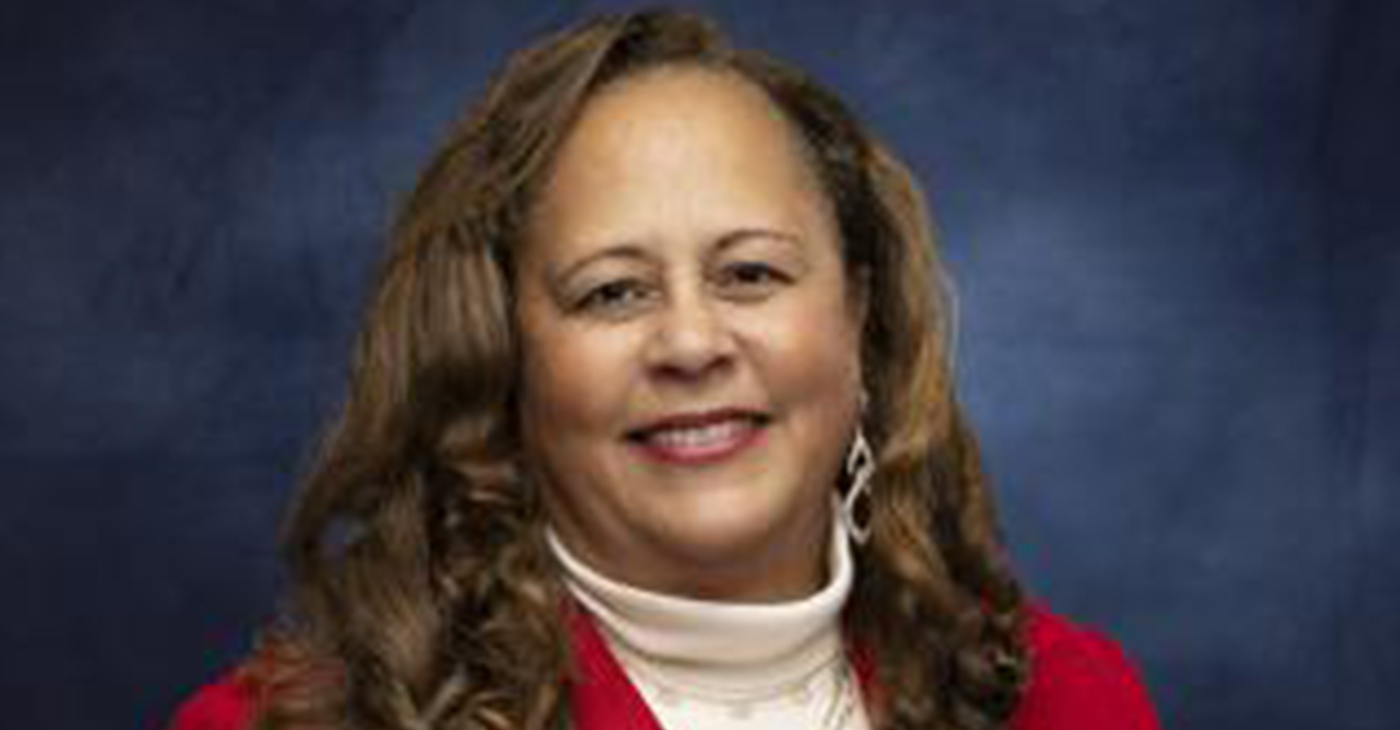
By Edward Henderson, California Black Media
Elected in November 2024 to represent California’s 35th Senate District, Sen. Laura Richardson (D-San Pedro) brings decades of experience to her role.
Before elected office, she served as a legislative staffer at the local, state, and federal levels and built a strong academic foundation, earning a political science degree from UCLA and an MBA from USC.
Richardson says she remains deeply committed to empowering residents, strengthening neighborhoods, and supporting the local economy.
For example, SB 748, a bill she authored that Gov. Newsom signed into law this year, allows cities to use existing homelessness funds to clear unsafe RV encampments, and another measure aimed at expanding provider access for Medi-Cal patients.
California Black Media (CBM) spoke with Richardson about her successes and disappointments over the past year and her plans for 2026.
What stands out as your most important achievement this year?
Being number one in getting the most bills signed by a freshman senator. Our team and staff were able to effectively move legislation through committees in both the Senate and Assembly and gain the governor’s support.
How did your leadership contribute to improving the lives of Black Californians?
Securing overall agency support from the governor to begin the work of understanding and documenting descendants of slavery. The discussion around “40 acres and a mule” will be ongoing for many years, but moving forward with creating an agency—although not fully funded—was significant. They were baby steps, but they were steps.

What frustrated you the most this year?
The administration. Even though federal and state roles differ, California has its own values and priorities. When the federal government makes cuts that impact Californians, the state legislature feels the need to backfill to protect people. It was challenging and frustrating.
What inspired you the most this year?
SB 237, which I was a joint principal author on, inspired me. It dealt with fuel stability. Two refineries closed, and several others are barely hanging on. Even as we work toward zero emissions, we still need a certain amount of fuel. SB 237 opened up some of the fuel potential in Kern County, and there’s a pipeline from Kern County down to my district.
What is one lesson you learned this year that will inform your decision-making next year?
Engage the governor’s staff earlier. I’m going to push to involve the governor’s legislative staff sooner.
In one word, what is the biggest challenge Black Californians are facing right now?
Affordability. No matter how much you make, everything is more expensive—gas, groceries, insurance, mortgages. Costs keep rising while salaries don’t.
What is the goal you want to achieve most in 2026?
Creating a process for dealing with abandoned cemeteries.
The last piece—not specific to this year but building toward the future—is figuring out how people and businesses in the district and in California can participate in major events like the Olympics, FIFA, and the Super Bowl, all of which are taking place here.
Activism
2025 in Review: Seven Questions for Sen. Lola Smallwood-Cuevas – an Advocate for Jobs and Justice
I’m proud of how we fought back against the Trump Administration’s attacks, especially on the budget, and strengthened protections for workers while fortifying the cultural power of Black Los Angeles. Workers’ rights remained central in my bill package because my background in organizing taught me a simple truth: when workers do well, communities do well.

By Edward Henderson, California Black Media
Representing the 28th Senate District, Sen. Lola Smallwood-Cuevas (D-Los Angeles) brings a lifelong commitment to working families.
After earning her communications degree from California State University Hayward (now known as CSU, East Bay), Smallwood-Cuevas began her career as a journalist telling the stories of working people—an experience that drew her into the labor movement.
Since being elected to the California State Senate, Smallwood-Cuevas has championed legislation that strengthens worker protections, expands access to justice, and uplifts historically marginalized communities.
California Black Media (CBM) spoke with Smallwood-Cuevas about her successes and disappointments this year, as well as her goals for 2026.
What stands out as your most important accomplishment this year?
I’m proud of how we fought back against the Trump Administration’s attacks, especially on the budget, and strengthened protections for workers while fortifying the cultural power of Black Los Angeles. Workers’ rights remained central in my bill package because my background in organizing taught me a simple truth: when workers do well, communities do well.
I also moved forward with the creation of California’s first Black cultural district in South LA. Amid gentrification, this district will protect cultural assets and bring resources as Los Angeles prepares for the FIFA World Cup and Olympic Games.
How did your leadership contribute to improving the lives of Black Californians this year?
We must name the disparities Black communities face—higher homelessness, incarceration, and health incidents. During the budget fight, when the governor proposed zero dollars for homelessness, I pushed hard. We secured $500 million for homelessness response, reinstated $1 billion for supportive programs, and added another $500 million for affordable housing.
What frustrated you most this year?
Our people are under attack. Racial profiling is creeping back into federal policy. Crime is being weaponized to justify disproportionate incarceration—even though crime rates are at historic lows.
But what frustrated me most was how quickly diversity, equity, and inclusion were rolled back through federal orders and preemptive action by corporations and foundations.
What has been your greatest inspiration this year?
Our resilience. California does not stay down. The movement around Proposition 50 was incredibly inspiring. I saw unity across Black California.
What is one lesson you’ve learned this year that will guide your decision-making next year?
Black California is resilient and brilliant. We are stronger than our opposition. And the lesson echoes Dr. King: “Organize, baby, organize.” We must build coalitions across local, county, and state levels.
In one word, what is the biggest challenge facing Black Californians?
Visibility. Visibility is power. We must be present—in rooms, on boards, in media, in headlines. We cannot retreat from Black identity.
What is the goal you most hope to achieve in 2026?
Economic stability. When California enters a recession, Black communities enter a depression. My goal is to advance policies that create real economic opportunity through safety-net protections, contract access, and targeted local hiring for quality jobs. crisis.
Activism
Families Across the U.S. Are Facing an ‘Affordability Crisis,’ Says United Way Bay Area
United Way’s Real Cost Measure data reveals that 27% of Bay Area households – more than 1 in 4 families – cannot afford essentials such as food, housing, childcare, transportation, and healthcare. A family of four needs $136,872 annually to cover these basic necessities, while two adults working full time at minimum wage earn only $69,326.

By Post Staff
A national poll released this week by Marist shows that 61% of Americans say the economy is not working well for them, while 70% report that their local area is not affordable. This marks the highest share of respondents expressing concern since the question was first asked in 2011.
According to United Way Bay Area (UWBA), the data underscores a growing reality in the region: more than 600,000 Bay Area households are working hard yet still cannot afford their basic needs.
Nationally, the Marist Poll found that rising prices are the top economic concern for 45% of Americans, followed by housing costs at 18%. In the Bay Area, however, that equation is reversed. Housing costs are the dominant driver of the affordability crisis.
United Way’s Real Cost Measure data reveals that 27% of Bay Area households – more than 1 in 4 families – cannot afford essentials such as food, housing, childcare, transportation, and healthcare. A family of four needs $136,872 annually to cover these basic necessities, while two adults working full time at minimum wage earn only $69,326.
“The national numbers confirm what we’re seeing every day through our 211 helpline and in communities across the region,” said Keisha Browder, CEO of United Way Bay Area. “People are working hard, but their paychecks simply aren’t keeping pace with the cost of living. This isn’t about individual failure; it’s about policy choices that leave too many of our neighbors one missed paycheck away from crisis.”
The Bay Area’s affordability crisis is particularly defined by extreme housing costs:
- Housing remains the No. 1 reason residents call UWBA’s 211 helpline, accounting for 49% of calls this year.
- Nearly 4 in 10 Bay Area households (35%) spend at least 30% of their income on housing, a level widely considered financially dangerous.
- Forty percent of households with children under age 6 fall below the Real Cost Measure.
- The impact is disproportionate: 49% of Latino households and 41% of Black households struggle to meet basic needs, compared to 15% of white households.
At the national level, the issue of affordability has also become a political flashpoint. In late 2025, President Donald Trump has increasingly referred to “affordability” as a “Democrat hoax” or “con job.” While he previously described himself as the “affordability president,” his recent messaging frames the term as a political tactic used by Democrats to assign blame for high prices.
The president has defended his administration by pointing to predecessors and asserting that prices are declining. However, many Americans remain unconvinced. The Marist Poll shows that 57% of respondents disapprove of Trump’s handling of the economy, while just 36% approve – his lowest approval rating on the issue across both terms in office.

WORK FROM HOME
Home-based business with potential monthly income of $10K+ per month. A proven training system and website provided to maximize business effectiveness. Perfect job to earn side and primary income. Contact Lynne for more details: Lynne4npusa@gmail.com 800-334-0540


Big God Ministry Gives Away Toys in Marin City

First 5 Alameda County Distributes Over $8 Million in First Wave of Critical Relief Funds for Historically Underpaid Caregivers

2025 in Review: Seven Questions for Assemblymember Lori Wilson — Advocate for Equity, the Environment, and More

2025 in Review: Seven Questions for Assemblymember Tina McKinnor, Champion of Reparations, Housing and Workers’ Rights

2025 in Review: Seven Questions for Sen. Laura Richardson, Who Made Legislative History This Year

2025 in Review: Seven Questions for Sen. Lola Smallwood-Cuevas – an Advocate for Jobs and Justice

Alfred Cralle: Inventor of the Ice Cream Scoop

BOOK REVIEW: Let Me Be Real With You

Oakland Post: Week of December 24 – 30, 2025

Bling It On: Holiday Lights Brighten Dark Nights All Around the Bay

Oakland Council Expands Citywide Security Cameras Despite Major Opposition

Lu Lu’s House is Not Just Toying Around with the Community

Desmond Gumbs — Visionary Founder, Mentor, and Builder of Opportunity

Families Across the U.S. Are Facing an ‘Affordability Crisis,’ Says United Way Bay Area

Black Arts Movement Business District Named New Cultural District in California

Oakland Post: Week of November 12 – 18, 2025

IN MEMORIAM: William ‘Bill’ Patterson, 94

How Charles R. Drew University Navigated More Than $20 Million in Fed Cuts – Still Prioritizing Students and Community Health

No Justice in the Justice System

Oakland Post: Week of November 19 – 25, 2025

Seth Curry Makes Impressive Debut with the Golden State Warriors

Oakland Post: Week of November 26 – December 2, 2025

LIHEAP Funds Released After Weeks of Delay as States and the District Rush to Protect Households from the Cold

Seven Steps to Help Your Child Build Meaningful Connections

Beyoncé and Jay-Z make rare public appearance with Lewis Hamilton at Las Vegas Grand Prix

Seven Steps to Help Your Child Build Meaningful Connections

Lewis Hamilton set to start LAST in Saturday Night’s Las Vegas Grand Prix

Trinidad and Tobago – Prime Minister Confirms U.S. Marines Working on Tobago Radar System

The Perfumed Hand of Hypocrisy: Trump Hosted Former Terror Suspect While America Condemns a Muslim Mayor

Thanksgiving Celebrated Across the Tri-State

Hyundai Ioniq 5 Parking, Safety, and 360 View #shorts

2025 Ioniq 5 New Wiper & Powerful Performance! #shorts

Electric SUV Range: Is 259 Miles Enough? #shorts

EV Charging: How Fast Can You Charge an Electric Vehicle? #shorts

Biometric Cooling… Messaging Seats…Come on! 2025 Infiniti QX80 Autograph 4WD

Charged Up: Witness the Magic of a Fully Electric Car! #shorts

Range Rover Sport PHEV Included…: See What’s Inside This Luxury SUV! #shorts

Invisible Hood View: Perfect Parking with X-Ray Vision! #shorts

AI Is Reshaping Black Healthcare: Promise, Peril, and the Push for Improved Results in California

ESSAY: Technology and Medicine, a Primary Care Point of View

Sanctuary Cities

The RESISTANCE – FREEDOM NOW

STATE OF THE PEOPLE: Freddie

ECONOMIC BOYCOTT DAY!!!!!

I told You So

-
 Alameda County4 weeks ago
Seth Curry Makes Impressive Debut with the Golden State Warriors
-
 #NNPA BlackPress4 weeks ago
LIHEAP Funds Released After Weeks of Delay as States and the District Rush to Protect Households from the Cold
-
 #NNPA BlackPress4 weeks ago
Seven Steps to Help Your Child Build Meaningful Connections
-
 #NNPA BlackPress4 weeks ago
Seven Steps to Help Your Child Build Meaningful Connections
-
 #NNPA BlackPress4 weeks ago
Trinidad and Tobago – Prime Minister Confirms U.S. Marines Working on Tobago Radar System
-
 #NNPA BlackPress4 weeks ago
Thanksgiving Celebrated Across the Tri-State
-

 #NNPA BlackPress4 weeks ago
Teens Reject Today’s News as Trump Intensifies His Assault on the Press
-

 #NNPA BlackPress4 weeks ago
Breaking the Silence: Black Veterans Speak Out on PTSD and the Path to Recovery
