
Arts and Culture
Melanin Medicine for Melancholy

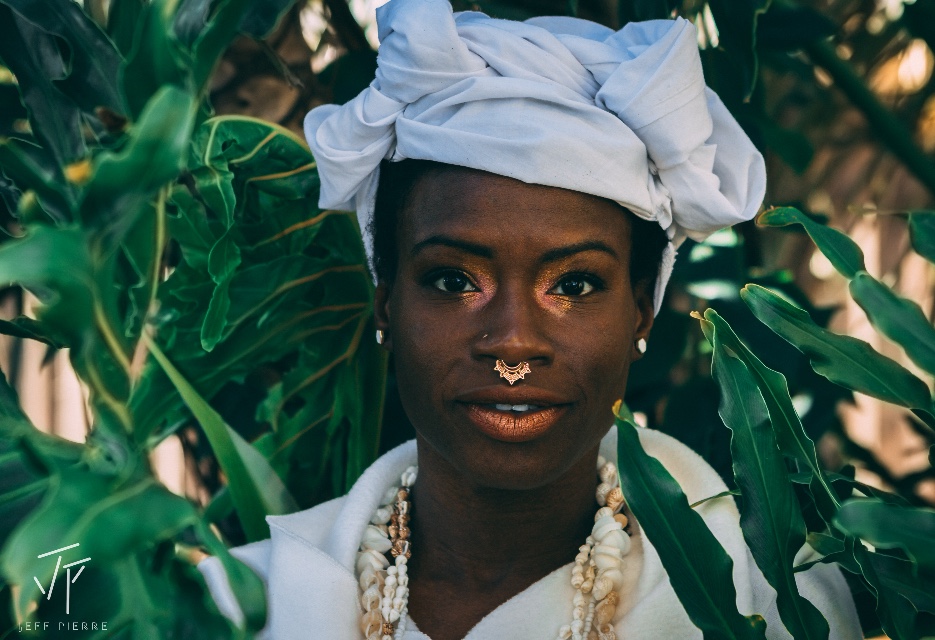
Part I.“Poetic Pain”
We are but African diasporic seeds sprinkled amongst the Earth. Reincarnations of our pasts’ past. Returned ancestars in the flesh roaming about the planet as modern-day griot carbon copies. Melanated manipulators of matter, Benders of time, Transmuters of thought, energy and space. Bound together by our collective history of global dehumanization and intergenerational narratives of doors of no return, strange fruit, Jim Crow,
black codes, prison, killings. Our DNA eternally etched with memories and traumatizing tales of the maafa. Burdens of being bagladies, bagbabies, and bagmenses too. We carry weight…theirs and ours.
We have chosen to begin this sharing with a poetic expression of our collective pain. By putting our melancholy in context, we are better able to show how our melanin essence is offered as medicine. Before going any further, we should point out that in mental health, “melancholy” is defined as depression of spirits, dejection, severe depression, and miserableness.
Few can deny that the experience of being Black in America has been filled with dejection, depression, and abject miserableness. Even fewer will recognize that in many ways, dance and creative movement have been the hidden invisible healing balm to our socially imposed wretchedness and dejection.
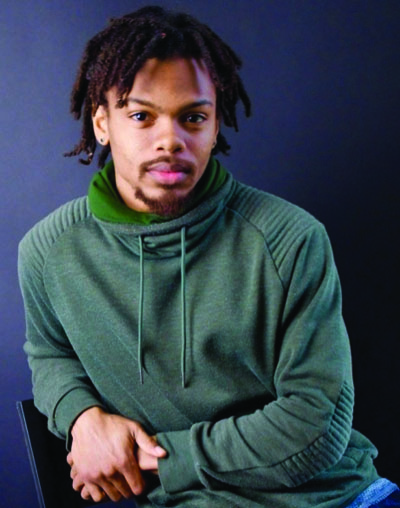
John Curtis
In coping with vicious experiences of marginalization and oppression, we have wised up and plugged into our melanin element/essence to serve as medicine for our melancholy.
According to Dr. Imhotep Llaila Afrika, continental Africans and children of the African Diaspora have the highest concentration of melanin in our brains, which allows us greater access to ancestral memory and historical memory, permitting us to tap into information, thoughts, and ancestral wisdom we didn’t know were there.
Ancestar Dr. Richard D. King defined melanin as “a Black chemical/biological door through which life passes in moving from the spirit realm into the material realm.” Melanin is tuning into ancestral messages, spiritual consciousness, inner vision, inner life, inner healing, creative genius.
From the lingering spirits of ancestors, we have inherited boundless rituals and remedies for healing that traversed the Middle Passage, swam to us, whispered to us, sang to us, appeared to us via dreams.
Dance and creative movement are, in fact, the activators in the performance of healing. Dance is not just dance. It is ritual. Rituals allow us to give honor to those who came before us and to root/connect us to our African ancients. Rituals offer us a sense of purpose, meaning, understanding, awareness, appreciation, acceptance, and gratitude for relationships, laws of nature, and cycles of life/death/rebirth. Healing rituals help to re-harmonize the energies that make us whole and well.
The seeds of Africa’s dispersal, Africans throughout the Diaspora, have adapted, combined, modified, and even birthed rituals to adjust to and survive the toxic spirit of the times. In confronting the reality of the slayings of Nia Wilson, Sandra Bland, and Brazilian human rights activist Marielle Franco, we are forced to commune with death too often.
Daktari Dance Medicine Collective wo(man)ifested a performance ritual to serve as medicine for our deep-seated sense of dejection and depression.
Next week: A description of the healing through motion by Daktari Dance Medicine.
To learn more about Daktari Dance Medicine Collective, follow us @daktaridance@gmail.com @DaktariDanceMedicineCollective on FB, and daktaridance@gmail.com via email.

Activism
Essay: Intentional Self Care and Community Connections Can Improve Our Wellbeing
At the deepest and also most expansive level of reality, we are all part of the same being, our bodies made from the minerals of the earth, our spirits infused by the spiritual breath that animates the universe. Willingness to move more deeply into fear and pain is the first step toward moving into a larger consciousness. Willingness to move beyond the delusion of our separateness can show us new ways of working and living together.


By Dr. Lorraine Bonner, Special to California Black Media Partners
I went to a medical school that was steeped in the principles of classical Western medicine. However, I also learned mindfulness meditation during that time, which opened me to the multifaceted relationship between illnesses and the interconnecting environmental, mental and emotional realities that can impact an individual’s health.
Therefore, when I began to practice medicine, I also pursued training in hypnosis, relaxation techniques, meditation, and guided imagery, to bring a mind-body focus to my work in medical care and prevention.
The people I saw in my practice had a mix of problems, including high blood pressure, diabetes, and a variety of pain issues. I taught almost everyone relaxation breathing and made some general relaxation tapes. To anyone willing, I offered guided imagery.
“My work embraced an approach to wellness I call “Liberatory Health” — one that not only addresses the treatment and management of disease symptoms but also seeks to dismantle the conditions that make people sick in the first place.”
From my perspective, illness is only the outermost manifestation of our efforts to cope, often fueled by addictions such as sugar, tobacco, or alcohol, shackled by an individualistic cult belief that we have only ourselves to blame for our suffering.
At the deepest and also most expansive level of reality, we are all part of the same being, our bodies made from the minerals of the earth, our spirits infused by the spiritual breath that animates the universe. Willingness to move more deeply into fear and pain is the first step toward moving into a larger consciousness. Willingness to move beyond the delusion of our separateness can show us new ways of working and living together.
To put these ideas into practical form, I would quote the immortal Mr. Rogers: “Find the helpers.” There are already people in every community working for liberation. Some of them are running for office, others are giving food to those who need it. Some are volunteering in schools, libraries or hospitals. Some are studying liberation movements, or are working in urban or community gardens, or learning to practice restorative and transformative justice, or creating liberation art, music, dance, theater or writing. Some are mentoring high schoolers or apprenticing young people in a trade. There are many places where compassionate humans are finding other humans and working together for a better world.
A more compassionate world is possible, one in which we will all enjoy better health. Creating it will make us healthier, too.
In community, we are strong. Recognizing denial and overcoming the fragmenting effects of spiritual disorder offer us a path to liberation and true health.
Good health and well-being are the collective rights of all people!
About the Author
Dr. Lorraine Bonner is a retired physician. She is also a sculptor who works in clay, exploring issues of trust, trustworthiness and exploitation, as well as visions of a better world.

Activism
A Call to Save Liberty Hall: Oakland’s Beacon of Black Heritage Faces an Uncertain Future
For generations, Liberty Hall has been more than bricks and wood — it has been a spiritual and cultural sanctuary for Black Oakland. The building once served as a hub for Marcus Garvey’s Universal Negro Improvement Association (UNIA), where Garvey’s call for economic independence and Pan-African unity resonated through the hearts of a people newly migrating to the West in search of freedom and dignity.

Special to The Post
On a quiet corner near the West Oakland BART Station stands a weathered but proud monument to African American history — the Universal Negro Improvement Association’s Liberty Hall, also known as the Marcus Garvey Building. Built in 1877, this two-story Italianate landmark has witnessed more than a century of struggle, self-determination, and community empowerment. Now, its survival hangs in the balance.
For generations, Liberty Hall has been more than bricks and wood — it has been a spiritual and cultural sanctuary for Black Oakland. The building once served as a hub for Marcus Garvey’s Universal Negro Improvement Association (UNIA), where Garvey’s call for economic independence and Pan-African unity resonated through the hearts of a people newly migrating to the West in search of freedom and dignity.
Local 188 of UNIA was the largest chapter in Northern California when the organization bought the building in 1925, but a fire burned the roof in 1931, and the chapter sold the building in 1933. The International Peace Movement, founded by Father Divine, used the building through the 1950s.
Since then, the building has been a meeting ground for civil rights organizers, artists, and educators like Overcomers With Hope who have carried that same flame of liberation through Oakland’s turbulent decades.
Today, local cultural organizer and artist Douglas “Pharoah” Stewart has stepped forward to lead the charge to save Liberty Hall. Stewart is already facing “Cultural Eviction” at the Oakland Cannery, and through his organization, Indigenous House, Stewart has rallied a coalition of artists, educators, historians, and community leaders to preserve and restore the site as a community-owned cooperative center — a place where arts, wellness, and economic empowerment can thrive for future generations.
“Liberty Hall is not just a building — it’s a living ancestor,” Stewart says. “This space gave birth to movements that shaped who we are as a people. If we lose this, we lose a piece of our soul.”
Stewart envisions transforming the historic landmark into a multi-purpose cooperative hub — complete with a cultural museum, community performance space, youth tech labs, and creative studios for local entrepreneurs. His vision echoes Garvey’s own: “A place where we can rise together, economically, spiritually, and culturally.”
But the fight is urgent. The aging building faces structural challenges, and time is running short to secure preservation funding. Stewart and his team are now calling on city officials, foundations, athletes, and celebrities to join forces with the community to raise the necessary capital for acquisition and restoration.
“We’re inviting everyone — from the Oakland A’s to local artists, from Golden State Warriors players to Black-owned businesses — to stand with us,” Stewart urges. “Let’s make Liberty Hall a model for what preservation can look like when the people lead.”
The Liberty Hall Project aligns with Oakland’s growing movement to protect historic Black cultural sites — places like Esther’s Orbit Room, Marcus Bookstore, and the California Hotel. For Stewart, Liberty Hall represents a chance to bridge the city’s past with its future, transforming preservation into a living, breathing act of justice.
“This is not nostalgia,” Stewart says. “This is nation-building. It’s about creating sustainable, community-owned spaces that honor our ancestors and empower our youth.”
As development pressures mount across West Oakland, Liberty Hall stands as a powerful reminder of resilience, resistance, and rebirth. The question now is whether the community — and those with the power to help — will answer the call.
For donations, partnerships, or information about the Liberty Hall Cooperative Development Project, contact Indigenous House at www.indigenoushouse.org Douglas Stewart dstewart.wealth@gmail.com
Activism
MLK Way at 57th Street in Oakland Renamed Bobby Seale Way for Black Panther Co-Founder
In 1962, Bobby Seale and Virtual Murrell cofounded the first known Black student organization called the Soul Students Advisory Council at Oakland City College located at 57th and Grove streets, now MLK. Jr. Way.

By Zac Unger
We are so proud to honor the legacy of the great Bobby Seale by commemoratively renaming 57th Street and Martin Luther King Jr. Way to Bobby Seale Way in North Oakland. Seale, 88, has dedicated his life to advancing social justice, racial equality, and community self-determination. He played an essential part in the history of our country by co-founding the Black Panther Party for Self Defense in Oakland in 1966 with the late Huey Newton.
Our City has a tremendous history of activism, and it is a legacy we are proud of and strive to continue as our community and country face so many incredible challenges right now.
In 1962, Bobby Seale and Virtual Murrell cofounded the first known Black student organization called the Soul Students Advisory Council at Oakland City College, located at 57th and Grove streets, now MLK. Jr. Way.
Later, they cofounded the first Negro history class, which led to the establishment of the first Black Studies program in college curricula in the country. Murrell is scheduled to introduce Seale at the street dedication.
The author of “Seize the Time,” Seale ran for mayor of Oakland in 1973, coming in second in a field of nine. We are proud to memorialize his legacy by renaming this street so that we do not forget the legacy and change he has made.
Zac Unger is Oakland’s District 1 Councilmember


WORK FROM HOME
Home-based business with potential monthly income of $10K+ per month. A proven training system and website provided to maximize business effectiveness. Perfect job to earn side and primary income. Contact Lynne for more details: Lynne4npusa@gmail.com 800-334-0540


Seth Curry Makes Impressive Debut with the Golden State Warriors

LIHEAP Funds Released After Weeks of Delay as States and the District Rush to Protect Households from the Cold

Seven Steps to Help Your Child Build Meaningful Connections

Seven Steps to Help Your Child Build Meaningful Connections

Teens Reject Today’s News as Trump Intensifies His Assault on the Press

Thanksgiving Celebrated Across the Tri-State

Breaking the Silence: Black Veterans Speak Out on PTSD and the Path to Recovery

Trinidad and Tobago – Prime Minister Confirms U.S. Marines Working on Tobago Radar System

‘Tis the Season: Festive Holiday Pop-ups Happening Around Atlanta

IN MEMORIAM: Mardelle Walker, 101

Oakland Post: Week of November 26 – December 2, 2025

‘Targeted’ Shooting of Two National Guardsmen Blocks From the White House

Meet Roxanne Brown, The First African American And The First Woman President Of The United Steelworkers

Tax Refunds Expected to Rise by About $1,000 Next Year

CFP Rankings: Top Five Remains Unchanged; Major Decision Looms for Lane Kiffin

A Call to Save Liberty Hall: Oakland’s Beacon of Black Heritage Faces an Uncertain Future

Port of Oakland September Cargo Volumes Dip Amid Shifting Trade Patterns

Prescribing Prevention: Doctors Turn to Lifestyle, Herbs and Veggies to Protect Against Chronic Illness in Black Californians

Mayor Lee Responds to OPD Chief Floyd Mitchell’s Decision to Resign

Past, Present, Possible! Oakland Residents Invited to Reimagine the 980 Freeway

Oakland School Board Proposes Budget Solutions to Avoid State or County Takeover

Oakland Post: Week of October 29 – November 4, 2025

Man Arrested for Making Death Threats Against Mayor Barbara Lee

Essay: Intentional Self Care and Community Connections Can Improve Our Wellbeing

Oakland Post: Week of November 12 – 18, 2025

Oakland Post: Week of November 5 – 11, 2025

IN MEMORIAM: William ‘Bill’ Patterson, 94

How Charles R. Drew University Navigated More Than $20 Million in Fed Cuts – Still Prioritizing Students and Community Health

No Justice in the Justice System

Lewis Hamilton set to start LAST in Saturday Night’s Las Vegas Grand Prix

Hyundai Ioniq 5 Parking, Safety, and 360 View #shorts

2025 Ioniq 5 New Wiper & Powerful Performance! #shorts

Electric SUV Range: Is 259 Miles Enough? #shorts

EV Charging: How Fast Can You Charge an Electric Vehicle? #shorts

Biometric Cooling… Messaging Seats…Come on! 2025 Infiniti QX80 Autograph 4WD

Charged Up: Witness the Magic of a Fully Electric Car! #shorts

Range Rover Sport PHEV Included…: See What’s Inside This Luxury SUV! #shorts

Invisible Hood View: Perfect Parking with X-Ray Vision! #shorts

AI Is Reshaping Black Healthcare: Promise, Peril, and the Push for Improved Results in California

ESSAY: Technology and Medicine, a Primary Care Point of View

Sanctuary Cities

The RESISTANCE – FREEDOM NOW

STATE OF THE PEOPLE: Freddie

ECONOMIC BOYCOTT DAY!!!!!

I told You So
-
 Activism4 weeks ago
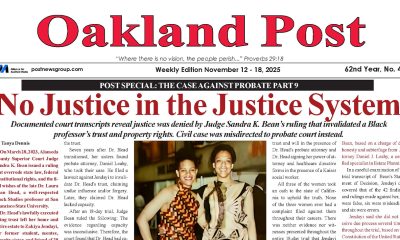
Oakland Post: Week of November 12 – 18, 2025
-
 Activism3 weeks ago
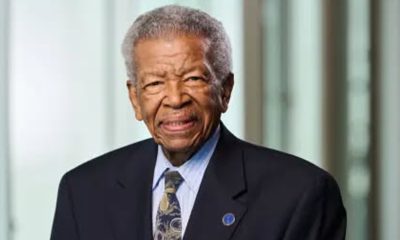
IN MEMORIAM: William ‘Bill’ Patterson, 94
-
 Activism4 weeks ago
How Charles R. Drew University Navigated More Than $20 Million in Fed Cuts – Still Prioritizing Students and Community Health
-
 Bay Area4 weeks ago
No Justice in the Justice System
-
 #NNPA BlackPress3 weeks ago
Lewis Hamilton set to start LAST in Saturday Night’s Las Vegas Grand Prix
-

 #NNPA BlackPress3 weeks ago
Beyoncé and Jay-Z make rare public appearance with Lewis Hamilton at Las Vegas Grand Prix
-
 Activism2 weeks ago
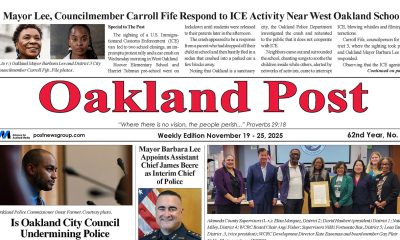
Oakland Post: Week of November 19 – 25, 2025
-

 #NNPA BlackPress4 weeks ago
The Perfumed Hand of Hypocrisy: Trump Hosted Former Terror Suspect While America Condemns a Muslim Mayor
