
World
Tanzania Replaces English with Kiswahili as its Official School Language


Tanzania President Jakaya Kikwete
Special to the NNPA from the New York Amsterdam News
Back in April, Tanzanian President Jakaya Kikwete’s administration announced that, henceforth, Kiswahili will be the primary language utilized in his country’s schools. Tanzania will become the first sub-Saharan nation in Africa to revert back to its indigenous tongue as the primary mode of communication in its educational system.
This effort is part of the continuing plan he had laid out earlier this past February, when Tanzania revealed that it is upgrading its educational programs in an effort to better prepare its youth for a prosperous future.
“It’s our hope that when students complete this basic education, which is compulsory up to Form 4, they will be at an age ready to contribute to the country’s development,” said Sifuni Mchome, the permanent secretary of the Ministry of Education and Vocational Training.
He also mentioned that the new system will encompass basic vocational education for students to develop necessary skills, as well as the importance of providing the proper training.
“We need a critical mass of skilled labor for the country’s development,” Mchome added.
Since its 1961 independence from Britain, public education in Tanzania has been bilingual. In elementary school, students are taught in Kiswahili—more popularly known as Swahili in the Western world—with English also included in the curriculum. From secondary school all throughout the collegate level, roles are reversed, with English becoming the primary format.
Kikwete’s decision brings some semblance of clarity to a system that, for generations, has created much confusion among many students, causing them not to excel in either language.
Tanzania has utilized Swahili as sort of a bonding element to fortify its foundation and create a strong sense of nationhood. More than 130 different ethnic groups populate the country, each with its own dialect and cultural customs, having the potential for ethnic conflict of the type seen in Kenya and Rwanda.
Swahili reflects Tanzania’s diversity and history while simultaneously providing a sense of collective identity and cohesiveness. Its unifying characteristics have helped Tanzania avoid many problems commonly associated with local strife.
Tanzania’s self-determining stance ruffled a few feathers throughout the past three decades, as it has continuously shaken off European-imposed imperialisms’ shackles.
The country and its young leader, “Mwalimu” (teacher) Julius Nyerere, were revered across the African continent during the post-independence glory years of the 1960s and ’70s for being the catalyst behind Africa’s anti-colonial campaign.
Paralyzing economic reform the following decade helped the country develop a free market economy, which has created growth, but the country still struggles to tighten the inequality span.
“In a globalized economy where English dominates almost everything—from trade to politics—it is not clear which way Tanzania wants to go in the next five decades,” reads a local report.
This policy bucks the trend in the region, as many local countries have adopted English as its medium for education, with some seeing it as an important conduit to global investors.
Rwanda, a former Belgian colony, “downgraded” French and adopted English as its official language in education in 2008. Gabon, another Francophone state, followed suit in 2012.


Activism
African Union Group to Award Rev. Dr. Amos Brown for Bringing Civil Rights Movement to Global Stage
Dr. Macaulay Kalu, secretary general of AU6RG, will present Dr. Brown with the Global Peace Builder Award. Other presenters include Rev. Dr. Freddie Haynes, senior pastor of Friendship West Baptist Church in Dallas; Oakland Mayor Barbara Lee, long-time advocate for appropriations to Africa as a congressmember; Rick Callendar, California-Hawaii president of the NAACP; Dr. Ike Neliaku, president and chairman of the Nigerian Institute of Public Relations; Pastor Ituah Ighodalo, head of the African Leadership Group and Ambassador Thompson and John William Templeton, founder of the Journal of Black Innovation National Black Business Month®.

By Carla Thomas and John William Templeton
On Aug. 31, the Third Baptist Church of San Francisco will mark its 173rd anniversary with an event steeped in history and global significance. This year’s commemoration, themed “Achieving Dr. King’s Promised Land Together,” will honor the lifelong achievements of Dr. Amos C. Brown, Sr.— a towering figure in the Civil Rights Movement — on a day that also observes the International Day for People of African Descent.
Brown will be recognized by the African Union’s organ for Africans abroad for ‘planetizing’ the civil rights movement gains at San Francisco’s Third Baptist Church, 1399 McAllister St., at 3 p.m.
The African Union, made up of 54 countries on the African continent, consists of five regions. It created a sixth region, the African Union Sixth Region Global (AU6RG), for the 400 million Africans living abroad. On Sept. 7, the second AU-Caribbean Community Summit occurs in Addis Ababa, Ethiopia.
Dr. Macaulay Kalu, secretary general of AU6RG, will present Dr. Brown with the Global Peace Builder Award. Other presenters include Rev. Dr. Freddie Haynes, senior pastor of Friendship West Baptist Church in Dallas; Oakland Mayor Barbara Lee, long-time advocate for appropriations to Africa as a congressmember; Rick Callendar, California-Hawaii president of the NAACP; Dr. Ike Neliaku, president and chairman of the Nigerian Institute of Public Relations; Pastor Ituah Ighodalo, head of the African Leadership Group and Ambassador Thompson and John William Templeton, founder of the Journal of Black Innovation National Black Business Month®.
Held during the 173rd anniversary of the church, the event called “Africa-America: Achieving Dr. King’s Promised Land Together” is a Diaspora-wide discussion led by Dr. Brown on what Martin Luther King, Jr. would say today.
Galvanized by the horrific 1955 slaying of Emmett Till, Dr. Brown’s journey in activism began in Jackson, Mississippi, where a neighbor, Medgar Evers, the NAACP’s first field secretary in that state, encouraged Brown to found the Mississippi NAACP Youth Council.
In 1956, Evers personally drove Brown to the NAACP convention in San Francisco, where Brown would first hear Dr. Martin Luther King Jr. speak. Brown became a prominent Freedom Rider, later attending Morehouse College and taking the only class Dr. King ever taught there. Thirteen years after Evers was assassinated in Jackson, Brown arrived at Third Baptist Church in 1976, serving with distinction for 49 years before his recent retirement. Under his stewardship, the church solidified its commitment to social justice and international unity.
His Excellency Rev. Ladi Peter Thompson, deputy secretary general for peace and security of AU6RG, said, “As a mentee of Medgar Evers, Freedom Rider and student of Dr. Martin Luther King Jr., Dr. Brown is the perfect authority for the young people of the Diaspora on achieving the prophetic goal that Dr. King foresaw in Memphis.”
Lady Dentaa Amoateng, founder of Grow, Unite, Build Africa (GUBA), will also announce that Dr. Brown is an honoree at the GUBA Award in Bridgetown, Barbados in November. The popular actress in Ghana and the United Kingdom will attend in person.
Dr. Lezli Baskerville, president/counsel of the National Association for Equal Opportunity in Higher Education, which includes 105 Historically Black Colleges and Universities (HBCUs) and 90 predominantly Black institutions (PBIs), invites its students, faculty, and alumni to attend or join remotely.
“HBCUs produced both Dr. King and Dr. Kwame Nkrumah and are the fountainhead for Diaspora unity,” said Baskerville.
Templeton, author of “ReUNION: State of Black Business, 22d edition,” said “Our movement will advocate the continuance of tariff-free treatment for Africa and the Caribbean; respect for African-American and African elected officials and the 13th, 14th, and 15th Amendments and the strengthening of educational and research connections across the Diaspora.”
Templeton said Black institutions have been at the forefront of defining the image of 1.5 billion Black people globally, a mission that is even more important as African youth will be the majority of the world’s young people in the coming decades.
ABOUT THIRD BAPTIST CHURCH
Founded on West Indian Emancipation Day on Aug.1, 1852, Third Baptist said in its annual report in 1858 that its sole purpose was the elimination of American chattel slavery and took an active role among the California abolitionists who convinced President Abraham Lincoln to issue the Emancipation Proclamation. The current sanctuary is constructed with wood from the Goodall Mansion, where President U.S. Grant stayed after leaving the White House, and is the last place where Dr. W.E.B. DuBois spoke before leaving for Africa in 1958.
Activism
Newsom, Pelosi Welcome Election of First American Pope; Call for Unity and Compassion
“In his first address, he reminded us that God loves each and every person,” said Newsom. “We trust that he will shepherd us through the best of the Church’s teachings: to respect human dignity, care for the poor, and wish for the common good of us all.” Newsom also expressed hope that the pontiff’s leadership would serve as a unifying force in a time of global instability.
By Bo Tefu, California Black Media
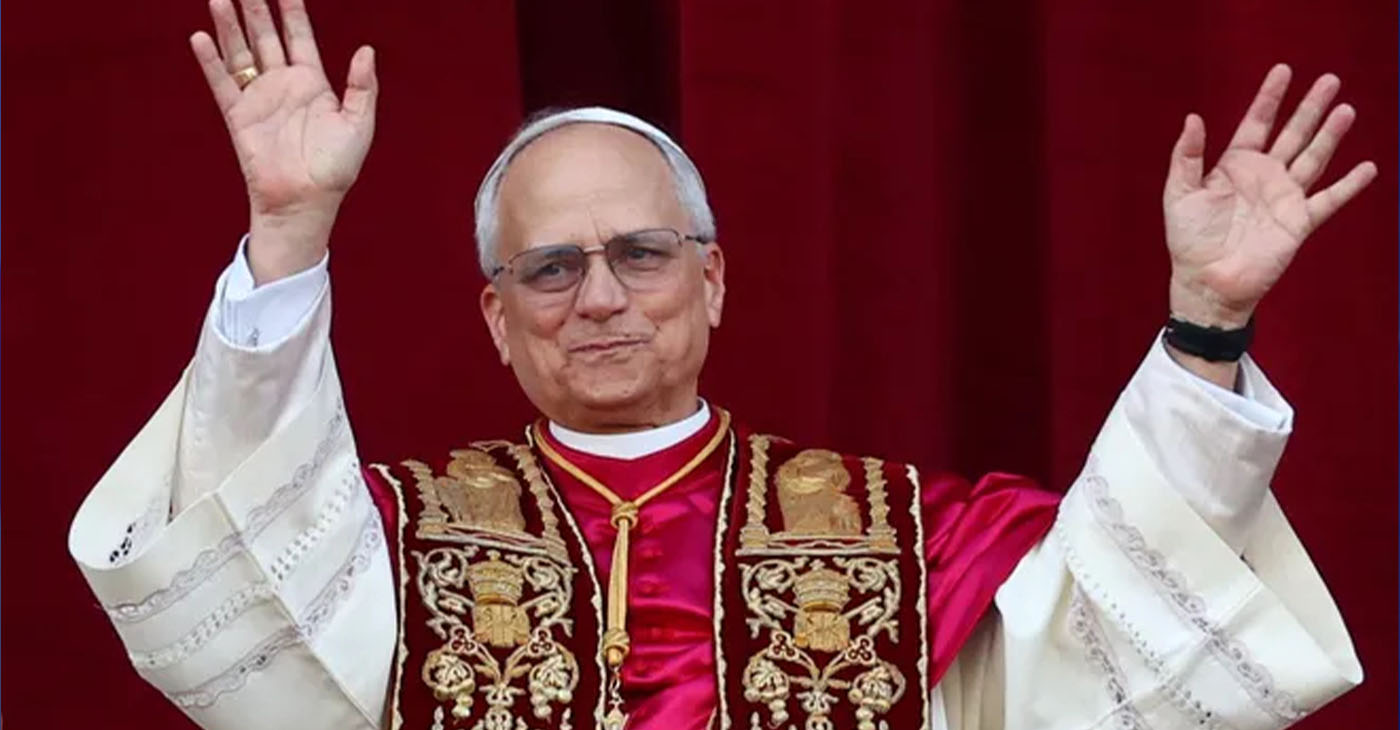
Gov. Gavin Newsom and First Partner Jennifer Siebel Newsom on May 8 issued a statement congratulating Pope Leo XIV on his historic election as the first American to lead the Catholic Church.
The announcement has drawn widespread reaction from U.S. leaders, including former House Speaker Nancy Pelosi, who called the moment spiritually significant and aligned with the values of service and social justice.
In their statement, the Newsoms expressed hope that the newly elected pope would guide the Church with a focus on compassion, dignity, and care for the most vulnerable. Newsom said he and the First Partner joined others around the world in celebrating the milestone and were encouraged by the pope’s first message.
“In his first address, he reminded us that God loves each and every person,” said Newsom. “We trust that he will shepherd us through the best of the Church’s teachings: to respect human dignity, care for the poor, and wish for the common good of us all.”
Newsom also expressed hope that the pontiff’s leadership would serve as a unifying force in a time of global instability.
“May he remind us that our better angels are not far away — they’re always within us, waiting to be heard,” he said.

Pelosi, a devout Catholic, also welcomed the pope’s election and noted his symbolic connection to earlier church leaders who championed workers’ rights and social equality.
“It is heartening that His Holiness continued the blessing that Pope Francis gave on Easter Sunday: ‘God loves everyone. Evil will not prevail,’” said Pelosi.
Activism
Retired Bay Area Journalist Finds Success in Paris with Black History Tours
In the late 90s, Stevenson finally realized her dream of living in Paris, now with her daughter. She started exploring the history of Africans in the city and would go on to teach others the same. Her business, which she named Black Paris Tours (BPT), received a significant boost when a family friend gave her a stack of cash and encouraged her to expand on the knowledge that she had only started to share with people she knew.
By Post Staff
There were two things Oakland-born, East Palo Alto-raised Ricki Stevenson always dreamed of:
- Going to New York as a newscaster to tell the true story of Blacks in America.
- Living and working in Paris one day.
Her dreams of life in Paris began when she was three years old and her mother, a former professional dancer, took her to see Josephine Baker perform. She was 11 when her parents took her to the Stanford University campus to meet James Baldwin, who was speaking about his book, “The Fire Next Time.” Ricki says that’s when she knew she’d one day live in Paris, “the city of light!”
But before that would ever happen, she had a tumultuous career as a newscaster across the country that was inspired by her family’s history.
Stevenson recalls marching with Cesar Chavez as he fought for labor rights for farm workers in California.
“Are we Mexican too?” she asked her parents. “No, but we will fight for everyone’s human rights,” they responded to her.
Ironically, Ricki’s paternal family roots went back to Greenwood, Oklahoma, infamous for the 1921 bombing of Black Wall Street. A time when Black people had oil wells, banks, and a thriving business community.
This background would propel her into a 25-year journalism career that gave her the opportunity to interview greats like President Jimmy Carter, PLO leader Yassir Arafat, James Baldwin, Rev. Jesse Jackson, UN Ambassador Andrew Young, Miriam Makeba, and the leaders of South African liberation movements.

A job offer from KCBS radio brought her back to the Bay Area in the 1980s. Then came the switch to TV when she was hired as a Silicon Valley business reporter with KSTS TV, working at the first Black-owned television station in northern CA (created and owned by John Douglas). Along the way, Stevenson worked as an entertainment reporter with BET; coproduced, with her disc jockey brother Isaac, a Bay Area show called “Magic Number Video;” lived in Saudi Arabia; worked as an international travel reporter with News Travel Network; and worked at KRON TV a news anchor and talk show host.
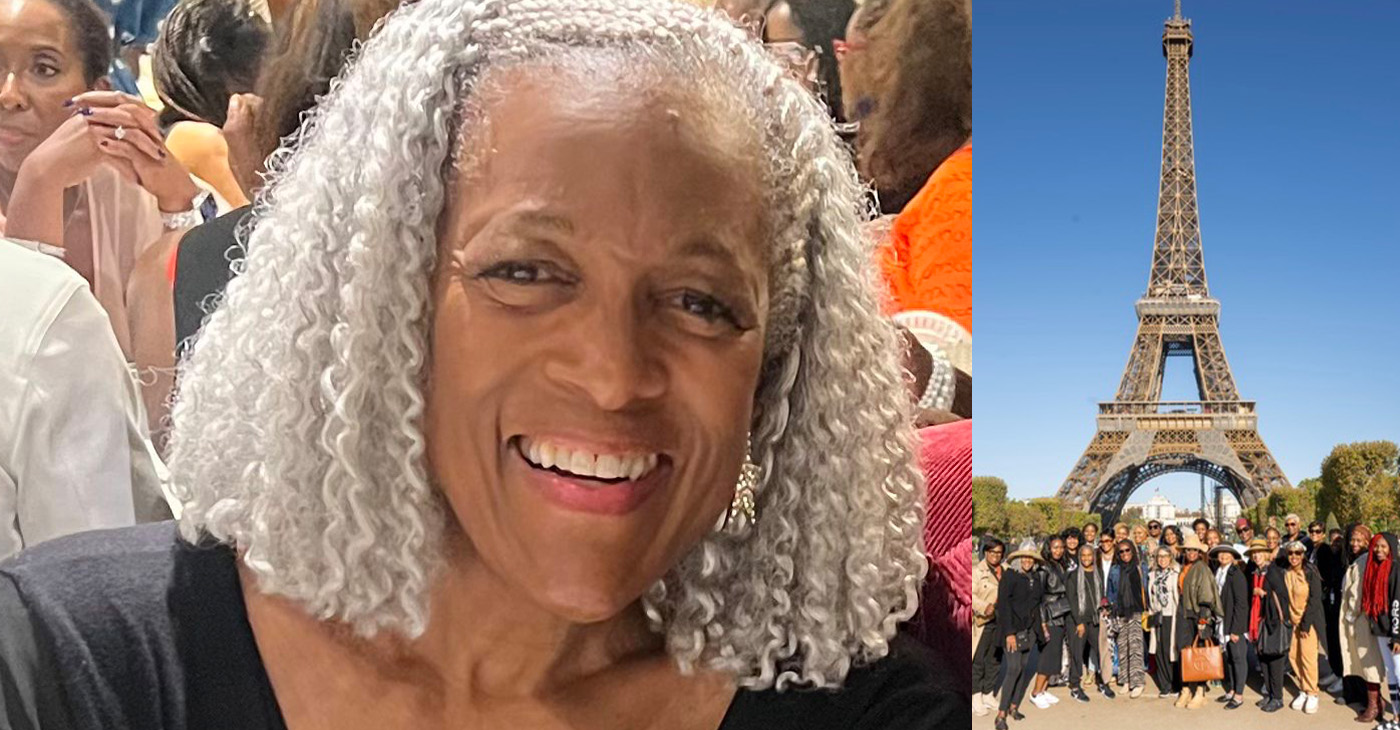
In 1997, Stevenson realized her dream of living in Paris with her young daughter, Dedie. She started exploring the history of Africans in the city and would go on to teach others the same. Her business, which she named Black Paris Tours (BPT), received a significant boost when a family friend, Admiral Robert Toney put a chunk of money in her hand. He said, “Ricki, my wife and I have been coming to Paris for 20 years, but in just two days with you and Dedie, we’ve learned and seen more than we ever did before.”
Years after BPT took off, Ricki met Nawo Carol Crawford and Miguel Overton Guerra, who she recruited as senior scholar guides for Black Paris Tours.
Guerra says he is proud of his work with Black Paris Tours in that it provides a wealth of information about the rich legacy of African and African American history and influence in Paris and Europe.
“I tend to have a feeling for history always being a means of a reference point backwards … you start to understand the history, that it isn’t just the United States, that it began with African people,” Guerra says.
He said that it’s been a pleasure to watch people learn something they didn’t know before and to take them through the city to key points in Black history, like hangout spots for writers like Baldwin and Richard Wright, restaurants in the busiest parts of Paris, the home of Josephine Baker and so much more.
Although the tours are open to all, Guerra hopes that those of African descent from all over the world can embrace that they don’t have to just stay where they are because movies and media have portrayed cities like Paris to be only white, it’s multicultural and accepting to all.
“We’ve been here, and we’ve been there, going way back when. And we shouldn’t be considered or consider ourselves to be strangers in any place that we go to,” he said.
Stevenson notes they’ve had 150,000 people take their tour over the years, with notables like former NFL quarterback Colin Kaepernick, Smokey Robinson, Steve Harvey, Miriam Makeba, and more.
Friends and former media colleagues of Stevenson compliment the BPT crew on their knowledge of the city and their ability to always keep it interesting.
“He [Guerra] just had a deep, deep wealth of knowledge and he was constantly supplanting information with historical facts and the like. I love that it was demonstrating and showing how Black people have thrived in Paris or contributed to the culture in Paris,” Candice Francis said.
She toured in the summer of 2022 and stated that in the two weeks that they visited Paris, BPT was the highlight of her trip. She shared that she was proud of Stevenson and the life she’d managed to manifest and build for herself.
“Even if you’re visiting Paris for the tenth time, if you haven’t taken the tour, then by all means, take it,” Francis emphasized.
Magaly Muñoz, Gay Plair and Paul Cobb also contributed to this story. You can book your own adventure with Black Paris Tours at www.blackparistour.com.

WORK FROM HOME
Home-based business with potential monthly income of $10K+ per month. A proven training system and website provided to maximize business effectiveness. Perfect job to earn side and primary income. Contact Lynne for more details: Lynne4npusa@gmail.com 800-334-0540


Seth Curry Makes Impressive Debut with the Golden State Warriors

LIHEAP Funds Released After Weeks of Delay as States and the District Rush to Protect Households from the Cold

Seven Steps to Help Your Child Build Meaningful Connections

Seven Steps to Help Your Child Build Meaningful Connections

Teens Reject Today’s News as Trump Intensifies His Assault on the Press

Thanksgiving Celebrated Across the Tri-State

Breaking the Silence: Black Veterans Speak Out on PTSD and the Path to Recovery

Trinidad and Tobago – Prime Minister Confirms U.S. Marines Working on Tobago Radar System

‘Tis the Season: Festive Holiday Pop-ups Happening Around Atlanta

IN MEMORIAM: Mardelle Walker, 101

Oakland Post: Week of November 26 – December 2, 2025

‘Targeted’ Shooting of Two National Guardsmen Blocks From the White House

Meet Roxanne Brown, The First African American And The First Woman President Of The United Steelworkers

Tax Refunds Expected to Rise by About $1,000 Next Year

CFP Rankings: Top Five Remains Unchanged; Major Decision Looms for Lane Kiffin

Oakland School Board Proposes Budget Solutions to Avoid State or County Takeover

A Call to Save Liberty Hall: Oakland’s Beacon of Black Heritage Faces an Uncertain Future

Port of Oakland September Cargo Volumes Dip Amid Shifting Trade Patterns

Oakland Post: Week of October 22 – 28, 2025

Prescribing Prevention: Doctors Turn to Lifestyle, Herbs and Veggies to Protect Against Chronic Illness in Black Californians

Mayor Lee Responds to OPD Chief Floyd Mitchell’s Decision to Resign

Past, Present, Possible! Oakland Residents Invited to Reimagine the 980 Freeway

Oakland Post: Week of October 29 – November 4, 2025

California Teachers Association Rallies Behind Prop. 50: A Stand for Education and Democracy

Man Arrested for Making Death Threats Against Mayor Barbara Lee

Essay: Intentional Self Care and Community Connections Can Improve Our Wellbeing

Oakland Post: Week of November 12 – 18, 2025

Oakland Post: Week of November 5 – 11, 2025

IN MEMORIAM: William ‘Bill’ Patterson, 94

MLK Way at 57th Street in Oakland Renamed Bobby Seale Way for Black Panther Co-Founder

Hyundai Ioniq 5 Parking, Safety, and 360 View #shorts

2025 Ioniq 5 New Wiper & Powerful Performance! #shorts

Electric SUV Range: Is 259 Miles Enough? #shorts

EV Charging: How Fast Can You Charge an Electric Vehicle? #shorts

Biometric Cooling… Messaging Seats…Come on! 2025 Infiniti QX80 Autograph 4WD

Charged Up: Witness the Magic of a Fully Electric Car! #shorts

Range Rover Sport PHEV Included…: See What’s Inside This Luxury SUV! #shorts

Invisible Hood View: Perfect Parking with X-Ray Vision! #shorts

AI Is Reshaping Black Healthcare: Promise, Peril, and the Push for Improved Results in California

ESSAY: Technology and Medicine, a Primary Care Point of View

Sanctuary Cities

The RESISTANCE – FREEDOM NOW

STATE OF THE PEOPLE: Freddie

ECONOMIC BOYCOTT DAY!!!!!

I told You So

-
 Activism3 weeks ago
Oakland Post: Week of November 12 – 18, 2025
-
 Activism3 weeks ago
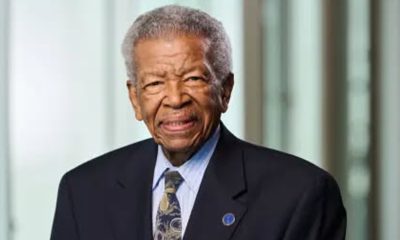
IN MEMORIAM: William ‘Bill’ Patterson, 94
-

 Activism3 weeks ago
How Charles R. Drew University Navigated More Than $20 Million in Fed Cuts – Still Prioritizing Students and Community Health
-

 Bay Area3 weeks ago
No Justice in the Justice System
-
 #NNPA BlackPress3 weeks ago
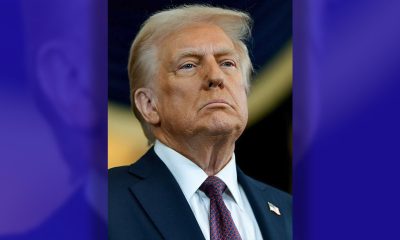
The Perfumed Hand of Hypocrisy: Trump Hosted Former Terror Suspect While America Condemns a Muslim Mayor
-
 #NNPA BlackPress2 weeks ago
Trump’s Death Threat Rhetoric Sends Nation into Crisis
-
 #NNPA BlackPress4 weeks ago
Protecting Pedophiles: The GOP’s Warped Crusade Against Its Own Lies
-

 #NNPA BlackPress2 weeks ago
Lewis Hamilton set to start LAST in Saturday Night’s Las Vegas Grand Prix
